Aging In Place Resource: Guidance For Safer Independent Living
Aging in place problems often develop gradually until something suddenly changes. If you're concerned about dementia, falls, unsafe living conditions, caregiving stress, or feel a situation is becoming unmanageable, scroll down for practical guidance to help you recognize risks early and make informed decisions before a crisis occurs.
Aging in place is something I know about firsthand. I spent years providing care for both of my parents at home through dementia, blindness, deafness, crippling arthritis, severe mobility decline, falls, medication complications, hospitalizations, type 2 diabetes, heart attacks, strokes, dialysis, hospice care, and many difficult, imperfect decisions.
Both of my parents died peacefully at home more than a decade ago. Much of the guidance on this site comes from hindsight gained through my experiences, combined with my own growing interest in aging in place as realistically and successfully as possible.
Born in 1954, I have spent many years focused on health, independence, mobility, and the practical realities of aging well. None of us stays young forever, but many aging-related problems become easier to manage with preparation and realistic planning.
During the years I cared for my parents at home, I saw how difficult it was to find practical aging in place information that reflected the realities families actually face. Much of what I found online felt overly clinical, generic, or heavily monetized.
Later, while researching how best to age in place for myself, I found the search results just as disappointing. I built this site to provide clearer, more realistic guidance.
The focus here is practical, affordable decision-making, home safety, caregiving realities, and the everyday problems families often face with little preparation.
Most families do not start planning for aging in place until something changes suddenly.
- An adult child realizes a parent may no longer be safe living alone
- Dementia symptoms become harder to ignore
- Someone starts wandering at night
- Medication mistakes begin happening
- A hospitalization changes everything
- Then a parent falls
Many families arrive here overwhelmed, exhausted, and unsure what to do next.
Aging In Place Resource was created to help seniors and caregivers make safer, more practical decisions about living at home during these stressful transitions.
I have spent a great deal of time researching aging in place, caregiving, home safety, mobility issues, dementia care, and long-term planning to create the most useful and practical resource possible for you.
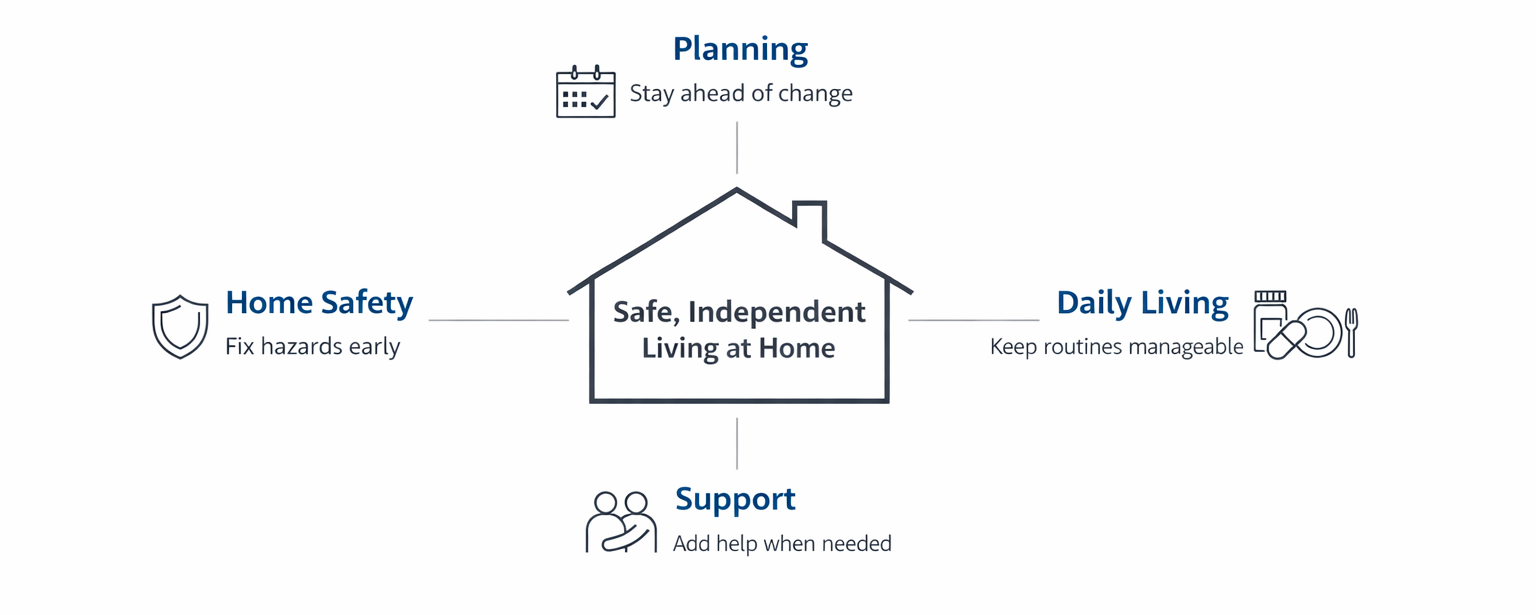
Start With The Problem You Are Facing Right Now
Many families arrive here during a period of sudden change, confusion, or crisis. Some adult children and relatives believe things are going reasonably well because an aging parent still sounds normal on the phone, only to discover during a visit that the situation at home has deteriorated far more than anyone realized.
If you are an adult child trying to help aging parents, you may be dealing with dementia symptoms, fall risks, caregiving stress, hospitalizations, home safety problems, or difficult decisions about whether someone can continue living safely alone.
If you are a senior preparing to age in place yourself, this site will provide useful, practical information. Many spouses become caregivers for a husband or wife during a long illness, major mobility decline, or dementia. That responsibility can become physically exhausting, emotionally overwhelming, and isolating. I regularly speak with people who are still grieving years after losing a spouse they cared for at home.
The content on this site is organized around some of the most common problems families face as aging in place becomes more challenging. The goal is practical, realistic guidance people can actually use, including many simple, low-cost ideas drawn from firsthand caregiving experience.
Dementia And Cognitive Changes
Memory loss, confusion, wandering, hallucinations, and resistance to help can create enormous stress for families. Many adult children do not realize how serious the situation has become until a crisis occurs.
Start here:
- Signs Dementia Care At Home Is Becoming Unsafe
- How To Cope With Dementia In A Parent
- Wandering And Exit-Seeking In Dementia
- Hallucinations And Confusion In Dementia
- When An Aging Parent Refuses Help
- Medication Mistakes And Cognitive Decline
Falls And Mobility Problems
Cognitive decline and fall risk often begin overlapping long before families realize how serious the situation has become. Falls often happen during ordinary daily activities such as using the bathroom, getting out of bed, carrying laundry, or walking through cluttered spaces.
Helpful pages:
- Fall Prevention For Seniors
- Bathroom Safety For Seniors
- Nighttime Safety For Seniors
- Mobility Aids For Seniors
- Flooring Safety For Seniors
- Fall Risks In Small Homes
Caregiving Stress And Burnout
Many caregivers slowly become overwhelmed without realizing how much pressure they are under.
Helpful pages:
- Caregiver Burnout Warning Signs
- Managing Daily Care At Home
- Helping A Parent Live Safely At Home
- When Aging in Place is no Longer Safe
- Preparing For Increasing Care Needs
Daily Living And Home Adaptation
Small home changes can sometimes prevent injuries, reduce stress, and make caregiving more manageable.
Helpful pages:
- Low-Cost Home Modifications For Seniors
- Bedroom Safety For Seniors
- Using A Bedside Commode Safely At Home
- Bathroom Safety For Seniors
- Safe Lighting For Seniors
- Reducing Fall Risks At Night
Aging In Place Often Changes Gradually
Many people imagine aging in place as simply remaining at home while growing older.
In reality, aging safely at home often requires ongoing adjustments as mobility, balance, vision, memory, strength, and health conditions change over time.
Some older adults remain highly capable and independent for many years.
Others may begin struggling with:
- Confusion
- Wandering
- Falls
- Driving
- Medication management
- Cooking safely
- Bathing
- Stairs
- Hospital recovery
- Chronic illness
- Isolation
This site focuses on practical ways families can reduce risks while preserving independence as long as possible.
Helping Aging Parents Live Independently
Start Here If You Are Feeling Overwhelmed
If you are unsure where to begin, these pages provide a strong overview:
- Start Here With Aging In Place Resource
- Aging In Place Checklist
- Home Safety For Seniors
- Low-Cost Home Modifications For Seniors
- Caregiving At Home
Practical Guidance Without The Noise
Many aging-related websites focus heavily on products, medical systems, or expensive home renovations.
Aging In Place Resource focuses on practical, affordable, realistic strategies families can often begin using immediately with the home, budget, and support system they already have.
Topics include:
- Home Safety
- Dementia Care
- Fall Prevention
- Caregiving Stress
- Mobility Problems
- Daily Living Challenges
- Long-Term Planning
- Hospital Recovery
- Aging Safely At Home
Practical Aging In Place Guidance
Aging In Place Resource was built to provide practical, realistic guidance for families dealing with dementia, falls, caregiving stress, mobility decline, and increasing care needs at home.
The goal is simple:
Help families make clearer, safer, more informed decisions before small problems become emergencies.
© 2026 Mark Fomenko. All rights reserved.
AgingInPlaceResource.com
Privacy Policy | Terms of Use | Disclaimer | Contact | Newsletter
Recent Articles


-
Aging In Place Resource Library
Sep 04, 26 08:30 AM
Aging In Place Resource Library -
Aging in Place Resource Newsletter
Aug 30, 26 11:16 AM
Aging in Place Resource Newsletter -
Aging in Place Resource: Simple Strategies for Living Safely at Home
Jul 28, 26 12:43 PM
 Aging in Place Resource provides practical guidance for aging in place. Learn how to live safely and independently at home with strategies for home safety, caregiving, planning, and long-term support.