About Aging In Place
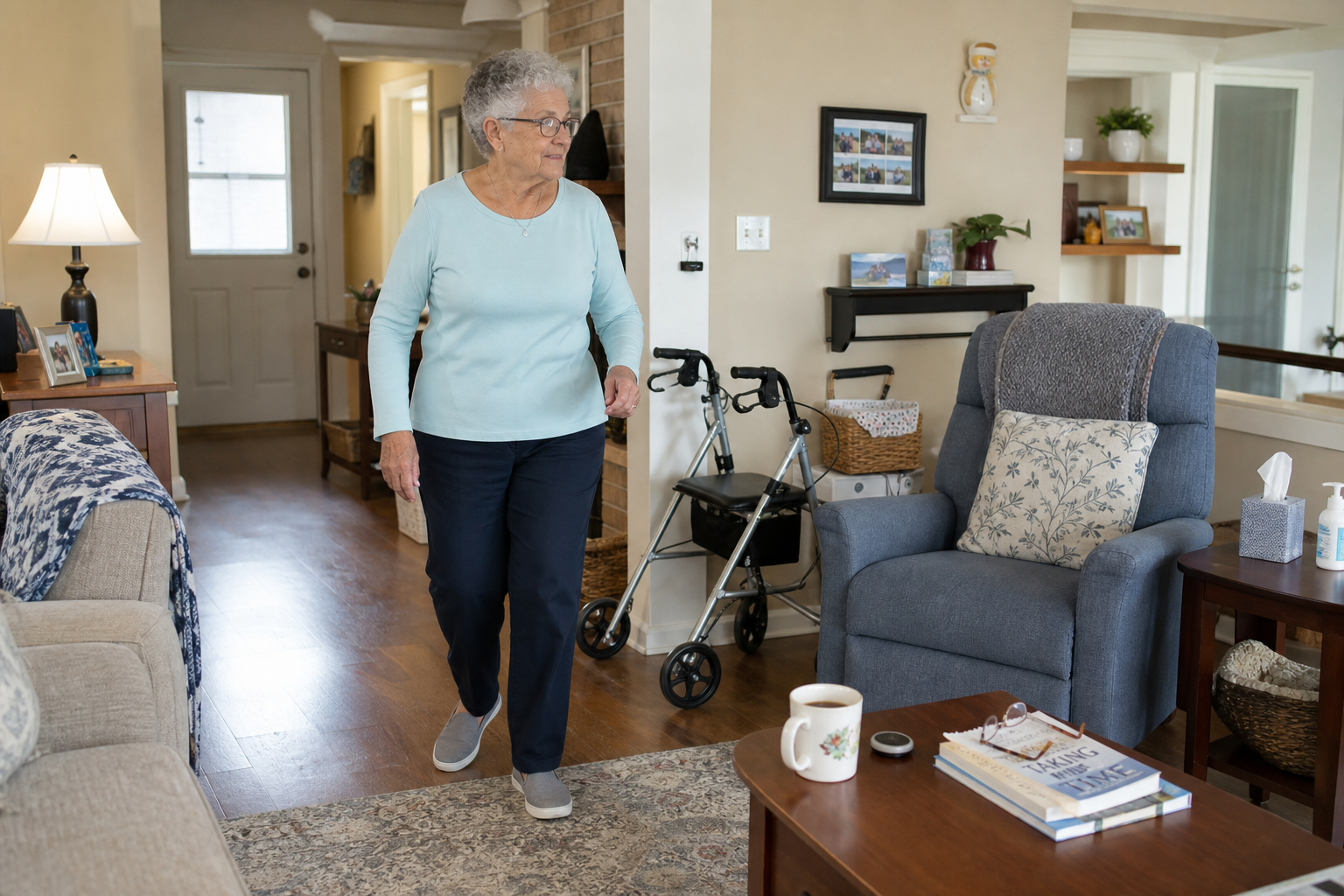
Questions About Aging In Place often begin with housing but eventually become questions about safety, mobility, and daily function. In reality, it is an ongoing process of adapting a home, daily routines, and expectations as health, mobility, memory, balance, and independence change over time.
Many families do not think much about aging in place until something forces the issue. A fall happens. A hospitalization leads to weakness. Dementia symptoms become harder to ignore. Medication mistakes begin occurring. An adult child visits and realizes a parent is struggling more than anyone understood.
The goal of aging in place is not simply remaining in a familiar house. The goal is maintaining safety, function, and quality of life while reducing avoidable risks. Understanding how that process typically unfolds can help families make better decisions before a crisis limits their options.
What Aging In Place Looks Like In The Real World
When people first think about aging in place, they often imagine an older adult continuing to live independently in familiar surroundings.
That may be true initially.
Over time, however, the focus gradually shifts from where someone lives to how they live.
Can they move safely through the house?
Can they prepare meals?
Can they manage medications?
Can they use the bathroom safely?
Can they recover from illness or injury without losing independence?
The answers to those questions often matter more than the address itself.
Most homes were designed for younger, healthier occupants. As abilities change, ordinary household features can become obstacles. Stairs become harder to manage. Low chairs become difficult to stand from. Poor lighting becomes more noticeable. Narrow walkways become problematic when walkers or wheelchairs enter the picture.
Successful aging in place usually depends on recognizing those changes before they become emergencies.
Why Small Problems Often Become Bigger Ones
One challenge about aging in place is that decline is usually gradual.
Small changes appear first.
Someone begins taking longer to complete familiar tasks.
They stop carrying laundry up and down stairs.
They avoid certain rooms.
They become more cautious walking across uneven surfaces.
They begin forgetting appointments or misplacing medications.
None of these issues may seem serious on their own.
Taken together, however, they often signal that the home and the person are beginning to move out of alignment.
Families frequently overlook these early signs because they develop slowly. Daily routines adjust around the problems. Workarounds become habits. Risks increase quietly.
By the time everyone agrees something has changed, the situation is often more advanced than it first appears.
How Mobility Changes The Home
Mobility problems affect nearly every part of aging in place.
Walking speed decreases.
Balance becomes less reliable.
Standing from a seated position takes more effort.
Turning movements become slower and less stable.
Fatigue appears sooner.
These changes affect how people interact with their homes.
Furniture that once felt comfortable may become difficult to rise from.
Frequently used items stored on high shelves become harder to reach.
Carrying objects while walking becomes risky.
Nighttime trips to the bathroom require more caution.
Many families discover that the safest improvements are often simple:
- Removing trip hazards
- Improving lighting
- Rearranging furniture
- Creating wider walking paths
- Reducing unnecessary stair use
- Keeping frequently used items within easy reach
Why Falls Change Everything
Many aging in place situations become significantly more complicated after a fall.
A serious fall can change mobility, confidence, and independence almost overnight.
Even when no major injury occurs, fear of falling often changes behavior.
People begin moving less.
They avoid activities they once enjoyed.
They spend more time seated.
Physical strength gradually declines.
The risk of future falls increases.
Most falls occur during routine activities:
- Getting out of bed
- Walking to the bathroom
- Turning around furniture
- Carrying household items
- Stepping over thresholds
- Navigating poor lighting
Watching movement patterns is often more useful than waiting for a fall to happen.
Where does the person hesitate?
Where do they reach for support?
Where do they lose balance?
Where do they rush?
Those observations often reveal problems before injuries occur.
How Cognitive Decline Changes Aging In Place
Many families discover that cognitive decline creates challenges very different from mobility problems.
Someone may still walk independently and carry on normal conversations while struggling with everyday decisions.
They may forget medications.
They may become confused about routines.
They may have difficulty preparing meals safely.
They may leave appliances unattended.
They may begin wandering.
The difficulty is that cognitive decline often develops unevenly.
Good days can make problems seem minor.
Bad days can make them impossible to ignore.
As memory and judgment decline, the environment itself becomes increasingly important.
Predictable routines help.
Consistent furniture placement helps.
Clear walking paths help.
Reduced clutter helps.
The safest homes are often the easiest homes to understand.
How To Cope With Dementia In A Parent
What Adult Children Often Discover
Adult children frequently learn firsthand about aging in place challenges during visits.
Phone calls and short conversations can hide a great deal.
A parent may sound fine while daily routines are beginning to break down.
Common discoveries include:
- Spoiled food in the refrigerator
- Burned cookware
- Missed medications
- Increasing clutter
- Unopened mail
- Bruises from falls
- Rooms that are no longer being used
- Difficulty standing or walking
- Medications scattered throughout the house
The pattern is remarkably common.
Families often discover that practical daily function tells a more accurate story than brief conversations.
The condition of the home frequently reveals problems that words do not.
Medication Mistakes And Cognitive Decline
Why Caregiving Workloads Increase Over Time
Many people underestimate how much caregiving can grow as aging in place becomes more challenging.
The process is usually gradual.
A family member begins helping with transportation.
Then groceries.
Then medications.
Then appointments.
Then household tasks.
Eventually, assistance may be needed several times each day.
The workload rarely arrives all at once.
Instead, responsibilities accumulate.
Families often find themselves managing:
- Medication systems
- Meal preparation
- Mobility assistance
- Transportation
- Safety monitoring
- Household organization
- Medical appointments
The practical challenge is not simply doing these tasks. It is doing them consistently while balancing work, family responsibilities, finances, and uncertainty about what comes next.
Planning Before A Crisis Happens
Many aging in place decisions become harder after a major event.
A fall, hospitalization, or sudden decline often forces rapid decisions under pressure.
Planning ahead creates more flexibility.
That does not necessarily require expensive renovations or complicated preparations.
Often it means paying attention early.
Notice changes in mobility.
Notice changes in memory.
Notice changes in daily routines.
Notice areas of the home that repeatedly create difficulty.
Small adjustments made early are often easier, less expensive, and more effective than major changes made during a crisis.
Families looking for additional information about fall prevention and healthy aging can review resources provided by the CDC.
Keeping Aging In Place Practical
When thinking about aging in place, it helps to view it as a process rather than a destination.
Needs change.
Abilities change.
Homes change.
Family roles change.
The most successful aging in place situations are usually not the ones with the most expensive modifications. They are the ones where families recognize changing realities and respond to them early.
A safer home is often a simpler home.
Walking paths are clear.
Lighting is adequate.
Frequently used items are easy to reach.
Daily routines are manageable.
Risks are addressed before they become emergencies.
Aging in place works best when practical decisions are made consistently over time rather than postponed until a crisis forces them.
© 2026 Mark Fomenko. All rights reserved.
AgingInPlaceResource.com
Privacy Policy | Terms of Use | Disclaimer | Contact | Newsletter
Recent Articles


-
Aging In Place Resource Library
Sep 04, 26 08:30 AM
Aging In Place Resource Library -
Aging in Place Resource Newsletter
Aug 30, 26 11:16 AM
Aging in Place Resource Newsletter -
Aging in Place Resource: Simple Strategies for Living Safely at Home
Jul 28, 26 12:43 PM
 Aging in Place Resource provides practical guidance for aging in place. Learn how to live safely and independently at home with strategies for home safety, caregiving, planning, and long-term support.