Aging in Place Resource: How to Live Safely and Independently at Home
Aging in place means living safely and independently in your own home as you grow older. Aging in Place Resource provides practical guidance to help individuals and families plan for successful aging in place by improving home safety, preparing for changing health needs, and making informed long-term living decisions. Whether you are planning ahead for yourself or helping an aging parent remain independent, this site offers clear, practical information to help people live safely at home for as long as possible.
Why the Aging in Place Resource Is Different
This guidance is based on direct experience caring for both of my parents at home through advanced aging and serious health decline. My father was blind, largely deaf, physically disabled, and severely demented, while my mother lived with diabetes, multiple strokes, and cognitive decline. Managing their care required practical solutions to ensure safety, mobility, daily living, and long-term decision-making in a real home environment.
The information on this site is designed to translate those real-world lessons into clear, practical guidance that others can use to make better decisions, avoid common mistakes, and maintain independence at home for as long as possible.
As this resource grows, additional tools, checklists, and in-depth guides will be made available for those who want more structured support.
________________________________________________________________________________________________________
Get clear, experience-based guidance on aging in place—sent when it’s worth your time.
No spam. No noise. Just useful guidance.
_______________________________________________________________________________________________________
Aging in Place Resource Can Help You Safely and Independently Live at Home as Long as Possible
Aging in place means staying in your own home as you get older. The problem is, most homes aren’t set up for the kinds of changes that come with age. Things like poor lighting, loose rugs, and hard-to-use bathrooms can quietly become real safety issues.
The good news is that many of these problems are fixable. Simple changes can make a home much safer and allow people to stay where they’re comfortable for much longer.
Making Your Home Safer
A safe home is the starting point. A lot of risks build up slowly and are easy to ignore until something happens.
Things like cluttered walkways, dim lighting, or a slippery bathroom might not seem urgent—but they’re often what lead to falls.
Start here:
Knowing When Help Is Needed
- Aging in Place Checklist
- Home Safety for Aging in Place
- Bathroom Safety and Fall Prevention
Living independently doesn’t mean doing everything alone. At some point, most people need some help—but it’s not always obvious when that point has been reached.
Signs can include more frequent falls, trouble managing medications, difficulty getting around, or struggling with everyday tasks.
It’s much easier to deal with these changes early than after a crisis. Planning ahead gives you more options and keeps decisions in your hands.
Learn more:
Planning Ahead
- When Aging in Place Is No Longer Safe
- Helping Aging Parents Live Independently
Aging in place works best when it’s planned, not improvised.
That means thinking ahead about things like housing, finances, and what kind of help might be needed down the road. Waiting too long usually limits your choices.
Planning early doesn’t mean giving up independence—it helps you keep it.
Start planning:
Essential Guides
- Planning for Aging in Place
- Housing Choices for Later Life
- Aging in Place Checklist
- Home Safety for Aging in Place
- Bathroom Safety Guide
- Preventing Falls at Home
- Transportation Options After Driving
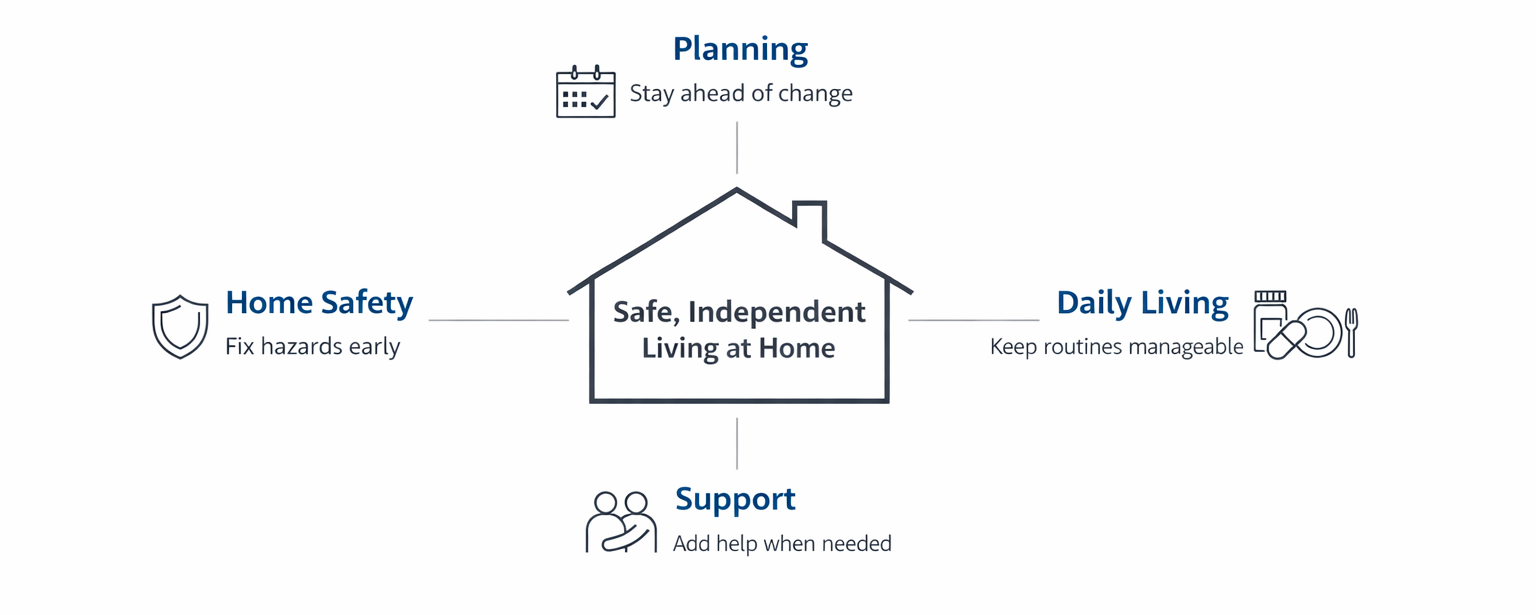
Most people don’t think about aging in place until something forces the issue. A fall, a hospital stay, or a sudden change in health can quickly turn a comfortable home into a difficult one. By that point, decisions often have to be made quickly, and there are fewer good options. That’s why it helps to start thinking about these things earlier, while there is still time to make clear, practical choices.
Aging in place is not just about staying at home—it’s about staying safe, staying functional, and avoiding preventable problems that can take away independence. Many of the risks that lead to major setbacks are not dramatic. They build up slowly. A dim hallway, a step that’s slightly uneven, a bathroom that’s hard to use—these are the kinds of things people live with every day until something goes wrong.
The goal is to catch those problems early and address them before they become emergencies. It also means being realistic about what changes over time. Strength, balance, memory, and energy levels don’t stay the same. Planning for those changes does not mean expecting the worst. It means making sure the home and daily routines can still work as things shift.
Families often find themselves reacting to problems instead of preparing for them, and that usually leads to stress and rushed decisions. Taking a steadier approach makes a big difference. Small improvements, made at the right time, can extend independence and reduce the chances of serious setbacks. The focus of this site is to help you see what to look for, what to fix, and how to stay ahead of problems so that living at home remains a safe and workable option.
Stay Informed
Aging in place is easier when you have reliable information and practical guidance. New articles and resources are added regularly to help individuals and families make informed decisions about housing, safety, caregiving, and long-term planning.
_____________________________________________________________________________________________________
Get clear, practical insights on aging in place—sent occasionally, and only when useful.
No spam. No noise. Unsubscribe anytime.
______________________________________________________________________________________________________