Aging in Place Guides
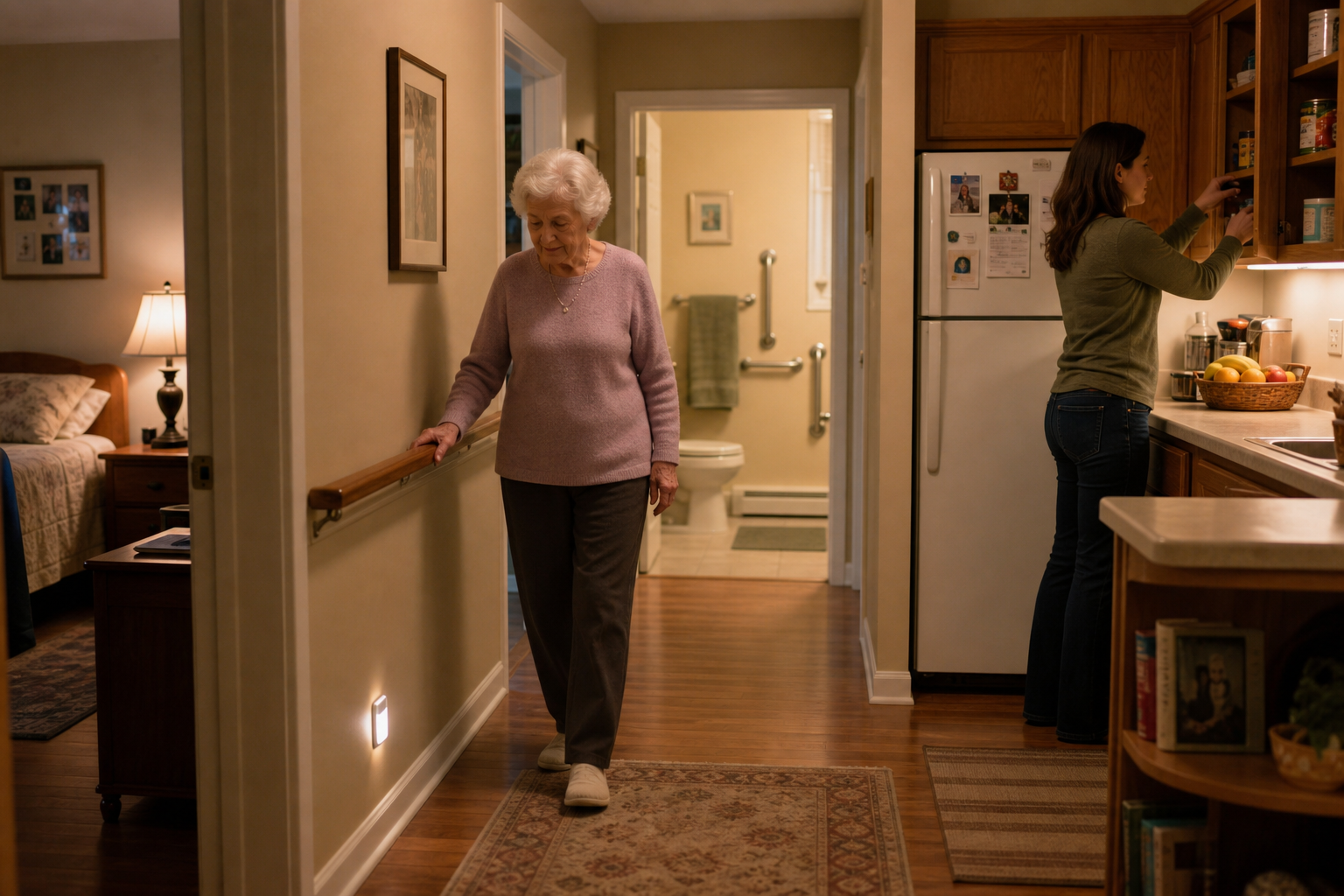
As the site grows, these aging in place guides will continue to expand into more detailed topics covering home safety, caregiving, daily routines, and long-term independence.
These aging in place guides help adult children, older adults, and families understand how to remain safely and realistically at home as mobility, balance, vision, strength, and daily routines change over time. Most people begin paying attention to these issues after a fall, a hospitalization, a medication problem, or a sudden realization that ordinary tasks are becoming harder.
The purpose of this page is not to overwhelm you with information. It is to organize the most important aging-in-place topics into clear categories so you can focus on the areas that matter most right now. Some homes need only small adjustments. Others need more careful planning. Either way, practical guidance works better than panic, expensive remodeling, or unrealistic solutions.
These aging in place guides are organized so you can move from broad planning to specific household risks without feeling overwhelmed.
Start With Fall Prevention First
Fall prevention sits at the center of nearly every aging-in-place decision because falls often set off a chain of events that reduce independence. Many homes contain small hazards that become increasingly dangerous when balance, reaction time, vision, or mobility changes.
The most common household fall risks include:
- Cluttered walking paths
- Poor nighttime lighting
- Slippery bathroom floors
- Loose rugs
- Crowded furniture layouts
- Unsafe stair navigation
Most families benefit from starting with the highest-risk movement areas first, rather than trying to change the entire home at once.
Helpful guides in this category include:
- Signs Of Fall Risk In Older Adults
- How To Prevent Falls In The Home
- Safe Furniture Layout
- Decluttering For Senior Safety
- Flooring Safety For Seniors
- Everyday Habits That Reduce Fall Risk
A room-by-room review often reveals hazards that become invisible through familiarity over time. Use these aging in place guides as a practical starting point, then move into the specific room, safety, or caregiving topic that fits your situation.
Bathroom Safety Guides
Bathrooms consistently create problems because they combine water, hard surfaces, confined movement, and awkward transfers in a relatively small space. Even physically independent older adults may begin struggling with entering the shower, standing safely, or nighttime bathroom trips long before they openly discuss these difficulties.
Warning signs often include:
- Holding onto towel bars for support
- Fear of slipping
- Hesitation entering the bathtub
- Difficulty standing after bathing
- Rushing nighttime bathroom trips
- Avoiding showers because movement feels tiring
Many bathroom improvements are practical and inexpensive:
- Non-slip surfaces
- Better lighting
- Stable grab bars
- Easier storage access
- Clear transfer space
- Shower seating when needed
Related bathroom safety guides include:
- Bathroom Safety For Seniors
- Preventing Bathroom Falls
- Bathroom Grab Bar Placement
- Small Bathroom Safety
- Lighting For Senior Safety
Bathrooms deserve focused attention because they combine several risk factors in one environment.
Mobility And Walking Guides
Mobility changes affect how every room in the home functions. Long walking distances, narrow pathways, crowded layouts, and awkward turning areas can slowly make ordinary routines exhausting or unsafe.
Many people assume mobility problems require expensive remodeling. In reality, simpler layout changes are often more effective.
Common mobility-related problems include:
- Furniture blocking natural walking paths
- Difficulty carrying items safely
- Long distances between essential rooms
- Obstacles near turning areas
- Limited transfer support
- Narrow hallways or doorways
Practical mobility improvements may include:
- Rearranging furniture
- Reducing unnecessary walking distances
- Relocating frequently used items
- Creating wider pathways
- Improving seating placement
- Simplifying room layouts
Mobility-related guides include:
- Walker Safety At Home
- Cane Safety For Seniors
- Wheelchair Safety Tips
- Mobility Aids At Home
- Stair Safety For Seniors
Many homes become safer without remodeling simply by reducing unnecessary physical effort throughout the day.
Making the Home Safer Without Remodeling
Kitchen Safety And Daily Living Guides
Kitchen changes often reveal early functional decline before families recognize larger problems elsewhere in the home. Someone may continue a normal conversation while quietly struggling with meal preparation, organization, memory, or safe movement in the kitchen.
Common kitchen warning signs include:
- Burned cookware
- Forgotten food on the stove
- Difficulty reaching storage areas
- Increasing clutter
- Reliance on very simple meals
- Trouble standing for long periods
Many kitchens become safer through organization rather than remodeling.
Useful adjustments often include:
- Moving frequently used items to waist height
- Reducing countertop clutter
- Improving lighting
- Using lighter cookware
- Creating seated work areas
- Keeping pathways open
Kitchen-related guides include:
- Kitchen Safety For Seniors
- Senior Kitchen Organization
- Daily Living Aids
- Medication Side Effects Risks
- Emergency Preparedness Seniors
In many families, subtle changes in kitchen behavior are among the earliest signs that additional home adaptations may be needed.
Bedroom And Nighttime Safety Guides
Many household falls occur during nighttime movement rather than daytime activity. Older adults are often tired, stiff, disoriented, or rushing to the bathroom when visibility is reduced.
Bedrooms that function adequately during the day can become difficult to navigate safely at night.
Common nighttime hazards include:
- Dark walking paths
- Low beds
- Unstable bedside furniture
- Shoes or clothing on the floor
- Poor switch placement
- Pets sleeping in pathways
Nighttime improvements often include:
- Motion-activated lighting
- Clear floor space
- Stable bedside lamps
- Easy access to mobility aids
- Safer transfer surfaces
- Better hallway visibility
Nighttime-related guides include:
- Nighttime Safety For Seniors
- Small Bedroom Safety For Seniors
- Senior Vision Changes And Home Safety
- Lighting For Senior Safety
- Signs Older Adults Shouldn't Live Alone
Families often underestimate how physically demanding nighttime movement becomes with age.
Cognitive Change And Caregiving Guides
Cognitive decline often develops gradually and first appears in everyday household routines. Families may notice increasing confusion, repeated questions, clutter buildup, forgotten tasks, or changes in judgment long before anyone discusses a formal diagnosis.
Environmental simplicity becomes increasingly important when cognitive changes develop.
Common warning patterns include:
- Confusion during familiar routines
- Increased frustration
- Misplacing important items
- Difficulty organizing daily tasks
- Unsafe cooking behavior
- Resistance to assistance
Helpful environmental approaches may include:
- Simplifying storage systems
- Reducing visual clutter
- Improving lighting consistency
- Maintaining stable room layouts
- Creating predictable routines
- Reducing unnecessary decision-making
Related guides include:
- Cognitive Changes And Home Safety
- Helping Aging Parents Accept Help
- Assessing Parents' Home Safety
- Caregiving At Home
- Signs Older Adults Shouldn't Live Alone
Many caregiving conflicts arise when families get caught up in arguing about behavior rather than simply adapting the environment as calmly and practically as they can.
Budget-Friendly Home Safety Guides
Aging in place does not require luxury remodeling. In many homes, low-cost environmental changes create substantial safety improvements without major construction or expensive equipment.
This matters because many families delay important safety improvements after assuming the process will be unaffordable.
Practical low-cost changes often include:
- Better lighting
- Furniture rearrangement
- Decluttering
- Safer storage placement
- Removing loose rugs
- Simplifying room layouts
Budget-focused guides include:
- Aging In Place On A Budget
- Low-Cost Home Modifications For Seniors
- How To Make A Home Safer Without Remodeling
- Safe Shoes For Seniors
- Decluttering For Senior Safety
Most aging-in-place improvements are more about reducing physical strain and environmental confusion than purchasing complicated products.
Use These Aging In Place Guides As An Ongoing Planning System
The most useful aging-in-place guides work together as a practical long-term planning system rather than as isolated articles. Needs change gradually over time, and home safety adjustments usually work best when implemented early instead of during a crisis.
A practical approach often looks like this:
- Start with major fall risks
- Improve nighttime safety
- Simplify high-use rooms
- Reduce unnecessary movement
- Adapt layouts gradually
- Reevaluate the home periodically
In my own experience helping aging parents remain at home, small practical changes often mattered more than expensive interventions. Clear pathways, calmer room layouts, better lighting, and realistic daily routines reduced stress and improved safety far more than complicated solutions.
This site continues expanding to cover additional aging-in-place topics, household environments, movement patterns, caregiving realities, and long-term planning concerns. The goal is not to create a perfect home. The goal is to create a safer, more manageable home that supports independence realistically over time.
© 2026 Mark Fomenko. All rights reserved.
AgingInPlaceResource.com
Privacy Policy | Terms of Use | Disclaimer | Contact | Newsletter
Recent Articles


-
Aging In Place Resource Library
Sep 04, 26 08:30 AM
Aging In Place Resource Library -
Aging in Place Resource Newsletter
Aug 30, 26 11:16 AM
Aging in Place Resource Newsletter -
Aging in Place Resource: Simple Strategies for Living Safely at Home
Jul 28, 26 12:43 PM
 Aging in Place Resource provides practical guidance for aging in place. Learn how to live safely and independently at home with strategies for home safety, caregiving, planning, and long-term support.