Start Here with Aging in Place Resource
Start Here With Aging In Place Resource gives you a practical path forward. This site is for older adults, adult children, caregivers, and families who want realistic ways to make their homes safer without turning every decision into a major remodeling project.
Aging in place means living safely and independently at home for as long as possible.
That sounds simple, but most homes are not designed for aging bodies, slower movement, vision changes, balance problems, caregiving needs, or sudden health setbacks.
The goal is simple.
Reduce risk.
Preserve independence.
Avoid rushed decisions.
Make steady improvements before a crisis forces action.
What This Site Is For
Aging In Place Resource is built around practical home safety and planning.
It focuses on the real issues families face:
- Fall prevention
- Bathroom safety
- Stair safety
- Safer furniture layouts
- Mobility changes
- Daily living aids
- Decluttering
- Kitchen safety
- Cognitive changes
- Caregiver planning
- Low-cost home modifications
This site is not about turning the home into a medical facility.
Start Here With Aging In Place Resource focuses on realistic home safety improvements that most families can actually implement.
It is about making ordinary homes safer, easier to use, and more forgiving as needs change.
Why Start Here With Aging In Place Resource Matters
Most aging-in-place problems do not begin with a major crisis.
They begin with small warning signs.
An older adult starts holding furniture while walking.
A parent stops using the stairs as often.
A bathroom feels less stable than it used to.
Clutter slowly narrows walking paths.
A kitchen routine becomes harder.
A fall almost happens, but everyone moves on.
These signs are easy to ignore until something happens.
A better approach is to treat them as early information.
When you notice small problems early, you can make small changes early.
The goal of Start Here With Aging In Place Resource is to help families reduce risk before a crisis occurs.
That is usually cheaper, easier, and less stressful than waiting for a fall, a hospital stay, or an urgent decision.
Start With The Aging In Place Checklist
The best first step is the Aging In Place Checklist.
The checklist helps you look at the home in sections instead of trying to solve everything at once.
Use it to review:
- Entrances
- Stairs
- Hallways
- Bathrooms
- Bedrooms
- Kitchen areas
- Lighting
- Floors
- Furniture
- Emergency planning
- Daily routines
A checklist helps because many home safety risks are easy to miss until something goes wrong.
Loose rugs, poor lighting, slippery bathroom surfaces, unstable chairs, and cluttered walkways may not look serious on their own. Together, they can create a dangerous home environment.
Start with the checklist, then return to the detailed guides when a specific problem needs more attention.
The Most Important Areas To Review First
Some parts of the home deserve attention before others.
You do not need to remodel the whole house immediately.
Start with the highest-risk areas.
Bathroom Safety
Bathrooms are one of the most dangerous areas in the home for older adults.
The main risks are:
- Wet floors
- Slippery tubs and showers
- Low toilet seats
- Poor lighting
- No grab bars
- Tight spaces
- Awkward transfers
Start with simple improvements:
- Add grab bars where support is actually needed
- Use non-slip surfaces in the tub or shower
- Improve lighting
- Remove loose mats
- Keep towels and supplies within easy reach
Bathroom safety should usually be one of the first priorities.
Stairs And Hallways
Stairs and hallways matter because they are used repeatedly.
A small hazard in a frequently used path becomes a daily risk.
Look for:
- Poor lighting
- Loose rugs
- Uneven flooring
- Clutter
- Missing handrails
- Weak contrast on stair edges
- Furniture that narrows walkways
Useful changes include better lighting, clearer paths, secure handrails, and removing obstacles before they cause a fall.
Bedrooms And Nighttime Movement
Many falls happen when someone is tired, half-awake, or moving in low light.
Review the bedroom carefully.
Check whether:
- The path to the bathroom is clear
- A lamp is easy to reach
- The bed height is safe
- Shoes or slippers are stable
- Cords are out of the walking path
- Nightlights are placed where needed
Nighttime safety is often improved with simple, inexpensive changes.
Kitchen Safety
The kitchen combines movement, reaching, lifting, heat, water, sharp tools, and sometimes cognitive strain.
Common risks include:
- Reaching too high
- Carrying hot items too far
- Using unstable step stools
- Slippery floors
- Crowded counters
- Forgotten burners
- Heavy cookware stored in poor locations
Kitchen safety usually starts with organization.
Store everyday items between shoulder and waist height. Keep heavy items easy to reach. Reduce the need to bend, climb, or carry hot food across the room.
Watch For Mobility Changes
Mobility changes are often the clearest sign that the home needs attention.
Watch for:
- Slower walking
- Trouble rising from chairs
- Grabbing walls or furniture for support
- Avoiding stairs
- Fatigue after normal tasks
- Shuffling steps
- Hesitation at thresholds
- Difficulty stepping into the shower
These changes do not always mean someone must leave home.
They do mean the home should be adjusted.
Furniture layout, lighting, bathroom support, safer shoes, mobility aids, and clearer walking paths can all make a difference.
Plan Before Caregiving Becomes Urgent
Caregiving often begins gradually.
An adult child helps with one errand. Then medication sorting. Then the doctor visits. Then home safety. Then meals. Then supervision.
Without a plan, caregiving expands until everyone is under pressure.
Aging in place works better when families discuss practical questions early:
- Who can help?
- What help is realistic?
- What happens after a fall?
- What if driving stops?
- What if memory changes?
- What if stairs become unsafe?
- What if the main caregiver needs a break?
These conversations are not always easy, but they are much easier before a crisis.
Low-Cost Changes Come First
Aging in place does not have to start with expensive remodeling.
Many useful changes are simple:
- Remove loose rugs
- Improve lighting
- Clear walking paths
- Add non-slip surfaces
- Move frequently used items lower
- Rearrange furniture
- Add nightlights
- Replace unsafe shoes
- Use a shower chair
- Add grab bars where needed
- Reduce clutter
- Keep phones within reach
Major renovations may be useful in some homes, but they are not the first step for every family.
Start with the changes that reduce risk the most for the least cost.
How To Use This Site
Use this site in a simple order.
First, read the Aging In Place Checklist.
Then choose the highest-risk area in the home.
For many families, that will be the bathroom, the stairs, the bedroom, or the main walking paths.
Next, read the guide that matches the problem you are seeing.
For example:
- If falls are a concern, start with the fall-prevention pages.
- If the bathroom feels unsafe, start with bathroom safety pages.
- If mobility is changing, review mobility aids and furniture layout.
- If a parent is becoming confused, review the cognitive change and home safety pages.
- If money is tight, focus on low-cost modifications first.
Do not try to fix everything in one weekend.
A steady, room-by-room approach usually works better.
Independence Does Not Mean Doing Everything Alone
Many people resist help because they believe independence means handling everything without support.
That definition can become dangerous.
Real independence means having as much control, dignity, safety, and choice as possible.
Sometimes that includes:
- Accepting help with harder tasks
- Using a cane or walker
- Changing a routine
- Rearranging the home
- Installing grab bars
- Letting family help with planning
- Giving up unsafe habits before they cause injury
Support is not failure.
It is often what makes long-term independence possible.
The Best Time To Start Is Before The Crisis
The best aging-in-place decisions are usually made early.
Before the fall.
Before the hospital discharge.
Before the urgent family meeting.
Before the stairs become impossible.
Before the bathroom becomes frightening.
Before caregiving becomes overwhelming.
Early planning gives you more choices.
Small changes made now can prevent larger problems later.
Many people end up using Start Here With Aging In Place Resource after a parent experiences a fall or a change in mobility. Preparing before a crisis is ideal, but the best approach is to start where you are.
Start Here, Then Work Step By Step
Begin with the Aging In Place Checklist.
Walk through the home slowly. Notice what is already safe and what needs attention.
Then choose one practical improvement.
Make the bathroom safer.
Clear the hallway.
Improve lighting.
Remove a tripping hazard.
Rearrange a bedroom.
Talk with a parent about future help.
Review mobility changes honestly.
Aging in place is not a single project.
It is an ongoing process of adjusting the home, routines, and support system as needs change.
Start now, keep it practical, and make the home safer one decision at a time.
The National Institute on Aging also provides useful home safety guidance for older adults and caregivers.
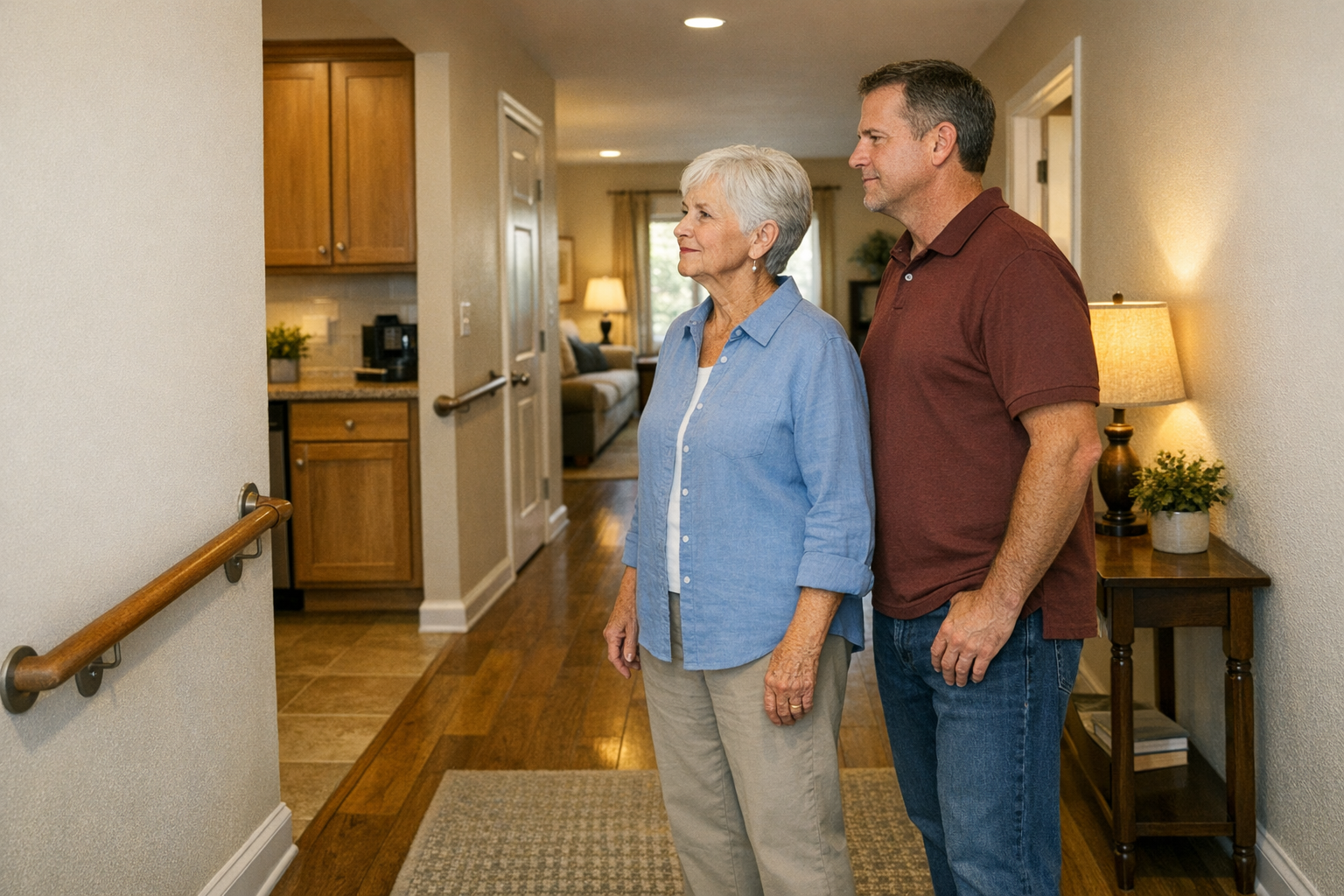
Start Here With Aging In Place Resource is designed to support long-term independence through practical home safety planning.
© 2026 Mark Fomenko. All rights reserved.
AgingInPlaceResource.com
Privacy Policy | Terms of Use | Disclaimer | Contact | Newsletter
Recent Articles


-
Aging In Place Resource Library
Sep 04, 26 08:30 AM
Aging In Place Resource Library -
Aging in Place Resource Newsletter
Aug 30, 26 11:16 AM
Aging in Place Resource Newsletter -
Aging in Place Resource: Simple Strategies for Living Safely at Home
Jul 28, 26 12:43 PM
 Aging in Place Resource provides practical guidance for aging in place. Learn how to live safely and independently at home with strategies for home safety, caregiving, planning, and long-term support.