Fall Prevention for Seniors
Fall prevention for seniors begins with a simple idea: most falls are not random. They often happen when ordinary movement meets poor lighting, clutter, loose flooring, rushed habits, weak footwear, medication effects, or a home layout that no longer matches the person’s strength and balance.
A safer home does not usually require a major remodel. It usually requires a clearer path, better lighting, steadier hand support, fewer trip hazards, and daily routines that reduce rushing. These changes protect independence because they make ordinary movement easier, not more complicated.
The goal is not to make the home feel restricted. The goal is to make walking, turning, reaching, dressing, bathing, cooking, and getting up at night safer and more predictable.
Fall Prevention For Seniors Starts With Clear Walking Paths
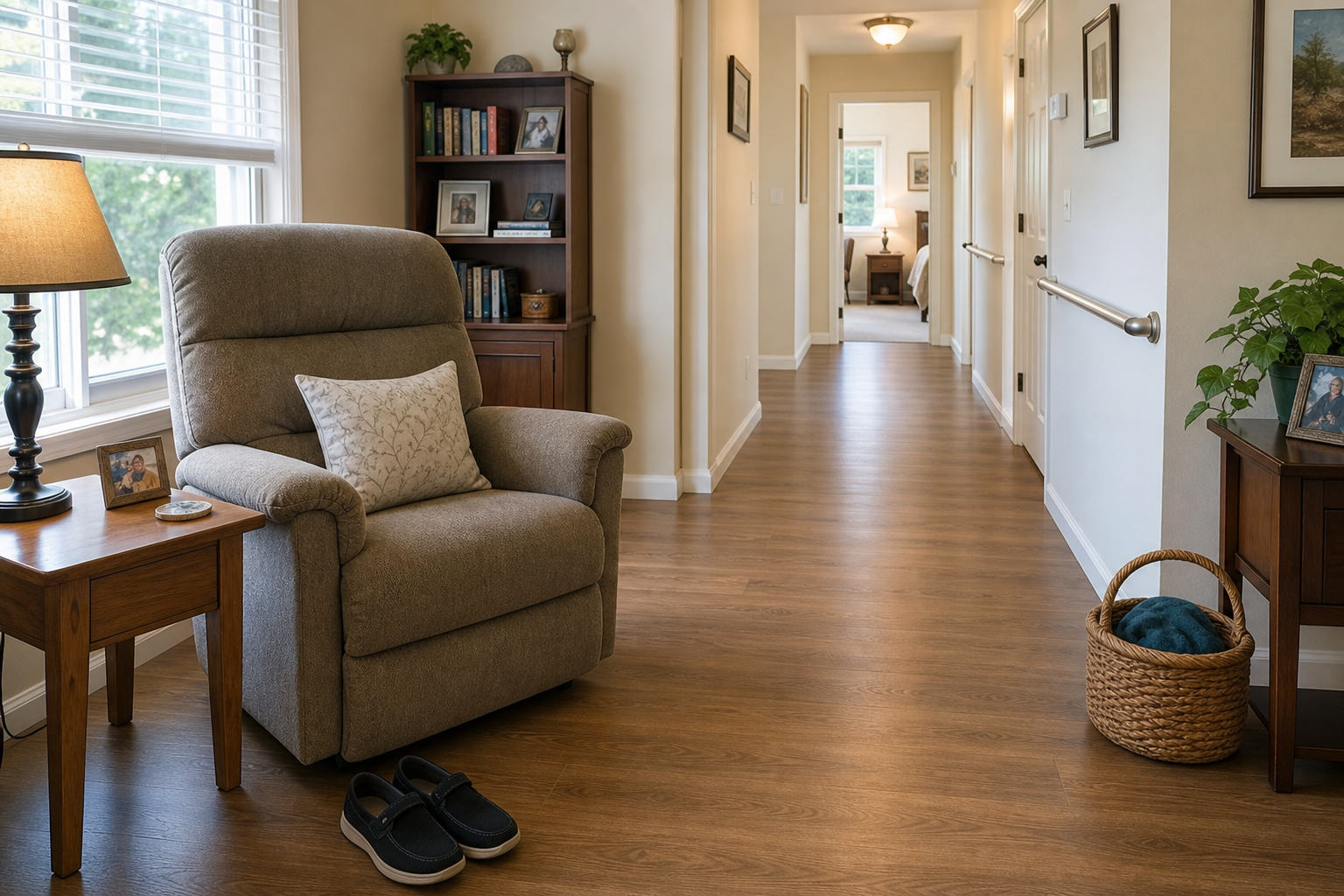
Clear walking paths reduce the most common household fall risks. A person does not need to be frail to trip over a rug edge, a pet bowl, an electrical cord, a laundry basket, or a pair of shoes left near a doorway. Small obstacles become more dangerous when vision is weaker, balance is slower, or attention is divided.
The best walking path is wide, visible, and boring. That may sound simple, but it matters. A safe path should not require sidestepping, twisting, stepping over objects, or squeezing between furniture. The most important routes are the ones used every day.
Start with these practical changes:
- Remove loose items from hallways and doorways
- Move small tables away from tight turns
- Keep laundry baskets out of walking routes
- Tape down or remove loose rug edges
- Place pet bowls where they cannot be kicked
- Keep charging cords away from foot traffic
Fall prevention for seniors works best when the home supports normal movement instead of forcing constant correction. If someone has to think carefully every time they cross the room, the room needs to be adjusted.
Use The Aging In Place Checklist To Find The Highest-Risk Areas First
A home safety review should begin with the places where falls are most likely to happen. These are usually not obscure areas. They are bathrooms, bedrooms, stairs, kitchens, entryways, and nighttime routes to the bathroom. The safest approach is to work through the home one area at a time instead of trying to fix everything at once.
Start with the daily path from bed to bathroom. Then check the bathroom itself. Then look at the main sitting area, kitchen, entry, and any stairs. This order makes sense because it follows real movement patterns rather than a theoretical inspection list.
A practical review should look for:
- Places where the person reaches for walls or furniture
- Areas where lighting is dim or uneven
- Flooring changes that catch the foot
- Chairs that are too low or too soft
- Bathroom surfaces that become slippery
- Steps without steady hand support
The Aging In Place Checklist can help organize these risks into a practical room-by-room review.
Improve Lighting Where Falls Actually Happen
Lighting should match movement, not decoration. Many homes have enough light for sitting, but not enough light for walking safely. A dim hallway, a shadowed bathroom entrance, a dark stair landing, or a poorly lit kitchen floor can create avoidable risk.
Fall prevention for seniors should include lighting at the exact points where people turn, step, reach, or change surfaces. A bright lamp across the room may not help if the person has to walk through darkness to reach it. Light switches, motion lights, and plug-in nightlights can often solve the problem at low cost.
Useful lighting changes include:
- Put a lamp within easy reach of the bed
- Use nightlights along the route to the bathroom
- Add brighter bulbs in hallways and stair areas
- Place motion lights near entryways
- Keep bathroom lighting easy to reach before stepping inside
- Reduce glare from shiny floors or uncovered windows
For more details on safer overnight movement, see Nighttime Safety For Seniors.
Make Bathrooms Safer Without Turning Them Into Medical Spaces
Bathrooms deserve special attention because they combine water, hard surfaces, low seats, awkward turns, and rushed movement. Many falls occur during everyday tasks such as getting to the toilet, stepping into the shower, reaching for a towel, or turning around near the sink.
A safer bathroom does not have to look institutional. A sturdy grab bar, non-slip bath mat, raised toilet seat, better lighting, and a clear floor can make the room safer while still feeling like a normal home. The key is to support the movement that already happens there.
Focus on these changes first:
- Remove loose rugs from the bathroom floor
- Use a non-slip mat inside the tub or shower
- Install grab bars where hands naturally reach
- Keep towels within easy reach
- Use a nightlight near the bathroom entrance
- Store toiletries where bending is not required
Bathroom safety is one of the strongest components of fall prevention for seniors because the bathroom is used frequently, and the consequences of a slip can be serious.
For room-specific guidance, see Bathroom Safety For Seniors.
Pay Attention To Shoes, Slippers, And Bare Feet
Footwear affects balance more than many families realize. A person may have a clear floor and good lighting but still be at risk if shoes slide, slippers collapse, or socks slip on smooth flooring. The safest footwear is not always the newest or most expensive. It is the footwear that stays on the foot, grips the floor, and supports normal walking.
Unsafe footwear often looks harmless. Soft slippers without backs, loose sandals, stretched-out shoes, and thick socks can all increase risk indoors. Bare feet may also be risky on cold, smooth, or uneven floors.
Better choices include:
- Shoes with firm backs
- Non-slip soles with visible tread
- Slippers that fit securely around the heel
- Low, stable footwear instead of raised heels
- Shoes are kept near the bed before standing
- Replacement of worn-out soles before they become slick
Footwear should be part of every fall prevention for seniors plan because it affects nearly every step taken inside the home.
For more practical examples, see Safe Shoe Choices For Seniors At Home.
Watch Medication Effects And Daily Timing
Some fall risks come from the home. Others come from how the body responds during the day. Dizziness, sleepiness, urgency, dehydration, blood pressure changes, and medication side effects can make a normally safe room feel unsafe very quickly.
The practical issue is timing. A person may be steadier at 10 a.m. than at 3 a.m. They may move well after breakfast but feel lightheaded after taking medication. They may be safe walking slowly, but unsafe when rushing to answer the phone or reach the bathroom.
Families should watch for patterns such as:
- New dizziness after a medication change
- Sleepiness during normal walking times
- Unsteadiness after standing up quickly
- More stumbling late in the day
- Rushing after drinking fluids before bed
- Confusion around medication schedules
MedlinePlus offers a useful overview of preventing falls at home: https://medlineplus.gov/ency/patientinstructions/000021.htm
Build Safer Habits Around Standing, Turning, And Carrying
Daily habits can reduce fall risk without making life feel restricted. Many falls happen during transitions: standing from a chair, turning in a narrow space, carrying items across a room, stepping onto a different surface, or reaching while off balance.
A safer habit is a repeatable movement pattern. It does not require constant worry. It simply gives the body more time and support. Standing slowly, pausing before walking, keeping one hand free, and avoiding rushed turns can make ordinary movement safer.
Useful daily habits include:
- Stand fully before taking the first step
- Pause after getting out of bed or a chair
- Carry fewer items at one time
- Use a small bag instead of carrying loose objects
- Turn with small steps instead of twisting
- Keep one hand free near stairs or doorways
These habits are especially useful because they cost nothing. They also preserve independence by making movement more controlled rather than more dependent.
For more practical routine changes, see Everyday Habits That Reduce Fall Risk.
Know What To Do After A Fall
A fall should not be treated as a normal inconvenience, even when no serious injury is obvious. It is useful information. It shows that something about the person, the home, the task, or the timing did not work safely.
The first step is to understand what happened. Where was the person going? What were they wearing? Was the room dark? Were they carrying something? Did they feel dizzy? Did they trip, slip, lose balance, or misjudge a step? These details point toward the next practical correction.
After a fall, families should:
- Check for pain, swelling, confusion, or weakness
- Avoid rushing the person upright
- Identify the exact location of the fall
- Look for the object, surface, or movement involved
- Adjust the area before normal use continues
- Track whether similar near-falls have happened before
Aging-in-Place Checklist planning should include fall prevention because a single fall often reveals several smaller risks that were already present. Practical prevention protects daily independence by making the home easier to use, not by limiting ordinary life.
For next steps after an incident, see What To Do After An Older Adult Falls.
Related Links
Page titles that are not links have not yet been posted on this site.
- Safe Shoe Choices For Seniors At Home
- Signs Of Fall Risk In Older Adults
- Medication Side Effects And Fall Risk
- What To Do After An Older Adult Falls
- Walking Safety For Seniors
- Reducing Fall Risk At Night
- Fall Risks In Small Homes
- Preventing Falls In The Bathroom
- Preventing Falls Around Pets
- Fall Risk After Hospitalization
- Fall Prevention For Seniors With Dementia
- Balance Problems In Older Adults
- Leg Weakness And Fall Risk In Seniors
- Fear Of Falling In Older Adults
- Fall Prevention For Seniors Living Alone
- How To Get Up After A Fall
- Fall Prevention During Nighttime Bathroom Trips
- Fall Prevention For Seniors With Poor Vision
- Fall Prevention For Seniors With Arthritis
© 2026 Mark Fomenko. All rights reserved.
AgingInPlaceResource.com
Privacy Policy | Terms of Use | Disclaimer | Contact | Newsletter
Recent Articles


-
Aging In Place Resource Library
Sep 04, 26 08:30 AM
Aging In Place Resource Library -
Aging in Place Resource Newsletter
Aug 30, 26 11:16 AM
Aging in Place Resource Newsletter -
Aging in Place Resource: Simple Strategies for Living Safely at Home
Jul 28, 26 12:43 PM
 Aging in Place Resource provides practical guidance for aging in place. Learn how to live safely and independently at home with strategies for home safety, caregiving, planning, and long-term support.