Caregiver Burnout Warning Signs
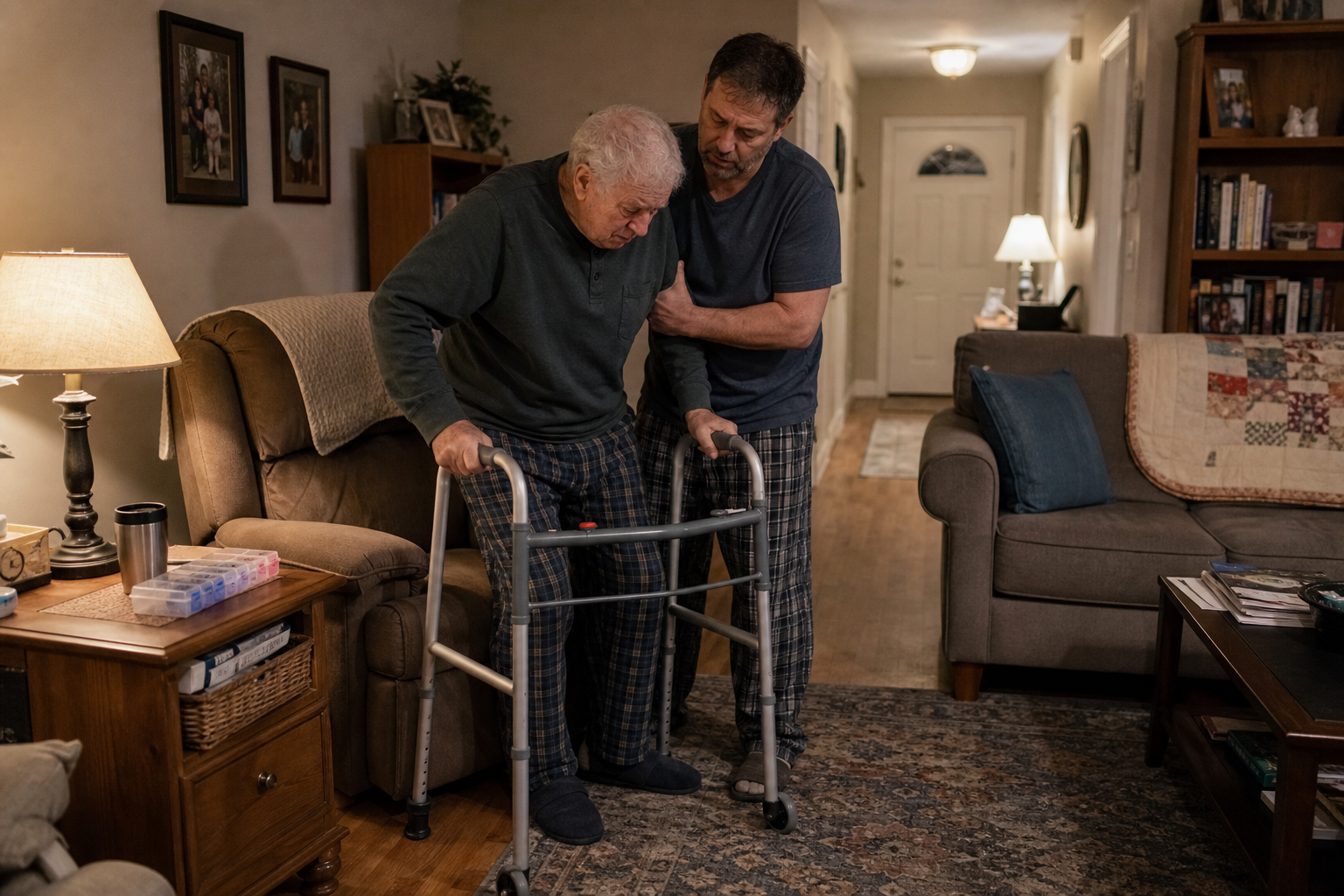
Caregiver Burnout Warning Signs often develop slowly while families are trying to keep daily life functioning. A caregiver may still be cooking meals, handling medications, helping with transfers, paying bills, and answering phone calls while quietly becoming physically and emotionally overloaded. Many people do not recognize the problem until routines start breaking down or tensions inside the home become constant.
Burnout creates practical risks inside ordinary homes. Fatigue affects judgment. Irritability changes communication. Small household tasks begin piling up. Missed medications, poor lifting habits, unsafe walking paths, skipped meals, and sleep deprivation can gradually turn a difficult caregiving situation into an unstable one. In some homes, the caregiver becomes so exhausted that both people are at risk.
Many caregivers try to push through exhaustion because they feel responsible for keeping everything together. Others feel guilty taking breaks when a parent or spouse is struggling. Understanding Caregiver Burnout Warning Signs early can help families simplify routines, reduce physical strain, and make more realistic decisions before the household reaches a crisis point.
Early Caregiver Burnout Warning Signs At Home
Early Caregiver Burnout Warning Signs are often practical rather than dramatic. The caregiver may still appear functional to outsiders while the home itself starts showing signs of overload.
Common warning signs include:
- Constant fatigue even after sleeping
- Increasing irritability over small problems
- Forgetting appointments or medications
- Skipping meals or eating poorly
- Feeling trapped inside the house
- Avoiding phone calls or visitors
- Loss of patience during repeated questions
- Frequent frustration during transfers or bathing
- Sleeping lightly because of fear something will happen
- Losing interest in hobbies or normal routines
Some caregivers become unusually quiet. Others become short-tempered and reactive. Neither response automatically means someone is uncaring. Exhaustion changes behavior.
A caregiver helping someone with dementia may answer the same question 40 times in one day while also cleaning, shopping, managing medications, and preventing wandering. Even calm people eventually wear down under constant repetition and interrupted sleep.
Homes under heavy caregiving stress often become more cluttered over time because the caregiver simply runs out of physical and mental energy. Laundry piles up. Walking paths narrow. Dishes remain in the sink longer. None of this necessarily reflects laziness. It often reflects overload.
A tired caregiver may also stop asking for help because explaining the situation repeatedly becomes exhausting by itself.
Sleep Problems And Constant Physical Exhaustion
Sleep disruption is one of the most common Caregiver Burnout Warning Signs. Many caregivers stop getting uninterrupted sleep for months or years.
Some older adults wake repeatedly during the night because of:
- Dementia confusion
- Bathroom trips
- Pain
- Hallucinations
- Sundowning behavior
- Fear of being alone
- Medication side effects
- Poor mobility
The caregiver often begins sleeping lightly in anticipation of hearing movement, a fall, or a door opening. Over time, the body never fully relaxes.
This exhaustion creates safety problems during normal household movement. A caregiver who is half-awake may attempt unsafe transfers, forget to lock wheelchair brakes, trip over clutter, or become less patient during difficult situations.
Many caregivers quietly adapt by sleeping in chairs, on couches, or in spare rooms near the care recipient. Some use baby monitors or motion alarms simply so they can rest without remaining hyper-alert every second.
Small adjustments can sometimes reduce overnight strain:
- Keep pathways to the bathroom completely clear
- Use low-level night lighting instead of bright overhead lights
- Place frequently used supplies within easy reach
- Reduce unnecessary nighttime noise
- Keep mobility aids positioned consistently
- Simplify overnight routines as much as possible
Repeated exhaustion also affects physical health. Some caregivers develop chronic headaches, back pain, digestive problems, muscle tension, metabolic disorders, and elevated blood pressure during long caregiving periods.
https://www.cdc.gov/aging/caregiving/caregiver-brief.html
Irritability, Resentment, And Emotional Overload
Caregiver Burnout Warning Signs are not always physical. Emotional overload often appears long before families openly discuss it.
A caregiver may begin feeling:
- Constantly on edge
- Easily angered
- Emotionally numb
- Trapped by responsibility
- Guilty for wanting time alone
- Frustrated by repeated confusion
- Resentful about lost independence
These feelings often coexist at the same time. A person may deeply love a parent or spouse while also feeling exhausted, isolated, and overwhelmed.
Dementia caregiving can be especially difficult because reasoning often stops working. A parent may insist nothing is wrong despite severe confusion. Another may become convinced family members are stealing, hiding things, or lying. Some remain socially charming while behaving very differently at home. This creates tension because outsiders may not fully understand the daily reality inside the house.
Repeated arguments usually increase exhaustion rather than solve problems. Many caregivers gradually learn that calm redirection works better than long explanations.
Humor sometimes becomes a survival tool inside caregiving households. Families occasionally laugh at situations that would sound unbelievable to outsiders. This does not mean they are insensitive. It often means they are coping.
Still, when irritation becomes constant, the household usually needs simplification. Too many responsibilities concentrated onto one exhausted person eventually creates instability.
Physical Strain And Unsafe Transfer Habits
Physical exhaustion often changes how caregivers move inside the home. This is one of the more dangerous Caregiver Burnout Warning Signs because injuries can affect both people at once.
Unsafe habits often appear gradually:
- Pulling someone up too quickly
- Twisting during transfers
- Lifting without stable footing
- Ignoring back pain
- Rushing bathroom trips
- Using unstable furniture for support
- Skipping mobility aids because they seem inconvenient
An exhausted caregiver may start taking shortcuts simply because every task feels physically demanding.
Transfers become especially risky when the caregiver is sleep deprived or emotionally frustrated. A rushed transfer from bed to wheelchair can quickly turn into a fall, back injury, or emergency room visit.
Small environmental changes can reduce physical strain:
- Remove clutter near transfer areas
- Keep commonly used items nearby
- Reduce unnecessary furniture
- Improve lighting around beds and bathrooms
- Use chairs with stable armrests
- Position mobility equipment consistently
Some caregivers wait too long before admitting certain tasks have become unsafe for one person to handle alone.
Isolation And Withdrawal From Normal Life
Many caregivers slowly disappear from normal social routines without fully noticing it.
Phone calls go unanswered. Visits become shorter. Invitations are declined automatically because leaving the house feels complicated or risky.
Isolation often develops for practical reasons:
- The care recipient cannot safely remain alone
- The caregiver fears falls or wandering
- Transportation becomes difficult
- The household routine becomes unpredictable
- The caregiver feels too exhausted to socialize
Over time, this isolation can intensify Caregiver Burnout Warning Signs because the caregiver loses outside perspective and emotional recovery time.
Some caregivers also stop discussing their situation honestly because they feel others cannot relate. They may answer “fine” even while functioning under severe strain.
Simple forms of outside contact can still help:
- Short visits from reliable friends
- Brief walks outdoors
- Grocery pickup instead of large shopping trips
- Rotating errands with family members
- Scheduled quiet time without interruptions
Even small breaks can reduce tension inside the home.
When The Home Starts Becoming Hard To Manage
One overlooked category of Caregiver Burnout Warning Signs involves changes in the condition of the home itself.
A caregiving household under severe strain often becomes harder to manage safely.
Common signs include:
- Narrow walking paths
- Unopened mail stacking up
- Expired food remaining in the refrigerator
- Missed bill payments
- Increased clutter
- Laundry accumulation
- Reduced housekeeping
- Poor lighting maintenance
- Missed medication refills
These problems usually develop slowly. The caregiver often prioritizes immediate survival tasks while lower-priority household maintenance falls behind.
This can create additional hazards. Clutter increases fall risk. Poor lighting makes nighttime movement harder. Missed maintenance can eventually affect heating, plumbing, or accessibility.
Some families reach a point where simplifying the home becomes more important than adding new equipment.
Reducing unnecessary furniture, duplicate items, decorative obstacles, and difficult cleaning surfaces often improves safety more than buying complicated gadgets.
Caregiver Burnout Warning Signs During Dementia Care
Caregiver Burnout Warning Signs are especially common during dementia caregiving because the workload is often mentally exhausting rather than simply physical.
The caregiver may experience:
- Repeated interruptions all day long
- Constant supervision demands
- Confusion-related arguments
- Wandering concerns
- Hallucinations
- Sleep disruption
- Resistance to bathing or medications
- Emotional unpredictability
One difficult reality is that some individuals with dementia remain socially convincing in short conversations. Visitors may briefly interact with them and assume things are much better than they actually are.
Meanwhile, the caregiver may be dealing with nighttime confusion, repeated emergencies, hidden medication issues, or wandering behavior every day.
The emotional tension becomes worse when the person with dementia insists nothing is wrong. Reasoning often stops helping at advanced stages.
Caregivers sometimes become exhausted trying to maintain calm while also preventing dangerous situations.
Simplifying routines can reduce daily conflict:
- Keep meals predictable
- Reduce unnecessary choices
- Maintain consistent furniture placement
- Avoid overstimulating environments
- Keep important items visible
- Use calm, direct communication
How To Cope With Dementia In A Parent
Reducing Burnout Through Practical Household Changes
Caregiver burnout is not always solved by dramatic decisions. In many homes, reducing strain starts with smaller practical changes.
Useful adjustments may include:
- Consolidating caregiving tasks into predictable routines
- Keeping supplies in consistent locations
- Reducing unnecessary lifting
- Simplifying meals
- Improving nighttime lighting
- Removing tripping hazards
- Using easier-to-clean surfaces
- Accepting simpler housekeeping standards
- Asking family members for specific practical help instead of vague offers
Some caregivers reach a point where perfection becomes impossible. The goal shifts toward maintaining a reasonably safe and functional household rather than preserving old standards.
It is also important to recognize when caregiving demands have exceeded what one exhausted person can realistically manage safely at home. This realization is often painful and rarely simple.
Most families make decisions gradually under stress, uncertainty, financial pressure, and exhaustion rather than through calm long-term planning sessions.
Recognizing Caregiver Burnout Warning Signs early gives families more time to adapt before conditions become dangerous for everyone involved.
© 2026 Mark Fomenko. All rights reserved.
AgingInPlaceResource.com
Privacy Policy | Terms of Use | Disclaimer | Contact | Newsletter
Recent Articles


-
Aging In Place Resource Library
Sep 04, 26 08:30 AM
Aging In Place Resource Library -
Aging in Place Resource Newsletter
Aug 30, 26 11:16 AM
Aging in Place Resource Newsletter -
Aging in Place Resource: Simple Strategies for Living Safely at Home
Jul 28, 26 12:43 PM
 Aging in Place Resource provides practical guidance for aging in place. Learn how to live safely and independently at home with strategies for home safety, caregiving, planning, and long-term support.