How To Cope With Dementia In A Parent
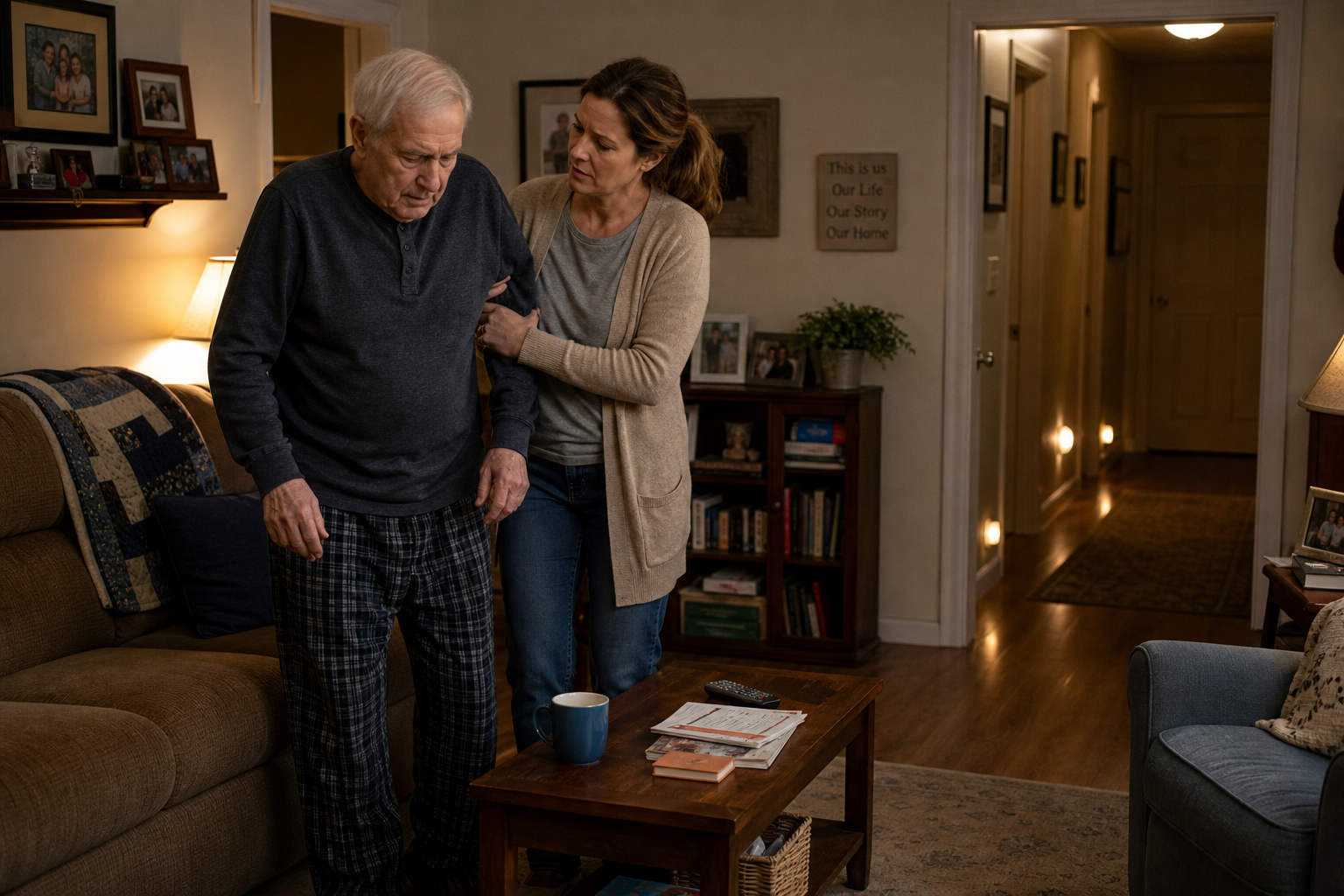
How To Cope With Dementia In A Parent often becomes a daily problem of confusion, repetition, disrupted routines, poor judgment, wandering, resistance, exhaustion, and constant adjustment. Many families do not fully understand what dementia care involves until they are already living through it inside an ordinary home.
A parent who once handled bills, meals, driving, conversations, and household decisions may slowly lose the ability to manage simple tasks safely. The changes are not always dramatic at first. Sometimes it begins with forgotten appointments, suspicious thinking, repeated stories, missed medications, or unusual behavior that seems small until the pattern becomes impossible to ignore.
The practical strain can become relentless. Adult children often find themselves answering the same question twenty times in one afternoon while trying to cook, clean, work, and manage their own households. Sleep disruption, emotional tension, and household safety problems can build slowly over months or years. Learning How To Cope With Dementia In A Parent usually involves simplifying the home, reducing conflict, creating predictable routines, and adapting expectations to reality rather than constantly fighting it.
Understanding What Dementia Changes Inside The Home
One of the hardest parts of How To Cope With Dementia In A Parent is accepting that reasoning and correction often stop working the way they once did. A parent may forget conversations within minutes but still react emotionally to frustration, embarrassment, fear, or criticism.
Families often waste enormous amounts of energy trying to force normal logic into situations where the brain can no longer process information normally. Arguments over misplaced objects, bills, driving, hygiene, medications, or imaginary events can spiral into daily conflict.
Some common household changes include:
- leaving appliances on
- forgetting meals
- wandering at night
- suspicious thinking
- confusion about time
- inability to follow steps
- repetitive questioning
- difficulty recognizing danger
- hoarding objects
- poor judgment with money
A calm tone usually works better than long explanations. Short sentences work better than complicated discussions. Visual cues often work better than verbal instructions.
It also helps to stop expecting consistency. A parent may appear completely normal one morning and deeply confused that evening. Dementia often fluctuates.
How To Cope With Dementia In A Parent Without Constant Arguments
Many caregivers eventually discover that winning arguments does not improve the situation. In fact, constant correction often increases agitation, anger, embarrassment, and suspicion.
How To Cope With Dementia In A Parent sometimes means choosing stability over factual accuracy. If a parent insists on something harmless that is incorrect, correcting every detail may create more distress than benefit.
For example:
- A parent may believe they need to leave for work despite being retired for twenty years.
- They may accuse someone of stealing an item they misplaced themselves.
- They may repeatedly ask about relatives who died years ago.
- They may insist they already ate when they have not.
In many cases, redirecting attention works better than confrontation. Changing the subject, offering a snack, folding towels together, walking outside briefly, or turning attention toward another task can reduce escalation.
Humor sometimes helps as well. Not mocking humor. Gentle household humor. Many exhausted caregivers eventually develop a quiet ability to laugh at the absurdity of certain moments simply because the alternative is constant tension.
This does not mean the situation is easy. Some days are emotionally brutal. A parent may say cruel things, make accusations, or fail to recognize their own children. Those moments are painful even when families intellectually understand dementia is causing the behavior.
Simplifying The Home Environment
A cluttered, overstimulating, or confusing home often increases agitation and accidents. One practical part of How To Cope With Dementia In A Parent is making the environment calmer and easier to understand.
Many helpful changes are inexpensive:
- improve lighting in hallways and bathrooms
- remove loose rugs
- reduce furniture crowding
- clear walking paths
- simplify kitchen counters
- label important drawers
- keep commonly used items visible
- reduce loud television noise
- use large clocks and calendars
- keep routines predictable
Too many choices can also create problems. Opening a closet packed with clothing may overwhelm someone with dementia. Offering two clothing choices often works better than offering twenty.
A lived-in home does not need to become sterile. Comfortable furniture, family photos, quilts, and familiar objects can help orientation and emotional comfort. The goal is reducing confusion and hazards, not creating a showroom.
MedlinePlus Dementia Care Resources
Managing Repetition, Wandering, And Daily Frustration
Repetition is one of the most exhausting parts of dementia caregiving. A parent may ask the same question repeatedly because the brain cannot reliably store the answer.
Answering repeated or nonsensical questions with visible irritation usually makes the situation worse for both people. Caregivers often become emotionally depleted because repetition can feel endless.
Some practical strategies include:
- keeping answers short
- using written reminder notes
- maintaining predictable schedules
- reducing overstimulation
- avoiding rushed transitions
- limiting background noise
- redirecting attention gently
Wandering creates additional stress. Some individuals begin pacing or trying to leave the house, especially during evening confusion, sometimes called sundowning.
Things can get very surreal. I worked in the 1990s as a landscaper doing installations and renovations. I did a renovation job for a woman caring for her severely demented husband in a rural community. When I first met him, he seemed completely normal. He spoke clearly, carried on a conversation easily, and gave no obvious sign of major impairment. About twenty minutes later, he looked at me and asked, “Who are you?” This went on all day.
His wife later explained that evenings were much harder. He would sometimes appear fully dressed in a business suit, insisting he needed to meet someone at the train station. They lived on a secluded five-acre property, but in his mind, he was back in Kansas City decades earlier. He would confidently leave the house, believing he was in Kansas City, going somewhere important. More than once, she had to call the police to help find him.
Situations like this are one reason wandering becomes so dangerous with dementia. The person may appear calm, purposeful, and completely certain about where they are going, even when they are deeply disoriented.
Helpful low-cost measures may include:
- door chimes
- simple locks placed higher or lower than expected
- motion lights
- keeping shoes and coats less visible near exits
- evening routines that reduce stimulation
- regular daytime movement and activity
Nighttime confusion can become especially difficult. Some caregivers sleep lightly for years because they worry a parent may fall, leave the home, or start using appliances overnight.
How To Cope With Dementia In A Parent often becomes less about controlling behavior and more about reducing triggers that increase confusion.
Handling Hygiene, Toileting, And Embarrassing Situations
Dementia frequently affects hygiene and bathroom routines long before families expect it. A parent may forget to bathe, resist assistance, wear soiled clothing, or become confused about toileting.
These situations are emotionally uncomfortable for nearly everyone involved.
Resistance often increases when the person feels rushed, embarrassed, cold, criticized, or overwhelmed. Calm pacing matters. Privacy matters. Familiar routines matter.
Practical adjustments may help:
- brighter bathroom lighting
- simple clothing with fewer fasteners
- grab bars
- raised toilet seats
- non-slip flooring
- easy-to-remove clothing
- baskets for used laundry
- clearly visible toilet paper
- reducing mirror glare at night
Some families quietly adapt without discussing every detail. Others try to force conversations about hygiene that only create humiliation and anger.
There is no perfect script. Caregivers often make decisions while exhausted and improvising.
Protecting The Caregiver From Burnout
One uncomfortable reality of How To Cope With Dementia In A Parent is that the caregiver's condition matters too. Exhausted caregivers make mistakes, become short-tempered, overlook hazards, and sometimes develop serious health problems themselves.
Many adult children gradually become trapped in nonstop vigilance. They stop sleeping properly. They stop leaving the house comfortably. Conversations revolve entirely around caregiving problems.
The emotional strain is complicated because dementia changes the relationship itself. A parent may physically remain present while psychologically becoming less recognizable over time.
Caregivers often feel:
- grief
- guilt
- resentment
- protectiveness
- exhaustion
- anger
- sadness
- relief after difficult days
- shame about feeling overwhelmed
Those feelings frequently exist at the same time.
Small forms of relief matter more than dramatic solutions. Even brief breaks can help:
- sitting outside quietly
- grocery shopping alone
- short walks
- uninterrupted sleep
- assistance from relatives
- meal simplification
- accepting imperfect housekeeping
Some households eventually reach the point where outside help becomes necessary for safety. That decision is often made under pressure rather than ideal conditions.
How To Cope With Dementia In A Parent During Unsafe Behaviors
Unsafe behavior is often what forces families to make major changes. A parent may insist they can still drive, cook alone, manage medications, climb ladders, handle finances, or walk safely despite obvious impairment.
Some parents remain completely convinced their thinking is normal even during severe dementia. My father experienced frequent hallucinations and major confusion, yet when asked directly whether he believed he had dementia, he calmly insisted his mind worked as well as it always had. Situations like this create enormous tension for families because reasoning, evidence, and long explanations often stop changing the person's perception of reality.
What's true for them is true. This is a key point when dealing with dementia in a parent.
A caregiver may see obvious confusion, memory loss, hallucinations, or unsafe behavior, while the parent experiences their version of events as completely real and internally consistent. Arguing every detail often increases fear, anger, and distrust without improving understanding. In many situations, reducing distress becomes more productive than trying to force agreement about reality.
Common high-risk situations include:
- leaving stoves on
- falling repeatedly
- wandering outdoors
- financial scams
- forgetting medications
- smoking hazards
- driving confusion
- inability to use phones during emergencies
- poor judgment around strangers
Many families gradually reduce risk rather than making one dramatic change overnight.
Examples include:
- disconnecting stove knobs
- limiting car access
- simplifying meals
- using automatic bill pay
- removing trip hazards
- supervising medications
- improving nighttime lighting
- rearranging furniture for easier movement
A parent may fiercely resist these changes. Sometimes families quietly adapt the environment instead of arguing directly.
Preparing For Progression And Difficult Decisions
Dementia usually changes gradually, but not always evenly. Some declines happen slowly. Others happen suddenly after illness, hospitalization, dehydration, infections, or falls.
Families often postpone planning because each stage becomes the new normal.
Important practical issues eventually include:
- legal documents
- medication oversight
- financial management
- driving cessation
- nighttime supervision
- meal preparation
- incontinence supplies
- wandering prevention
- emergency contacts
- future housing decisions
Trying to solve everything at once can feel overwhelming. Small steps are often more realistic.
One difficult reality is that caregiving at home can become physically impossible for a single exhausted person. Lift assistance, severe wandering, aggression, or complete incontinence can exceed what an ordinary household can safely manage long term.
That realization does not mean the caregiver failed.
Reducing Fall Risk At Night For Seniors
Maintaining Stability And Realistic Expectations
How To Cope With Dementia In A Parent often becomes less about fixing the condition and more about creating a manageable daily rhythm inside the home.
Perfect routines rarely exist. Some days go smoothly. Others fall apart before breakfast.
Many caregivers eventually learn to focus on practical stability:
- fewer arguments
- safer walking paths
- calmer evenings
- simpler meals
- reduced clutter
- easier transfers
- consistent lighting
- manageable routines
- realistic expectations
Small improvements matter. A safer bathroom matters. Better lighting matters. Reduced confusion matters. A calmer household matters.
The goal is not perfection. The goal is reducing chaos, avoiding preventable crises, and helping everyone function as safely and realistically as possible for as long as the situation allows.
© 2026 Mark Fomenko. All rights reserved.
AgingInPlaceResource.com
Privacy Policy | Terms of Use | Disclaimer | Contact | Newsletter
Recent Articles


-
Aging In Place Resource Library
Sep 04, 26 08:30 AM
Aging In Place Resource Library -
Aging in Place Resource Newsletter
Aug 30, 26 11:16 AM
Aging in Place Resource Newsletter -
Aging in Place Resource: Simple Strategies for Living Safely at Home
Jul 28, 26 12:43 PM
 Aging in Place Resource provides practical guidance for aging in place. Learn how to live safely and independently at home with strategies for home safety, caregiving, planning, and long-term support.