Caregiving at Home
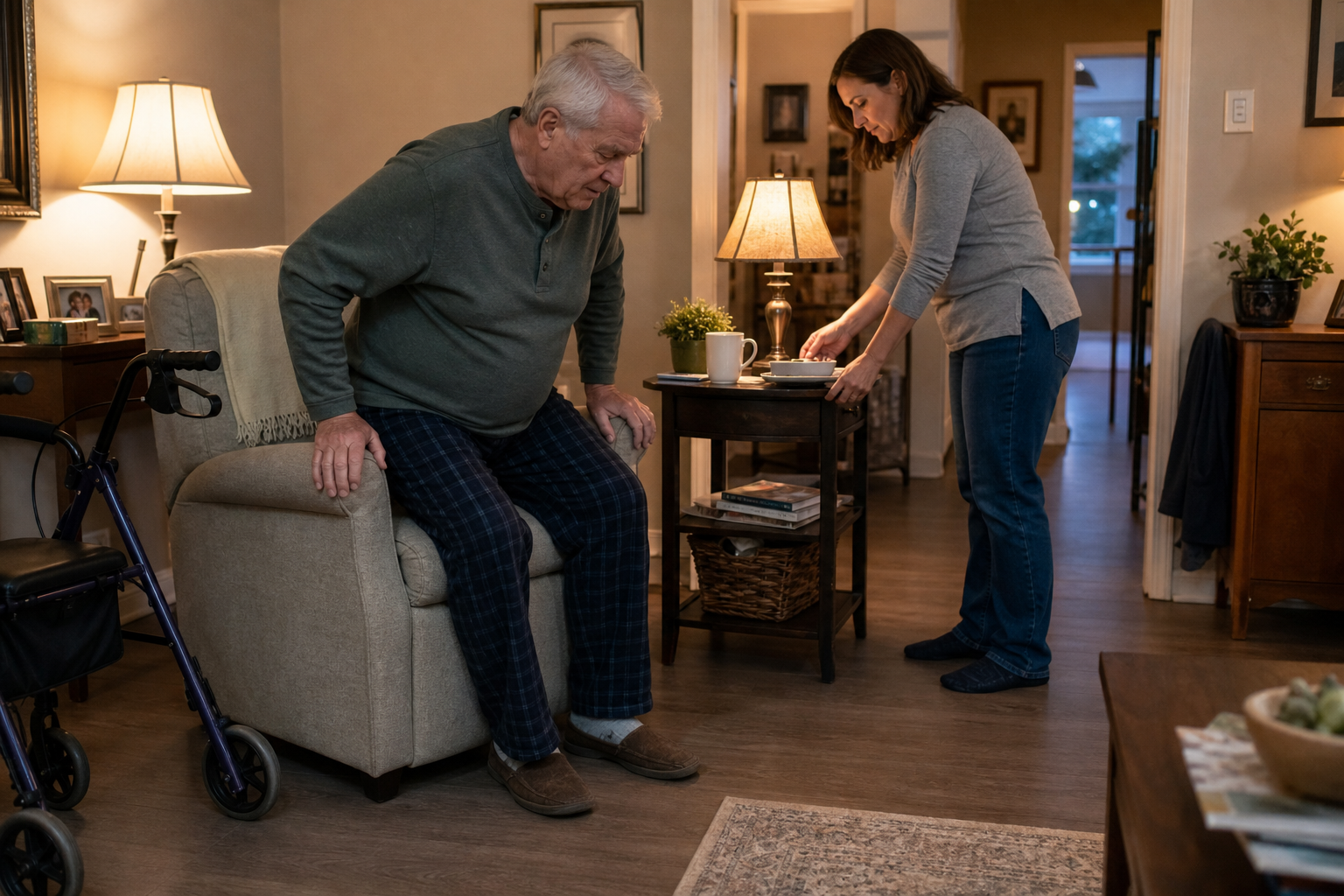
Caregiving at home works best when the home itself supports the person receiving care and the caregiver providing it. The daily risks are often ordinary: a rushed trip to the bathroom, poor lighting at night, clutter near a favorite chair, meals that require too much standing, or a hallway that becomes difficult to navigate with a walker.
The goal is not to turn a home into a medical setting. The goal is to reduce strain, prevent avoidable accidents, and preserve as much independence as possible. Small changes often matter more than large projects because they affect the routines repeated every day.
Caregiving At Home Starts With Safer Movement Through The House
Safe movement is the foundation of caregiving at home because most problems begin when a person stands, turns, reaches, or walks through a familiar space.
Start by watching the main daily routes. These usually include the path from bed to bathroom, chair to kitchen, kitchen to table, and front door to vehicle. A room may look acceptable until you notice how often someone grabs furniture, shuffles around obstacles, or turns too sharply in a narrow space.
Focus on practical adjustments:
- Move small tables away from walking paths.
- Remove loose rugs from hallways and turning areas.
- Keep walking aids within arm’s reach of the bed and main chair.
- Place frequently used items between waist and shoulder height.
- Add nightlights along the bedroom-to-bathroom route.
Caregiving at home becomes less physically demanding when the house quietly reduces effort. The best safety changes are often invisible after a few days because they simply make normal movement easier.
Helping a Parent Live Safely at Home
Build Daily Routines Around Real Energy Levels
A good caregiving routine respects how much energy the older adult and caregiver actually have.
Many families create routines based on ideal schedules, then become frustrated when the plan does not hold. A better approach is to match tasks to the strongest parts of the day. Bathing, meal preparation, medication checks, laundry, and errands should not all be stacked into one exhausting block.
Simple routine improvements can help:
- Prepare breakfast items the night before.
- Set clothing out in dressing order.
- Keep a written morning and evening checklist near the kitchen.
- Schedule heavier tasks after rest periods.
- Use one basket for items that need to move from room to room.
Caregiving at home should reduce the need for repeated decision-making. Clear routines prevent small problems from becoming daily arguments.
Daily Routines For Aging In Place
Make The Bathroom Easier To Use Without A Remodel
Bathroom safety depends on reducing slips, trips, and rushed movements.
The bathroom is one of the hardest rooms for caregiving because it combines water, hard surfaces, tight turns, and privacy concerns. Expensive remodeling is not always the first answer. Many useful improvements are simple and affordable.
Start with the movements that happen most often:
- Place a non-slip mat outside the tub or shower.
- Keep soap, shampoo, and towels within easy reach.
- Use a raised toilet seat if standing is difficult.
- Add a sturdy shower chair if standing while bathing is unsafe.
- Clear the floor of scales, baskets, and extra mats.
Caregiving at home also requires preserving dignity. The safer the setup, the less a caregiver has to hover, rush, or physically intervene.
Reduce Caregiver Strain During Transfers
Transfers should be planned before they become physically difficult.
A transfer happens when someone moves from one surface to another: bed to standing, chair to walker, toilet to standing, car seat to driveway, or recliner to wheelchair. These moments create risk for both people. The older adult may lose balance, and the caregiver may twist, pull, or strain a shoulder or back.
Better transfer setup includes:
- Choose chairs with firm seats and stable arms.
- Avoid low, soft furniture that is hard to rise from.
- Keep walkers directly in front of the person before standing.
- Make sure feet are flat on the floor before movement begins.
- Remove objects near the turning space.
Do not rely on strength alone. Caregiving at home becomes more sustainable when furniture height, hand placement, and clear floor space do part of the work.
Transfer Safety and Aging in Place
Organize The Kitchen To Reduce Standing And Reaching
Kitchen organization should make simple meals possible with less fatigue.
Many older adults remain safest when the kitchen is arranged for light, familiar routines instead of full meal preparation. The goal is to reduce bending, climbing, lifting, and prolonged standing. A person who can still prepare coffee, toast, soup, sandwiches, or simple reheated meals may keep more independence if the kitchen supports those tasks.
Helpful changes include:
- Move daily dishes to the easiest cabinet shelf.
- Store heavy pans at waist height.
- Keep a stable chair nearby for seated preparation.
- Place coffee supplies together in one easy area.
- Remove rarely used appliances from the counter.
Caregiving at home is easier when the kitchen does not require constant correction. Simplify the room around what is actually being used now, not what was useful ten years ago.
Senior Friendly Kitchen Organization
Keep Medication, Meals, And Hydration In Plain Sight
Daily caregiving at home tasks at home become easier when important items are visible, organized, and hard to overlook.
Medication, food, and hydration problems often develop quietly. A person may forget whether pills were taken, skip meals because preparation feels tiring, or drink too little because water is not close by. The solution is not more lecturing. The solution is a visible system.
Useful steps include:
- Keep a dated pill organizer in one consistent location.
- Place a water bottle beside the favorite chair.
- Use a simple meal list on the refrigerator.
- Keep snacks in easy-open containers.
- Remove expired food during weekly checks.
The routine should be simple enough to work on a tired day. For additional general guidance on home care basics, see MedlinePlus: https://medlineplus.gov/ency/patientinstructions/000021.htm
Make Nighttime Care Safer Before Problems Happen
Nighttime is when small hazards become harder to see and harder to recover from.
The bedroom-to-bathroom route deserves special attention. At night, balance may be worse, vision is reduced, and urgency can make people move faster than they should. A safe daytime route may not be safe at 2 a.m.
Practical nighttime changes include:
- Use motion-activated nightlights near the bed and bathroom.
- Keep slippers or safe shoes in the same place every night.
- Remove laundry baskets and cords from the walking route.
- Place a flashlight within reach of the bed.
- Keep eyeglasses on the same bedside surface.
Caregiving at home should include nighttime planning even if no fall has happened yet.
The Aging in Place Checklist can help families review these risks before they become emergencies.
Keep Family Help Specific And Realistic
Family caregiving works better when responsibilities are concrete.
Vague offers like “Let me know what you need” often fail because the main caregiver is too tired to assign work. A better system gives people specific tasks that can be repeated. One person may handle groceries. Another may manage bills. Another may check smoke alarms, change light bulbs, or take the older adult to appointments.
Make help easier to accept:
- Keep a shared list of recurring tasks.
- Assign one person to prescription pickup.
- Schedule short visits for specific chores.
- Keep emergency contacts printed near the phone.
- Review the home setup monthly.
Caregiving at home is not only about the person receiving care. It is also about making the care system durable enough to continue. Aging in place and fall prevention both depend on reducing preventable strain, not just reacting after something goes wrong.
A practical Aging in Place Checklist helps families see the home as a working system rather than a collection of separate rooms.
Caregiver Burnout Warning Signs
Cognitive Changes and Home Safety
How To Cope With Dementia In A Parent
Preparing For Increasing Care Needs
Hallucinations And Confusion In Dementia
Wandering And Exit-Seeking In Dementia
When an Aging Parent Refuses Help
Medication Mistakes And Cognitive Decline
Signs Dementia Care At Home Is Becoming Unsafe
Early Signs of Dementia in Elderly Parents
When an Elderly Parent Comes Home From the Hospital
© 2026 Mark Fomenko. All rights reserved.
AgingInPlaceResource.com
Privacy Policy | Terms of Use | Disclaimer | Contact | Newsletter
Recent Articles


-
Aging In Place Resource Library
Sep 04, 26 08:30 AM
Aging In Place Resource Library -
Aging in Place Resource Newsletter
Aug 30, 26 11:16 AM
Aging in Place Resource Newsletter -
Aging in Place Resource: Simple Strategies for Living Safely at Home
Jul 28, 26 12:43 PM
 Aging in Place Resource provides practical guidance for aging in place. Learn how to live safely and independently at home with strategies for home safety, caregiving, planning, and long-term support.