Transfer Safety And Aging In Place
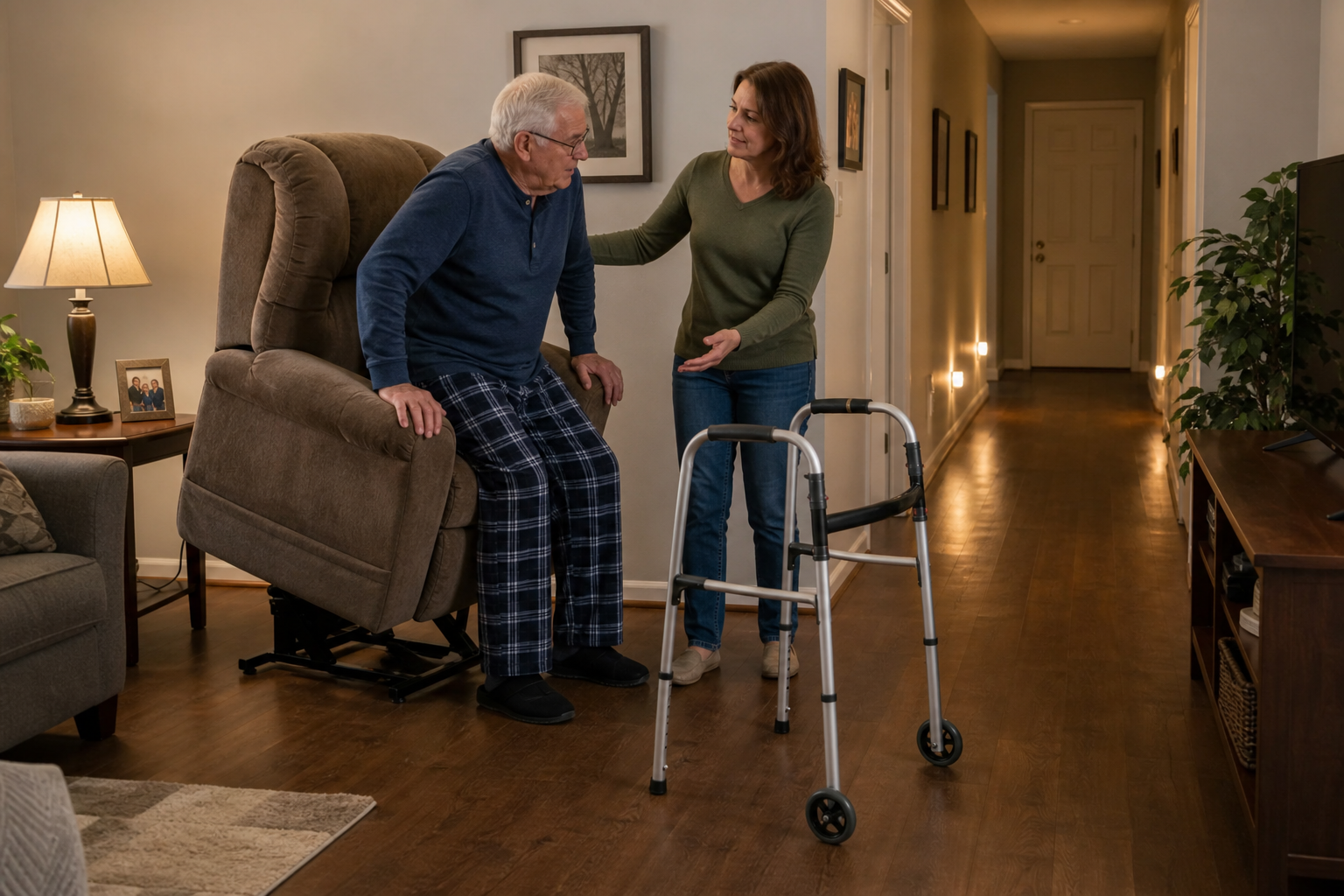
Transfer Safety And Aging In Place is about making the small movements between sitting, standing, lying down, and stepping safer inside an ordinary home. Many serious falls do not happen during long walks. They happen during short transfers from a bed, chair, toilet, shower bench, recliner, wheelchair, or car seat.
Transfer safety matters because these movements often happen when a person is tired, rushed, stiff, distracted, or using one hand to reach for something. The goal is not to turn a home into a care facility. The goal is to reduce strain, improve footing, place support where it is actually needed, and help an older adult remain as independent as possible.
Small changes can make transfers safer without major remodeling. Better chair height, clearer floor space, firmer seating, good lighting, stable handholds, and slower routines can prevent many avoidable falls.
Transfer Safety And Aging In Place Starts With Stable Footing
Transfer Safety And Aging In Place depends first on what the feet are doing before the body moves. A person who stands from a chair, bed, toilet, or shower bench needs both feet positioned flat, close enough under the body, and on a surface that does not slide.
Many transfer problems begin before the person is fully standing. The feet may be too far forward. One slipper may be partly off. A throw rug may shift. A walker may be out of reach. The person may push upward before gaining balance. These details look minor until a transfer becomes unstable.
Good footing should be prepared before movement begins.
- Remove loose rugs near beds, chairs, toilets, and doorways.
- Keep shoes or slippers fully on before standing.
- Place both feet flat on the floor before rising.
- Move cords, baskets, pet beds, and small stools away from transfer areas.
- Use non-slip flooring or non-slip mats only where they stay flat and secure.
- Keep the walker, cane, or rollator within reach without leaning.
Footing also changes during the day. Socks that seem safe in bed may be risky on smooth flooring. A person may be steady in the morning but less steady after dinner. Transfer safety is strongest when the surrounding space tolerates ordinary fatigue rather than when conditions are perfect.
Create Safer Transfers From Beds And Recliners
Bed and recliner transfers require sufficient height, lighting, and side clearance for the person to move without twisting or pulling from a weak position. A low bed can make standing difficult. A very soft mattress can sink under the body. A deep recliner can trap the hips and force a person to rock forward.
The safest transfer position usually allows the person to sit near the edge, place both feet on the floor, lean slightly forward, and push up from a stable surface. Pulling on a walker is usually less safe than pushing from the bed, chair arms, or another fixed support.
Useful adjustments include:
- Raise a low bed with stable risers only if the bed remains secure.
- Remove thick bedding that tangles around feet.
- Keep a lamp within reach before standing at night.
- Place a sturdy chair near the bed only if it does not block the path.
- Choose recliners with firm arms and a seat height that allows easier standing.
- Use an electric recliner that can raise the senior to a near standing position.
- Avoid placing small tables where knees or walker legs will hit them.
Recliners deserve special attention because they are often used for long periods. After sitting for an hour or more, legs may feel stiff. Before standing, the person should pause, place both feet correctly, scoot forward, and rise slowly.
For a broader room-by-room safety review, use the Aging in Place Checklist.
Make Toilet Transfers Safer Without Major Remodeling
Transfer Safety and Aging in Place is especially relevant in the bathroom. Toilet transfers are often difficult because the seat is low, the space is narrow, and people may rush. A senior I knew attempted a toilet transfer alone and fell sideways onto the toilet, breaking it and injuring herself. Incidents like this are more common than many families realize because toilet transfers combine low seating height, confined space, urgency, and unstable footing
The goal is to provide the person with stable support before sitting and standing. Towel bars are not safe handholds. Sink edges may not support weight. A toilet paper holder may pull loose. The best low-cost improvements are usually a raised toilet seat, secure grab bars, or a toilet safety frame.
Practical changes include:
- Clear the floor around the toilet so feet can be placed squarely.
- Install grab bars into secure wall backing when possible.
- Use a raised toilet seat if the current toilet is too low.
- Add a toilet safety frame if wall-mounted bars are not practical.
- Keep toilet paper within easy reach to reduce twisting.
- Make sure night lighting reaches the toilet area, not just the hallway.
Privacy can make this topic hard to discuss. Families may avoid it until there is a fall. It is better to frame the change as a practical comfort improvement rather than a loss of independence.
For related bathroom planning, see Bathroom Safety For Seniors.
Improve Chair Transfers In Living Areas
Chair transfers are safer when the chair supports the movement instead of working against it. Many attractive chairs are poor choices for aging-in-place safety because they are too low, too soft, too deep, or have weak arms. Transfer Safety and Aging in Place should be the priority. Attractive but unsafe furniture is not worth the risk.
A good transfer chair should allow the feet to reach the floor, the knees to bend comfortably, and the arms to push upward without wobbling. The person should not need to collapse backward into the seat or struggle forward from a deep cushion.
Look closely at the chairs used most often.
- Replace low accent chairs with firmer seating.
- Add a firm cushion if it improves height without sliding.
- Move frequently used chairs closer to good lighting.
- Leave enough front clearance for a walker or cane.
- Avoid rolling chairs unless they lock securely.
- Remove small footstools from the main standing path.
Dining chairs can also create transfer problems. A chair that slides too easily may move backward before the person is safely seated. A chair that is too heavy may be hard to position. A chair with arms may help standing, but only if it fits under the table and does not create awkward twisting.
For related layout changes, see Safe Furniture Layout For Seniors.
Plan Safer Shower And Tub Transfers
Shower and tub transfers combine wet surfaces, balance demands, and awkward stepping. This is one of the areas where Transfer Safety And Aging In Place requires special care because the safest solution is often to reduce the need for stepping in the first place.
A walk-in shower is easier than a tub, but many homes do not have one. Families should not assume an expensive remodel is the only option. A shower chair, handheld showerhead, non-slip surface, and properly placed grab bars can make bathing safer in many ordinary bathrooms.
Helpful steps include:
- Place a shower chair where the person can sit before washing.
- Use a handheld showerhead to reduce the need to stand and reach.
- Keep soap and shampoo between the shoulder and waist height.
- Remove loose bath mats that bunch or slide.
- Dry the floor before the person exits the shower.
- Use a tub transfer bench if stepping over the tub wall is unsafe.
The transition out of the shower is often riskier than getting in. Feet are wet. Glasses may be off. The person may be tired. Towels should be within reach without twisting, and the exit path should be dry, clear, and well-lit.
For more details, see Preventing Bathroom Falls.
Use Better Lighting For Night Transfers
Night transfers are risky because the person may be sleepy, stiff, disoriented, or trying not to wake someone else. A dark bedroom, hallway, or bathroom can turn a familiar route into a fall hazard.
The safest nighttime setup does not depend on memory. Light should guide the path from bed to bathroom and back. The person should not need to cross a dark room to reach a switch. A bedside lamp, motion-activated nightlights, and clear floor space can make a major difference at a low cost.
Useful nighttime changes include:
- Place a lamp within easy reach from the bed.
- Add motion lights near the bed, hallway, and bathroom.
- Keep slippers in the same place every night.
- Remove laundry baskets and shoes from the walking path.
- Keep glasses, hearing aids, and mobility aids within reach.
- Use a bedside commode only when bathroom trips have become unsafe.
The first few steps after rising from bed deserve special caution. Sitting briefly before standing allows dizziness or stiffness to become obvious before the person is fully upright.
For additional practical guidance, see Home Lighting Safety For Seniors.
Make Car Transfers More Predictable
Car transfers can be difficult because the seat is low, the doorway is narrow, the ground may slope, and the person may feel rushed. The safest car transfer begins before the door opens.
Choose parking spaces with enough room to fully open the door. Avoid curbs, gravel, puddles, ice, and uneven pavement when possible. The person should turn, back up carefully to the seat, feel the seat behind the legs, sit first, and then bring the legs into the car.
A few habits help:
- Park on level ground whenever possible.
- Move the passenger seat back before the person gets in.
- Clear bags and floor mats from the footwell.
- Let the person sit before lifting their legs into the car.
- Avoid pulling on the door for full-body support.
- Allow extra time so the transfer is not rushed.
Getting out usually requires the reverse pattern. Both feet should be outside the car and firmly on the ground before standing. A swivel cushion may help some people, but it must not slide or create instability.
For related walking and movement support, see Mobility Aids For Seniors.
Build Transfer Safety Into Daily Routines
Transfer safety works best when it becomes part of an everyday routine rather than a special safety lecture. Older adults often resist changes that feel like corrections. Practical adjustments are easier to accept when they make life simpler, more comfortable, and less tiring.
A good routine reduces decisions. The walker stays in the same place. The favorite chair is kept clear. The bathroom path stays open. The bed area is arranged the same way each night. This kind of consistency matters because many transfers happen automatically.
The Home Safety For Seniors page can help families identify transfer risks room by room, but the most useful changes are the ones that match the person’s real habits. Watch where they actually sit, stand, reach, turn, and pause during the day. Transfer Safety And Aging In Place also connects directly to fall prevention.
Focus on repeatable changes:
- Keep the most-used chair safe instead of rearranging every room at once.
- Improve the bathroom path before buying extra equipment.
- Replace unsafe slippers before changing the flooring.
- Practice slower standing from the bed, toilet, and recliner.
- Keep frequently used items within easy reach.
- Review transfer areas again after illness, medication changes, or a recent fall.
Transfer safety is not about eliminating all risk. It is about removing the obvious hazards that make ordinary movement harder than it needs to be. A safer home supports independence by making repeated daily movements more stable, more predictable, and less physically demanding.
For related fall-risk planning, see Signs Of Fall Risk In Older Adults.
© 2026 Mark Fomenko. All rights reserved.
AgingInPlaceResource.com
Privacy Policy | Terms of Use | Disclaimer | Contact | Newsletter
Recent Articles


-
Aging In Place Resource Library
Sep 04, 26 08:30 AM
Aging In Place Resource Library -
Aging in Place Resource Newsletter
Aug 30, 26 11:16 AM
Aging in Place Resource Newsletter -
Aging in Place Resource: Simple Strategies for Living Safely at Home
Jul 28, 26 12:43 PM
 Aging in Place Resource provides practical guidance for aging in place. Learn how to live safely and independently at home with strategies for home safety, caregiving, planning, and long-term support.