Signs Of Fall Risk In Older Adults
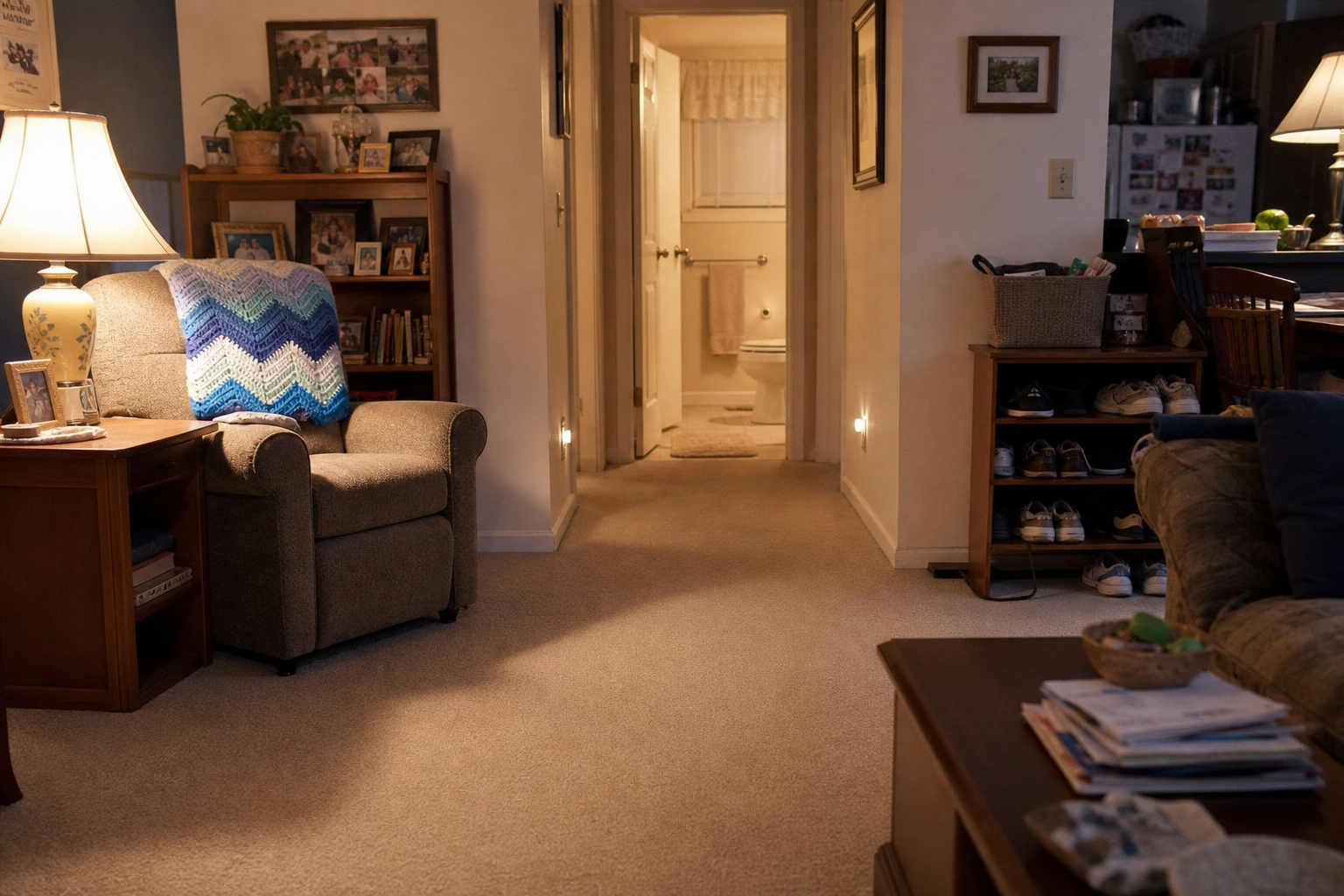
Signs Of Fall Risk In Older Adults are often visible before a serious fall happens. They may appear as small changes in walking, standing, turning, reaching, stepping, or moving through familiar rooms.
The goal is not to make the home feel restricted or medical. The goal is to notice practical warning signs early, adjust the environment, simplify movement, and protect independence without spending money on unnecessary remodeling.
Many fall risks begin with ordinary daily habits. A person may lean on furniture, avoid certain rooms, stop using stairs, shuffle across rugs, or rush at night. These signs deserve attention because small changes at home can often reduce the risk quickly.
Signs Of Fall Risk In Older Adults Often Start With Unsteady Movement
Unsteady movement is one of the clearest early warnings.
Watch how the person moves when standing from a chair, crossing a room, turning near furniture, or walking from one surface to another. A person does not need to fall for the risk to be real. Reaching for walls, grabbing chair backs, pausing before stepping, or taking unusually short steps can all indicate that balance is becoming less dependable.
Useful things to observe include:
- Notice whether the person pushes off furniture with both hands before standing.
- Watch for shuffling feet on carpet, tile, or wood flooring.
- Look for hesitation when turning around in narrow spaces.
- Check whether the person avoids carrying items while walking.
- Notice whether they widen their stance when standing still.
- Watch whether they touch walls or counters for balance.
Signs Of Fall Risk In Older Adults are especially important when they appear gradually. A small walking change can become normal to the family because everyone gets used to seeing it. That is why observation matters.
Changes In Daily Routes Can Reveal Hidden Risk
Avoiding rooms and changing routines often says something important.
When an older adult stops using a basement, guest room, back porch, upstairs bedroom, or certain bathroom, the reason may be physical difficulty rather than preference. People often adapt quietly. They may say they “just don’t need to go there,” but the real issue may be stairs, poor lighting, slippery flooring, or fear of falling.
Look for route changes such as:
- Notice whether laundry is piling up because the laundry area is hard to reach.
- Check whether the person avoids stairs except when absolutely necessary.
- Watch whether they use longer routes to avoid thresholds or rugs.
- Ask whether certain chairs or rooms are becoming harder to use.
- Notice whether they stop going outside through a particular doorway.
- Look for items being stored in odd places to avoid walking farther.
A practical home review should follow the person’s real movement path. Start at the bed, then follow the route to the bathroom, kitchen, favorite chair, entryway, and mailbox. The Aging in Place Checklist can help organize these observations without turning the process into a major project.
Flooring Problems Often Turn Small Balance Issues Into Falls
Walking surfaces matter more when balance is less reliable.
A person with strong balance may step over a curled rug or uneven threshold without thinking. A person with slower reactions may catch a foot, stumble, and have no time to recover. Flooring risk is not just about whether the floor looks clean. It is about how the foot moves across the surface.
Practical flooring checks include:
- Remove small loose rugs from main walking routes.
- Tape down or repair curled rug edges that catch shoes.
- Move electrical cords away from pathways.
- Check thresholds between rooms for height changes.
- Keep pet bowls, baskets, and shoes out of walking lanes.
- Make sure floor mats do not slide when stepped on.
Signs Of Fall Risk In Older Adults often become more obvious on mixed flooring. Carpet to tile, tile to wood, or rug to bare floor can change traction suddenly. Watch these transition points closely.
Furniture Placement Can Either Support Movement Or Block It
Furniture layout can quietly raise fall risk.
A room may look attractive but still be difficult to move through. Narrow paths, low tables, decorative stands, footstools, and unstable chairs can create problems. The issue is not whether the home is perfectly neat. A lived-in home can be safe if the main walking routes are clear and stable.
Focus on movement first:
- Create a clear path from the favorite chair to the bathroom.
- Move small tables out of turning areas.
- Remove footstools from nighttime walking paths.
- Place frequently used chairs where arms can support standing.
- Keep storage baskets away from doorways.
- Make sure chairs do not slide when used for support.
A person who bumps furniture, steadies themselves on shelves, or takes awkward sideways steps through a room may already be compensating for layout problems. Those compensations can work for months, then fail in a single tired or distracted moment.
The Aging in Place Checklist is useful here because it keeps the focus on real, everyday movement rather than on redesigning the whole house.
Bathroom Movement Shows Risk Faster Than Many Other Rooms
Bathroom movement deserves close attention.
The bathroom combines hard surfaces, water, tight spaces, bending, reaching, and transfers. It is also one of the places where people may avoid asking for help because privacy matters. That makes observation of ordinary behavior especially important.
Look for warning signs such as:
- Notice whether the person holds the towel bar when stepping in or out.
- Check whether they avoid bathing as often as before.
- Watch for difficulty sitting down on or rising from the toilet.
- Look for wet towels placed on the floor for traction.
- Notice whether shampoo, soap, or towels require bending or reaching.
- Check whether the bath mat slides under pressure.
Signs Of Fall Risk In Older Adults may appear as small bathroom workarounds. A person may leave the shower door open for support, use the sink edge to stand, or rush through bathing to reduce time on wet surfaces. These habits show that the room needs practical adjustment.
Medication Timing And Lightheadedness Can Change Home Safety
Some fall risks appear at specific times of day.
A person may walk well in the afternoon but become unsteady in the morning, after meals, after taking medication, or when getting up at night. The home setup should match the person’s weakest moments, not just their best.
Useful actions include:
- Watch movement shortly after standing from bed or a recliner.
- Notice whether dizziness appears after medication routines.
- Keep water within easy reach near the usual sitting area.
- Encourage slow standing before walking across the room.
- Place a stable chair near areas where the person often pauses.
- Keep the route to the bathroom clear for nighttime use.
This is not about managing medicine like a clinician. It is about noticing when the body is less steady and arranging the home accordingly. MedlinePlus offers practical fall-prevention information to support safer daily habits.
Nighttime Behavior Often Exposes The Weakest Safety Points
Nighttime walking is one of the most revealing tests of a home.
At night, people are groggy, lighting is weaker, depth perception is worse, and urgency may be higher. A safe daytime route may become risky after midnight. The path from bed to bathroom deserves special attention because it is often repeated when the person is least alert.
Practical nighttime improvements include:
- Place a clear lamp or touch light within reach of the bed.
- Keep slippers beside the bed in the same spot every night.
- Remove laundry baskets from the bedroom floor.
- Keep the bathroom door partly open if it improves visibility.
- Use night lights along the exact walking route.
- Move cords and small furniture away from the bed path.
Signs Of Fall Risk In Older Adults may include bruises they cannot explain, reluctance to get up at night, or new use of furniture for support. These signs should lead to simple changes first: better light, clearer paths, easier access, and fewer obstacles.
The Aging in Place Checklist helps connect nighttime movement, bathroom access, lighting, and floor safety into one practical review.
Stairs And Steps Show Whether Balance Is Still Reliable
Stairs reveal changes in strength, timing, vision, and confidence.
An older adult may still walk well on flat floors but struggle with steps. Watch whether they use both feet on each step, pull hard on the railing, pause before starting, or avoid carrying items. These are not character flaws or overreactions. They are useful warnings.
Check stair safety by doing specific physical checks:
- Make sure every step has even lighting.
- Remove loose objects from the stairs immediately.
- Confirm that handrails are secure and easy to grip.
- Add contrast at step edges if depth is hard to judge.
- Keep both hands free when going up or down.
- Store frequently used items on the main living level.
Near the end of a practical home review, connect what you have seen. A person who shuffles on flooring, avoids stairs, reaches for furniture, and rushes at night has multiple overlapping risks. Aging in place works better when these signs are treated as early prompts for simple changes, not as reasons to panic or surrender independence. Fall prevention is usually a pattern of small, corrective actions taken before a crisis.
_____________________________________________________________________________________________________
Get clear, practical insights on aging in place sent occasionally, and only when useful.
No spam. No noise. Unsubscribe anytime.
______________________________________________________________________________________________________