Stair Safety For Seniors
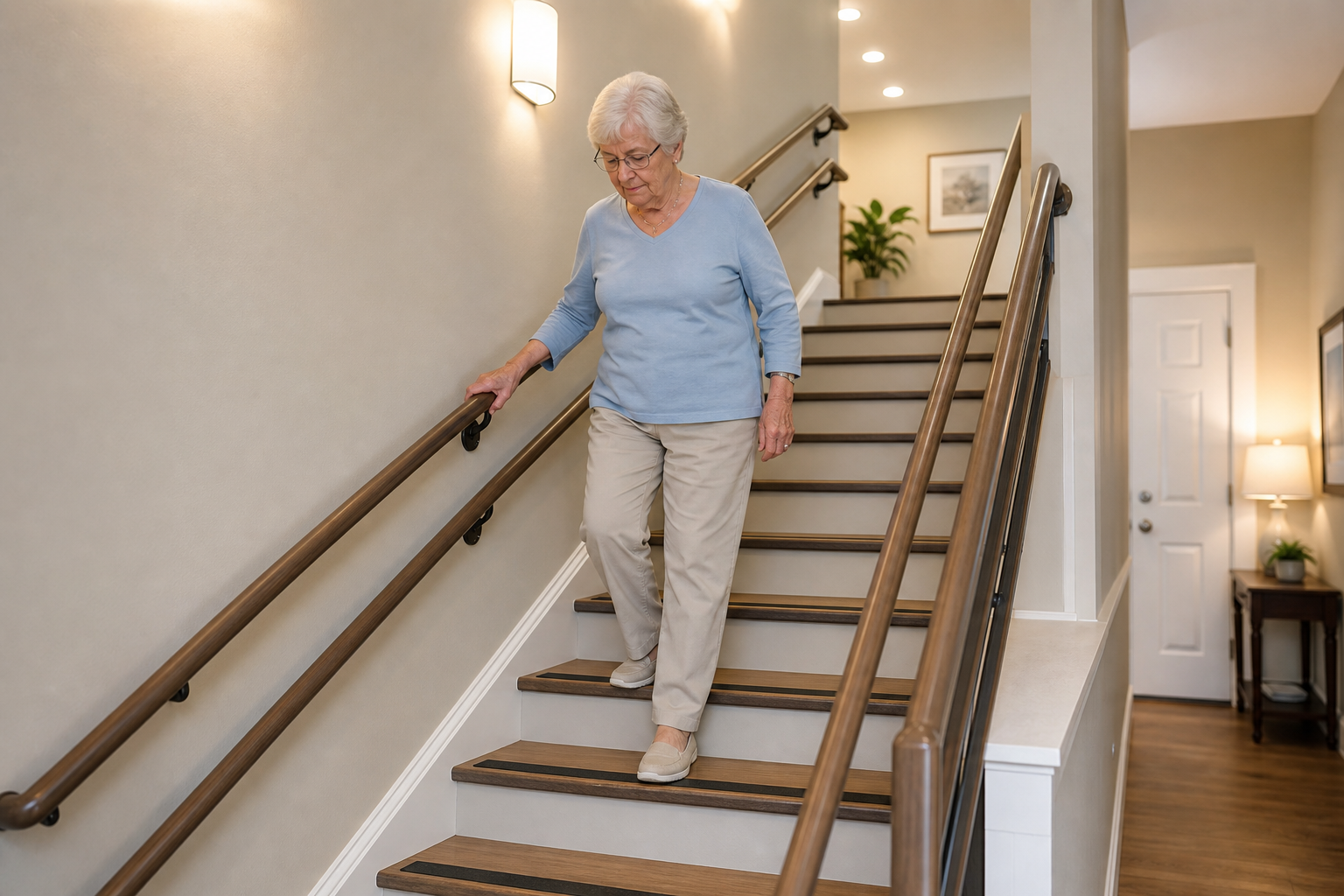
Stair safety for seniors is one of the most critical areas of focus in any aging in place plan because stairs combine elevation, movement, and balance demands in a single environment. A single misstep can result in serious injury, especially when strength, vision, or reaction time are reduced.
The staircase is a high-risk zone because it is used frequently, often without full attention. People carry items, move quickly, or navigate stairs in low light conditions. Preventing accidents requires deliberate design, consistent habits, and small adjustments that reduce risk every time the stairs are used.
A prevention mindset means treating stairs as a system rather than a structure. Every step, rail, and lighting decision contributes to safety or risk.
Stair Design and Structural Risks in Stair Safety For Seniors
The physical design of the staircase directly determines how safe or dangerous it is to use daily. Small inconsistencies in step height or depth can disrupt balance and lead to falls.
A safe staircase should feel predictable with every step. Uneven risers, narrow treads, or steep angles force the body to compensate, increasing the risk of missteps.
Key structural improvements include:
• Ensure every step has the same height and depth without variation
• Install non-slip surfaces on each tread to improve traction
• Avoid open-back steps that reduce visual clarity and foot placement
• Maintain consistent stair width to allow stable movement
• Repair loose boards or worn edges immediately
• Remove decorative elements that interfere with the footing
When stairs feel stable and uniform, movement becomes automatic rather than reactive, which significantly reduces fall risk.
Lighting Conditions and Visibility on Stairs
Lighting determines whether a staircase is navigable or hazardous, especially during early morning or nighttime use. Poor visibility turns even well-built stairs into a high-risk area.
Light should be consistent from top to bottom. Shadows, glare, or dark spots can distort depth perception and cause hesitation or missteps.
Effective lighting strategies include:
• Install overhead lighting that evenly covers the entire staircase
• Add wall-mounted lights to eliminate shadows along steps
• Use motion-activated lights for immediate illumination
• Place light switches at both the top and bottom of the stairs
• Ensure bulbs are bright enough but not blinding
• Replace dim or flickering lights immediately
Consistent lighting supports stair safety for seniors by providing clear visual cues for each step and reducing hesitation while moving.
Handrails and Grip Stability
Handrails provide the most immediate form of physical support during stair use. Without reliable handholds, balance must be maintained entirely by the body, which increases risk.
A proper handrail should be easy to grip, continuous, and positioned at a comfortable height. It should not wobble or require effort to hold.
Handrail safety improvements include:
• Install handrails on both sides of the staircase
• Ensure rails extend beyond the top and bottom steps
• Use round or oval shapes that fit naturally in the hand
• Secure rails firmly into wall studs for stability
• Avoid decorative rails that reduce grip strength
• Keep rails free of clutter or obstructions
Consistent use of handrails is one of the most effective habits for reducing falls and reinforcing safe movement patterns.
How to prevent falls in the home
Stair Surface Materials and Traction
The surface of each step plays a critical role in preventing slips, especially when shoes, socks, or bare feet interact with the material.
Hard, smooth surfaces increase the likelihood of slipping, while textured or cushioned materials provide better grip and control.
Improving stair traction involves:
• Apply non-slip strips or adhesive treads to each step
• Use low-pile carpeting to increase friction without creating trip hazards
• Avoid polished wood or tile finishes on stair surfaces
• Secure all carpet edges to prevent lifting or curling
• Clean stairs regularly to remove dust or debris
• Replace worn materials that reduce grip effectiveness
Proper traction supports consistent footing and reduces the chance of sudden slips during ascent or descent.
Managing Objects and Carrying Behavior on Stairs
Carrying items while using stairs significantly increases risk because it limits visibility and reduces balance control. Many falls occur when attention is divided.
Safe movement requires keeping hands free and maintaining a clear line of sight to each step.
Safer carrying practices include:
• Use a small bag or pouch instead of carrying loose items
• Avoid carrying large or bulky objects on stairs
• Make multiple trips instead of overloading
• Keep one hand on the handrail at all times
• Use assistive tools like stair baskets or lifts if needed
• Pause before stepping onto stairs to assess balance
Behavioral adjustments reinforce stair safety for seniors by reducing distractions and maintaining stability during movement.
Footwear and Physical Stability on Stairs
Footwear directly affects grip, balance, and movement control on stairs. Improper shoes or bare feet increase the likelihood of slipping or misstepping.
Supportive footwear improves stability and confidence during stair use.
Recommended footwear practices include:
• Wear shoes with non-slip soles inside the home
• Avoid loose slippers that can shift during movement
• Do not use stairs in socks alone
• Ensure shoes fit properly without heel movement
• Replace worn-out soles that reduce traction
• Keep footwear near stair entry points for easy access
Maintaining proper footwear habits is a simple but effective way to reduce fall risk in stair environments.
https://medlineplus.gov/ency/patientinstructions/000021.htm
Nighttime Stair Use and Risk Reduction
Nighttime movement presents additional challenges due to reduced visibility, fatigue, and slower reaction times. Stairs become significantly more dangerous under these conditions.
Preparing for nighttime use requires anticipating movement before it happens.
Night safety strategies include:
• Install motion-activated lighting along the staircase
• Keep pathways to stairs completely clear
• Use glow-in-the-dark markers on step edges
• Place a flashlight within easy reach of the bed
• Avoid rushing when using stairs at night
• Consider limiting stair use during overnight hours
Reducing nighttime risk strengthens overall stairs safety for seniors and prevents accidents during vulnerable periods.
Consistent Habits That Reinforce Stair Safety
Daily habits determine whether a staircase remains safe over time. Even well-designed stairs can become dangerous if routines are inconsistent or careless.
Safety becomes reliable when behaviors are automatic and repeated consistently.
Key habit-based practices include:
• Always use the handrail regardless of confidence level
• Keep stairs completely free of objects at all times
• Move deliberately without rushing or skipping steps
• Maintain focus when using stairs without distractions
• Regularly inspect stairs for wear or damage
• Reinforce safe use with all household members
Stairs Safety For Seniors depends on repetition and consistency. Small actions, performed correctly every time, create a stable and predictable environment that reduces risk.
_____________________________________________________________________________________________________
Get clear, practical insights on aging in place sent occasionally, and only when useful.
No spam. No noise. Unsubscribe anytime.
______________________________________________________________________________________________________