Bathroom Safety for Seniors
Bathroom safety for seniors is one of the most important factors in maintaining independence at home. The bathroom combines hard surfaces, water, tight spaces, and frequent use—often under time pressure. This page explains where accidents actually happen, how to reduce risk immediately, and what changes make the biggest difference in real homes.
Why the Bathroom Is High Risk
The bathroom creates multiple hazards in a small area.
- Wet floors reduce traction
- Hard surfaces increase injury severity
- Limited space restricts movement
- Frequent nighttime use adds urgency and poor visibility
- Transitions (standing, sitting, stepping) are constant
Most falls do not happen during unusual situations. They happen during routine tasks like getting up quickly, stepping out of the shower, or turning in a tight space.
The Most Common Bathroom Hazards
Most bathroom safety for seniors problems are predictable.
- Slippery floors after bathing or cleaning
- Stepping over tub walls without support
- Low toilets that require effort to stand
- Lack of grab points near the toilet or shower
- Poor lighting during nighttime use
- Loose rugs or bath mats that shift
- Clutter around sinks or pathways
These hazards often combine. For example, stepping out of a wet tub at night without proper lighting and no grab bar is a common fall scenario.
Start With the Highest-Impact Fixes
Some changes reduce risk immediately and should be prioritized.
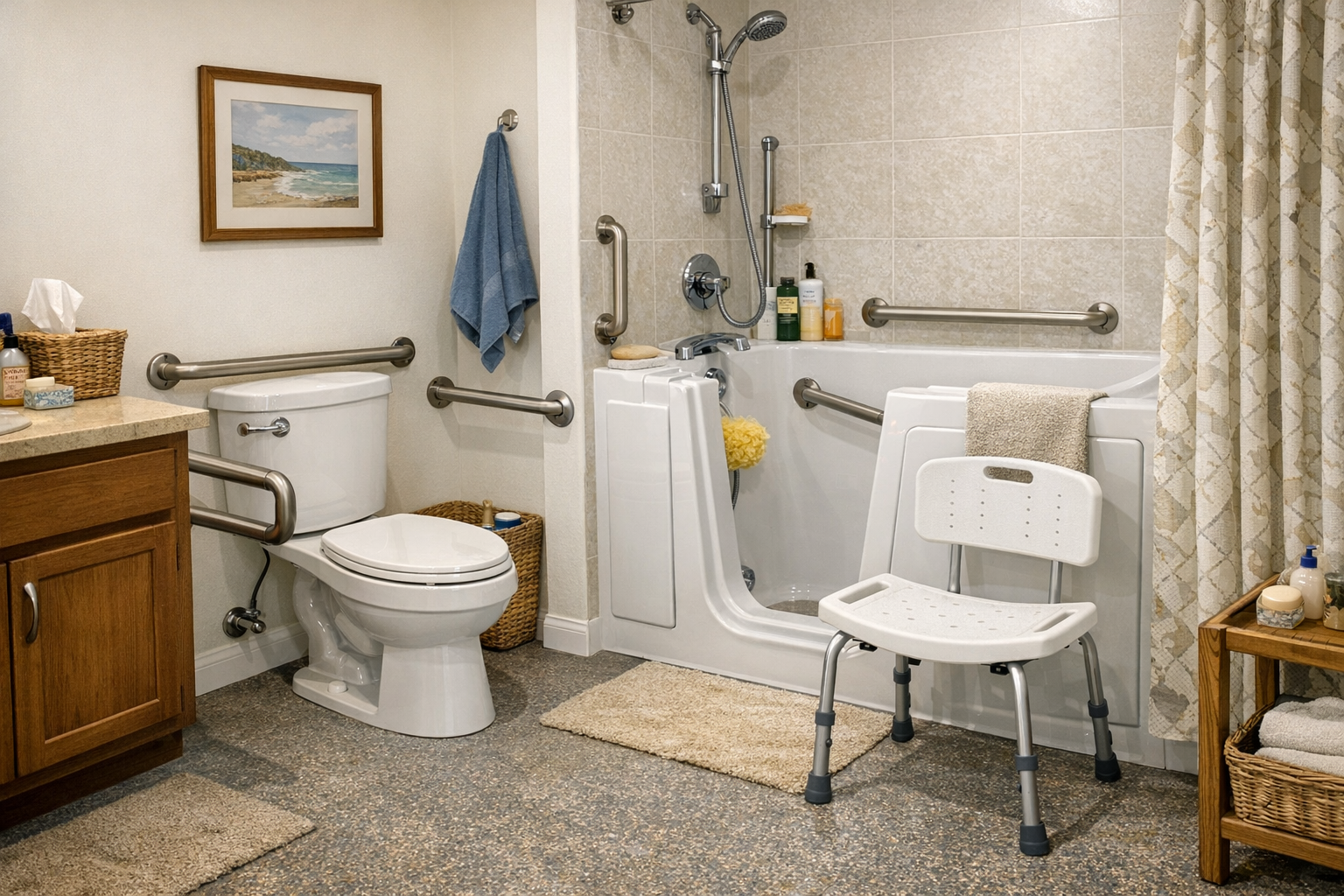
- Install grab bars in key locations: Inside the shower or tub, just outside the shower or tub, next to the toilet.
- Add non-slip surfaces: Adhesive strips in tubs and showers, non-slip bath mats with rubber backing.
- Improve lighting: Bright overhead lighting, night lights for visibility after dark
- Remove loose rugs or secure them properly.
These changes address the majority of fall risks without requiring a full remodel.
Safe Shower and Tub Use
Getting in and out of the shower or tub is one of the highest-risk movements.
- Use a grab bar to stabilize entry and exit
- Avoid using towel bars or fixtures for support
- Consider a shower chair or bench
- Use a handheld showerhead for seated bathing
- Keep soap and shampoo within easy reach
For tubs:
- Stepping over a high tub wall increases the risk significantly
- A tub transfer bench can reduce the need to step over
- A walk-in shower is safer long-term if remodeling is an option
The goal is to eliminate unstable movements and reduce the need for balance under wet conditions.
Toilet Safety and Stability
Standing up and sitting down places stress on balance and leg strength.
- Install grab bars beside or behind the toilet.
- Use a raised toilet seat if the toilet is low.
- Ensure clear space around the toilet for movement.
- Avoid using nearby furniture or counters for support.
A low toilet increases the risk of falls because it requires more effort to stand, especially when fatigued.
Managing Nighttime Bathroom Trips
Many falls occur at night.
- Install motion-activated night lights along the path to the bathroom.
- Ensure the bathroom light switch is easy to reach.
- Keep the pathway clear of obstacles.
- Use contrasting colors to improve the visibility of fixtures.
Rushing is a major factor. When urgency combines with darkness and poor balance, the risk increases sharply.
Flooring and Surface Safety
Flooring plays a direct role in fall prevention.
- Avoid smooth, glossy tile surfaces without traction.
- Use non-slip mats in front of sinks and showers.
- Keep floors dry whenever possible.
- Clean up water spills immediately.
Even a small amount of water can create a slipping hazard, especially on tile.
Sink and Counter Area Safety
The sink area is often overlooked but frequently used.
- Keep commonly used items within easy reach.
- Avoid bending or stretching to access supplies.
- Maintain clear counter space to prevent clutter buildup.
- Ensure a stable footing while grooming or brushing teeth.
Reaching or twisting in a small space increases instability.
Reducing Clutter and Improving Layout
Tight spaces increase risk.
- Remove unnecessary items from the bathroom.
- Keep pathways wide and clear.
- Store items in organized, accessible locations.
- Avoid stacking items on the floor.
Clutter forces awkward movement and increases the chance of tripping or losing balance.
Ventilation and Moisture Control
Moisture contributes to slippery conditions.
- Use exhaust fans to reduce humidity.
- Keep surfaces dry after use.
- Fix leaks that create persistent damp areas.
A consistently damp environment increases long-term risk.
Evaluating Your Bathroom for Risk
A simple assessment can identify problems quickly.
Walk through the bathroom and ask:
- Where would support be needed when standing or stepping?
- Are there any surfaces that become slippery?
- Is lighting sufficient at all times of day?
- Is anything within reach unstable or unreliable?
- Are there obstacles in the path of movement?
If a task requires extra effort, balance, or speed, it is a potential risk point.
When to Consider Upgrades
Basic fixes go a long way, but some situations require more substantial changes.
Consider upgrades if:
- Balance is declining.
- Strength is reduced.
- Falls or near-falls have already occurred.
- The bathroom layout restricts safe movement.
Common upgrades include:
- Walk-in showers
- Wider doorways
- Built-in seating
- Reinforced walls for secure grab bar installation
These changes support long-term independence.
Small Changes That Make a Big Difference
Many effective improvements are simple.
- Replace round doorknobs with lever handles.
- Use anti-scald devices on faucets.
- Keep a stable stool or seat for tasks that require standing.
- Use contrasting colors for better visual distinction.
These adjustments reduce strain and improve usability without major expense.
The Role of Routine and Behavior
Bathroom safety for seniors is not only about equipment.
- Avoid rushing, especially at night.
- Take time to stabilize before moving.
- Keep frequently used items within easy reach.
- Maintain consistent habits to reduce unexpected movements.
Most accidents occur during routine activities performed under less-than-ideal conditions.
Planning Ahead for Safety
Bathroom safety for seniors should be addressed before a problem occurs.
- Make changes early, not after a fall.
- Prioritize the highest-risk areas first.
- Reassess periodically as needs change.
- Consider using structured checklists to ensure nothing is missed.
Planning reduces the need for reactive changes after an injury.
Final Considerations
Bathroom safety is a core part of aging in place. The goal is not to eliminate all risk but to reduce it to a manageable level through practical, proven changes.
Focus on:
- Stability (grab bars, seating)
- Traction (non-slip surfaces)
- Visibility (lighting)
- Accessibility (layout and reach)
When these elements are addressed together, the bathroom becomes significantly safer and easier to use daily.
_____________________________________________________________________________________________________
Get clear, practical insights on aging in place—sent occasionally, and only when useful.
No spam. No noise. Unsubscribe anytime.
______________________________________________________________________________________________________