How to Prevent Falls in the Home
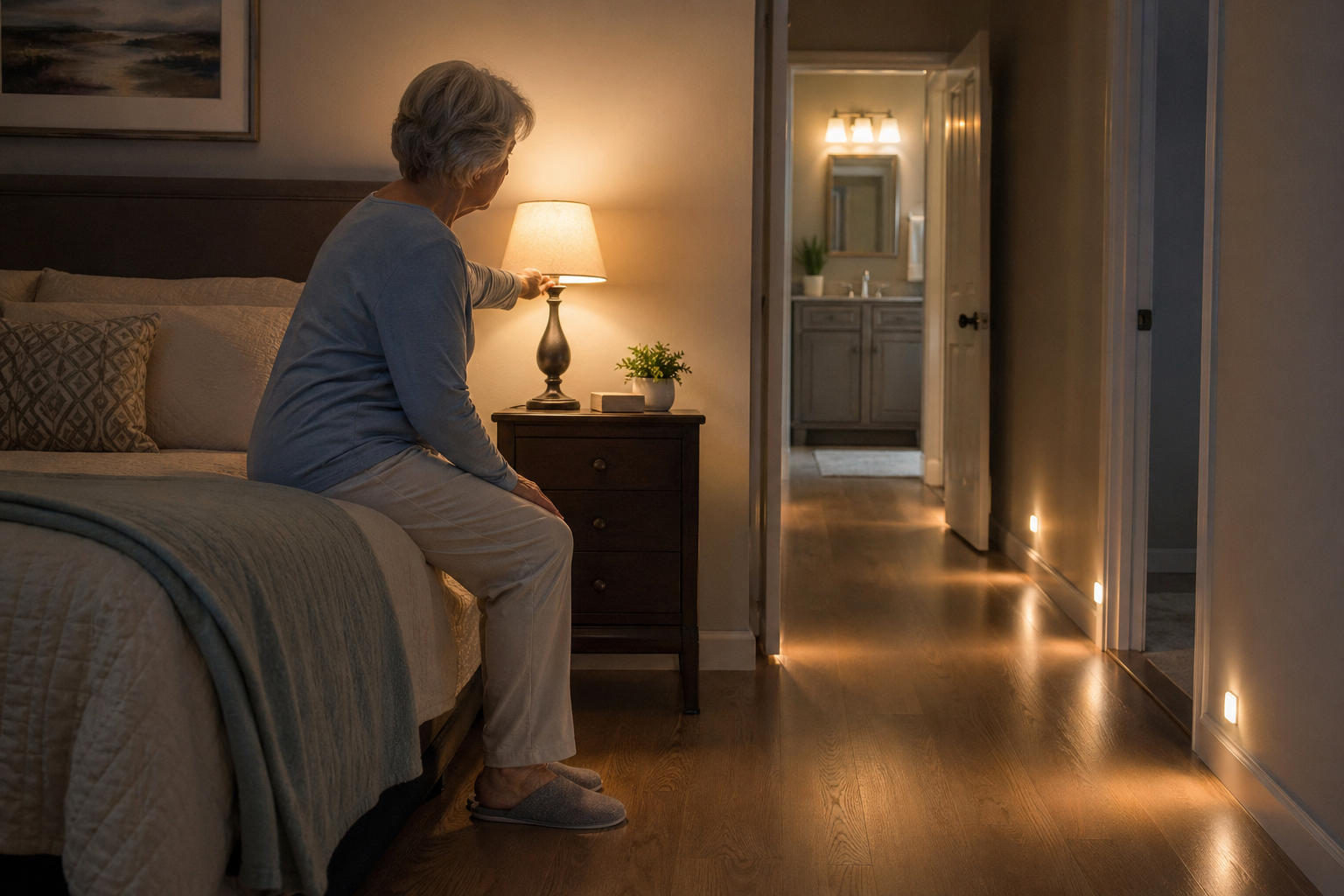
Falls at home rarely come from one obvious mistake. They usually happen during ordinary movement. Someone gets up too quickly at night, turns in a narrow space, steps onto a damp surface, or carries too much while walking. Understanding how to prevent falls in the home starts with recognizing these everyday patterns and adjusting the environment to support safer movement.
The objective is not to turn a home into a medical setting. The objective is to make daily life smoother, more predictable, and less physically demanding. When the environment supports natural movement, the risk of falls drops significantly.
If you want a structured way to apply everything on this page, use the Aging in Place Checklist to identify risks room by room and prioritize what to fix first.
Why Falls Happen at Home
Most falls are not random. They follow consistent patterns tied to routine behavior.
Common scenarios include:
- Rushing to the bathroom at night
- Walking through dim or uneven lighting
- Stepping over clutter or obstacles
- Reaching too high or bending too low
- Turning quickly in tight spaces
- Losing balance during transitions such as sitting or standing
Learning how to prevent falls in the home requires focusing on these routine actions rather than rare events. A safe home is one that reduces the need for risky movement and supports stability during everyday tasks.
Risk tends to build gradually. A rug edge lifts slightly. Lighting becomes less effective. A pathway narrows. Furniture shifts. Each change seems minor, but together they create conditions where a fall becomes likely.
High-Risk Areas That Require Immediate Attention
Certain parts of the home consistently produce more falls because they combine movement, obstacles, and reduced reaction time.
These are the most common problem areas, but it’s easy to miss smaller risks. A room-by-room Aging in Place Checklist can help you catch issues before they turn into a fall.
Bathroom
The bathroom presents one of the highest risks.
Common issues:
- Wet or slippery floors
- Lack of stable support points
- Low seating surfaces
- Poor lighting during nighttime use
Why it matters:
Bathroom use involves frequent transitions. Sitting, standing, stepping into a tub, and turning in a confined space all increase fall risk.
Practical steps:
- Install grab bars near the toilet and inside the shower
- Use non-slip mats both inside and outside the tub
- Improve lighting and add night lights
- Consider a raised toilet seat if standing is difficult
- Use a shower chair when balance is unreliable
Stairs
Stairs demand coordination, strength, and attention.
Common issues:
- Missing or weak handrails
- Poor visibility at landings
- Objects left on steps
- Worn or uneven surfaces
Why it matters:
A single misstep on stairs can lead to serious injury.
Practical steps:
- Install secure handrails on at least one side, ideally both
- Keep all steps completely clear
- Improve lighting at the top and bottom
- Repair loose or damaged surfaces
- Use contrast markings on edges if visibility is an issue
Bedroom
The bedroom becomes risky during transitions, especially at night.
Common issues:
- Getting up too quickly
- Walking in low light
- Clutter between bed and bathroom
- Unstable furniture used for support
Why it matters:
People are often groggy, rushed, or unsteady when moving at night.
Practical steps:
- Place a lamp within easy reach of the bed
- Use motion-sensor or plug-in night lights
- Keep pathways completely clear
- Remove or secure loose rugs
- Avoid relying on lightweight furniture for support
Kitchen
The kitchen involves constant movement and shifting positions.
Common issues:
- Spills on the floor
- Reaching for items stored too high or too low
- Cluttered walkways
- Standing on unstable surfaces
Why it matters:
Distraction and multitasking increase the likelihood of missteps.
Practical steps:
- Store frequently used items between waist and shoulder height
- Clean spills immediately
- Keep pathways open
- Use a stable step stool with a handle if needed
- Avoid standing on chairs
Hallways and Living Areas
These spaces often feel safe but contain hidden risks.
Common issues:
- Poor lighting
- Narrow walking paths
- Loose rugs
- Tight furniture arrangements
Practical steps:
- Improve lighting throughout
- Remove unnecessary obstacles
- Secure rugs or eliminate them
- Create wide, direct walking paths
How to Identify Fall Risks Before They Cause Injury
Many hazards go unnoticed because they are familiar. A structured walkthrough of the home can reveal risks.
Ask:
- Where would someone rush?
- Where is lighting weakest?
- Where are turns tight or awkward?
- What becomes difficult at night?
- What is on the floor that should not be there?
Check conditions during high-risk times:
- Early morning
- Nighttime
- Trips to the bathroom
- Carrying items
- Moving between different flooring surfaces
Knowing how to prevent falls in the home means actively looking for risk before it leads to injury.
The Most Effective Changes to Make First
Not all improvements have equal impact. Focus on the changes that prevent the most common falls.
To make this easier to apply, work through a structured Aging in Place Checklist so nothing gets overlooked and improvements are made in the right order.
Start with:
- Improving lighting in all key areas
- Clearing clutter from floors and pathways
- Securing or removing loose rugs
- Installing grab bars in high-risk locations
- Making stairs clearly visible and easy to use
- Reorganizing storage to reduce reaching and bending
These changes work because they reduce risk without relying on perfect behavior.
Behavior That Increases Fall Risk
Even a well-designed home cannot fully compensate for risky habits.
Common behaviors:
- Rushing unnecessarily
- Carrying too many items
- Walking in socks on smooth surfaces
- Standing up too quickly
- Moving through dark areas without turning on lights
Safer alternatives:
- Pause briefly after standing
- Use available handrails
- Wear shoes or slippers with grip
- Carry smaller loads
- Turn on lights consistently
Understanding how to prevent falls in the home includes adjusting behavior as well as the environment.
Physical Changes That Affect Fall Risk
Falls become more likely as balance, strength, and coordination decline.
Warning signs:
- Using furniture for support
- Difficulty standing from a seated position
- Shuffling steps
- Instability when turning
- Increased effort climbing stairs
Practical responses:
- Maintain regular walking
- Perform simple strength exercises such as chair stands
- Practice safe balance exercises
- Address changes in mobility early
A home can be well-designed, but physical decline must still be addressed directly.
Overlooked Contributors to Falls
Some of the most important factors are often missed.
Medication Effects
Certain medications can cause:
- Dizziness
- Drowsiness
- Slower reaction time
- Lightheadedness
Vision Changes
Vision problems can affect:
- Depth perception
- Contrast detection
- Adjustment to lighting changes
Footwear
Unsafe footwear includes:
- Loose slippers
- Worn-out soles
- Socks on smooth floors
Practical steps:
- Review medications that affect balance
- Keep vision prescriptions current
- Use footwear with non-slip soles indoors
How to Prevent Falls in the Home Long-Term
Fall prevention is not a one-time task. It requires ongoing attention.
Conditions change over time:
- Balance may decline
- Strength may decrease
- Movement patterns may shift
- Nighttime activity may increase
A long-term approach includes:
- Regularly checking for new hazards
- Updating lighting and safety features
- Adjusting layouts as needed
- Reorganizing storage for easier access
- Using structured checklists to track improvements
Knowing how to prevent falls in the home means revisiting safety regularly, not just once.
When Additional Support Is Needed For How to Prevent Falls in the Home
Some situations require more than environmental changes.
Take added precautions if:
- A fall has already occurred
- Near-falls are frequent
- Walking becomes unstable
- Support from walls or furniture is needed
- Basic movements become difficult
Additional options:
- Professional home safety assessments
- Physical therapy for strength and balance
- Mobility aids such as canes or walkers
- Adjustments to sleeping or bathroom setups
Final Perspective
Understanding how to prevent falls in the home comes down to one principle: reduce the gap between how a person moves and how the environment supports that movement.
Most falls are predictable. They result from clutter, poor lighting, rushed behavior, unstable surfaces, and gradual physical changes. The most effective strategy is to remove as many of these factors as possible.
Start with the highest-risk areas. Improve lighting. Clear pathways. Stabilize key surfaces. Reduce the need for awkward movement. Then revisit the home periodically as needs change.
Consistent, practical adjustments do more than prevent injury. They protect independence, confidence, and the ability to continue living safely at home.
For additional evidence-based guidance on how to prevent falls in the home, visit this NIH page.
© 2026 Mark Fomenko. All rights reserved.
AgingInPlaceResource.com
Privacy Policy | Terms of Use | Disclaimer | Contact | Newsletter
Recent Articles


-
Aging In Place Resource Library
Sep 04, 26 08:30 AM
Aging In Place Resource Library -
Aging in Place Resource Newsletter
Aug 30, 26 11:16 AM
Aging in Place Resource Newsletter -
Aging in Place Resource: Simple Strategies for Living Safely at Home
Jul 28, 26 12:43 PM
 Aging in Place Resource provides practical guidance for aging in place. Learn how to live safely and independently at home with strategies for home safety, caregiving, planning, and long-term support.