Nighttime Safety For Seniors
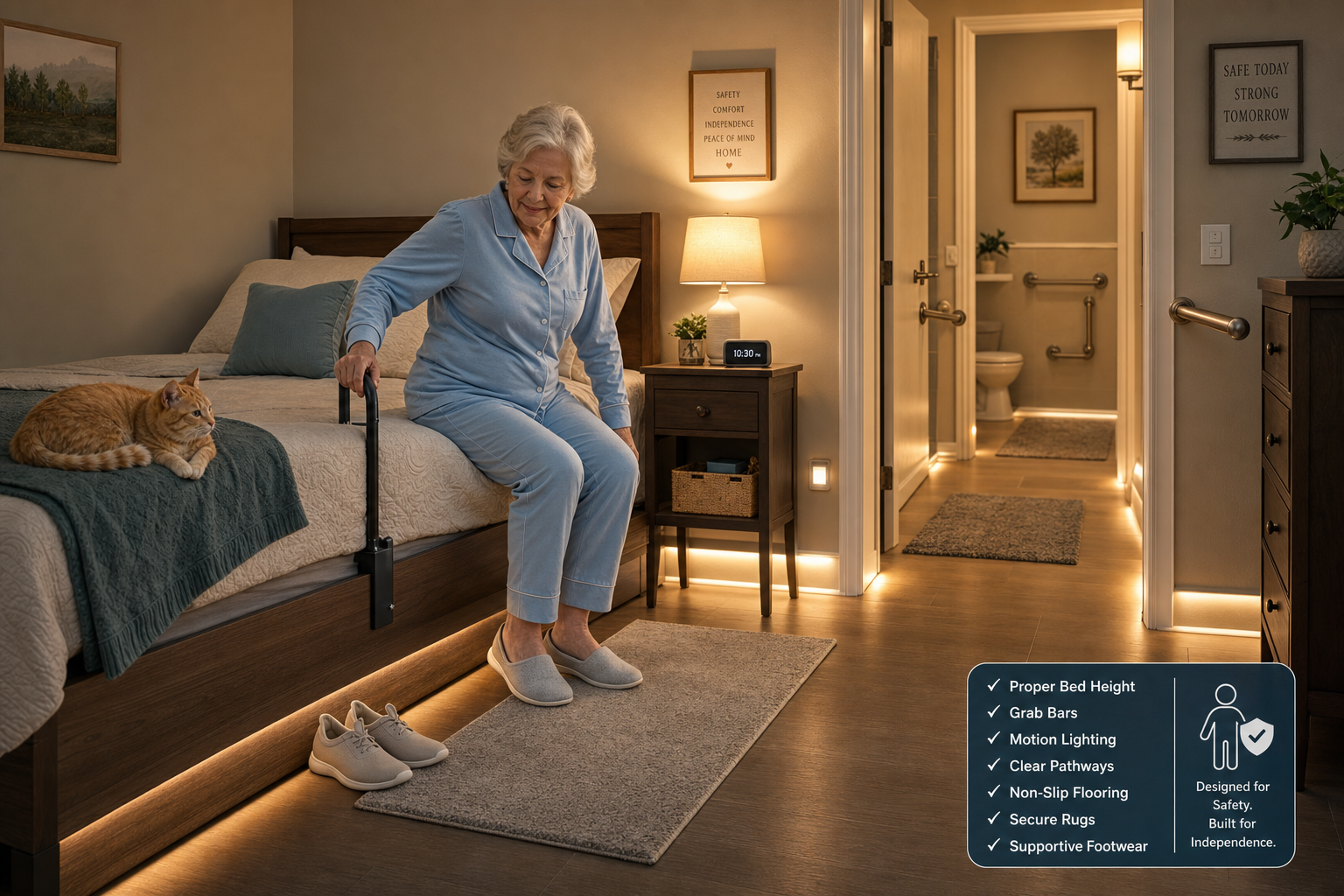
Nighttime movement creates unique hazards for older adults because visibility is reduced, changes in balance are more noticeable, and fatigue impairs coordination. Nighttime Safety For Seniors becomes especially important when people wake suddenly, rush to the bathroom, or move through dim hallways without proper support.
Bedrooms and nighttime walking paths are high-risk areas because they combine low lighting, furniture obstacles, rugs, cords, uneven flooring, and fast transitions from lying down to standing. Many falls occur during routine nighttime activities that seem harmless until balance, reaction time, or depth perception changes with age.
A prevention-focused setup improves safety before a fall occurs. Small physical adjustments throughout the bedroom, hallway, and bathroom route can reduce unnecessary risk and support safer aging in place.
Nighttime Safety For Seniors Starts With Lighting And Walking Paths
Good lighting reduces confusion, improves depth perception, and makes nighttime movement more predictable. The safest bedrooms use layered lighting rather than relying on a single bright ceiling fixture. Older adults often struggle when moving from darkness into sudden brightness, especially after waking quickly.
Motion-sensor lighting is useful because it activates automatically without requiring balance adjustments to locate a switch. Hallways, bathroom entrances, and bedside areas benefit most from this type of lighting. Walking paths should remain completely clear at all times.
Important nighttime lighting adjustments include:
- Install motion-activated floor lighting near the bed
- Keep lamp switches within arm’s reach of the mattress
- Remove decorative floor objects from walking paths
- Secure electrical cords against baseboards
- Use warm, low-glare lighting instead of harsh bulbs
- Improve visibility between the bedroom and bathroom
Furniture spacing matters as much as lighting. Sharp corners, unstable chairs, and narrow pathways increase the risk of nighttime collisions. A direct route from the bed to the bathroom should remain unobstructed every night, without temporary items such as baskets, shoes, or pet items.
Safe Bed Transfers Reduce Sudden Balance Problems
Standing too quickly after sleeping can cause dizziness, weakness, and temporary disorientation. Many falls occur within the first few seconds after leaving the bed because the body has not yet fully adjusted to upright posture. Nighttime Safety For Seniors should include safe transfer habits that slow movement patterns and reduce rushed behavior.
Bed height plays a major role in stability. Beds that sit too low require excessive effort to stand, while overly high mattresses increase instability during descent. A stable sitting position with feet flat on the floor improves the safety of transfers.
Helpful bed transfer practices include:
- Sit upright for several seconds before standing
- Keep supportive footwear beside the bed
- Avoid slippery socks on hard flooring
- Use a stable bedside table for lighting access
- Position mobility devices within easy reach
- Keep blankets from tangling around the feet
Nighttime bathroom urgency often causes people to rush. A slower transfer process usually prevents more falls than aggressive mobility equipment alone. Safe nighttime routines should prioritize controlled movement over speed.
Flooring Conditions Influence Nighttime Stability
Flooring surfaces affect traction, turning ability, and walking confidence. Loose rugs, polished floors, and uneven transitions increase the risk of nighttime falls because reduced lighting makes surface changes harder to detect. Nighttime Safety For Seniors improves when the flooring remains predictable throughout the entire walking route.
Carpet edges should lie completely flat. Small rug corners frequently catch slippers or mobility aids during nighttime movement. Flooring consistency matters because abrupt transitions between carpet and hard flooring can disrupt balance while walking.
Safer flooring strategies include:
- Remove loose throw rugs near the bed
- Use non-slip backing beneath area rugs
- Repair uneven flooring transitions immediately
- Keep pet toys off nighttime walking routes
- Avoid waxy floor treatments that reduce traction
- Replace damaged carpet with curled edges
Bathroom entrances deserve special attention because tile surfaces become slippery quickly. Moisture combined with low lighting increases instability. Simple traction improvements often significantly reduce nighttime slipping.
How to Prevent Falls in the Home
Bathroom Route Planning Prevents Dangerous Nighttime Rushing
The path between the bedroom and bathroom should remain simple, open, and easy to navigate, even when someone is half awake. Nighttime bathroom trips become hazardous when furniture blocks movement or lighting forces awkward navigation. Nighttime Safety For Seniors depends heavily on bathroom route planning, as this is one of the most frequent nighttime activities.
Older adults often rely on memory rather than visibility when walking at night. This becomes dangerous when furniture has been rearranged or temporary obstacles appear unexpectedly. Consistent room organization improves safer navigation.
Useful bathroom-route improvements include:
- Install grab bars near bathroom entrances
- Add motion lighting inside the bathroom doorway
- Remove decorative benches from hallways
- Keep mobility aids beside the bed overnight
- Use contrasting colors near doorway thresholds
- Avoid storage bins along nighttime pathways
A portable urinal or bedside commode may help individuals with severe mobility limitations or high nighttime urgency. These options reduce unnecessary walking distance during overnight hours.
Footwear Choices Affect Overnight Mobility
Many nighttime falls happen because older adults walk barefoot or wear unstable footwear while rushing to the bathroom. Slippers without traction slide easily across tile, hardwood, or laminate flooring. Nighttime Safety For Seniors includes selecting footwear specifically designed for nighttime stability rather than comfort alone.
Supportive footwear should remain easy to put on while seated at the bedside. Complicated straps or unstable slip-on designs may increase tripping risk. Shoes used for nighttime movement should stay in the exact same location every evening.
Safer nighttime footwear habits include:
- Use closed-heel slippers with non-slip soles
- Avoid oversized slippers that drag while walking
- Replace worn footwear with smooth tread surfaces
- Keep shoes directly beside the bed
- Avoid walking barefoot on hard flooring
- Use lightweight footwear with stable support
Footwear selection becomes even more important for people who use walkers or canes because slipping affects both balance and the positioning of the assistive device simultaneously.
Medication Effects And Nighttime Confusion Require Attention
Certain medications increase nighttime dizziness, grogginess, confusion, or urgency. Sleep aids, blood pressure medications, pain medications, and sedatives commonly affect overnight stability. Risk increases further when people wake abruptly and attempt to move immediately in darkness.
Medication timing sometimes contributes to repeated nighttime bathroom trips. Reviewing medication schedules with a healthcare provider may reduce overnight disruptions and the frequency of unnecessary walking.
Signs that nighttime medication effects may be increasing risk include:
- Morning confusion after nighttime medication use
- Repeated stumbling after standing up
- Increased bathroom frequency overnight
- Excessive grogginess during walking
- Difficulty focusing in dim lighting
- Delayed reaction time after waking
Hydration patterns also matter. Drinking large amounts of fluid immediately before bedtime may increase nighttime urgency and rushed walking.
https://medlineplus.gov/ency/article/003140.htm
Hallway And Stairway Safety Supports Safer Movement
Hallways and stairs become especially dangerous during overnight movement because lighting angles change and shadows distort depth perception. Older adults may misjudge stair edges or hallway obstacles while still partially asleep. A consistent environment reduces navigation errors and improves confidence.
This section also connects directly to the larger aging in place framework used throughout the site. The same environmental planning principles used for nighttime movement apply to broader fall prevention and home safety decisions. Small layout improvements often create meaningful long-term safety benefits.
Effective hallway and stairway improvements include:
- Install handrails on both sides of stairways
- Add illuminated stair-edge strips
- Use motion lighting at stair entrances
- Remove hallway furniture with narrow clearance
- Keep emergency flashlights accessible
- Secure stair carpeting tightly against the steps
System Context: Nighttime safety is one part of a larger aging in place strategy focused on reducing preventable falls and improving home navigation. Environmental consistency, lighting control, and walking-path management support safer long-term independence throughout the home.
Consistent Nighttime Habits Improve Long-Term Safety
Safe nighttime movement depends on routine as much as equipment. Predictable habits reduce rushed decisions, improve orientation, and help older adults recognize hazards before movement begins. Prevention works best when safety adjustments become automatic parts of the nighttime environment rather than occasional corrections.
Many unsafe situations develop gradually because clutter accumulates, lighting burns out, or furniture shifts over time. Regular reassessment helps maintain safe nighttime conditions as mobility needs change.
Practical long-term nighttime habits include:
- Test nighttime lighting weekly
- Keep walking routes free of storage items
- Replace burned-out bulbs immediately
- Review mobility changes every few months
- Reassess bathroom access after any fall
- Check flooring traction during cleaning routines
Consistent nighttime safety planning supports safer aging in place by reducing preventable hazards before emergencies occur. Bedrooms, hallways, and bathroom routes should function as stable movement environments every night without requiring fast reactions or risky adjustments.
_____________________________________________________________________________________________________
Get clear, practical insights on aging in place sent occasionally, and only when useful.
No spam. No noise. Unsubscribe anytime.
______________________________________________________________________________________________________