Safe Furniture Layout For Seniors
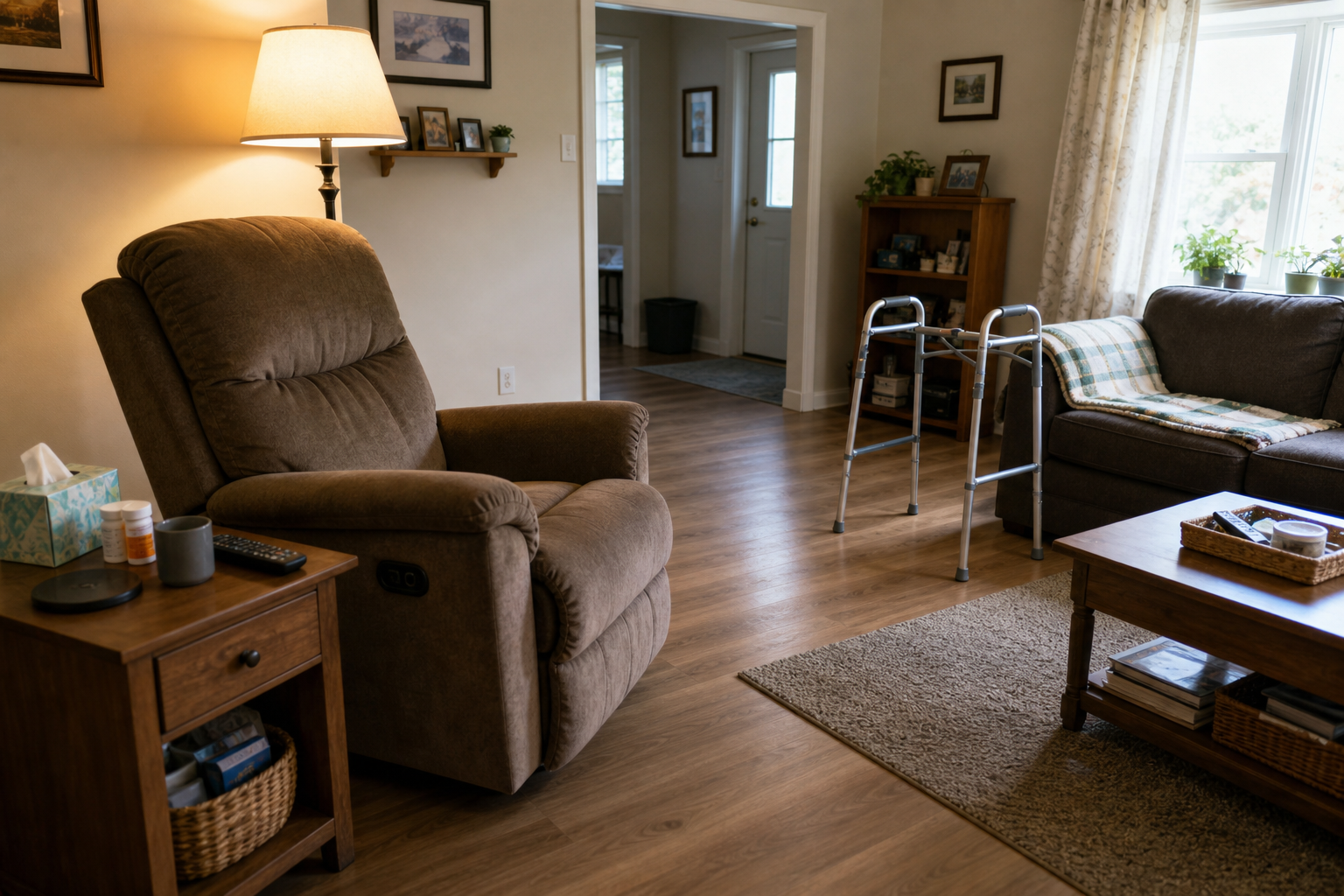
Safe Furniture Layout For Seniors is about arranging everyday rooms so walking, turning, sitting, standing, and reaching can happen without avoidable obstacles. The main risk is not the furniture itself. The risk is how furniture interrupts movement when balance, strength, eyesight, or reaction time changes.
A room can look normal and still be difficult to move through safely. A chair may sit too close to a coffee table. A side table may block a walker. A recliner may force someone to step around an ottoman in the dark. The best prevention usually starts with practical, low-cost changes before buying new furniture or considering major remodeling.
A safer layout should make daily movement easier, not make the home feel empty or institutional. The goal is a lived-in home with fewer traps, clearer paths, and better support for independent living.
Safe Furniture Layout For Seniors Starts With Clear Walking Paths
Clear walking paths reduce the most basic furniture-related fall risk.
Every main room should have an obvious route from one doorway to the next. This matters most in living rooms, bedrooms, dining areas, and any space used at night. A person should not have to twist sideways, step over footrests, squeeze between chairs, or brush against furniture while walking through the room.
Safe Furniture Layout For Seniors begins by looking at how someone actually moves through the home. The best layout is not always the prettiest layout. It is the one that allows steady movement from the chair to the bathroom, from the bedroom to the hallway, from the kitchen to the table, and from the entryway to the living area.
Useful actions include:
- Move coffee tables far enough from sofas so knees, feet, and walkers have room to pass.
- Remove small accent tables from narrow walkways.
- Place chairs so they do not block the direct route to a doorway.
- Keep power cords behind furniture instead of across open floor areas.
- Shift decorative baskets, plant stands, and magazine racks away from traffic paths.
- Leave enough open space near frequently used chairs for standing and turning.
A good test is simple. Walk the route slowly while carrying a cup of water. If the path requires sidestepping, reaching for balance, or watching every foot placement, the room needs adjustment.
Arrange Seating Around Standing And Sitting Safely
Seating should support safe transfers, not just comfort.
Many falls happen when someone is getting into or out of a chair. Low sofas, deep recliners, soft cushions, and armless chairs can make standing harder. When furniture placement forces a person to push off unevenly or step around an obstacle immediately after standing, the risk increases.
For Safe Furniture Layout For Seniors, the best seat is usually firm, stable, easy to approach, and easy to leave. The surrounding space matters as much as the chair itself. A good chair placed in a crowded corner can still create a hazard.
Practical changes include:
- Place the most-used chair near a clear walking path, not behind a coffee table.
- Choose a chair with arms so the person can push up evenly.
- Keep a small table within easy reach but not in the standing path.
- Move ottomans away from the direct route between the chair and doorway.
- Avoid placing loose footstools where feet land after standing.
- Make sure the chair does not slide when weight is placed on the arms.
The safest layout allows someone to sit, stand, pause, and begin walking without immediately having to turn around furniture. That pause matters. It gives the body time to stabilize before the next step.
Leave Turning Space For Walkers, Canes, And Slower Movement
Turning space is often overlooked until mobility becomes harder.
A person using a cane, walker, or furniture for light support needs more room than someone walking freely. Tight furniture groupings may look efficient, but they can force short, awkward steps. Turning in a narrow space can also cause the feet to cross or catch on furniture legs.
Safe Furniture Layout For Seniors should account for slower, wider, and more deliberate movement. This does not mean every room must be stripped down. It means the main routes should allow turning without bumping into chair arms, table corners, or storage pieces.
Specific actions include:
- Create open turning space near the favorite chair.
- Keep walker routes free of narrow gaps between sofas and tables.
- Move dining chairs fully under the table when not in use.
- Remove extra chairs from corners where turning is already tight.
- Keep furniture legs out of the main walking line.
- Test whether a walker can turn without lifting or dragging it.
This is especially important in homes where furniture was arranged years before mobility became an issue. A room that once worked well may now need a different layout.
Control Side Table, Lamp, And Remote-Control Hazards
Small furniture often causes large problems.
Side tables, lamps, remotes, charging cords, and reading materials tend to gather around favorite seats. These items are useful, but they can create clutter exactly where someone needs stable movement. A table placed too close may block the feet. A lamp cord may cross the standing area. A remote dropped on the floor may lead to unsafe bending.
Safe Furniture Layout For Seniors should keep necessary items reachable without crowding the body. The person should be able to sit, stand, and reach for common items without twisting hard or leaning across open space.
Helpful adjustments include:
- Place the side table on the stronger or more natural reaching side.
- Keep the table close enough for use but outside the foot path.
- Use a lamp with a switch that can be reached from the chair.
- Run charging cords behind furniture instead of across walking areas.
- Use a small tray or basket on the table for remotes and glasses.
- Remove unstable nesting tables from beside frequently used chairs.
The goal is not to remove convenience. The goal is to make convenience safer. A well-placed side table can reduce unnecessary reaching, bending, and repeated trips across the room.
Match Furniture Layout To Flooring And Surface Changes
Furniture placement should work with the floor, not fight it.
Floor transitions, area rugs, thresholds, and changes in surface texture can make walking less predictable. Furniture can make the problem worse when it forces someone to step onto a rug edge, turn on a threshold, or walk between two different surfaces while carrying something.
Safe Furniture Layout For Seniors should keep the most common routes on the most stable walking surfaces. If a rug curls, slides, or creates a raised edge, furniture should not be arranged in a way that makes that rug unavoidable.
Practical steps include:
- Move chairs so that feet do not land on the edge of an area rug.
- Remove small rugs from narrow walking routes.
- Keep heavy furniture from bunching or lifting rug corners.
- Place tables so people do not have to turn on uneven flooring.
- Keep pathways away from loose mats near doors.
- Check whether furniture legs create hidden tripping points on patterned floors.
Visual clutter also matters. Busy rugs, dark furniture legs, and low tables can be harder to judge in dim light. A simpler furniture route can make the floor easier to read.
Use Furniture Placement To Support Nighttime Movement
Nighttime movement needs its own layout plan.
A room that works during the day may become unsafe after dark. Low light, sleepiness, urgency, and poor visibility can turn ordinary furniture into obstacles. The route from bed to bathroom is especially important because it is often used when balance and attention are at their lowest.
Safe Furniture Layout For Seniors should make the nighttime path short, direct, and predictable. Furniture should not require sharp turns, sidesteps, or reaching for support in the dark. The bed, nightstand, dresser, chair, and doorway should be arranged so the path is easy to follow even with limited light.
Useful changes include:
- Move laundry baskets away from the bed-to-door route.
- Keep the nightstand close enough to reach without leaning.
- Place a lamp where it can be turned on before standing.
- Remove benches or trunks from the foot of the bed if they narrow the path.
- Keep slippers beside the bed but outside the walking line.
- Avoid placing chairs where they block the route to the bathroom.
MedlinePlus offers additional fall-prevention guidance at https://medlineplus.gov/ency/patientinstructions/000021.htm
Keep Storage Furniture From Blocking Daily Routines
Storage furniture should not make daily movement harder.
Bookcases, cabinets, dressers, consoles, and storage benches often stay where they have always been, even after the household’s needs change. These pieces can narrow walking paths, block light switches, crowd doorways, and make it harder to reach everyday items safely.
Safe Furniture Layout For Seniors works best when storage supports routines instead of interrupting them. The first step is to notice what gets used every day. Coats, shoes, medications, reading glasses, chargers, kitchen items, and personal supplies should be placed where they reduce unnecessary bending and walking.
Specific actions include:
- Move storage benches away from narrow entry paths.
- Place frequently used items between waist and shoulder height.
- Remove low decorative cabinets from tight hallways.
- Keep dresser drawers from opening into walking routes.
- Shift heavy storage pieces away from light switches and outlets.
- Use fewer storage surfaces in areas where clutter builds quickly.
This is where a short system check helps. Furniture layout, walking paths, lighting, and fall prevention all affect whether aging in place stays practical. The Aging in Place Checklist can help connect these room-level decisions to the larger home safety plan.
Home Modifications for Aging in Place
Make Furniture Changes Before Buying More Equipment
The most useful safety improvement may be moving what is already there.
Many homes do not need expensive furniture or a remodel to become easier to move through. They need fewer obstacles, better spacing, and a layout that reflects how the person actually lives now. Buying more equipment before fixing the layout can create new clutter and make movement harder.
Safe Furniture Layout For Seniors should be reviewed whenever walking, balance, or vision changes, or caregiving needs change. A layout that worked last year may need small adjustments today. The best changes are usually simple enough to test immediately.
Practical actions include:
- Walk through each room and remove one unnecessary obstacle at a time.
- Test the main route from each seat to the nearest doorway.
- Rearrange furniture before buying new chairs, tables, or storage pieces.
- Keep only the most useful table near each favorite seat.
- Recheck the layout after adding a cane, walker, or lift chair.
- Ask whether each piece of furniture helps daily living or hinders it.
Prevention is easier when the home is treated as adjustable. Small layout changes can preserve independence, reduce avoidable strain, and make daily routines safer without turning the home into a medical setting.
Living Room Safety For Seniors
_____________________________________________________________________________________________________
Get clear, practical insights on aging in place sent occasionally, and only when useful.
No spam. No noise. Unsubscribe anytime.
______________________________________________________________________________________________________