Living Room Safety For Seniors
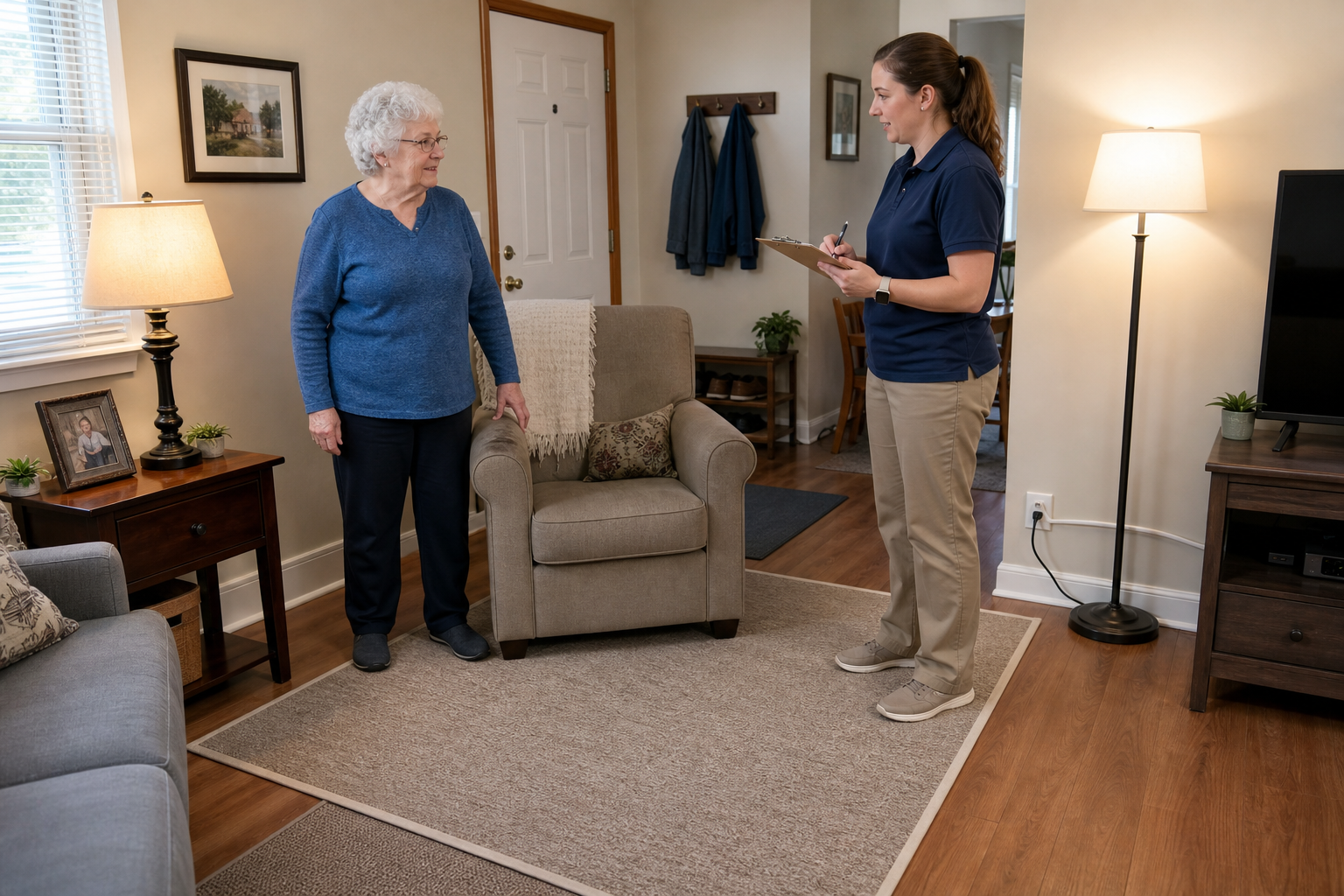
Living room safety for seniors is often overlooked, even though this is one of the most frequently used spaces in the home. It is where sitting, standing, walking, and reaching happen repeatedly throughout the day. Each of these movements carries risk when furniture, lighting, or layout are not optimized for stability and ease of use.
Unlike bathrooms or stairways, the living room feels familiar and comfortable. That familiarity can hide hazards. Prevention requires a deliberate approach to how the space is arranged and used. Small adjustments in furniture placement, lighting, and walking paths can significantly reduce fall risk and improve day-to-day independence.
The goal is not to redesign the room entirely, but to refine it so that movement is predictable, stable, and supported.
Living Room Safety For Seniors Starts With Stable Seating And Safe Transfers
Seating height and stability are the living room equivalents of bed safety and must be addressed first.
Low, soft couches create instability when standing. Deep cushions force the body into awkward positions, increasing strain on knees and hips. Chairs that shift or slide during transfers immediately increase fall risk.
Practical adjustments include:
- Choose chairs with firm cushions that do not compress excessively
- Ensure seat height allows feet to rest flat on the floor when seated
- Use armrests that are strong enough to support pushing up
- Remove rocking chairs or unstable seating from primary use areas
- Test each seat by sitting and standing multiple times
A stable sitting position allows controlled movement. When this is ignored, even a well-lit room can still be unsafe.
Clear Walking Paths And Remove Hidden Obstacles
A clear path through the living room is one of the most effective ways to reduce falls.
Many homes develop narrow pathways over time due to added furniture or decorative items. These small obstructions force adjustments in walking patterns, increasing the chance of tripping.
Focus on creating direct, unobstructed routes:
- Maintain at least 30–36 inches of clear walking space
- Remove small tables or stands that interrupt movement
- Relocate decorative items that extend into pathways
- Avoid placing furniture diagonally in walking areas
- Keep pet beds, cords, and baskets out of traffic zones
Consistent walking patterns reduce hesitation and missteps. Living room safety for seniors improves immediately when the layout supports predictable movement.
Lighting That Supports Safe Movement Day And Night
Lighting must be functional, not decorative.
Dim lighting or shadows can obscure edges, cords, or uneven surfaces. Seniors often move through the living room during early morning or evening hours when visibility is reduced.
Improve lighting with targeted adjustments:
- Install bright overhead lighting that evenly illuminates the room
- Add floor or table lamps near seating areas
- Use bulbs with consistent brightness across all fixtures
- Position lights to eliminate shadows on walking paths
- Install motion-activated lighting for nighttime movement
Good lighting reduces hesitation and helps identify hazards before they become a problem.
How to prevent falls in the home
Secure Rugs And Eliminate Floor Instability
Loose rugs are a primary fall hazard in living rooms.
Even rugs that appear stable can shift slightly underfoot. Edges can curl, and surfaces can bunch, creating unpredictable footing.
Address this directly:
- Remove small area rugs that are not essential
- Use non-slip backing under any remaining rugs
- Tape down rug edges to prevent curling
- Replace thick rugs with low-profile alternatives
- Avoid layered rugs entirely
Stable flooring allows confident walking. Living room safety for seniors depends heavily on eliminating shifting surfaces.
Manage Electrical Cords And Reduce Clutter
Electrical cords are frequently overlooked but create serious tripping hazards.
Living rooms often have multiple devices, including lamps, televisions, and charging stations. These create cord pathways that cross walking areas.
Reduce risk by organizing cords effectively:
- Route cords along walls instead of across floors
- Use cord covers to secure them in place
- Bundle excess cord length with ties
- Position outlets to minimize extension cord use
- Remove unused electronics and associated wiring
Clutter has a similar effect. Excess items reduce space and create unpredictable obstacles.
Living room safety for seniors improves when the environment is simplified and intentional.
Stable Furniture Placement And Anchor Points
Furniture should support movement, not interfere with it.
Many seniors use furniture as informal support while walking. If that furniture shifts, the result can be a sudden loss of balance.
Create reliable anchor points:
- Position chairs and tables so they do not move when leaned on
- Avoid lightweight furniture that slides easily
- Place frequently used items within arm’s reach of seating
- Anchor tall furniture to the wall to prevent tipping
- Keep frequently used seating in consistent locations
Furniture placement should reinforce safe movement patterns rather than disrupt them.
https://medlineplus.gov/ency/patientinstructions/000021.htm
Optimize Seating Areas For Daily Use
The living room often serves multiple functions, but not all seating areas are equally safe.
Primary seating should be easy to access and positioned close to key pathways. Secondary seating can remain, but should not interfere with movement.
Refine the layout with purpose:
- Designate one primary seating area for daily use
- Place seating close to entrances and exits
- Avoid forcing long walking distances across the room
- Keep frequently used items nearby to reduce reaching
- Ensure clear sightlines to avoid disorientation
Consistency reduces cognitive load and physical strain.
Living room safety for seniors becomes more reliable when daily patterns are supported by the layout.
Reinforce Safe Movement Habits In The Living Room
A safe environment only works when paired with consistent behavior.
Even with an ideal setup, rushing, carrying too many items, or moving in low light increases risk. The living room should support controlled, deliberate movement.
Encourage safe habits:
- Stand up slowly from seated positions
- Pause before walking to regain balance
- Avoid carrying items that block vision
- Use available support points when needed
- Turn on lights before entering the room at night
These habits align with the physical setup of the room and reinforce long-term safety.
© 2026 Mark Fomenko. All rights reserved.
AgingInPlaceResource.com
Privacy Policy | Terms of Use | Disclaimer | Contact | Newsletter
Recent Articles


-
Aging In Place Resource Library
Sep 04, 26 08:30 AM
Aging In Place Resource Library -
Aging in Place Resource Newsletter
Aug 30, 26 11:16 AM
Aging in Place Resource Newsletter -
Aging in Place Resource: Simple Strategies for Living Safely at Home
Jul 28, 26 12:43 PM
 Aging in Place Resource provides practical guidance for aging in place. Learn how to live safely and independently at home with strategies for home safety, caregiving, planning, and long-term support.