Preventing Falls In The Bathroom At Night
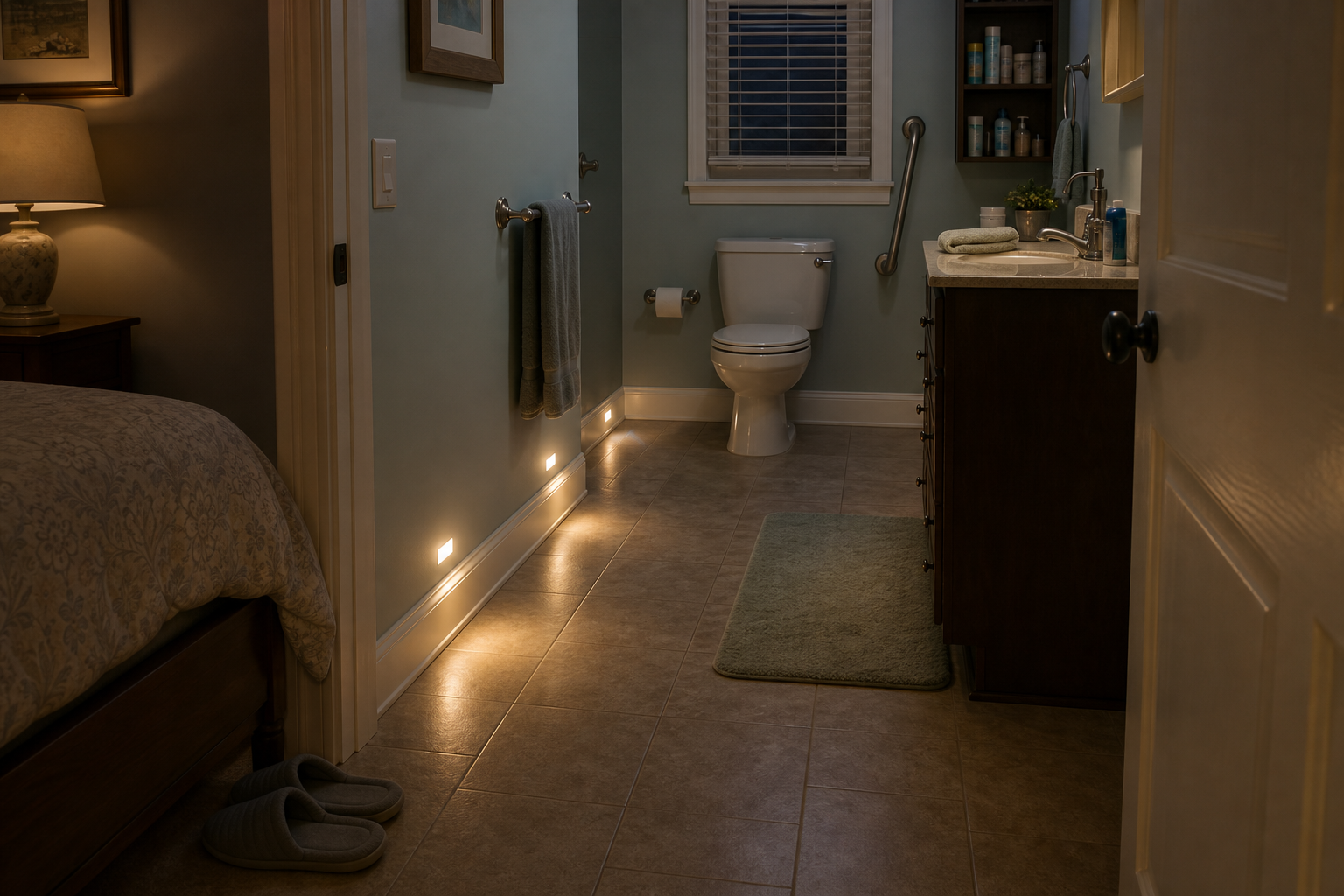
Preventing Falls In The Bathroom At Night means reducing the risk of falls when someone gets out of bed, walks through a dark or dim hallway, enters the bathroom, uses the toilet, washes their hands, and returns to bed while still sleepy. The danger is not one single thing. It is the combination of poor lighting, urgency, slick surfaces, loose rugs, narrow paths, unstable supports, and rushed movement.
This problem creates real risk at home because nighttime bathroom trips occur when reaction time is slower, and balance is less steady. The goal is not to turn the house into a medical space. The goal is to make ordinary movement easier, clearer, and safer with affordable changes that support independence.
A safer nighttime bathroom routine should feel simple. The best prevention usually comes from fixing the path, improving visibility, reducing slippery surfaces, and making each movement more predictable.
Preventing Falls In The Bathroom At Night Starts With The Walking Path
The walking path is the first risk to fix.
A nighttime bathroom trip usually begins before the bathroom door. The person may be waking from deep sleep, moving in low light, and trying to reach the toilet quickly. If the route includes shoes on the floor, laundry baskets, cords, throw rugs, pet beds, or furniture corners, the bathroom fall risk starts in the bedroom or hallway.
Keep the route simple and repeatable every night. The safest path is wide enough for a cane, a walker, or a steady hand if needed. Preventing Falls In The Bathroom At Night becomes much easier when the person does not have to step around objects or make quick decisions while half awake.
Useful changes include:
- Remove loose items from the floor between the bed and bathroom.
- Move laundry baskets, storage bins, and shoes away from the walking route.
- Keep the bathroom door partly open if that makes the toilet easier to find.
- Place a stable chair or dresser away from the path, not beside it.
- Check that walkers or canes are parked within reach before standing.
The route should look boring. That is a good thing. A boring nighttime path is easier to use safely.
Use Lighting That Guides The Whole Trip
Good lighting should guide movement without creating glare.
A single bright ceiling light may not solve the problem if the person has to cross a dark room to reach the switch. The better approach is layered lighting that begins at the bed, continues through the path, and makes the toilet area visible. Motion-sensor night lights are often inexpensive and useful when placed correctly.
Preventing Falls In The Bathroom At Night depends on seeing edges, turns, floor changes, and fixtures. Light should reveal the route without making the person squint or feel startled. Harsh light can briefly reduce vision when someone wakes up suddenly.
Practical lighting steps include:
- Put a touch lamp or easy switch within reach of the bed.
- Add motion-sensor night lights along the bedroom-to-bathroom route.
- Place a night light inside the bathroom, not only in the hallway.
- Use warm, steady light instead of flickering or overly bright bulbs.
- Test the route at night from bed level, not only during the day.
Home Lighting Safety For Seniors
Make The Bathroom Floor Less Slippery
The bathroom floor needs special attention because water changes the risk immediately.
Tile, vinyl, and smooth bathroom flooring can become dangerous when a small amount of water is present. A few drops near the sink, toilet, or tub can matter at night because the person may not see them. Bare feet, loose slippers, and worn socks can also reduce traction.
Preventing Falls In The Bathroom At Night requires a floor that is dry, clear, and easy to step on. Avoid decorative rugs that slide or bunch. If a bath mat is needed, use one with a secure non-slip backing and keep it outside the main walking path when possible.
Focus on these actions:
- Remove loose throw rugs from the bathroom floor.
- Wipe down the area around the sink, toilet, and tub before bedtime.
- Use a non-slip bath mat only where it stays flat and secure.
- Replace curled, cracked, or loose edges of flooring.
- Wear slippers with firm backs and non-slip soles instead of socks alone.
Improve Toilet Transfers Before The Nighttime Trip
The toilet transfer is one of the most important moments.
Many bathroom falls happen during sitting, standing, turning, or adjusting clothing. At night, these movements are harder because the person may feel rushed or groggy. A low toilet, weak lighting, or nothing stable to hold can turn a routine movement into a fall risk.
The goal is to make the transfer slow, supported, and predictable. The toilet area should allow the person to turn fully, lower themselves without dropping, and stand without pulling on towel bars or sink edges. Towel bars are not grab bars. They are not designed to hold body weight.
Helpful changes include:
- Install a properly mounted grab bar beside the toilet if support is needed.
- Consider a raised toilet seat if the toilet is too low.
- Keep toilet paper within easy reach to avoid twisting.
- Remove small trash cans or scales from the foot area.
- Practice standing slowly before taking the first step away from the toilet.
Keep The Sink Area Dry And Easy To Use
The sink area should not force reaching, twisting, or stepping around clutter.
After using the toilet, many people wash their hands while still sleepy. If the sink counter is crowded, the floor is damp, or the soap is hard to reach, the person may lean awkwardly or take an unsteady sidestep. These small movements matter more at night than they do during the day.
Preventing Falls In The Bathroom At Night includes making the sink area simple. Put the items used every night in predictable places. Keep the counter clear enough that nothing gets knocked to the floor. A dropped cap, comb, toothpaste tube, or medication bottle can become a trip hazard.
Use these physical adjustments:
- Move the soap to the front of the sink so it can be easily reached.
- Keep the hand towel close enough to use without having to lean.
- Remove rarely used bottles from the counter before bedtime.
- Dry the sink edge and the nearby floor if water often splashes.
- Use a stable wastebasket location away from the feet.
Review Medication, Hydration, And Timing Without Overcomplicating It
Nighttime bathroom risk is often affected by evening habits.
Some people wake often because they drink a lot late in the evening. Others may feel dizzy when they first stand. Some medications can affect urgency, alertness, balance, or nighttime bathroom frequency. This does not mean every issue needs to become medicalized, but it does mean the routine deserves attention.
A practical approach is to look for patterns. If bathroom trips happen at the same time every night, or if the person feels rushed every time, the household can adjust the evening setup. Keep water available, but avoid unnecessarily large drinks right before bed unless there is a specific reason.
Useful steps include:
- Keep a small bedside water glass instead of a large container.
- Use the bathroom shortly before getting into bed.
- Stand at the bedside for a few seconds before walking.
- Keep glasses, hearing aids, and mobility aids within reach.
- Note whether dizziness, urgency, or confusion is happening repeatedly.
Make The Bedroom-To-Bathroom Routine Automatic
A safe routine reduces decisions.
The more predictable the nighttime trip becomes, the less the person has to figure out in the dark. That matters because nighttime movement is not the time for problem-solving. The body should already know where the slippers are, where the light is, where the cane is, and which path to follow.
Preventing Falls In The Bathroom At Night works best when the setup is reset every evening. This does not need to be complicated. A family member or the older adult can do a one-minute check before bed.
A simple reset can include:
- Put slippers in the same position beside the bed every night.
- Place the cane or walker on the stronger side if that is the usual pattern.
- Move pets out of the walking path before the lights go off.
- Check that night lights are working.
- Make sure the bathroom floor is dry.
- Leave the bathroom door in the safest position, either open or closed.
Small routines are easier to maintain than large systems. The point is to make the safe choice the normal choice.
The Aging in Place Checklist helps connect nighttime bathroom safety with the larger home safety plan. A bathroom route is not separate from fall prevention. It is one of the daily movement patterns that determines whether a person can continue to live safely at home.
How to Prevent Falls in the Home
Choose Affordable Changes Before Major Remodeling
Most homes can be made safer without expensive remodeling.
A full bathroom renovation may be helpful in some cases, but it should not be the first assumption. Many nighttime fall risks can be reduced with better lighting, clearer paths, safer footwear, grab bars, non-slip surfaces, and smarter item placement. These changes are practical because they match how people actually move through the home.
Preventing Falls In The Bathroom At Night should begin with the lowest-cost fixes that remove the most obvious hazards. After that, larger changes can be considered if the person still struggles with transfers, balance, or bathroom access.
Start with these priorities:
- Remove tripping hazards before buying new equipment.
- Add night lights before changing fixtures.
- Improve footwear before changing the floor.
- Install real grab bars before relying on towel bars.
- Reposition everyday items before adding storage furniture.
- This means reorganizing the items already being used before buying new cabinets, shelves, carts, or furniture.
For example:
- Move frequently used toiletries from a low cabinet to the sink counter to reduce bending.
- Put toilet paper within arm’s reach instead of across the bathroom. Store nighttime medications in a stable bedside organizer instead of a distant drawer.
- Move towels closer to the shower exit to reduce walking on a wet floor.
- Relocate a laundry basket that blocks the nighttime path.
The underlying idea is that many fall risks come from awkward movement patterns, not a lack of storage space. Rearranging existing items is often cheaper, faster, and more effective than adding more furniture that can create additional obstacles.
Prevention is not a single purchase. It is a set of physical changes that make the same nightly movement safer over time. When the route from bed to bathroom is clear, lit, dry, and predictable, independent living becomes more realistic and less fragile.
_____________________________________________________________________________________________________
Get clear, practical insights on aging in place sent occasionally, and only when useful.
No spam. No noise. Unsubscribe anytime.
______________________________________________________________________________________________________