Home Lighting Safety For Seniors
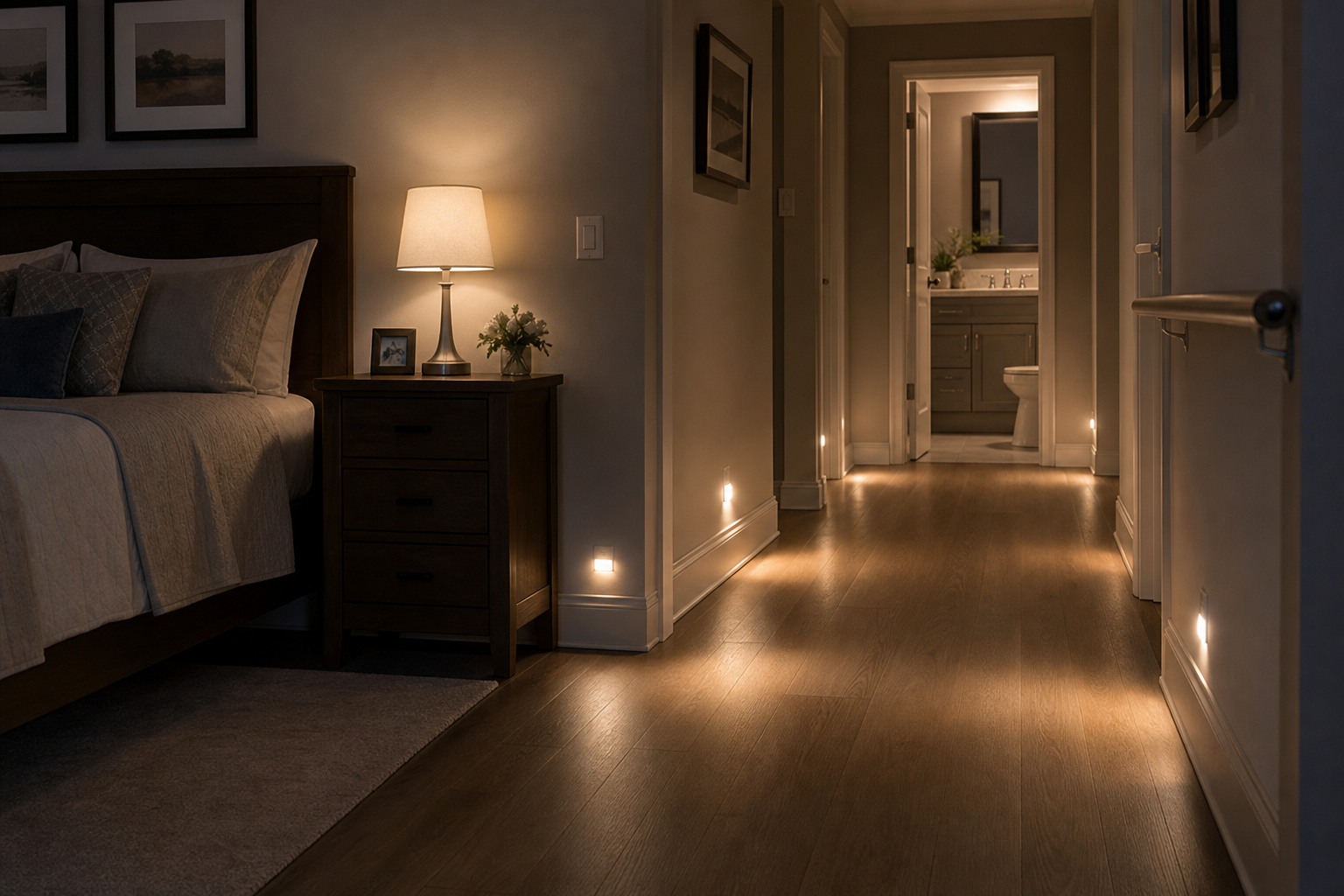
Home lighting safety for seniors is one of the most overlooked factors in fall prevention, yet poor lighting directly increases the risk of trips, missteps, and disorientation. Shadows, glare, and dim pathways make even familiar spaces dangerous, especially during nighttime movement or transitions between rooms.
The bedroom is a high-risk environment because it combines low light conditions with frequent movement during vulnerable times, such as waking up at night. Vision adjusts more slowly, balance is reduced, and obstacles are harder to detect. A prevention mindset means treating lighting as a safety system, not just a comfort feature.
When lighting is planned correctly, it supports movement, improves depth perception, and reduces hesitation that can lead to instability.
Lighting Placement And Home Lighting Safety For Seniors
Lighting placement is the foundation of safe movement and must eliminate shadows and blind spots. Home lighting safety for seniors begins with ensuring that light reaches all walking surfaces, especially along the path from the bed to the doorway and bathroom.
Poor placement creates uneven illumination, where the eye struggles to adjust between bright and dark areas. This delay can cause hesitation or misjudgment of distance.
To improve placement:
• Position lamps so light spreads across the floor, not just upward
• Use multiple light sources instead of relying on one overhead fixture
• Place lighting near transitions such as doorways and hall entrances
• Eliminate dark corners where furniture edges may be hidden
• Ensure light coverage along the full path to the bathroom
Balanced lighting allows the eyes to process space quickly and accurately, reducing the likelihood of a misstep.
Nighttime Visibility And Pathway Illumination
Nighttime movement is one of the most dangerous situations in the home, especially when waking suddenly. Lighting must support immediate visibility without requiring complex actions.
Soft, continuous lighting is more effective than switching on bright overhead lights, which can cause temporary blindness and disorientation.
To improve nighttime visibility:
• Install motion-activated night lights along the bed-to-bathroom path
• Use low-level floor lighting to define walking routes
• Keep a bedside lamp within arm’s reach
• Avoid complete darkness in sleeping areas
• Ensure hallway lighting activates automatically when movement is detected
Reducing Glare And Eye Strain
Glare can be just as dangerous as poor lighting because it obscures vision and creates false depth perception. Home lighting safety for seniors must include glare control to maintain clear visual input.
Glare often comes from uncovered bulbs, reflective surfaces, or improperly angled lights. It can make it difficult to distinguish edges, steps, or obstacles.
To reduce glare:
• Use lampshades or diffusers to soften light output
• Position lights so they do not shine directly into the eyes
• Avoid glossy surfaces that reflect light sharply
• Choose matte finishes for furniture and flooring when possible
• Adjust light angles to illuminate surfaces without creating hotspots
Proper glare management allows consistent visual clarity throughout the room.
How to Prevent Falls in the Home
Light Switch Accessibility And Ease Of Use
Lighting is only effective if it can be activated instantly and without effort. Switch placement is critical in home lighting safety for seniors.
Reaching across a dark room to find a switch introduces unnecessary risk. Delays in turning on lights increase the likelihood of moving in unsafe conditions.
To improve accessibility:
• Install switches near bed entry points
• Use large, easy-to-press rocker switches
• Add remote-controlled lighting systems
• Ensure switches are at a comfortable height
• Label or differentiate switches if multiple controls exist
Consistent Lighting Between Rooms
Lighting inconsistency between rooms can disrupt visual adaptation. Moving from a bright room into a dim one can temporarily reduce visibility, increasing the risk of falls.
Home lighting safety for seniors should ensure smooth transitions between spaces, especially along common pathways.
To maintain consistency:
• Match brightness levels between connected rooms
• Avoid sudden changes in light intensity
• Use similar color temperatures throughout the home
• Ensure hallways are as well-lit as main rooms
• Eliminate dark transition zones between spaces
Consistency supports stable movement and reduces hesitation.
Choosing The Right Bulbs And Brightness Levels
Bulb selection directly affects visibility, contrast, and comfort. Lighting that is too dim hides hazards, while overly bright lighting can create glare.
Home lighting safety for seniors depends on selecting bulbs that provide clear, even illumination.
To optimize lighting:
• Use bulbs with sufficient brightness for full room coverage
• Choose warm or neutral tones for comfortable visibility
• Avoid flickering or aging bulbs that reduce clarity
• Replace bulbs regularly to maintain consistent output
• Use higher brightness levels in task areas such as reading or dressing
https://pmc.ncbi.nlm.nih.gov/articles/PMC7828303/
Floor-Level Lighting And Obstacle Detection
Floor-level lighting improves depth perception and helps identify obstacles quickly. It is especially useful in areas where tripping hazards are more likely.
Lighting that reaches the floor ensures that objects such as rugs, cords, or furniture legs are clearly visible.
To enhance floor-level visibility:
• Install low-mounted lights along baseboards
• Use under-bed lighting to illuminate immediate surroundings
• Highlight edges of furniture near walking paths
• Ensure rugs and floor transitions are well-lit
• Add lighting to stair edges if applicable
Reinforcing Safe Movement Through Lighting Design
Lighting should actively guide movement, not just illuminate space. Strategic design supports predictable, stable navigation throughout the home.
When lighting reinforces pathways, it reduces decision-making during movement and allows for more confident mobility.
To reinforce safe movement:
• Create clearly defined lighted paths between key areas
• Align lighting with natural walking routes
• Avoid clutter that blocks light distribution
• Maintain consistent lighting schedules for daily routines
• Regularly review lighting effectiveness as needs change
System Context: Lighting is a core component of fall prevention and supports safe aging in place by improving visibility, navigation, and confidence during movement. This page connects directly to broader safety planning and should be used alongside the Aging in Place Checklist to reinforce a complete home safety system.
_____________________________________________________________________________________________________
Get clear, practical insights on aging in place sent occasionally, and only when useful.
No spam. No noise. Unsubscribe anytime.
______________________________________________________________________________________________________