Senior-Friendly Kitchen Organization
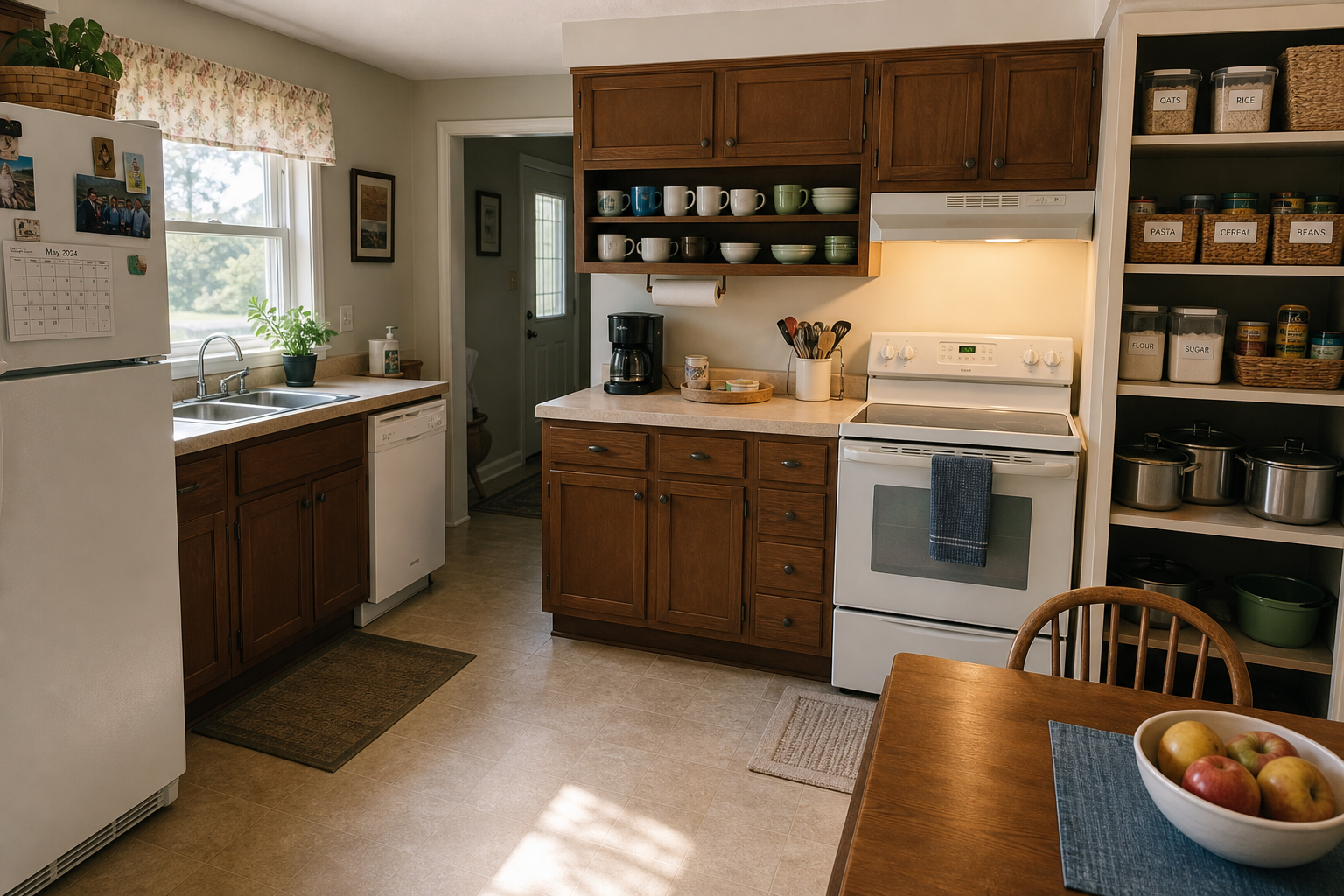
Senior-Friendly Kitchen Organization is about arranging a kitchen so that normal daily tasks require less reaching, bending, lifting, turning, and searching. The main risk is usually not a single dramatic hazard. It is the repeated strain of ordinary movements done in a crowded room with hard floors, hot surfaces, sharp tools, and limited space.
A safer kitchen does not require expensive remodeling. Most improvements come from moving items to better locations, reducing clutter, simplifying routines, and making the most-used tools easier to see and reach. The goal is practical independence, not a perfect kitchen.
Small changes matter because the kitchen is used every day. A poorly organized kitchen can turn coffee, breakfast, medication, dishes, or a simple snack into a series of unnecessary risks.
Senior-Friendly Kitchen Organization Starts With Reducing Reach And Bend Risks
The safest kitchen setup keeps daily items between shoulder height and hip height.
High shelves and low cabinets create avoidable movement problems. Reaching overhead can affect balance, especially when the person is holding a plate, pan, mug, or food container. Deep bending can also be risky because it shifts weight forward and makes it harder to recover if balance changes. Senior-Friendly Kitchen Organization should begin by identifying which items are used daily and placing them in the easiest-to-reach zones.
Start with a practical review, not a complete kitchen overhaul. Watch where strain happens during normal use. The problem may be a coffee mug stored too high, a heavy pan kept in a bottom cabinet, or breakfast items scattered across several locations.
Useful first changes include:
- Move daily plates, bowls, and mugs to a shelf at waist-to-chest height.
- Store heavy pots in an upper drawer or cabinet shelf that does not require deep bending.
- Place cereal, tea, coffee, and commonly used foods in one easy-reach area.
- Remove rarely used appliances from the prime counter space.
- Keep a sturdy step stool out of the routine by moving needed items lower.
The best first test is simple. A person should be able to prepare a basic meal or drink without reaching overhead, kneeling, twisting sharply, or carrying items across the whole kitchen.
Store Daily Items Where They Are Actually Used
Daily kitchen items should live close to the task they support.
Many kitchens are organized by category instead of use. All glasses go in one cabinet, all spices go in another, and all pans go wherever they fit. That may look orderly, but it can create extra steps and unnecessary carrying. Senior-Friendly Kitchen Organization works better when the kitchen is arranged around common routines.
For example, coffee supplies should be close to the coffee maker. A favorite bowl and spoon can be stored near breakfast foods. Cutting boards should be close to the main prep area. Dish towels should be near the sink, not across the room. The less distance between task and tool, the fewer chances there are to drop something, trip, or become fatigued.
Good task-based storage includes:
- Keep coffee, filters, mugs, and sweetener near the coffee maker.
- Store a cutting board, small knife, and mixing bowl near the main counter.
- Place dish soap, sponge, and towels within easy reach of the sink.
- Keep frequently used seasonings near the stove but away from direct heat.
- Store food containers and lids together near the area where leftovers are packed.
This kind of organization also helps family caregivers see what is missing, duplicated, or becoming difficult to manage.
Reduce Carrying Across The Kitchen
Carrying fewer items over shorter distances lowers risk.
The kitchen often requires people to move while holding things. That may include a hot cup of coffee, a full plate, a pot of water, groceries, or leftovers. Carrying becomes more hazardous when pathways are narrow, counters are cluttered, or the person has to turn while holding something. A senior-friendly kitchen should create short, predictable routes between storage, preparation, cooking, and eating areas.
The simplest improvement is to create landing zones. A landing zone is a clear counter space where something can be set down before the next movement. This matters when moving food from the refrigerator to the counter, from the stove to the plate, or from the sink to the dish rack.
Practical carrying reductions include:
- Clear one counter area next to the refrigerator for setting items down.
- Keep one section of counter open beside the stove for safe pan movement.
- Use a small tray to move several light items instead of making multiple trips.
- Store everyday dishes close to the eating area when possible.
- Avoid storing heavy drinks, cans, or jars on the lowest shelves.
A small rolling cart can help in some kitchens, but only if the floor is smooth, the pathway is wide, and the cart does not become another obstacle. If the kitchen is tight, a clear counter is usually safer than adding more furniture.
Make Counters Clear Enough To Use
Counter space should support movement, not storage overflow.
A cluttered counter forces awkward workarounds. People may prepare food on a tiny open corner, set hot dishes too close to the edge, or stack items where they can fall. Senior-Friendly Kitchen Organization depends on having at least one reliable work area that stays open every day.
This does not mean the kitchen has to look bare. A realistic home may have a toaster, coffee maker, fruit bowl, mail, pill organizer, and dish rack. The issue is whether the counter still allows safe food preparation and safe set-down space. A messy but functional kitchen can be safer than a decorative kitchen where nothing useful is within reach.
Start by deciding which items deserve permanent counter space. Anything used daily may stay if it does not block movement. Anything used weekly or less should usually be moved to a cabinet, pantry shelf, or nearby storage area.
Useful counter rules include:
- Keep at least one clear prep space near good lighting.
- Move decorative items away from work areas.
- Keep cords behind appliances instead of across counters.
- Place sharp tools in a stable holder or drawer, not loose on the counter.
- Remove stacks of papers from areas used for food, heat, or water.
Once a clear work zone exists, daily cooking becomes easier and safer without buying anything.
Organize Cabinets So Heavy Items Stay Stable
Heavy kitchen items should be stored where they can be moved without strain.
Pots, pans, mixing bowls, canned goods, glass containers, and small appliances can become risky when stored too high, too low, or too deep inside cabinets. The danger is not only dropping something. The larger issue is losing balance while trying to pull weight from an awkward angle.
A better cabinet layout places heavier items at mid-level whenever possible. If lower storage is the only option, the item should be near the front rather than buried behind other objects. Deep cabinets are especially troublesome because they encourage reaching, leaning, and pulling.
Practical cabinet changes include:
- Store heavy cookware on the front half of a lower shelf.
- Move lightweight plastic containers to higher shelves.
- Keep canned goods in shallow rows so labels are visible.
- Remove duplicate pots, lids, and pans to free up storage space.
- Use simple shelf risers only when they make items easier to see and reach.
- Place rarely used serving dishes outside the main kitchen work zone.
Cabinet organization should be based on actual use. The favorite saucepan deserves the easiest spot. The holiday platter does not.
Improve Visibility Inside Drawers, Cabinets, And Pantry Areas
Better visibility reduces searching, stretching, and rushed movement.
A poorly lit or crowded storage area makes kitchen tasks harder than they need to be. People may pull out the wrong item, knock things over, or keep bending and reaching while searching. This is especially common in deep pantry shelves, dark lower cabinets, junk drawers, and crowded utensil drawers.
Visibility improvements are usually inexpensive. Better labels, fewer duplicates, shallow containers, and brighter task lighting can make the kitchen easier to use. Senior-Friendly Kitchen Organization should make the right item obvious without digging.
Helpful visibility changes include:
- Place similar items in small bins that can be pulled forward.
- Use large-print labels on pantry containers when packages look similar.
- Keep the most-used utensils in the front section of the drawer.
- Remove expired food so shelves are easier to scan.
- Add battery-powered stick-on lights inside dark cabinets if needed.
- Store clear containers at eye level only if they are light enough to handle safely.
Food safety also depends on being able to see dates, labels, and storage conditions. MedlinePlus offers practical food safety guidance to help prevent foodborne illness at home.
https://medlineplus.gov/ency/patientinstructions/000021.htm
Simplify Meal Preparation Zones
Meal preparation is safer when each routine has a simple path.
My mother was an excellent cook and baker for many years and eventually pretty much forgot how to cook. Families sometimes notice cognitive decline in the kitchen long before they notice it during ordinary conversation. A parent may still seem socially normal while quietly losing the ability to manage complex cooking tasks. One common pattern is a gradual narrowing of meal preparation abilities. A person who once prepared full dinners from memory may slowly stop cooking altogether except for very simple foods like scrambled eggs, sandwiches, toast, or coffee. The change is often subtle because these simpler routines remain deeply familiar and automatic. In many homes, changes in cooking habits are among the clearest early signs that kitchen organization, supervision, and safety need more attention.
Many older adults do not need a redesigned kitchen. They need a kitchen that supports the meals they actually make. A person who eats toast, soup, fruit, sandwiches, frozen meals, or simple dinners does not need every tool within reach. The safest layout supports realistic habits.
Create zones for repeated tasks. A breakfast zone might include cereal, bowls, spoons, coffee supplies, and napkins. A light-meal zone might include a cutting board, a plate, a small knife, sandwich items, and easy-to-reach containers. A cleanup zone should keep dish soap, towels, trash bags, and cleaning cloths together.
Aging in place works best when the home supports everyday activities rather than requiring constant extra effort. Senior-Friendly Kitchen Organization directly supports fall prevention by reducing unnecessary walking, reaching, bending, and carrying. The Aging in Place Checklist can help connect kitchen changes with other home safety decisions.
Good preparation-zone changes include:
- Keep breakfast items together in one cabinet or on a shelf.
- Store one easy-to-use pan near the stove instead of several stacked pans.
- Place snacks and light meals at an easy height.
- Keep trash and recycling routes clear of bags, boxes, and loose items.
- Set up one drawer for the few utensils used most often.
Keep Senior-Friendly Kitchen Organization Easy To Maintain
The kitchen should be organized in a way that can be maintained on an ordinary day.
A complicated system usually fails. Fancy bins, perfect labels, and detailed storage categories may look good once, but they can become frustrating if they require too much effort. A practical system should be easy to reset after groceries, meals, dishes, and family visits.
Maintenance is where many kitchens become unsafe again. A cleared counter slowly fills with mail. A safe pantry becomes crowded with duplicates. A good walking path collects bags, pet bowls, boxes, or small stools. Senior-Friendly Kitchen Organization works only when the easiest choice is also the safest choice.
Simple maintenance habits include:
- Remove one unused item whenever a new kitchen item is added.
- Keep grocery bags off the floor immediately after unloading.
- Return daily items to the same easy-reach location every time.
- Check lower cabinets monthly for items that have migrated too far back.
- Keep one visible donation box outside the kitchen for duplicate tools.
- Review the refrigerator weekly so old food does not crowd out safe choices.
The kitchen should support daily independence without creating a new organizing burden. A safer layout is one that remains usable when the person is tired, distracted, or moving more slowly than usual.
© 2026 Mark Fomenko. All rights reserved.
AgingInPlaceResource.com
Privacy Policy | Terms of Use | Disclaimer | Contact | Newsletter
Recent Articles


-
Aging In Place Resource Library
Sep 04, 26 08:30 AM
Aging In Place Resource Library -
Aging in Place Resource Newsletter
Aug 30, 26 11:16 AM
Aging in Place Resource Newsletter -
Aging in Place Resource: Simple Strategies for Living Safely at Home
Jul 28, 26 12:43 PM
 Aging in Place Resource provides practical guidance for aging in place. Learn how to live safely and independently at home with strategies for home safety, caregiving, planning, and long-term support.