Preventing Falls Around Pets
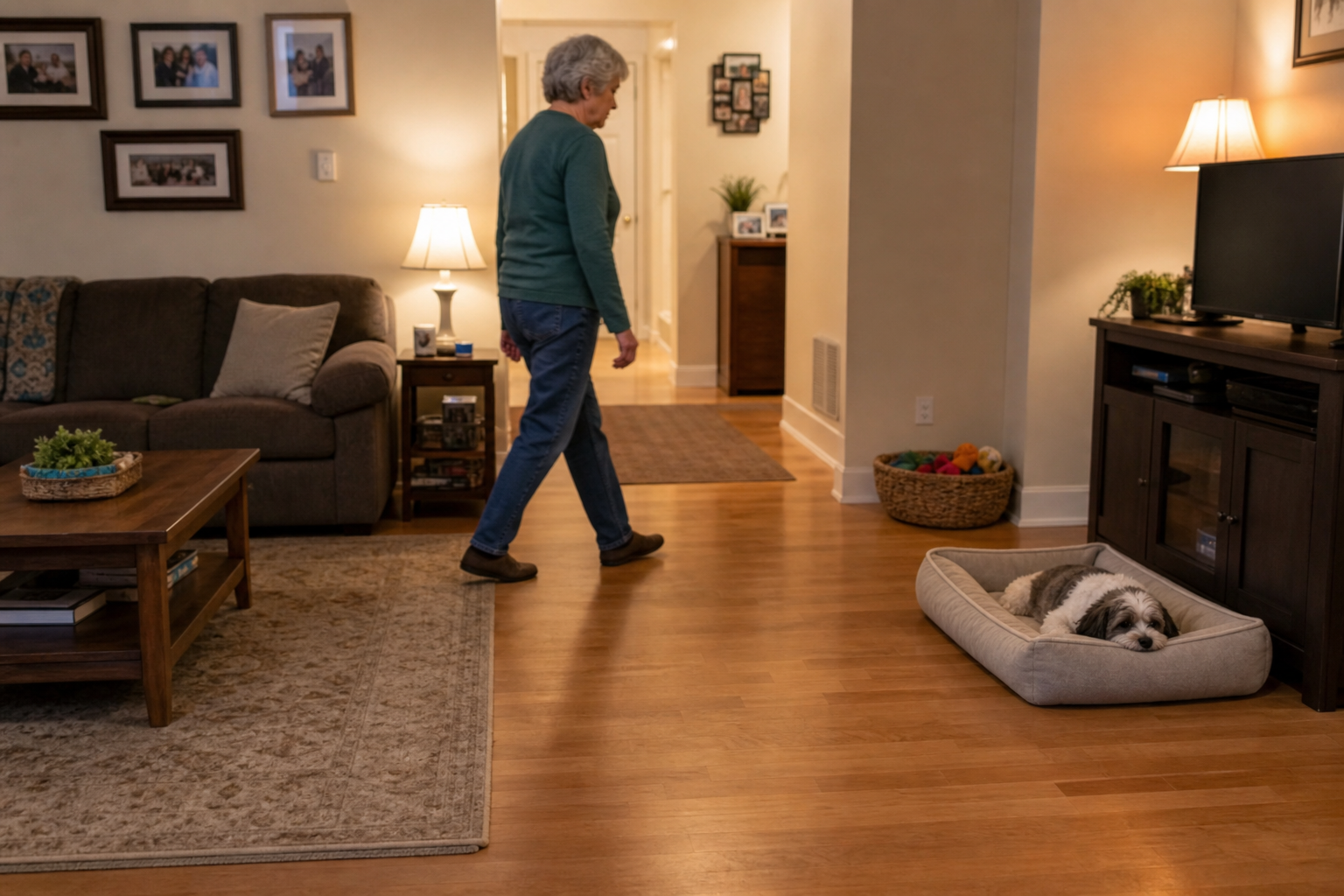
Preventing Falls Around Pets is not about blaming the animal. It is about recognizing how pets actually move through a home. Dogs follow closely. Cats cut across walking paths. Food bowls slide. Toys appear in doorways. A leash gets wrapped around an ankle before anyone notices.
These are small problems until they happen at the wrong moment. A person may be carrying laundry, turning in a hallway, getting up at night, or stepping backward near a chair. The pet may only be doing something normal. The fall risk comes from timing, clutter, poor visibility, and habits that have not been adjusted.
The goal is not to remove the pet from daily life. Pets provide comfort, routine, and companionship. The goal is to make the home more predictable so the person and the animal can share the same space with less risk.
Why Preventing Falls Around Pets Starts With Predictable Movement
The first step is noticing where the pet tends to be when people are walking. Most homes have patterns. A dog may lie beside the favorite chair. A cat may wait near the kitchen. A small dog may follow closely from room to room. These patterns matter because falls often happen during ordinary movement, not during unusual activity.
Watch for the places where people and pets cross paths:
- Doorways
- Hallways
- Kitchen work areas
- Favorite chairs
- Bedside areas
- Stairs
- Entryways
- Laundry paths
A pet that stays close underfoot may need a more predictable resting place. This does not need to be expensive. A dog bed beside a wall, a folded blanket in a quiet corner, or a cat perch away from the walking path can help.
The key is consistency. If the pet has a comfortable place to settle, and the older adult uses the same walking path each day, both become easier to manage. Predictability reduces surprises. Preventing Falls Around Pets often comes down to making daily movement more predictable for both the person and the animal.
Keep Pet Bowls, Toys, And Beds Out Of Walking Paths
Pet supplies often create more risk than the pet itself. Food bowls, water bowls, toys, bones, leashes, and beds can all become tripping hazards when they sit in traffic areas.
Bowls should be placed where they will not be stepped around during normal movement. A corner of the kitchen may seem convenient, but it may also be exactly where someone turns with a plate, a cup of coffee, or a walker. A better location is often along a wall, away from the main walking route.
Water bowls need special attention. A small spill on tile, laminate, or vinyl flooring can become a slick spot. Use a non-slip mat under bowls, but make sure the mat lies flat and does not curl at the edges.
Pet toys should have a simple home. A basket against the wall works better than toys scattered across the floor. The goal is not perfection. The goal is fewer surprises underfoot.
Good rules include:
- Keep bowls out of doorways and turns
- Place beds against walls, not in open walking space
- Pick up toys before bedtime
- Avoid long chew items in narrow paths
- Use flat, non-slip mats under bowls
- Remove any mat that slides, bunches, or curls
Small changes can make the home feel less cluttered without compromising the pet's comfort.
Improve Visibility For Pets, Floors, And Obstacles
Preventing Falls Around Pets depends heavily on visibility. Many falls happen because the person does not see the pet, the toy, or the edge of a rug until balance is already lost.
Lighting should make both the floor and the pet visible. This matters most with dark pets, dark floors, or patterned rugs. A black cat on a dark hallway floor can be almost invisible at night. A small brown dog on wood flooring may blend into the room.
Good lighting does not have to be harsh. It needs to be placed where movement happens. Night lights near the bedroom, bathroom path, kitchen, and pet feeding area can make a real difference. Motion lights can help, but they should turn on quickly and not startle the pet.
Contrast also matters. A light-colored bed for a dark dog, or a darker mat under a pale bowl, can make objects easier to see. Avoid busy floor patterns where pet toys disappear visually.
Manage Leashes, Harnesses, And Doorway Routines
Leashes create a specific kind of fall risk because they move quickly and wrap easily. The risk is highest at doors, steps, porches, and entryways. A dog may pull toward a smell, another animal, or a visitor. The person may still be turning, reaching, or locking the door.
A safer leash routine starts before the door opens. The leash should be short enough to control but not so short that the dog crowds the person’s feet. Retractable leashes are often poor choices for older adults because the line can extend suddenly and become hard to manage.
Keep outdoor routines slow and consistent:
- Put the leash on before opening the door
- Stand with both feet planted before moving
- Keep the dog beside you, not circling behind you
- Avoid wrapping the leash around the hand
- Use the same exit path when possible
- Keep the entry floor clear of shoes, bags, and packages
For larger dogs, training matters. The dog does not need advanced obedience. It needs a reliable habit of waiting at the door and walking without sudden pulling.
See: Walking Safety For Seniors
Make Chairs, Sofas, And Transfers Safer Around Pets
Pets often gather near people when they sit down or stand up. This is natural, but it can be risky. A dog may lie directly in front of a recliner. A cat may jump onto a lap just as someone starts to rise. A small pet may sleep beside the chair where feet need to land.
Standing up safely requires space. The person needs to place both feet, lean forward, push from the chair, and take the first step without stepping over an animal. If the pet is in that space, the movement becomes awkward.
Create a clear zone around favorite seating. This may mean moving the pet bed slightly to the side instead of directly in front of the chair. It may mean training the pet to stay on a blanket nearby while the person stands.
Simple habits help:
- Look down before standing
- Pause before the first step
- Keep the floor beside the chair clear
- Do not step over a sleeping pet
- Move slowly if the pet is excited
- Teach the pet to wait before jumping up
The first step after standing is one of the most important moments. It should be clear, visible, and unhurried.
See: Transfer Safety For Seniors
Reduce Kitchen And Mealtime Fall Risks
Kitchens are common problem areas because people move in short, repeated patterns. They turn from counter to sink, from refrigerator to table, from stove to cabinet. Pets learn these patterns quickly, especially when food is involved.
It is better for the pet and easier for the household if pets are not fed human food. Feed high-quality pet food instead and, if possible, make the kitchen pet-free during meal preparation. A pet that begs, circles, or waits underfoot can create repeated near-misses. This is especially risky when someone is carrying hot food, a sharp utensil, or a full dish.
A simple boundary can help. The pet can wait outside the kitchen, on a mat by the wall, or behind a gate during meal preparation. This does not have to feel harsh. Many pets adjust well when the rule is consistent, and the waiting place is comfortable.
Pet food storage also matters. Heavy bags should not be kept where they block walking space. Scoops, lids, and containers should be easy to reach without bending awkwardly. Spilled kibble should be cleaned promptly because small pieces can roll underfoot.
Choose Footwear And Floor Surfaces That Work With Pets
Bare feet, socks, loose slippers, smooth floors, and quick-moving pets are a poor combination for many older adults. The issue is not one single factor. It is the mix. A pet darts across the room, the foot slides slightly, and the person has less time to recover.
Footwear should be stable enough for normal indoor movement. Slippers should stay on the foot and not twist, slide, or catch. Open-heel styles may be convenient, but they can be less predictable when turning quickly or stepping around a pet.
Floor surfaces should also be checked from a pet-safety perspective. Area rugs may slide when a dog runs across them. Small mats may bunch when a cat plays. A rug that seems fine during quiet walking may shift when a pet moves fast.
Look for:
- Sliding rugs
- Curled rug corners
- Slick floors near bowls
- Loose slippers
- Socks without grip
- Pet hair buildup on smooth floors
- Toys hidden under furniture edges
Safe Shoe Choices For Seniors At Home
Set Routines For Excited Pets, Visitors, And Doorbells
Many pet-related fall risks happen when the pet gets excited. Doorbells, visitors, delivery drivers, other animals, and feeding time can all trigger sudden movement. The older adult may react quickly, turn too fast, or try to block the pet with a foot or leg.
A safer routine removes the need for rushing. For example, the pet can go to a bed, crate, gated area, or separate room before the door is opened. Packages can wait. Visitors can wait. The person should not have to manage balance, the door, and an excited animal all at once.
This is especially important for small dogs that weave around feet and large dogs that jump or bump. Even a friendly dog can knock someone off balance.
The routine should be simple:
- Pause before answering the door
- Secure the pet first
- Keep the entry area clear
- Avoid backing up while the pet is moving
- Ask visitors not to rush in
- Keep treats near the pet’s waiting place
NIH: Fall Prevention Around Pets
Keep Preventing Falls Around Pets Practical And Consistent
Preventing Falls Around Pets works best when the changes are simple enough to maintain. A complicated system will not last. A few reliable habits are more useful than a long list that no one follows.
Start with the highest-risk spots. Clear the path from the bed to the bathroom. Move bowls out of traffic areas. Pick up toys before night. Improve lighting where the pet blends into the floor. Create a clear zone around the favorite chair. Make leash routines slower and more controlled.
The pet does not need to be perfect. The home needs to be arranged so that normal pet behavior is less likely to cause a fall. That means fewer objects underfoot, better visibility, clearer walking paths, and routines that reduce sudden movement.
Train your dog not to pull on the leash or jump on you or visitors. It is not rocket science. It is usually a matter of patient, persistent communication and repetition. Treats can help, but calm, consistent voice commands are often more important because some dogs will only obey when treats are involved.
Small adjustments made for Preventing Falls Around Pets can reduce clutter, improve visibility, and make the home easier to move through safely. These changes protect independence without making the home feel institutional. They also allow pets to remain part of daily life in a safer, more manageable way.
© 2026 Mark Fomenko. All rights reserved.
AgingInPlaceResource.com
Privacy Policy | Terms of Use | Disclaimer | Contact | Newsletter
Recent Articles


-
Aging In Place Resource Library
Sep 04, 26 08:30 AM
Aging In Place Resource Library -
Aging in Place Resource Newsletter
Aug 30, 26 11:16 AM
Aging in Place Resource Newsletter -
Aging in Place Resource: Simple Strategies for Living Safely at Home
Jul 28, 26 12:43 PM
 Aging in Place Resource provides practical guidance for aging in place. Learn how to live safely and independently at home with strategies for home safety, caregiving, planning, and long-term support.