Reducing Fall Risk At Night
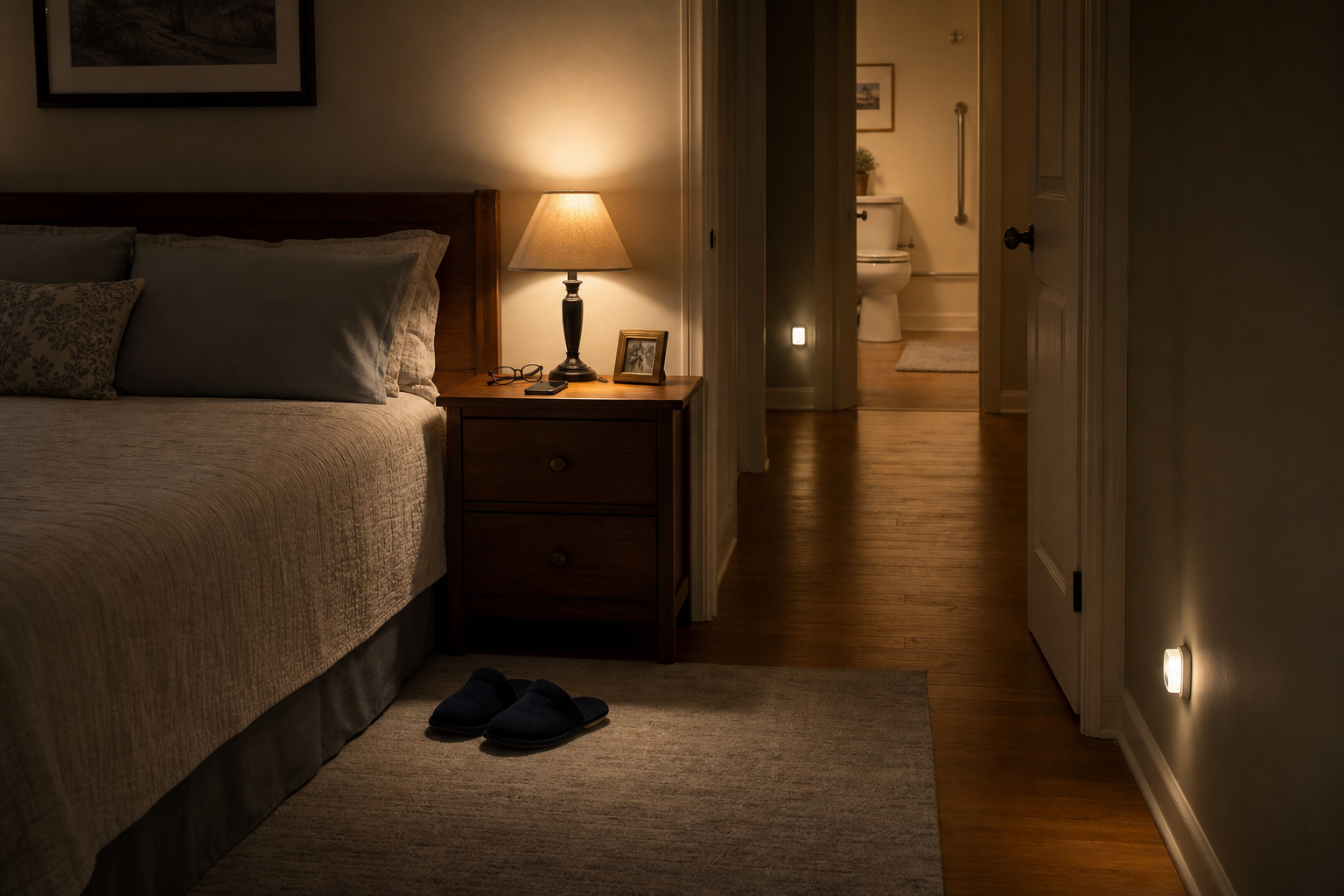
Reducing Fall Risk At Night matters because many falls happen when visibility is poor, the body is stiff, and ordinary walking becomes less predictable. A trip to the bathroom, kitchen, hallway, or front door can become risky when the house is dark or cluttered.
Night safety does not usually require major remodeling. It often depends on better lighting, clearer routes, stable footwear, sensible furniture placement, and routines that reduce rushing. The goal is not to make the home feel restricted. The goal is to make nighttime movement easier, calmer, and safer.
Reducing Fall Risk At Night Starts With Clear Walking Paths
Reducing Fall Risk at Night begins with the path between the bed and the most common nighttime destinations. For many older adults, that means the bathroom first, then the kitchen, hallway, thermostat, or front door. A safe path should be simple enough to follow while sleepy, stiff, or slightly disoriented.
The best nighttime route is not always the shortest route. It is the route with the fewest obstacles, the best lighting, and the most predictable footing. Furniture that works fine during the day may become a hazard at night if it narrows the walkway or forces a person to turn sharply.
Useful changes include:
- Move small tables away from the bed-to-bathroom path
- Remove baskets, shoes, magazines, and pet items from walking routes
- Keep electrical cords against the wall, not across open floor space
- Leave enough room for a cane, walker, or steadying hand on furniture
- Keep doors fully open or fully closed instead of half-open
A clear path should not depend on perfect memory. It should still make sense when someone wakes suddenly and needs to move before being fully alert.
Improve Bedroom Lighting Before Standing
Good lighting should be reachable before the person gets out of bed. The first few seconds after waking can be unsteady, especially if the person is stiff, groggy, or hurrying to the bathroom. Reaching into the dark for a lamp, glasses, a cane, or slippers can create unnecessary risk.
A bedside light should be easy to turn on without having to lean far over the edge of the bed. Touch lamps, large-switch lamps, remote-controlled lights, or motion-activated night lights can all work. The best option is the one the person will actually use every night.
A safer bedside setup may include:
- Place the lamp switch within easy reach from lying down
- Keep glasses in the same spot every night
- Put slippers beside the bed with the toes facing outward
- Keep a cane or walker close enough to reach before standing
- Remove low stools, boxes, and decorative items near the bed
- Use a night light that softly marks the route to the door
The Aging in Place Checklist can help families review risks in bedrooms, hallways, bathrooms, and lighting as part of a larger home safety plan.
Make Bathroom Trips Safer After Dark
Nighttime bathroom trips are one of the most common reasons older adults get out of bed. The risk increases when the bathroom is cold, dim, narrow, or cluttered. Rushing makes the problem worse because the person may skip their footwear, forget their cane, or move before their balance has fully settled.
The bathroom route should be lit from the bedroom to the toilet. A dark hallway followed by a bright bathroom can also be disorienting, so soft, continuous lighting is often better than one harsh light. The goal is enough visibility without glare.
Practical bathroom changes include:
- Add a night light inside the bathroom
- Keep the floor dry before bedtime
- Remove loose bathmats unless they have a secure backing
- Keep toilet paper, wipes, and supplies within easy reach
- Make sure the toilet area is not crowded by hampers or storage bins
- Leave the bathroom door open slightly if that improves visibility
For more room-specific guidance, see Bathroom Safety For Seniors.
Use Footwear That Works In The Dark
Healthcare professionals often advise against walking barefoot, wearing loose slippers, and wearing socks because they believe these can make nighttime walking less stable. The advice is often influenced by issues that may not apply to relatively healthy individuals. People with type 2 diabetes, for example, may face risks associated with going barefoot that do not apply to many healthy seniors. Flooring type also matters, especially on tile, wood, laminate, or smooth vinyl surfaces. Footwear should be easy to put on without bending awkwardly, but secure enough that it does not slide, twist, or catch underfoot.
Footwear should also be stable, predictable, and easy enough to use consistently. Some older adults prefer barefoot walking or open-backed slippers because they are faster and easier to manage at night. The more important issue is whether the person can move confidently and safely on the flooring surfaces in their home. Slippery floors, loose slippers, thick socks, poor lighting, and rushed movement are often more important risk factors than the exact shoe style itself.
A safer nighttime footwear routine may include:
- Keep footwear beside the bed in the same position every night
- If needed, choose slippers with backs or secure-fitting open-heel styles that do not slide or flop while walking
- Avoid walking in socks on smooth floors
- Replace stretched-out slippers that no longer stay on securely
- Keep shoes away from the walking path when not being worn
- Choose footwear simple enough that it will actually be used during nighttime trips to the bathroom
It is important to understand that much of this advice for reducing fall risk at night is intended for the most physically compromised seniors. Healthcare professionals often work with people who have serious balance problems, neuropathy, frailty, cognitive impairment, or recent injuries. Healthy older adults may face very different risks and often remain highly capable and physically confident well into later life. For more details, see Safe Shoe Choices For Seniors At Home.
Reduce Glare, Shadows, And Flooring Confusion
Night lighting should help the eyes understand the floor. Too little light hides hazards. Too much glare can make polished floors, thresholds, and rugs harder to judge. Shadows from furniture, doorways, and uneven lighting can make a flat floor look confusing.
Flooring changes are often more useful than expensive equipment. A loose rug, curled edge, shiny transition strip, or dark object on a dark floor may be almost invisible at night. Contrast helps. So does keeping the walking route plain and predictable.
Helpful adjustments include:
- Remove small, loose rugs from nighttime walking paths
- Tape down or replace curled rug edges
- Use soft night lights near flooring transitions
- Keep dark shoes, bags, and pet toys off dark floors
- Avoid glossy floor cleaners that increase glare
- Make thresholds easier to see with contrast tape if needed
Reducing Fall Risk At Night is easier when floors are treated as part of the safety system, not just part of the decor.
For related guidance, see Flooring Safety For Seniors.
Plan For Medication, Dizziness, And Sleepiness
Some nighttime fall risks are not caused by the house alone. Sleepiness, dehydration, medication timing, blood pressure changes, and rushing can all affect balance. The practical answer is not to make the home feel like a hospital. It is to build a nighttime routine that allows a person to move more slowly and predictably. In some situations, however, equipment changes become necessary for safe transfers. A hospital bed may make it easier and safer to get in and out of bed, reposition during the night, or assist a spouse or caregiver. This became necessary for both of my parents during the last years of their lives.
Standing too quickly can be a problem after lying down for several hours. A simple pause at the edge of the bed gives the body time to adjust. This is especially useful before walking to the bathroom or across a dark room.
A safer nighttime sequence may include:
- Turn on the light before sitting up
- Sit on the edge of the bed for a short pause
- Put on secure footwear before standing
- Reach for the cane or walker before taking the first step
- Stand still briefly before walking
- Avoid carrying blankets, clothing, or loose items while walking
MedlinePlus offers practical fall-prevention guidance that includes home safety steps and daily habits: https://medlineplus.gov/ency/patientinstructions/000021.htm
Keep Pets, Cords, And Clutter Out Of Night Routes
Pets can create special nighttime risks because they move quietly, sleep in walkways, or follow closely underfoot. A small dog, cat, food bowl, toy, or leash can be hard to see in dim light. The same is true of charging cords, oxygen tubing, extension cords, laundry baskets, and shoes.
Reducing Fall Risk At Night often means removing surprises from the floor. The home does not need to be spotless. It needs predictable walking routes. A lived-in home can still be safe if the main paths stay clear.
Practical steps include:
- Keep pet beds away from the bedroom-to-bathroom path
- Move food and water bowls out of walking routes before bedtime
- Coil charging cords on a table instead of the floor
- Put laundry baskets against a wall, not near doorways
- Store slippers and shoes beside furniture, not in open paths
- Use a small basket for items that collect near the bed
For pet-specific fall prevention, see Preventing Falls Around Pets.
Use A Night Routine That Reduces Rushing
A safer night begins before bedtime. Many nighttime falls happen because ordinary items are not where they should be. Glasses are across the room. The cane is leaning near a chair. A hallway light is off. The bathroom floor is damp. A pet toy is in the walkway. None of these problems is dramatic by itself, but together they raise risk.
A bedtime routine should be short enough to repeat every night. It should prepare the environment so that the person does not have to solve problems while half-awake. Reducing Fall Risk At Night is mostly about making safe movement automatic.
A practical routine may include:
- Turn on night lights before going to bed
- Place glasses, phone, and water within easy reach
- Put cane, walker, or slippers in the same place every night
- Clear the route to the bathroom
- Check that the bathroom floor is dry
- Move pet items and loose objects away from walking paths
Night safety fits naturally into a larger aging-in-place plan because it connects lighting, flooring, bathroom access, furniture placement, and daily habits. The Aging in Place Checklist can help families see how one small hazard often connects to several others. A safer night route supports fall prevention without making the home feel institutional.
For broader home safety planning, see Fall Prevention For Seniors.
© 2026 Mark Fomenko. All rights reserved.
AgingInPlaceResource.com
Privacy Policy | Terms of Use | Disclaimer | Contact | Newsletter
Recent Articles


-
Aging In Place Resource Library
Sep 04, 26 08:30 AM
Aging In Place Resource Library -
Aging in Place Resource Newsletter
Aug 30, 26 11:16 AM
Aging in Place Resource Newsletter -
Aging in Place Resource: Simple Strategies for Living Safely at Home
Jul 28, 26 12:43 PM
 Aging in Place Resource provides practical guidance for aging in place. Learn how to live safely and independently at home with strategies for home safety, caregiving, planning, and long-term support.