Bathroom Safety for Seniors
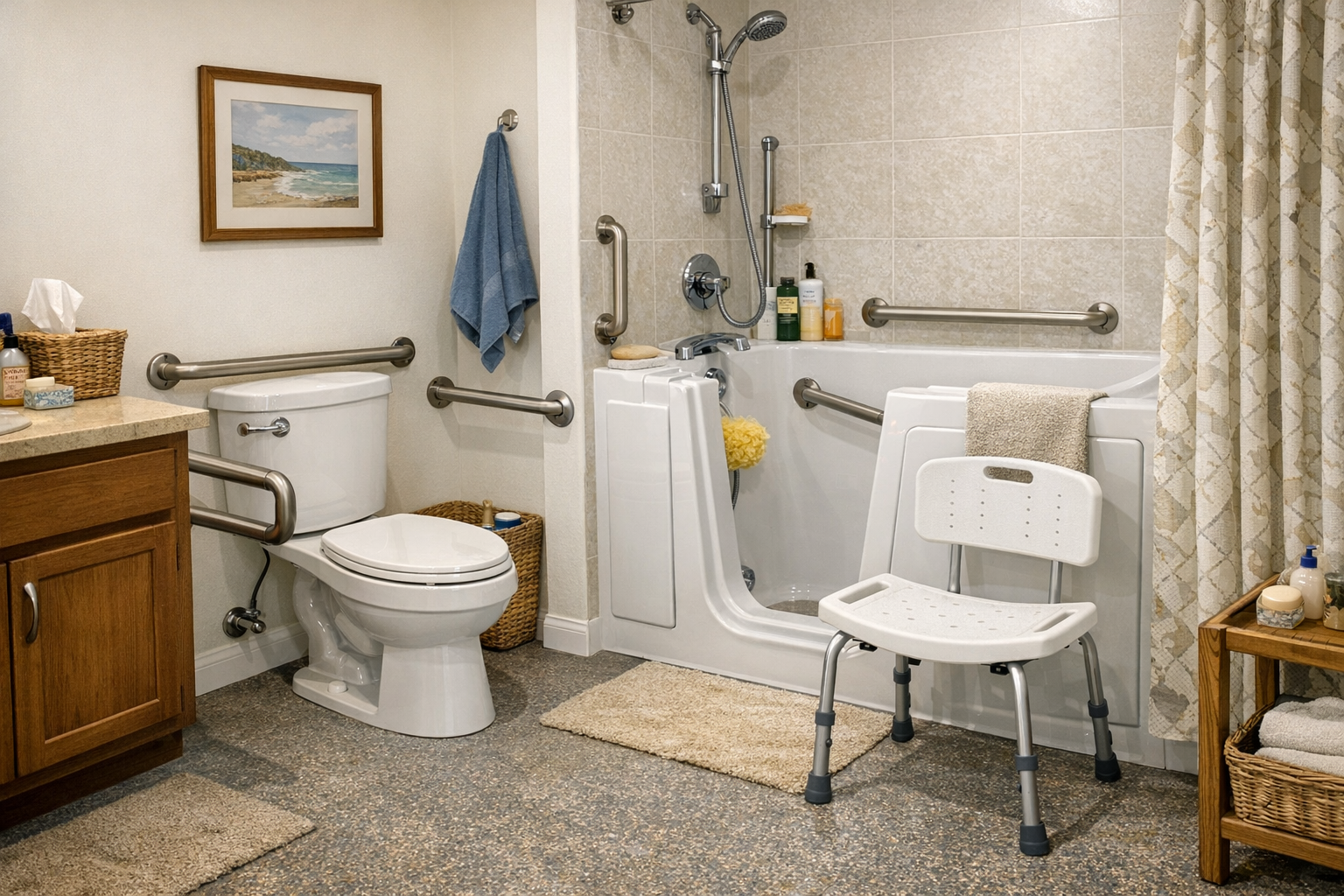
Bathroom safety for seniors is one of the most important parts of aging-in-place planning because the bathroom combines water, hard surfaces, narrow spaces, and repeated daily movement.
A safer bathroom does not require a luxury remodel. Most improvements come from better footing, better lighting, better placement of everyday items, and fewer rushed movements.
Bathroom Safety For Seniors Starts With Slip Control
The first priority is reducing the chance of slipping where water collects.
Wet tile, loose rugs, slick tub floors, and polished surfaces can turn an ordinary bathroom trip into a fall risk. Start with the floor before buying equipment or changing fixtures.
Practical changes include:
- Remove loose bath mats that slide or bunch up
- Use a rubber-backed mat only if it grips firmly
- Place a non-slip mat inside the tub or shower
- Keep a towel within reach before bathing
- Wipe standing water immediately after use
- Avoid walking barefoot on damp tile
Bathroom safety for seniors improves when the room supports steady movement without requiring perfect balance. If you've not been there, see Home Safety For Seniors
Make The Toilet Area Easier To Use
Toilet transfers are often harder than they appear because the seat is low, the space is narrow, and people may rush.
A raised toilet seat, sturdy toilet safety frame, or secure grab bar can reduce strain on knees, hips, and arms. The goal is not to make the bathroom look medical. The goal is to make sitting and standing more predictable.
Helpful adjustments include:
- Add a raised toilet seat if standing is difficult
- Install a grab bar near the toilet, not a towel bar
- Keep toilet paper within easy reach
- Remove small trash cans from the footpath
- Make sure clothing does not drag around the feet
For more on transfer safety, see:
Transfer Safety and Aging in Place
Improve Shower And Tub Safety
Bathing creates one of the highest-risk situations in the home because the person is often wet, tired, barefoot, and turning in a confined space.
A shower chair can help when standing for the full shower is no longer steady. A handheld showerhead makes seated bathing easier and reduces twisting. Grab bars should be placed where the person naturally reaches while entering, turning, and exiting.
Practical shower improvements include:
- Use a shower chair with rubber feet
- Add a handheld showerhead
- Keep soap and shampoo between shoulder and waist height
- Avoid glass bottles in the shower
- Use a non-slip tub or shower surface
- Dry off before stepping fully into the room
For a deeper look at this specific risk, see Preventing Bathroom Falls.
Fix Lighting Before Nighttime Bathroom Trips
Nighttime bathroom trips deserve special attention because balance, vision, and reaction time are often worse after sleep.
A person may be half-awake, moving quickly, or trying not to disturb others. That combination can make even a familiar bathroom unsafe. Lighting should guide the path before the person reaches the bathroom, not only after entering it.
Useful changes include:
- Place a night light between the bed and the bathroom
- Use motion-sensor lighting near the doorway
- Keep the bathroom light switch easy to locate
- Avoid bright glare that causes squinting
- Clear the path before bedtime
- Keep slippers or shoes in the same place every night
For related planning, see: Nighttime Safety For Seniors.
Keep Floors Clear, Dry, And Predictable
A bathroom floor should be simple to understand at a glance.
Small objects matter in a tight room. A scale, laundry basket, extra towel, low trash can, or open cabinet door can interrupt foot placement. The safer approach is to reduce decisions on the floor.
Good floor habits include:
- Store the scale against the wall when not in use
- Keep laundry baskets outside the main walking path
- Close cabinet doors after every use
- Remove decorative items near the toilet or shower
- Keep cleaning bottles off the floor
- Use one stable bath mat only if truly needed
Bathroom safety for seniors depends on repeatable layouts. The room should look and feel the same each time it is used.
See: Decluttering For Senior Safety.
Arrange Everyday Items To Reduce Reaching
Reaching is a hidden risk in bathrooms because it shifts body weight.
Items used every day should be easy to reach without bending, twisting, or stepping onto wet flooring. This includes towels, soap, shampoo, toothbrushes, razors, toilet paper, medications, and grooming supplies.
A safer setup may include:
- Move daily items to waist-height shelves
- Keep towels on hooks instead of high bars
- Store backup supplies outside the bathroom
- Use pump bottles instead of slippery bar soap
- Keep grooming tools in one open container
- Remove rarely used products from crowded cabinets
For basic fall prevention guidance, see MedlinePlus: https://medlineplus.gov/ency/patientinstructions/000021.htm
Plan For Safe Help Without Taking Over
Some bathroom tasks may eventually require help, but help should be planned in a way that preserves privacy and independence.
Adult children and caregivers often wait until a fall happens before making changes. A better approach is to notice small signs early: grabbing the sink for support, avoiding showers, leaving towels on the floor, or seeming unusually tired after bathing.
Practical family steps include:
- Ask what part of the bathroom feels hardest
- Make one change at a time
- Avoid rearranging everything without permission
- Place safety items where they will actually be used
- Watch for resistance caused by embarrassment
- Treat privacy as part of safety
For related support, see:
Helping Aging Parents Accept Help
Using a Bedside Commode Safely at Home
Keep Bathroom Safety For Seniors Practical Over Time
Bathroom safety for seniors should be reviewed as strength, balance, vision, and daily routines change.
A bathroom that worked well last year may become less safe after illness, weight loss, medication changes, or reduced mobility. The best approach is steady adjustment, not panic remodeling.
The Aging In Place Checklist can help connect bathroom changes with broader fall prevention, lighting, flooring, and daily routine planning. Bathroom safety works best when it is part of the whole home, not treated as a separate problem.
Simple review habits include:
- Check grab bars for looseness
- Replace worn non-slip mats
- Remove new clutter before it becomes normal
- Recheck lighting after seasonal time changes
- Ask whether bathing has become tiring
- Adjust storage as movement changes
For related home changes, see Low-Cost Home Modifications For Seniors.
© 2026 Mark Fomenko. All rights reserved.
AgingInPlaceResource.com
Privacy Policy | Terms of Use | Disclaimer | Contact | Newsletter
Recent Articles


-
Aging In Place Resource Library
Sep 04, 26 08:30 AM
Aging In Place Resource Library -
Aging in Place Resource Newsletter
Aug 30, 26 11:16 AM
Aging in Place Resource Newsletter -
Aging in Place Resource: Simple Strategies for Living Safely at Home
Jul 28, 26 12:43 PM
 Aging in Place Resource provides practical guidance for aging in place. Learn how to live safely and independently at home with strategies for home safety, caregiving, planning, and long-term support.