Using A Bedside Commode Safely At Home
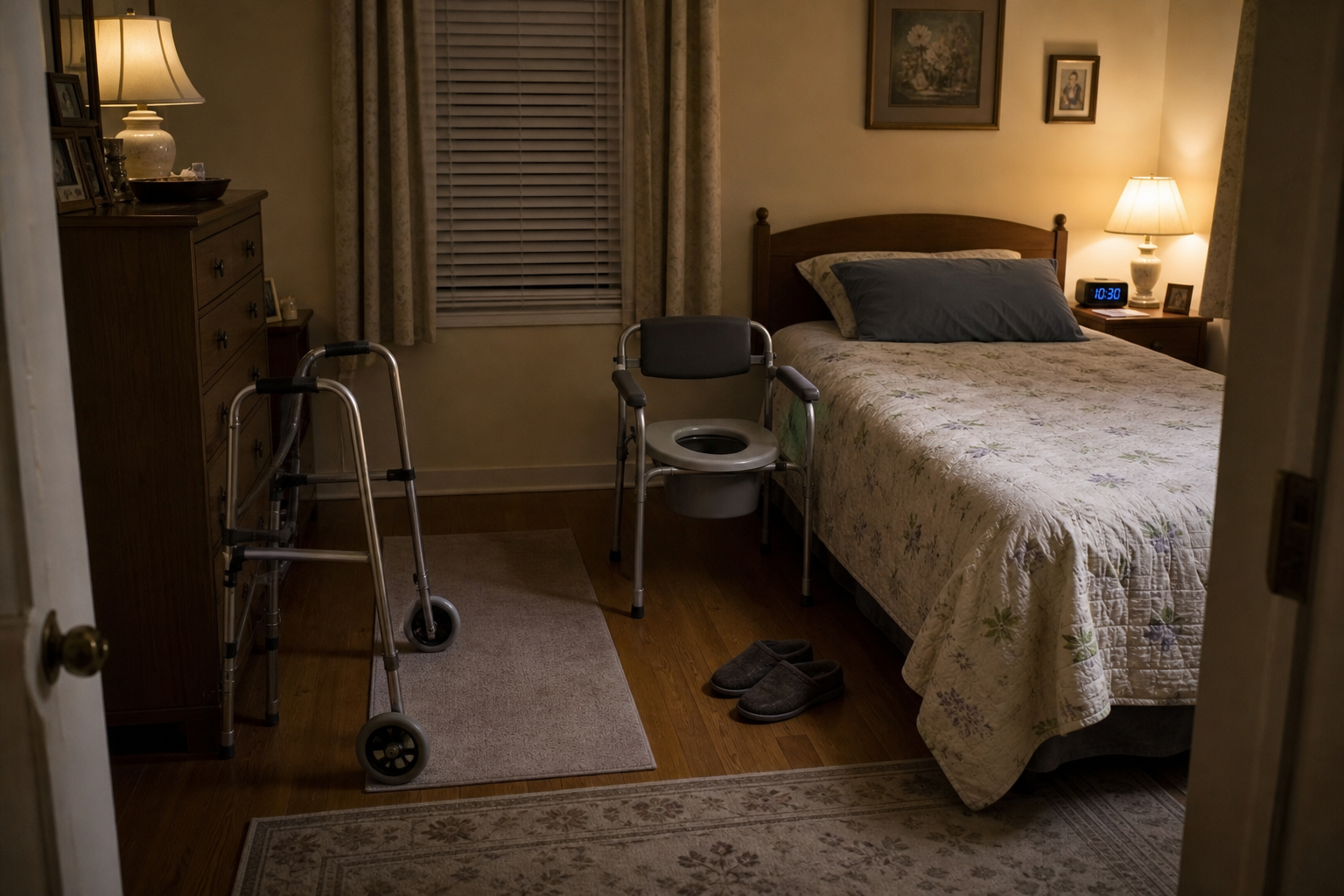
Using A Bedside Commode Safely At Home can reduce exhausting nighttime walks, hurried transfers, and dangerous bathroom trips during illness, recovery, weakness, or declining mobility. Many families resist the idea at first because a bedside commode feels embarrassing, temporary, or emotionally difficult. In practice, it often becomes one of the simplest ways to prevent falls and preserve independence at home.
People sometimes struggle longer than necessary before introducing a bedside commode. They may continue making unsafe trips to the bathroom in the darkness, leaning on unstable furniture, or rushing while half-awake. Adult children often notice the danger before parents do. The subject can create tension because nobody wants to feel dependent or “old.” Yet many people discover that using a bedside commode safely at home actually reduces stress and restores confidence.
A bedside commode does not have to turn a bedroom into a hospital room. In many homes it becomes a practical nighttime tool that quietly solves a real problem. The goal is not perfection or dignity theater. The goal is reducing falls, avoiding injuries, conserving energy, and making daily life more manageable.
Using A Bedside Commode Safely At Home At Night
Nighttime is when many serious falls happen. People wake suddenly, feel urgency, become disoriented, or try to move too quickly in dim lighting. A bedside commode shortens the walking distance and reduces the chance of stumbling while tired or unsteady.
Place the commode where the path from bed is simple and direct. Avoid forcing someone to turn sideways through narrow gaps or maneuver around furniture. The feet of the commode should sit flat and stable on the floor without wobbling.
Good nighttime setup usually includes:
- A lamp within easy reach from bed
- Motion-sensor night lighting
- Clear walking space beside the bed
- Stable footwear nearby
- Dry flooring without rugs or cords
- A reachable walker or cane if normally used
The commode should not require awkward twisting or long reaching while standing up from bed. Positioning matters more than many people realize. Even shifting the commode six inches can improve balance and reduce strain during transfers.
Some families initially hide the commode during daytime because they dislike how it looks. That often leads to rushed repositioning at night. Consistency is safer. Predictable placement helps movement become automatic.
Using A Bedside Commode Safely At Home is often easier when the room is arranged around movement instead of appearance.
Choosing The Right Location For A Bedside Commode
The safest location is usually beside the stronger side of the body. If someone favors one leg or naturally pivots one direction, work with that movement pattern rather than against it.
Avoid placing the commode:
- Behind furniture
- Across slippery flooring
- Near rolling chairs
- Beside cluttered nightstands
- In tight corners
- On thick carpet that causes instability
A small bedroom can still work well if unnecessary furniture is removed. Many older homes become crowded over time with decorative tables, baskets, magazine racks, plants, or storage bins that slowly shrink safe walking space.
The area around the commode should allow room for feet, turning, and hand placement. People often underestimate how much space is needed when weak, sleepy, or using a walker.
If someone uses oxygen tubing, power cords, or charging cables, keep them routed against walls whenever possible. Crossing pathways with cords creates a major tripping hazard.
A stable chair nearby can help with dressing or resting, but avoid lightweight folding chairs that slide when grabbed suddenly.
Using A Bedside Commode Safely At Home becomes much harder when the room is crowded with obstacles that require constant adjustment.
Safe Transfers On And Off The Commode
Most bedside commode injuries happen during transfers rather than while sitting. Rushing is a major problem. Many people try to stand too quickly because they feel urgency or embarrassment.
Encourage slow, deliberate movement:
- Sit briefly at the edge of the bed before standing
- Plant both feet firmly
- Pause after standing
- Reach for stable surfaces only
- Turn carefully instead of twisting sharply
- Lower slowly onto the seat
Hand placement matters. The armrests on a sturdy commode can provide stability, but only if they are securely locked and properly adjusted.
Some people try using nearby furniture instead of the commode arms. A rolling cart, unstable nightstand, or lightweight table may shift unexpectedly.
Loose robes, oversized pajama pants, and long nightgowns can also create transfer problems. Clothing that catches around knees or under shoes increases fall risk.
Caregivers often feel awkward discussing toileting because both parties want privacy. Still, practical observation matters. If someone repeatedly struggles to stand, pivots unsafely, or nearly falls during transfers, the setup needs adjustment.
Keeping The Bedside Commode Clean Without Creating Hazards
A bedside commode should be easy to clean. Complicated routines usually fail over time, especially when caregivers are tired or overwhelmed.
Disposable liners can simplify cleanup. Some families prefer double-bagging the bucket for easier handling. Others use absorbent gel packets that reduce splashing and odor. Sturdy kitchen trash bags combined with a small amount of cat litter can also help control liquid, odor, and spills. Environmentally conscious households sometimes prefer compostable bags paired with compressed wood pellets, which absorb moisture effectively and reduce mess during disposal.
Avoid overfilling the bucket. Carrying a heavy container across the house increases spill risk.
Keep basic supplies nearby:
- Disposable gloves
- Cleaning wipes
- Toilet paper
- Spare liners
- Hand sanitizer
- A covered trash container
Strong chemical odors can make a bedroom unpleasant, especially in smaller homes. Mild soap and routine cleaning usually work well enough.
One overlooked issue is moisture on flooring after cleanup. Even small damp spots near the commode can become slipping hazards during nighttime use.
If someone is embarrassed about odor, quiet practical solutions help more than reassurance speeches. A small covered trash can, regular cleaning, ventilation, and predictable routines usually solve most concerns.
Using A Bedside Commode Safely At Home often depends less on equipment and more on maintaining a calm, workable routine.
Reducing Resistance To Using A Bedside Commode
Many people resist a bedside commode because they associate it with severe decline or loss of independence. Others simply feel humiliated by the idea. Families sometimes avoid the conversation until after a dangerous fall forces the issue.
Some people are surprisingly resistant to using a bedside commode because they associate it with severe disability or institutional care. In reality, many perfectly capable people have used similar setups for practical reasons. Long-haul truck drivers, campers, sailors, and people working in remote environments have relied on portable toilet systems for decades because they are convenient, reduce unnecessary trips, and make life easier during difficult conditions. A clean, stable bedside commode is simply a practical tool that can conserve energy and reduce dangerous nighttime walking.
The emotional resistance is understandable. A bedside commode changes how a room feels. It can feel like visible proof that life has changed.
Still, there is another side to the issue. Repeated exhausting trips to the bathroom can quietly dominate daily life. Some people stop drinking enough water because they dread nighttime bathroom trips. Others remain awake worrying about making it to the toilet in time.
A bedside commode can reduce panic, urgency, and exhaustion. It may allow someone to remain safely at home much longer.
The discussion often goes better when framed practically instead of emotionally:
- “This shortens the trip at night.”
- “This may help prevent another fall.”
- “This can conserve energy.”
- “This is easier during recovery.”
- “This gives you more control at night.”
Humor sometimes helps too. Many families quietly discover that after a few days, the commode simply becomes another household object like a walker, grabber tool, or shower chair.
Flooring, Lighting, And Walking Paths Around The Commode
The safest bedside commode setup usually looks simple. Predictable movement matters more than decorative appearance.
Good lighting is critical. Harsh overhead lights can feel disorienting at night, while total darkness encourages risky movement. Soft motion lighting often works best.
Pay close attention to the flooring around the commode:
- Remove throw rugs
- Avoid slick socks on smooth flooring
- Keep pathways dry
- Secure carpet edges
- Eliminate extension cords
- Avoid clutter beside the bed
People commonly create narrow walking paths by stacking storage bins, laundry baskets, pet beds, or boxes beside the bed. Those obstacles become especially dangerous during urgent nighttime movement.
Footwear should be stable and easy to put on quickly without bending awkwardly.
For additional fall prevention guidance, see the CDC’s older adult fall prevention resources.
CDC Older Adult Fall Prevention Resources
Using A Bedside Commode Safely At Home During Illness Or Recovery
Temporary weakness often creates sudden toileting problems. A person recovering from surgery, illness, dehydration, infection, or hospitalization may become exhausted by short walks that previously seemed easy.
Families are often caught off guard by how quickly bathroom trips become physically difficult.
Using A Bedside Commode Safely At Home during recovery can reduce overexertion and lower the risk of collapsing while trying to reach the bathroom. This is especially true when someone is weak, dizzy, heavily fatigued, or adjusting to new medications.
The safest approach is usually to introduce the commode before a crisis develops instead of after multiple near-falls.
A few practical adjustments can make recovery easier:
- Keep water within reach
- Place tissues and wipes nearby
- Maintain consistent lighting
- Avoid rearranging furniture constantly
- Keep mobility aids positioned the same way each night
Caregivers often become exhausted during recovery periods too. Simpler nighttime routines help everyone sleep more consistently and reduce frantic overnight movement.
Maintaining Independence While Using A Bedside Commode
A bedside commode is often viewed as a symbol of failure when it is really an adaptation. Many ordinary household changes work the same way. People use reading glasses, railings, ramps, step stools, carts, and grabbers because they reduce strain and improve safety.
Using A Bedside Commode Safely At Home can allow someone to manage toileting with less assistance, less urgency, and fewer dangerous nighttime walks. In some homes, that may delay the need for outside care or major environmental changes.
Small practical adjustments usually work better than dramatic overhauls. Clear walking space, stable lighting, predictable routines, and thoughtful placement often make more difference than expensive equipment.
The goal is not creating a perfect environment. The goal is making ordinary movement safer and more manageable inside a real home where people are tired, distracted, aging, recovering, or simply trying to get through the night without falling.
© 2026 Mark Fomenko. All rights reserved.
AgingInPlaceResource.com
Privacy Policy | Terms of Use | Disclaimer | Contact | Newsletter
Recent Articles


-
Aging In Place Resource Library
Sep 04, 26 08:30 AM
Aging In Place Resource Library -
Aging in Place Resource Newsletter
Aug 30, 26 11:16 AM
Aging in Place Resource Newsletter -
Aging in Place Resource: Simple Strategies for Living Safely at Home
Jul 28, 26 12:43 PM
 Aging in Place Resource provides practical guidance for aging in place. Learn how to live safely and independently at home with strategies for home safety, caregiving, planning, and long-term support.