Decluttering For Senior Safety
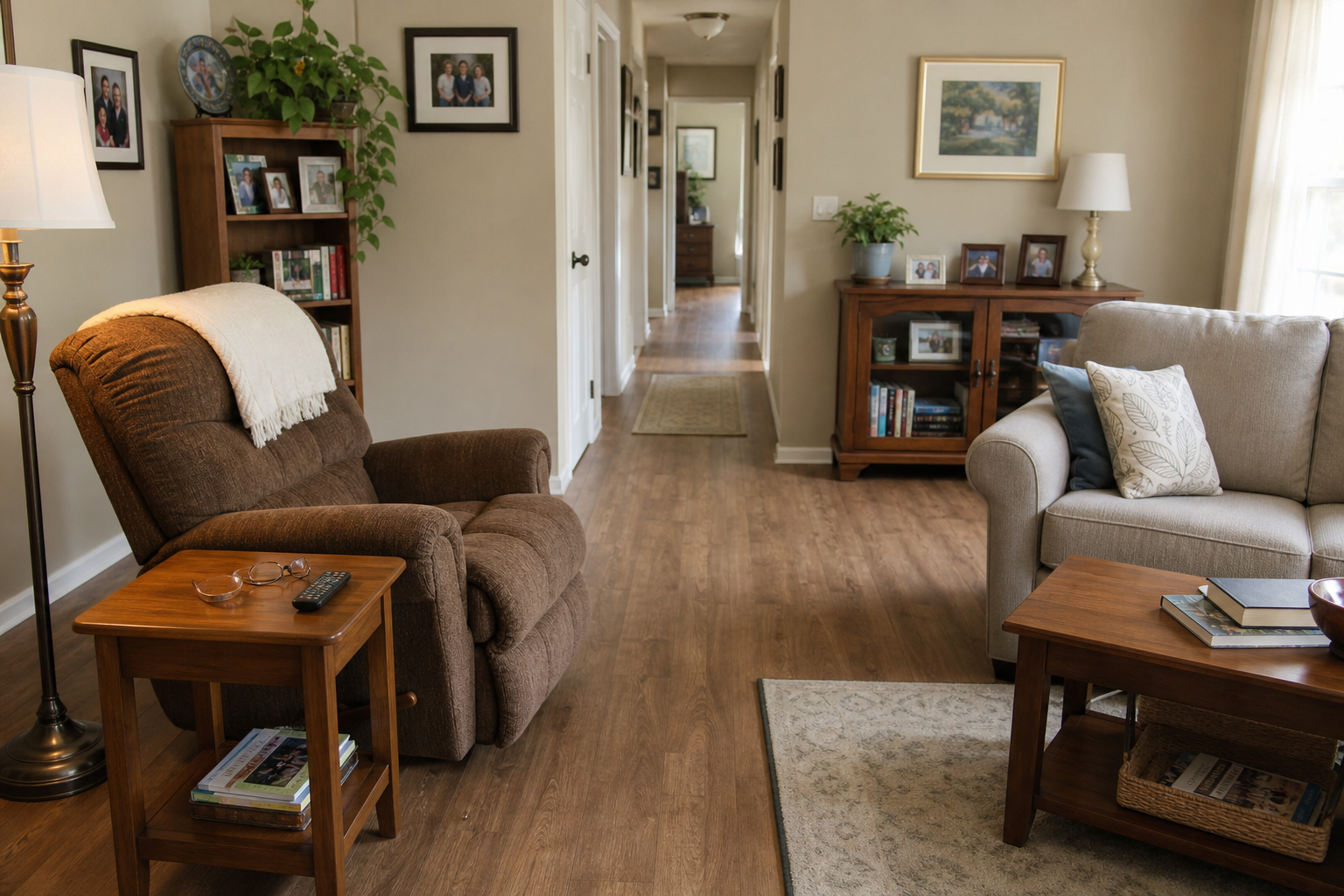
Decluttering For Senior Safety is about removing the ordinary household obstacles that make walking, turning, reaching, carrying, and getting up from a chair more dangerous than they need to be.
Clutter is not just “stuff.” It changes how a person moves through a home. It narrows pathways, blocks light, hides floor changes, creates tripping hazards, and makes simple daily routines harder. The goal is not to create a perfect-looking house. The goal is to make the home easier to live in, easier to move through, and safer to manage without expensive remodeling.
A realistic decluttering plan should protect independence, not punish personality. Many older adults have objects that matter to them. The safest approach is usually gradual, respectful, and practical.
Why Decluttering For Senior Safety Starts With Walking Paths
Decluttering For Senior Safety starts with the routes used every day.
The most important spaces are not the closets, drawers, or storage rooms. The most important spaces are the walking paths between the bedroom, bathroom, kitchen, living room, entry door, and favorite chair. These are the routes most likely to be used when someone is tired, distracted, carrying something, or moving in low light.
A safe path should be wide enough for steady walking without turning sideways or stepping around obstacles. It should also stay consistent. A pathway that changes every few days because boxes, bags, baskets, or small tables keep moving into it is harder to trust.
Start with the most-used routes:
- Remove small tables from narrow pathways.
- Move plant stands away from turns and doorways.
- Keep laundry baskets out of walking areas.
- Clear stacks of magazines, books, or mail from the floor.
- Relocate pet beds, food bowls, and toys away from foot traffic.
- Keep extension cords and charging cords out of travel paths.
The practical test is simple. Walk the path slowly while pretending to carry a cup of coffee in one hand. If you must step around something, turn awkwardly, or look down constantly, the path needs more clearing.
Clear Floors Before Organizing Shelves
Floors matter more than shelves because feet meet the floor first.
A house can be visually cluttered and still reasonably safe if the walking surfaces are clear. A house can also look “organized” but remain dangerous if bins, cords, shoes, ottomans, and storage baskets sit where someone walks. Decluttering For Senior Safety should always begin at floor level because floor hazards cause sudden movement problems.
The first goal is not to sort every possession. The first goal is to remove objects that interrupt walking, turning, standing, and transferring from one place to another.
Focus on floor-level hazards first:
- Put shoes in one fixed location near the door.
- Remove loose stacks from beside chairs and beds.
- Place pet supplies against a wall instead of in open space.
- Move decorative baskets out of walking lanes.
- Replace floor piles with one stable storage container on a shelf.
- Coil or reroute cords so they do not cross the floor.
Do not begin with sentimental items in boxes unless they are blocking movement. That can create arguments and delay the safety work. Begin with the things on the floor that create immediate physical risks.
Reduce Clutter Around Chairs, Beds, And Sofas
The spaces around sitting areas need extra attention because standing up requires balance.
Many falls do not happen while someone is walking across a room. They happen during transitions: standing from a chair, sitting down, getting out of bed, reaching for a lamp, or turning to grab a blanket. Clutter near chairs and beds makes these small movements less predictable.
A favorite chair often attracts side tables, reading material, snacks, mail, remotes, blankets, footstools, and charging cords. Some of these items are useful. The problem begins when useful items spread into the standing area.
Create a safer sitting zone:
- Keep one stable side table within easy reach.
- Remove low footstools unless they are truly needed and consistently placed.
- Place the phone, remote, glasses, and water in the same location every day.
- Move loose blankets off the floor and onto a chair arm or shelf.
- Keep slippers beside the bed, not under the edge, where they become hidden.
- Leave enough open space for both feet to plant firmly before standing.
Decluttering For Senior Safety is especially important near beds because nighttime movement is less coordinated. A person who is half-awake should not have to navigate shoes, cords, baskets, or extra furniture before reaching the bathroom.
Make Kitchen And Bathroom Items Easier To Reach
Clutter also becomes a safety problem when everyday items are stored badly.
A crowded cabinet, packed pantry, or overfilled bathroom shelf can force unnecessary bending, reaching, twisting, and climbing. The safer approach is to keep frequently used items between shoulder and hip height whenever possible. This reduces the need to stretch overhead, bend deeply, or stand on step stools.
The most useful decluttering is often not removal. It is relocation. Items used daily should be the easiest to reach. Items used rarely should move higher, lower, or farther away.
Start with practical storage changes:
- Move daily dishes to a lower cabinet shelf.
- Keep one pan, one pot, and one skillet in the easiest spot.
- Place commonly used canned foods at eye level.
- Store heavy appliances on the counter only if they are used often.
- Remove expired food, duplicate containers, and unused cleaning supplies.
- Keep bathroom toiletries in a shallow bin instead of scattered across surfaces.
The kitchen and bathroom are high-use rooms, making kitchen safety and bathroom safety priorities. It should not require a treasure hunt every time someone needs a towel, toothbrush, saucepan, or medication bottle. Decluttering For Senior Safety works best when it reduces effort and risk.
Control Paper, Mail, And Small Table Clutter
Paper clutter is a special problem because it spreads quietly.
Mail, catalogs, receipts, medical papers, notebooks, newspapers, and magazines can take over tables, chairs, counters, and floors. The danger is not just visual mess. Paper piles slide, hide objects, block surfaces, and create stress when something important cannot be found.
Small tables can make this worse. A narrow table placed beside a chair may begin as a convenience, then become a landing pad for everything. When tables multiply, movement paths shrink. When piles spill over, the floor becomes unsafe.
Use a simple paper-control system:
- Keep one basket for incoming mail.
- Throw away envelopes and inserts immediately.
- Place bills in one visible folder.
- Store medical papers in one labeled folder or box.
- Recycle newspapers and catalogs on a fixed schedule.
- Keep tabletops clear enough to set down a drink safely.
This does not require a home office or an expensive organizing system. It requires a repeatable place for paper to land and a regular habit of removing what no longer matters.
Watch For Hidden Hazards In Decorative Clutter
Decorative clutter can be more dangerous than it looks.
Small rugs, plant stands, figurine tables, baskets, cords for lamps, holiday decorations, and display furniture may feel harmless because they have been in the home for years. Familiarity can make hazards harder to see. A person may remember where an item used to be, not where it is now.
This matters most near turns, doorways, stairs, and dim corners. The body needs more room to adjust when changing direction. A small object near a turn can force a short sideways step, and that is often where balance problems begin.
Look closely at decorative items that affect movement:
- Remove small rugs that slide, curl, or bunch.
- Move plant stands away from corners and doorways.
- Keep decorative boxes off the floor.
- Limit seasonal decorations in walking paths.
- Use fewer small tables in narrow rooms.
- Keep lamp cords tight against walls.
A room does not need to look bare. It needs to be predictable. The safest decorations are visible, stable, and away from foot traffic.
https://medlineplus.gov/ency/patientinstructions/000021.htm
Build A Decluttering Routine That Does Not Create Conflict
A decluttering plan works better when it avoids unnecessary arguments.
Many older adults do not see their belongings as clutter. They see memories, hobbies, routines, gifts, unfinished projects, and proof of independence. Calling everything junk is usually counterproductive. It can turn a safety task into a personal insult.
A better method is to connect each change to movement. Instead of saying, “You have too much stuff,” say, “This chair needs more room around it so it is easier to stand up.” That keeps the focus on function rather than judgment.
Use small, specific steps:
- Clear one pathway instead of one whole room.
- Remove one unstable table instead of discussing every table.
- Sort one drawer while leaving sentimental boxes alone.
- Ask which items should stay within easy reach.
- Offer choices between two safer storage locations.
- Take donation bags out promptly so they do not become new obstacles.
A home can support aging in place only when movement through the space remains practical. Decluttering For Senior Safety connects directly to fall prevention because it reduces the number of small decisions the body must make while walking, reaching, turning, and standing.
Keep Decluttering Practical Enough To Maintain
The safest home is the one that can stay safe after the first cleanup.
A dramatic weekend decluttering project may look productive, but it can fail if the system is too difficult to maintain. The better goal is a home that resets easily. Every common item should have an obvious place to return to, and the safest walking routes should be easy to keep open.
This is where affordability matters. Most homes do not need custom storage, expensive shelving, or a complete redesign. They need fewer obstacles, better placement, and habits that match real daily behavior.
Make the system easier to maintain:
- Keep donation boxes small enough to carry.
- Place trash and recycling bins where paper clutter begins.
- Use open bins for frequently handled items.
- Keep storage labels large and simple.
- Remove furniture that only collects piles.
- Check walking paths at the same time each evening.
Decluttering For Senior Safety is not about creating a showroom. It is about making the ordinary home easier to move through tomorrow morning, next week, and next year. The most useful changes are the ones that stay in place because they fit the person, the house, and the daily routine.
© 2026 Mark Fomenko. All rights reserved.
AgingInPlaceResource.com
Privacy Policy | Terms of Use | Disclaimer | Contact | Newsletter
Recent Articles


-
Aging In Place Resource Library
Sep 04, 26 08:30 AM
Aging In Place Resource Library -
Aging in Place Resource Newsletter
Aug 30, 26 11:16 AM
Aging in Place Resource Newsletter -
Aging in Place Resource: Simple Strategies for Living Safely at Home
Jul 28, 26 12:43 PM
 Aging in Place Resource provides practical guidance for aging in place. Learn how to live safely and independently at home with strategies for home safety, caregiving, planning, and long-term support.