Kitchen Safety For Seniors
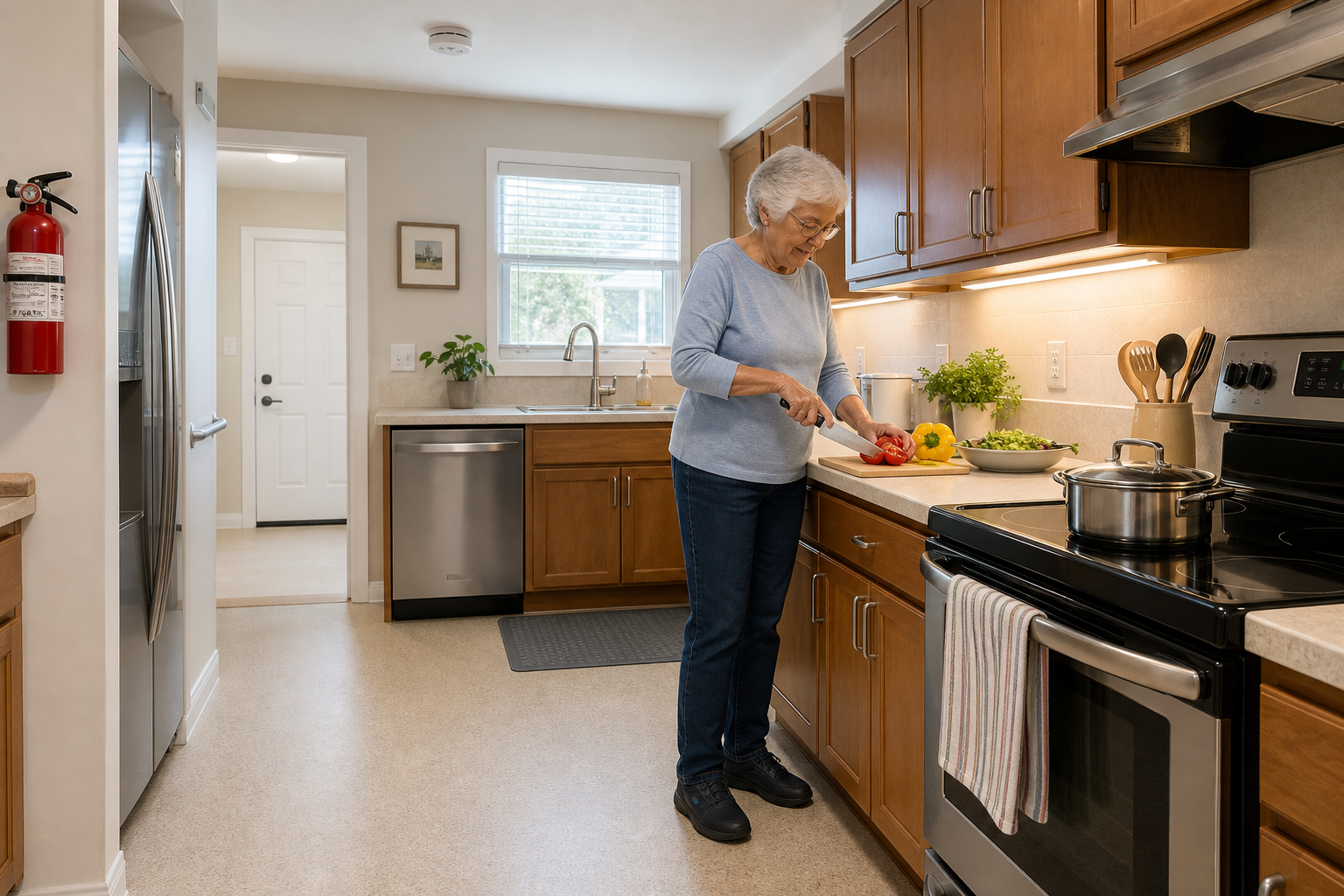
Kitchen environments combine heat, sharp tools, water, and movement, making them one of the highest-risk areas in any home. Kitchen Safety For Seniors is not about avoiding the kitchen, but about controlling these risks through layout, habits, and simple adjustments that reduce the chance of injury while preserving independence.
The kitchen is especially hazardous because it requires constant transitions between standing, turning, reaching, and carrying. Small errors, such as a wet floor or a misplaced pan, can quickly lead to burns or falls. A prevention mindset focuses on removing friction from everyday actions to keep movement stable and predictable.
The goal is not perfection. The goal is a kitchen that supports safe, repeatable behavior without requiring constant attention or effort.
Flooring And Movement Hazards In Kitchen Safety For Seniors
Unstable flooring and cluttered movement paths are the primary causes of falls in the kitchen. Kitchen Safety For Seniors begins with how the floor behaves under normal use, including spills, grease, and frequent foot traffic.
Smooth tile or worn vinyl becomes dangerous when wet. Rugs that slide or curl at the edges create hidden trip points. Even minor obstacles, such as pet bowls or small appliances placed on the floor, can interrupt balance during turning movements.
Safe flooring depends on traction and predictability.
• Remove loose rugs or replace them with non-slip, low-profile mats
• Keep walkways clear of cords, stools, and floor-level objects
• Clean spills immediately, especially near sinks and cooking areas
• Use non-slip coatings or mats in high-risk zones
• Wear supportive, non-slip footwear while cooking
A stable walking surface reduces the need for corrective movements, which are often what lead to falls.
Lighting And Visibility In Daily Kitchen Use
Poor lighting increases the likelihood of both falls and cooking errors. Kitchen Safety For Seniors requires consistent, shadow-free illumination across all work areas.
Lighting should support depth perception and clear identification of surfaces. Shadows near countertops or stove areas can distort distances and lead to misplacement of hands or objects.
Layered lighting works best.
• Install bright overhead lighting to eliminate general shadows
• Add under-cabinet lights to improve countertop visibility
• Use motion-activated lights for early morning or nighttime use
• Replace dim or flickering bulbs immediately
• Ensure light switches are easy to access from entry points
Lighting should not require adjustment during use. It should simply work every time the kitchen is entered.
Safe Use Of Heat And Appliances
Burns are one of the most common injuries in the kitchen. Kitchen Safety For Seniors depends on controlling how heat is used and minimizing exposure during cooking.
Stoves, ovens, and small appliances all present burn risks, especially when attention shifts during multitasking. Controls should be simple and clearly visible. Handles should be positioned to avoid accidental contact.
Safe heat management reduces both direct burns and secondary accidents caused by sudden reactions.
• Turn pot handles inward to avoid accidental bumps
• Use appliances with automatic shutoff features
• Avoid loose clothing that can contact open flames
• Keep frequently used items within easy reach to reduce stretching over heat
• Use oven mitts with a secure grip rather than thin cloths
Consistency in appliance use creates safer habits over time.
How to Prevent Falls in the Home
Countertop Organization And Reach Safety
Reaching and bending create instability, especially when combined with carrying or turning. Kitchen Safety For Seniors improves when frequently used items are placed within a safe reach zone.
The ideal zone is between waist and shoulder height. Items stored above or below this range increase the risk of imbalance or strain.
Organization reduces unnecessary movement.
• Store daily-use items on mid-level shelves
• Avoid stacking heavy objects overhead
• Use pull-out shelves to reduce deep reaching
• Keep countertops clear to allow stable hand placement
• Reorganize cabinets based on frequency of use
Reducing reach distance minimizes the need for balance correction during routine tasks.
Knife Handling And Food Preparation Safety
Sharp tools require stable positioning and controlled movement. Kitchen Safety For Seniors includes adapting preparation habits to reduce the risk of cuts.
Cutting should always occur on a stable, non-slip surface. Rushed or awkward movements increase the chance of injury, especially when grip strength is reduced.
Preparation safety depends on control, not speed.
• Use non-slip cutting boards that stay fixed during use
• Keep knives sharp to avoid excessive force
• Cut slowly and deliberately, focusing on hand placement
• Use pre-cut or assisted tools when needed
• Avoid carrying knives while moving through the kitchen
Safe preparation habits reduce both minor and serious injuries.
https://pmc.ncbi.nlm.nih.gov/articles/PMC6124855/
Fire Prevention And Emergency Readiness
Fire risk increases when attention is divided or when cooking is left unattended. Kitchen Safety For Seniors requires simple systems that prevent escalation.
Even small fires can spread quickly if not addressed immediately. Prevention focuses on avoiding ignition and having a clear response plan.
Preparedness reduces reaction time.
• Never leave cooking unattended, especially with open flame
• Keep a fire extinguisher within easy reach
• Avoid using water on grease fires
• Install and maintain smoke detectors near the kitchen
• Keep flammable items away from heat sources
Understanding basic fire response procedures is essential.
Fire safety tips: https://www.usfa.fema.gov/downloads/pdf/publications/fa_221.pdf
Managing Fatigue And Standing Time
Fatigue leads to slower reactions and reduced balance control. Kitchen Safety For Seniors improves when tasks are structured to reduce prolonged standing.
Cooking does not need to be continuous. Breaking tasks into stages reduces strain and improves focus.
Energy management supports safer movement.
• Use a stable chair or stool for seated prep work
• Prepare ingredients in stages rather than all at once
• Take short breaks between tasks
• Avoid rushing to complete meals quickly
• Schedule cooking during times of peak energy
Fatigue often precedes accidents. Managing it directly reduces risk.
Creating A Consistent Safety Routine
Consistency is the final layer of safety. Kitchen Safety For Seniors becomes effective when the same safe behaviors are repeated daily without variation.
A structured routine removes guesswork and reduces the likelihood of overlooked hazards. Safety should be built into the normal flow of kitchen use.
Reliable habits create predictable outcomes.
• Check floors and surfaces before starting any task
• Turn on the lights before entering the kitchen
• Return tools and items to the same location after use
• Clean as you go to prevent the buildup of hazards
• End each session with a quick safety check
System Context: Kitchen safety directly supports broader aging in place goals by reducing fall and injury risk in one of the most frequently used areas of the home. This page connects to the overall structure of the site by reinforcing practical safety behaviors that align with the Aging in Place Checklist and support consistent daily routines.
_____________________________________________________________________________________________________
Get clear, practical insights on aging in place sent occasionally, and only when useful.
No spam. No noise. Unsubscribe anytime.
______________________________________________________________________________________________________