Safe Shoe Choices For Seniors At Home
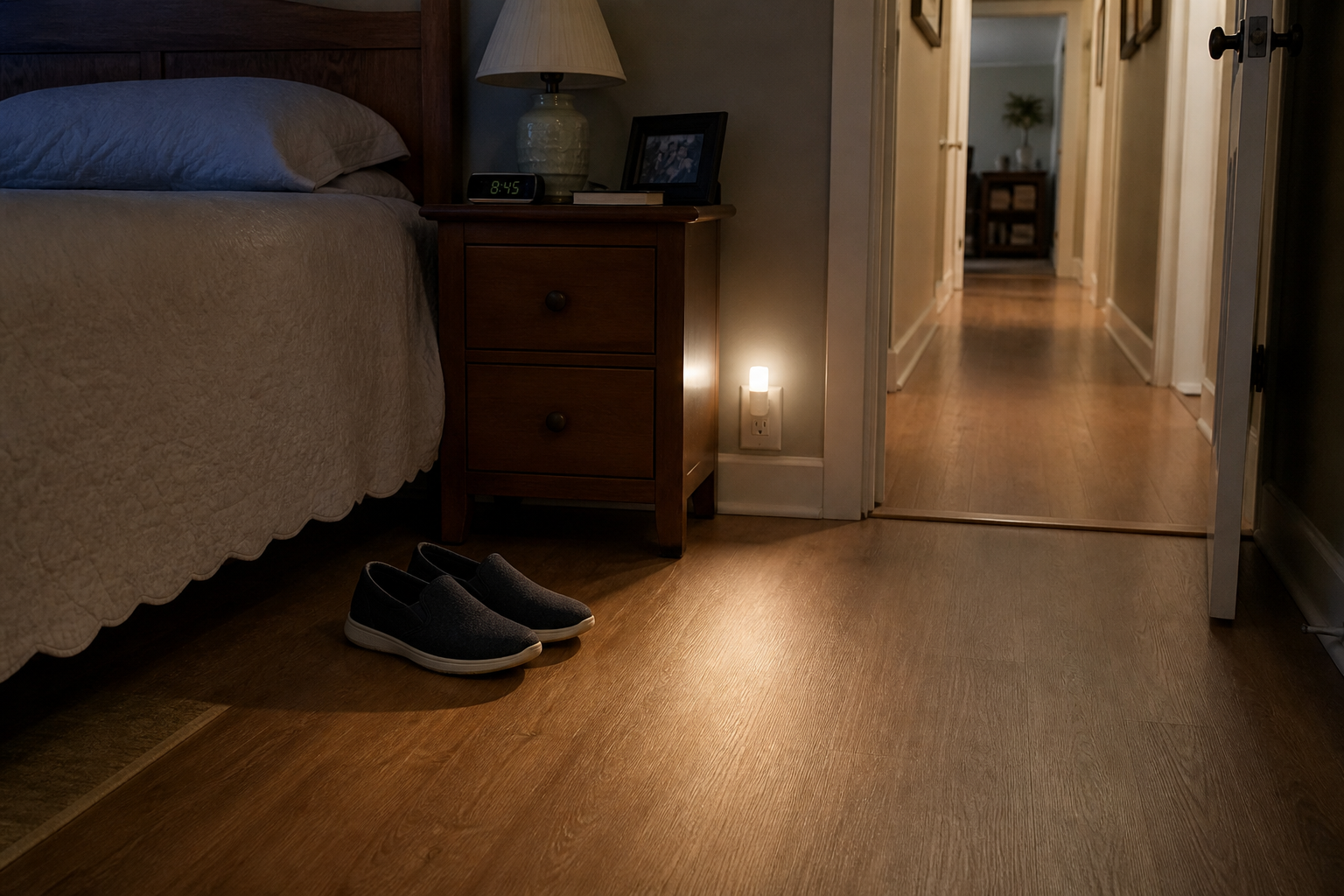
Safe Shoe Choices For Seniors At Home matter because many household falls begin with ordinary movement: standing up, walking across the kitchen, getting out of bed, or stepping onto a bathroom floor. Shoes that slide, catch, twist, or fit poorly can turn a normal day at home into a serious fall risk.
The goal is not to buy expensive specialty footwear or turn the house into a medical setting. The goal is to make walking safer with practical, affordable choices that support balance, grip, and confidence during everyday movement.
Good indoor footwear should make the home easier to move through, not harder.
Safe Shoe Choices For Seniors At Home Should Reduce Slipping And Tripping
The safest indoor shoes reduce both sliding and catching.
A shoe can create danger in two opposite ways. A slick sole can slide across smooth flooring. A bulky or sticky sole can catch on rugs, thresholds, or uneven floor transitions. Safe Shoe Choices For Seniors At Home should fall between those extremes: enough traction to grip, but not so much that the foot stops suddenly while the body keeps moving.
Look closely at how the shoe behaves on the actual floors in the home. Tile, vinyl, laminate, low-carpet, and hardwood can all affect how a shoe performs.
Better indoor shoes usually have:
- A flat, stable sole that sits fully on the floor
- A non-slip tread that grips without feeling sticky
- A closed heel or secure heel strap
- Enough toe room to avoid curling or squeezing
- A lightweight feel that does not drag the foot down
- A sole edge that does not catch easily on rugs or thresholds
Avoid judging shoes only by comfort while sitting. The real test is walking, turning, stopping, and standing from a chair.
Avoid Loose Slippers And Backless House Shoes
Loose slippers are one of the most common bad shoe choices inside the home.
Many older adults wear slippers because they feel soft, warm, and familiar. The problem is that soft does not always mean safe. A slipper that shifts under the foot, bends too easily, or slips off the heel can create instability with every step. Backless slippers are especially risky because the foot has to grip the shoe to keep it on.
Safe Shoe Choices For Seniors At Home should stay attached to the foot without effort. The wearer should not have to shuffle, curl their toes, or constantly look down to keep the shoe in place.
Check slippers by asking simple questions:
- Does the heel lift out while walking?
- Does the slipper twist sideways during turns?
- Does the sole fold easily in half?
- Does the foot slide forward inside the shoe?
- Does the slipper make the person shuffle?
If the answer is yes, the slipper may be comfortable but unsafe.
Feet and Footwear for Older Adults
Match Shoes To The Flooring In The Home
Shoes should be tested on the surfaces where they will actually be used.
A shoe that works well on carpet may feel slippery on tile. A shoe that grips well in the kitchen may catch on a hallway rug. This is why Safe Shoe Choices For Seniors At Home should be evaluated room by room, not just by brand, price, or appearance.
Flooring transitions deserve special attention. A senior may walk safely across one surface but stumble where carpet meets vinyl, where a rug edge rises slightly, or where a threshold separates two rooms. Shoes with thick, uneven, or overly flexible soles can make these areas harder to manage.
Practical testing helps:
- Walk from the bedroom to the bathroom in the shoes
- Turn around in the kitchen without rushing
- Step across common thresholds slowly
- Check whether the toe catches on rug edges
- Notice whether the shoe slides on smooth flooring
- Remove or reposition rugs that interfere with safe walking
For more surface-specific planning, see Flooring Safety For Seniors.
Choose Shoes That Support Standing Up And Sitting Down
Good indoor shoes should help during transfers, not just walking.
Many falls happen when someone stands up from a chair, gets out of bed, or lowers into a seat. During those moments, the feet need to stay planted. Shoes that slide forward, twist under the foot, or lack heel support can make standing and sitting less stable.
Safe Shoe Choices For Seniors At Home should provide a firm base. The sole should not collapse when weight shifts forward. The heel should remain secure. The shoe should allow the foot to feel grounded without creating pressure or pain.
Watch common transfer points:
- Favorite recliner
- Dining chair
- Bedside
- Toilet area
- Kitchen chair
- Entryway bench
A simple test is useful. Have the person sit, place both feet flat, stand slowly, pause, and sit again. If the shoes slide, wobble, or shift, they are not helping enough.
Keep Nighttime Footwear Easy To Find And Put On
Nighttime shoes need to be safe before the person is fully alert.
Getting up at night is different from walking during the day. The room is darker. The person may be sleepy. The first steps may be rushed because of bathroom urgency. Shoes that require bending, tying, adjusting, or searching under the bed are less likely to be used correctly.
Safe Shoe Choices For Seniors At Home should include a reliable nighttime option. The shoes should sit in the same place every night, within easy reach, with the opening facing the bed. They should be easy to slide into without becoming loose once walking begins.
Useful nighttime habits include:
- Place shoes beside the bed before sleeping
- Keep the left and right shoes separated clearly
- Use a small nightlight near the walking path
- Avoid leaving shoes partly under the bed
- Remove loose socks from the floor area
- Choose shoes that do not require tying at night
For walking after dark, see Nighttime Safety For Seniors.
Replace Shoes When The Soles Or Shape Break Down
Old shoes can look familiar while no longer being safe.
Indoor shoes wear down slowly, so the change is easy to miss. A sole may become smooth. One side of the heel may compress. The upper may stretch until the foot slides around. The shoe may still feel comfortable because the wearer is used to it, but comfort does not cancel out poor stability.
Check the bottom and shape of indoor shoes every few months. Put them on a flat surface and see whether they tilt. Look for slick patches on the sole. Press the sides to see whether the shoe still holds its shape.
Replace shoes when:
- The tread has become smooth
- The heel is worn unevenly
- The shoe leans to one side
- The upper has stretched out
- The insole bunches or shifts
- The person has started shuffling more
MedlinePlus offers practical fall-prevention guidance at: https://medlineplus.gov/ency/patientimages/000308.htm
Balance Warmth, Comfort, And Safety
Warm feet still need a stable footing.
Cold floors make slippers tempting, especially in winter. Thick socks may feel easier than shoes, but socks can slide on smooth floors unless they are designed with a reliable grip. Even then, socks do not provide the same structure as a stable indoor shoe.
Safe Shoe Choices For Seniors At Home should balance comfort with control. Warm lining is fine if the shoe still fits securely. Cushioning is fine if the sole does not become too soft or unstable. The best choice is often a simple indoor shoe with a low profile, secure heel, and non-slip bottom.
Practical comfort checks include:
- Make sure toes are not squeezed
- Avoid soles that feel spongy or unstable
- Choose fasteners that are easy to manage
- Use socks that do not bunch inside the shoe
- Keep one safe pair near the main living area
- Avoid walking in ordinary socks on smooth floors
Footwear is one small part of a larger fall-prevention pattern. The Aging in Place Checklist helps connect shoes, flooring, lighting, pathways, and daily habits into one practical home safety plan.
Make Shoe Habits Part Of The Daily Home Safety Routine
Shoes only help when they are worn at the right times.
A safe pair of indoor shoes sitting in the closet does not reduce risk. The shoes need to become part of ordinary movement: getting out of bed, walking to the bathroom, cooking, answering the door, doing laundry, and moving between rooms. Safe Shoe Choices For Seniors At Home work best when the easiest choice is also the safest choice.
Place shoes where they support real habits. Keep one pair by the bed if nighttime walking is common. Keep another pair near the favorite chair if the person often takes off their shoes while watching television. Do not rely on reminders alone when a better placement can solve the problem.
Useful daily routines include:
- Put shoes on before leaving the bedroom
- Keep unsafe slippers out of the main walking path
- Store outdoor shoes away from indoor pathways
- Check that shoe laces are tied or replaced with safer closures
- Keep the most stable pair in the most-used location
- Remove worn shoes instead of saving them as backups
For broader movement planning inside the home, see Home Safety For Seniors.
© 2026 Mark Fomenko. All rights reserved.
AgingInPlaceResource.com
Privacy Policy | Terms of Use | Disclaimer | Contact | Newsletter
Recent Articles


-
Aging In Place Resource Library
Sep 04, 26 08:30 AM
Aging In Place Resource Library -
Aging in Place Resource Newsletter
Aug 30, 26 11:16 AM
Aging in Place Resource Newsletter -
Aging in Place Resource: Simple Strategies for Living Safely at Home
Jul 28, 26 12:43 PM
 Aging in Place Resource provides practical guidance for aging in place. Learn how to live safely and independently at home with strategies for home safety, caregiving, planning, and long-term support.