Helping A Parent Live Safely At Home
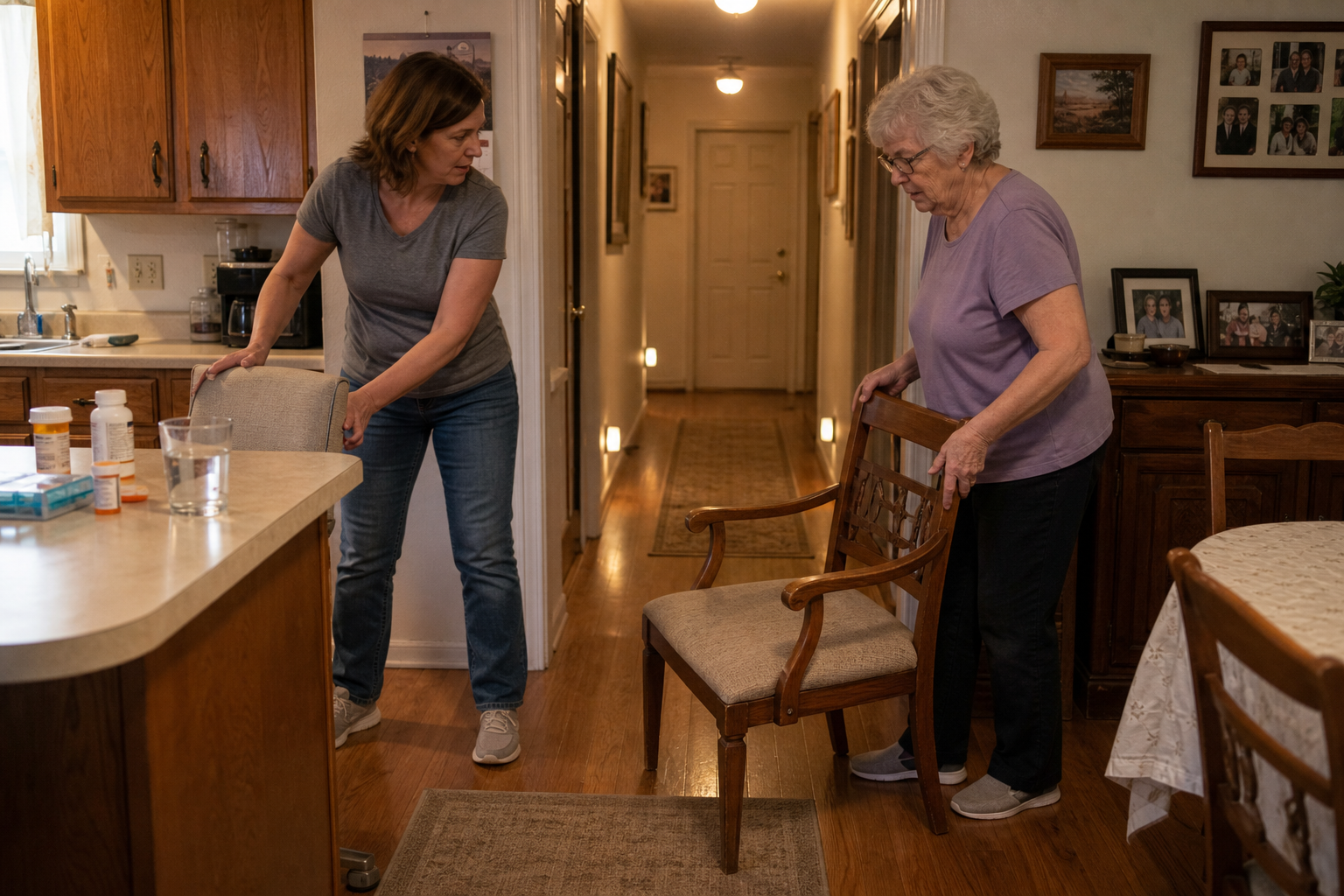
Helping A Parent Live Safely At Home often begins gradually. A parent forgets medications, struggles getting out of a chair, leaves clutter in walkways, or starts avoiding stairs because they no longer feel steady. Families usually adapt piece by piece until one bad fall, a hospitalization, or a frightening moment forces everyone to recognize that the house itself may no longer support safe daily living.
The difficulty is that many older adults still appear capable much of the time. Someone may hold a normal conversation while quietly struggling with balance, fatigue, poor vision, confusion at night, or reduced judgment. Adult children are often trying to help without humiliating a parent or turning the home into something that feels institutional. That balancing act creates stress and second-guessing for everyone involved.
Helping A Parent Live Safely At Home usually depends less on expensive remodeling and more on reducing friction inside ordinary daily routines. Better lighting, clearer walking paths, safer transfers, easier visibility, simpler furniture layouts, and more predictable habits often make a larger difference than people expect.
Helping A Parent Live Safely At Home Starts With Movement
One of the fastest ways to understand whether a parent is struggling at home is to watch how they move through ordinary tasks. Do not focus only on whether they can technically walk. Pay attention to hesitation, reaching, leaning, and fatigue.
Watch for signs such as:
- using walls or furniture for balance
- stopping before turns
- shuffling around rugs or thresholds
- carrying objects while unstable
- difficulty standing from soft chairs
- holding onto door frames
- pausing before steps
- avoiding parts of the home entirely
Many older adults quietly change their behavior to compensate for declining balance or strength. A parent may stop showering regularly because stepping into the tub feels dangerous. Another may sleep in a recliner because getting in and out of bed became exhausting weeks earlier.
Helping A Parent Live Safely At Home becomes easier when the house supports natural movement instead of fighting it. Often this means widening walking routes by removing decorative furniture, floor plants, magazine racks, storage baskets, and unstable side tables.
Do not rely on lightweight furniture for support. A rolling cart or small decorative table may slide when grabbed suddenly.
If a parent consistently steadies themselves by touching walls or furniture, treat that as useful information rather than stubborn behavior. The walking route likely needs improvement.
Safe walking paths matter more than maintaining a perfect room layout.
How to Prevent Falls in the Home
Improving Lighting Without Major Remodeling
Poor lighting creates problems gradually. A parent may know the house extremely well and still misjudge distances, miss a step, or trip over objects that blend into darker flooring.
Lighting problems are especially common in:
- hallways
- bathrooms
- stair edges
- kitchens at night
- bedrooms after waking
- entryways
- rooms with dark furniture and dark flooring
Helping A Parent Live Safely At Home often involves increasing visibility rather than dramatically changing the home itself.
Simple improvements may include:
- brighter LED bulbs
- motion-sensor night lights
- keeping lamps within easy reach
- reducing deep shadows behind furniture
- opening curtains during the day
- improving lighting near steps and transitions
- using contrasting colors between floors and furniture
Many falls happen during rushed nighttime movement. A parent wakes half asleep, tries not to turn on lights, and moves through the house using memory alone.
Motion-sensor lighting can help because it removes the need to search for switches in the dark. Consistency matters. If lighting changes from room to room, older eyes may struggle to adjust quickly.
Glare can also become a problem. Extremely bright bulbs reflecting off shiny floors may reduce depth perception instead of improving safety.
Helping A Parent Live Safely At Home means making the environment easier to read at a glance.
Home Lighting Safety For Seniors
Reducing Clutter And Unstable Walking Surfaces
Many homes slowly accumulate obstacles over decades. Small decorative items, stacked boxes, pet bowls, cords, folding tables, and narrow walking gaps may seem harmless until mobility changes.
A cluttered house does not necessarily mean neglect. Some older adults simply continue arranging the home for the way they lived twenty years earlier instead of the way they move now.
Common problem areas include:
- braided rugs
- electrical cords across walkways
- low coffee tables
- crowded furniture layouts
- stacked newspapers
- pet toys
- slippery bathroom mats
- shoes left near doorways
- uneven flooring transitions
Helping A Parent Live Safely At Home often requires simplifying rooms instead of adding equipment.
Many families discover that removing one unnecessary chair improves safety more than buying multiple assistive devices.
Walk through the home carrying laundry, groceries, or a cup of coffee. Tight spaces become much more obvious when your hands are occupied. That is how many falls actually happen.
Pets also create unpredictable movement patterns. Small dogs sleeping behind heels or cats weaving around legs can become serious hazards for someone with slower reaction time.
Making Transfers Easier And Safer
Transfers are one of the most physically demanding parts of daily life. Standing from bed, getting off a toilet, entering a shower, or rising from a recliner may require much more strength than families realize.
Parents sometimes hide these struggles because the movements are embarrassing or exhausting.
Warning signs include:
- rocking repeatedly before standing
- needing several attempts to rise
- pulling heavily on another person
- collapsing backward into chairs
- avoiding low seating
- refusing to use certain rooms
- grabbing unstable objects during transfers
Helping A Parent Live Safely At Home may involve adjusting furniture height before considering larger changes.
Simple improvements can include:
- firmer chair cushions
- stable armchairs instead of deep couches
- grab bars near toilets
- raised toilet seats
- sturdy bed frames at proper height
- keeping frequently used items within reach
Never encourage someone to pull hard on towel bars, sink edges, or lightweight furniture during transfers. Those objects may fail suddenly.
Families also underestimate fatigue. A parent may manage one difficult transfer safely in the morning and struggle badly by evening.
Transfer problems often become more noticeable after illness, dehydration, medication changes, or poor sleep.
Transfer Safety and Aging in Place
Helping A Parent Live Safely At Home With Predictable Daily Routines
Predictable routines reduce confusion, unnecessary walking, and physical strain. This becomes especially important when memory problems, fatigue, or poor judgment begin affecting daily life.
Helping A Parent Live Safely At Home is easier when important tasks happen in consistent ways and in consistent locations.
Helpful routine adjustments may include:
- keeping medications in plain sight
- storing frequently used dishes near waist level
- placing water where it will actually be consumed
- keeping phones charged in the same location
- reducing repeated stair trips
- simplifying meal preparation
- using visible calendars and notes
- maintaining regular sleep schedules
A parent who forgets meals may also become weaker and less stable. Someone who avoids drinking water because the bathroom feels difficult to reach may become dehydrated and dizzy.
Small routines often reveal larger problems. A refrigerator filled with expired food may indicate exhaustion rather than laziness. Burned cookware may indicate distraction or memory decline.
Families sometimes argue constantly about these issues because the parent still feels mentally independent. That tension is common. Many people can recognize pieces of their decline while remaining unable to judge the overall situation clearly.
Helping A Parent Live Safely At Home requires realistic observation rather than endless debate.
Recognizing When The Home Is Becoming Unsafe
Most families do not face one dramatic moment that clearly answers everything. Problems usually build gradually.
Warning signs may include:
- repeated falls or near-falls
- wandering outside confused
- unpaid bills piling up
- spoiled food
- burned pans
- missed medications
- increasing isolation
- poor hygiene
- sleeping in chairs
- refusing necessary mobility aids
- confusion at night
- unexplained bruises
- fear of bathing or stairs
Helping A Parent Live Safely At Home sometimes means recognizing when current arrangements are no longer working well enough.
Some parents remain highly persuasive socially even while struggling badly at home. Visitors may leave thinking everything seems normal because the parent can still converse intelligently for short periods.
Nighttime confusion is especially difficult. A parent may become disoriented after dark and insist they need to leave the house, go to work, or meet someone long dead. Families often discover these situations only after repeated frightening incidents.
The goal is not perfect safety. No living arrangement removes all risk. The goal is reducing avoidable danger while preserving as much independence as realistically possible.
Balancing Independence With Practical Limits
Many older adults fear losing control more than they fear physical danger. That fear shapes behavior in ways families sometimes misunderstand.
A parent may reject grab bars because they associate them with decline. Another may refuse a walker because they believe using one means giving up independence. Some will quietly continue unsafe habits simply to avoid feeling managed.
Helping A Parent Live Safely At Home usually works better when changes feel practical rather than symbolic.
Instead of framing changes as signs of weakness, focus on reducing effort and frustration:
- easier walking
- less bending
- fewer nighttime hazards
- simpler access to daily items
- less physical strain
Avoid turning every conversation into a safety lecture. Constant correction creates resistance and exhaustion on both sides.
Sometimes compromise works better than winning arguments. A parent may refuse major changes but accept small adjustments that noticeably improve comfort.
Families also need realistic expectations. Exhausted adult children often make decisions while juggling work, finances, sleep deprivation, distance, and uncertainty. Many choices happen under pressure with incomplete information.
Helping A Parent Live Safely At Home is rarely neat or emotionally simple.
Small Changes Often Prevent Larger Crises
Large emergencies are often preceded by smaller warning signs that were easy to normalize at the time. A single fall may follow months of poor lighting, unstable transfers, exhaustion, clutter, and unsafe routines gradually stacking together.
Helping A Parent Live Safely At Home usually depends on noticing those smaller patterns early enough to simplify daily life before a crisis forces rushed decisions.
Start with the areas that affect movement every day:
- walking paths
- bathroom access
- nighttime visibility
- transfer safety
- meal preparation
- medication routines
- frequently used seating
- stair use
Do not assume every solution must be expensive. In many homes, removing obstacles, improving visibility, rearranging furniture, and simplifying routines provide meaningful safety improvements quickly.
The most useful changes are often the ones a parent will actually continue using consistently. A perfectly designed solution that gets ignored helps nobody.
Helping A Parent Live Safely At Home is usually an ongoing process of observation, adjustment, simplification, and practical compromise rather than one final permanent fix.
© 2026 Mark Fomenko. All rights reserved.
AgingInPlaceResource.com
Privacy Policy | Terms of Use | Disclaimer | Contact | Newsletter
Recent Articles


-
Aging In Place Resource Library
Sep 04, 26 08:30 AM
Aging In Place Resource Library -
Aging in Place Resource Newsletter
Aug 30, 26 11:16 AM
Aging in Place Resource Newsletter -
Aging in Place Resource: Simple Strategies for Living Safely at Home
Jul 28, 26 12:43 PM
 Aging in Place Resource provides practical guidance for aging in place. Learn how to live safely and independently at home with strategies for home safety, caregiving, planning, and long-term support.