Medication Mistakes And Cognitive Decline
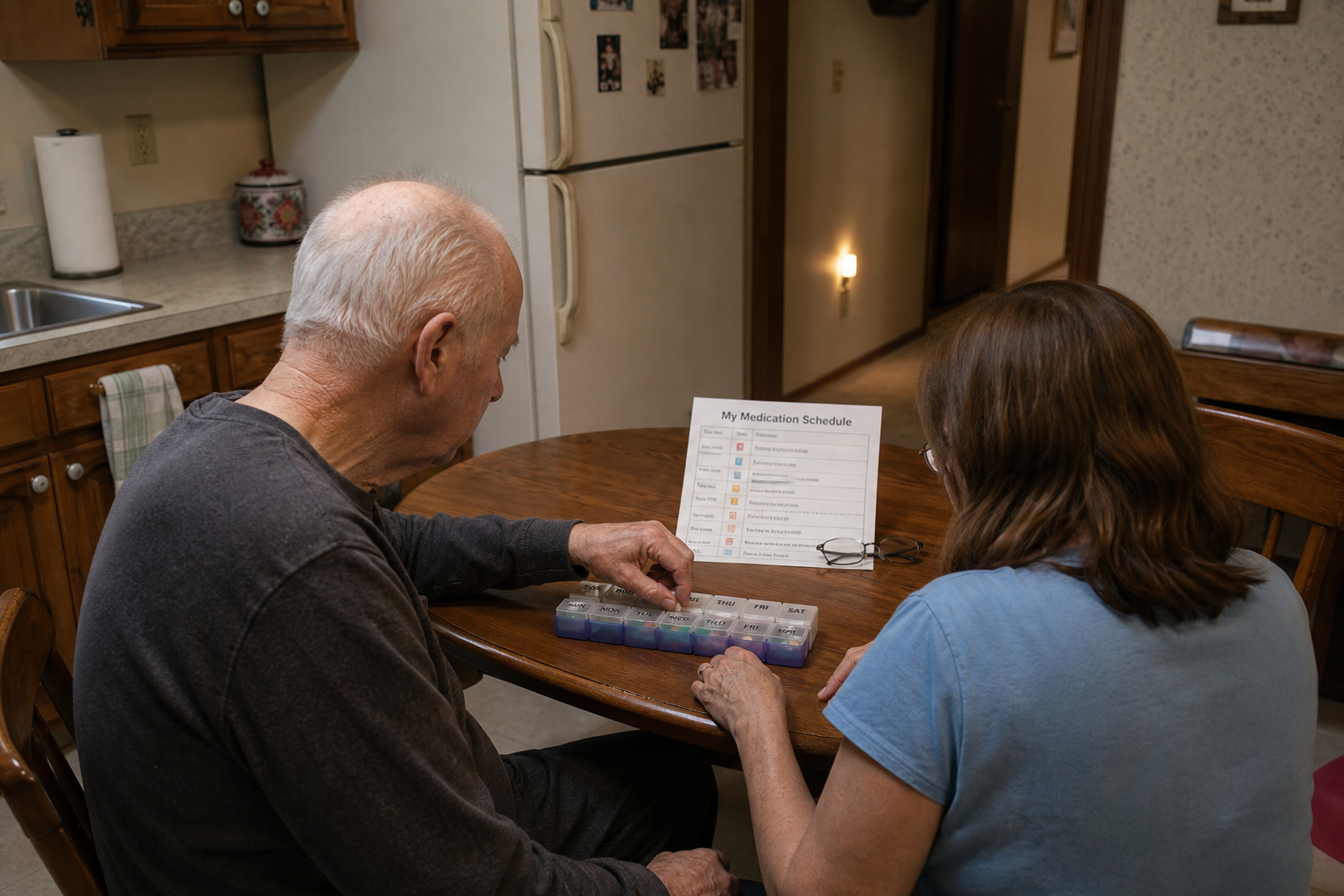
Medication Mistakes And Cognitive Decline often become intertwined slowly inside ordinary homes. A medication that once seemed harmless may suddenly cause confusion, dizziness, agitation, poor balance, excessive sleepiness, or hallucinations. Families sometimes assume dementia is rapidly worsening when the real problem is a medication issue, a dosage problem, or a dangerous combination of medications.
These situations can become difficult because the symptoms often appear gradually. A parent may begin forgetting meals, mismanaging pills, wandering at night, or acting unusually suspicious. Someone who previously handled medications independently may quietly lose the ability to organize schedules, understand instructions, or remember whether doses were already taken.
Medication mistakes are also emotionally complicated. Adult children often discover problems after a hospitalization, a fall, or a frightening behavioral change. Many caregivers realize afterward that the warning signs had been building for months. Practical systems and simpler routines can reduce many of these risks without turning the home into a medical environment.
Things can get frightening very quickly.
My sister is eight years older than I am and has a neurodegenerative disorder that may be Parkinson’s disease, although her doctors have never been fully certain. At one point, she was taking more than the recommended dose of a Parkinson’s medication and began having frequent hallucinations, severe confusion, irrational behavior, and constant nausea. She could barely keep food down and lost a great deal of weight, including muscle mass, very quickly.
Her behavior became so alarming that many of her friends and neighbors pulled away from her socially. After her medication was reduced to the recommended dosage, the hallucinations and irrational behavior disappeared. She now complains of feeling socially isolated.
My sister is a very intelligent person and has always been conservative about taking medication, yet she became convinced that taking more than the prescribed dose would help her more.
Situations like this can frighten families because medication problems in older adults can sometimes look very similar to severe psychiatric illness or rapid dementia progression.
How Medication Mistakes And Cognitive Decline Create Daily Safety Problems
Medication Mistakes And Cognitive Decline can affect nearly every part of daily living at home. Confusion caused by medications may look very similar to dementia progression. Families sometimes focus entirely on memory loss while missing the fact that medications are contributing to the problem.
Common warning signs include:
- Pills found loose in pockets or furniture
- Missed doses followed by double dosing
- Increasing daytime sleepiness
- Sudden balance problems
- New nighttime wandering
- Visual or auditory hallucinations
- Confusion about time or location
- Increased irritability or paranoia
- Poor judgment during transfers or walking
Some medications also increase fall risk by lowering blood pressure or causing dizziness when standing up. Others create confusion severe enough that a person cannot safely use stairs, walkers, or mobility aids.
A person may insist they already took medication when they did not. Another person may repeatedly take medication because they forgot earlier doses. Both situations are common.
In many homes, the first practical goal is not perfect compliance. The goal is reducing preventable danger while preserving as much independence as possible.
Learn more about Managing Daily Car at Home
Medication Mistakes And Cognitive Decline After Hospitalizations
Medication Mistakes And Cognitive Decline often worsen after a hospitalization or rehabilitation stay. Medication schedules may change quickly during medical treatment. Families sometimes return home with multiple new prescriptions, discontinued medications, and unclear instructions.
This creates confusion even for organized households.
Common post-hospital problems include:
- Old medications mixed with new ones
- Duplicate medications accidentally continued
- Pill bottles stored in multiple rooms
- Unclear dosage changes
- Sedating medications added temporarily but continued indefinitely
- Different caregivers giving conflicting instructions
Many older adults become temporarily more confused after hospitalization. Fatigue, disrupted sleep, pain medication, dehydration, and unfamiliar surroundings can all contribute to cognitive decline. Returning home does not always immediately fix the confusion.
It is often helpful to simplify medication storage immediately after discharge:
- Keep all medications in one visible location
- Remove expired medications
- Separate active medications from discontinued ones
- Use a written daily checklist
- Avoid storing medications in several rooms
Large complicated systems sometimes fail faster than simple visible routines.
The NIA NIH medication safety guide provides additional practical guidance.
Nighttime Confusion And Unsafe Medication Use
Medication Mistakes And Cognitive Decline frequently become most dangerous at night. Dim lighting, fatigue, poor vision, and disrupted sleep can make medication confusion much worse after dark.
Some seniors wake disoriented and begin searching for pills in the middle of the night. Others accidentally take morning medication twice because they lose track of time.
Nighttime medication problems commonly involve:
- Sleeping pills
- Pain medication
- Diabetes medication
- Anxiety medication
- Medications causing dizziness or bathroom urgency
Homes with poor nighttime lighting create additional hazards. A confused senior may stand quickly, become dizzy, and fall while trying to reach medication bottles stored in bathrooms or kitchens.
Practical nighttime safety improvements may include:
- Motion-activated nightlights
- Large clocks visible from bed
- Keeping water nearby
- Reducing clutter between bed and bathroom
- Avoiding medication storage in dark cabinets
- Using large-print medication labels
Some families also stop storing medications in multiple locations because wandering between rooms at night increases fall risk considerably.
Learn more about Medication Side Effects and Fall Risk
When A Senior Can No Longer Manage Medications Independently
One of the hardest transitions in aging in place happens when someone can no longer safely manage medications alone. Many seniors strongly resist giving up this responsibility because it represents independence and personal control.
The loss is often emotionally significant even when the risks are obvious.
Warning signs may include:
- Frequently dropped pills
- Confusing similar bottles
- Running out of medication early
- Refusing needed medication
- Repeatedly asking whether medication was taken
- Increasing anger about medication discussions
- Hidden pill bottles
- Taking medication at unusual times
Some seniors become skilled at pretending they understand medication instructions even when they no longer do. Families may not realize how serious the problem has become until a major mistake occurs.
Simple supervision often works better than confrontation.
Instead of arguing:
- Sit nearby during medication times
- Use calm repetition
- Keep routines consistent
- Reduce unnecessary discussion
- Avoid overwhelming choices
Many households quietly transition from independent medication management to guided medication management over time rather than through one dramatic decision.
Learn more about Helping A Parent Live Safely At Home
Simplifying Medication Routines In Ordinary Homes
Medication Mistakes And Cognitive Decline become more likely when routines are overly complicated. Multiple dosing schedules, difficult packaging, poor lighting, and scattered storage locations increase confusion.
Practical simplification usually works better than adding more complexity.
Helpful adjustments may include:
- Using one weekly pill organizer
- Keeping medications near a normal daily routine
- Avoiding cluttered countertops
- Using large-print written schedules
- Eliminating duplicate containers
- Using easy-open containers when appropriate
- Keeping reading glasses near medications
- Improving overhead lighting
Some families discover that visible routines work better than hidden storage. A pill organizer near the breakfast table may be safer than medications hidden in a crowded bathroom cabinet.
Hydration and meals also matter. Seniors who skip meals or become dehydrated may experience much stronger medication side effects.
Medication routines should fit the actual behavior patterns inside the home rather than an idealized system that nobody consistently follows.
Hallucinations, Delirium, And Sudden Behavioral Changes
Medication Mistakes And Cognitive Decline sometimes produce frightening behavioral changes very quickly. Families are often shocked when someone who seemed relatively stable suddenly becomes paranoid, agitated, or hallucinatory.
This does not automatically mean permanent dementia progression.
Possible warning signs include:
- Seeing people who are not there
- Hearing voices or noises
- Severe confusion appearing suddenly
- Reversed sleep schedules
- Sudden aggression
- Extreme drowsiness
- Marked personality changes
- Inability to recognize familiar surroundings
Medication interactions, abrupt medication withdrawal, dehydration, infections, and missed doses can all contribute to delirium-like symptoms.
These episodes often become especially dangerous because judgment deteriorates quickly. A confused person may attempt stairs alone, leave the house unexpectedly, or refuse mobility assistance.
Families sometimes spend enormous energy arguing about what is “real.” In practice, calm redirection is usually safer and more effective than confrontation during severe confusion episodes.
Environmental stability helps:
- Maintain predictable routines
- Reduce noise and chaos
- Improve lighting
- Limit unnecessary stimulation
- Speak calmly and directly
- Avoid lengthy explanations
The goal is often reducing escalation rather than forcing agreement.
Learn more about How To Cope With Dementia In A Parent
Organizing The Home To Reduce Medication Errors
The physical setup of a home strongly affects medication safety. Cluttered kitchens, poor lighting, crowded counters, and confusing storage systems increase the odds of mistakes.
Simple environmental changes can make daily routines easier.
Helpful adjustments include:
- Keeping medication areas uncluttered
- Removing expired bottles regularly
- Using stable seating during medication times
- Avoiding slippery rugs near medication stations
- Improving kitchen and hallway lighting
- Keeping emergency contact numbers visible
- Storing medications away from look-alike supplements
In some homes, seniors become embarrassed about needing help and begin hiding medications. Families may discover pills inside drawers, coat pockets, tissue boxes, or handbags.
This behavior is not always deliberate deception. Cognitive decline often creates anxiety, confusion, and attempts to maintain control.
A calmer household routine generally works better than aggressive monitoring.
Medication organization should reduce stress rather than constantly reminding someone of declining abilities.
Medication Management For Seniors
Preventing Medication Problems Before A Crisis Develops
Medication Mistakes And Cognitive Decline are often easier to manage earlier than later. Small warning signs usually appear before major emergencies happen.
Families who pay attention to daily patterns often notice subtle changes first:
- Increased confusion during medication times
- Slower walking after new prescriptions
- More daytime sleeping
- Difficulty following conversations
- Changes in appetite
- Missed appointments
- Growing difficulty reading labels
It is common for families to second-guess themselves during this stage. Good days can make problems seem temporary. Bad days can create panic. Most households move back and forth between those extremes for quite a while.
Practical prevention usually involves gradual adjustment rather than one final solution.
Simple routines, better lighting, fewer obstacles, visible schedules, and reduced clutter often improve safety considerably without making a home feel institutional.
Many seniors remain at home successfully much longer when medication routines become simpler, more visible, and easier to supervise calmly.
© 2026 Mark Fomenko. All rights reserved.
AgingInPlaceResource.com
Privacy Policy | Terms of Use | Disclaimer | Contact | Newsletter
Recent Articles


-
Aging In Place Resource Library
Sep 04, 26 08:30 AM
Aging In Place Resource Library -
Aging in Place Resource Newsletter
Aug 30, 26 11:16 AM
Aging in Place Resource Newsletter -
Aging in Place Resource: Simple Strategies for Living Safely at Home
Jul 28, 26 12:43 PM
 Aging in Place Resource provides practical guidance for aging in place. Learn how to live safely and independently at home with strategies for home safety, caregiving, planning, and long-term support.