Managing Daily Care At Home
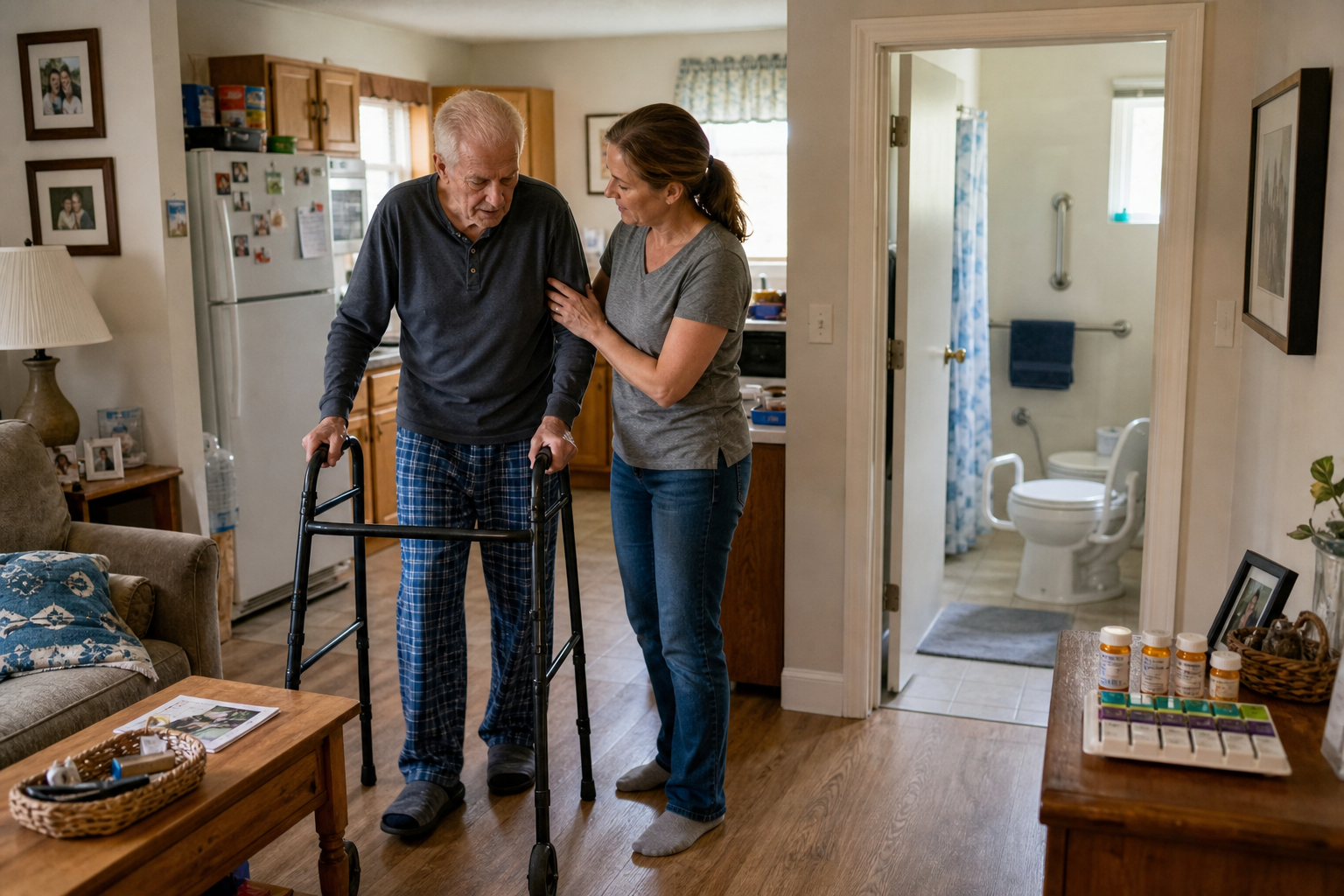
Managing Daily Care At Home often becomes difficult gradually instead of all at once. A parent may still appear capable in conversation while struggling with bathing, dressing, medication routines, transfers, cooking, or safe movement through the home. Small problems begin stacking together. Missed meals, poor lighting, cluttered walkways, confusion about schedules, and physical fatigue can quietly increase risk inside an otherwise ordinary house.
Many families discover that managing daily care at home is less about dramatic medical situations and more about repeated everyday tasks. Getting out of bed safely. Finding the bathroom at night. Remembering medication. Carrying laundry without falling. Preparing simple meals without confusion or exhaustion. These routine activities shape whether someone can continue living at home safely and independently.
The goal is usually not perfection. Most families are trying to reduce strain, avoid preventable emergencies, and keep daily life workable without turning the home into an institution. Small practical adjustments often make the biggest difference.
Managing Daily Care At Home With Predictable Routines
Managing daily care at home becomes easier when the household follows predictable patterns. Repeated routines reduce confusion, lower stress, and make it easier to notice when something changes.
Simple consistency matters more than complicated scheduling systems. Many older adults function better when daily activities happen in roughly the same order each day.
Useful anchors often include:
- waking at similar times
- regular meal times
- consistent medication timing
- evening preparation before dark
- familiar walking routes through the house
- keeping important items in the same place
Some families discover that confusion increases sharply late in the day. Tasks that seem simple at 10 a.m. may become frustrating or unsafe at 7 p.m. Moving difficult activities earlier can reduce arguments and exhaustion.
Large written schedules are not always helpful. A cluttered refrigerator covered in notes can become visual noise. One simple checklist in a visible location often works better than ten reminders scattered around the house.
Managing daily care at home also becomes easier when unnecessary decisions are reduced. Laying out tomorrow’s clothes the night before, simplifying kitchen supplies, and keeping commonly used items visible can prevent frustration from building throughout the day.
Reducing Physical Strain During Daily Tasks
Many injuries happen during ordinary household activities instead of emergencies. Carrying laundry, standing at the sink, stepping around pets, reaching into low cabinets, or turning quickly while holding objects can all create problems.
Managing daily care at home safely often means reducing repeated physical strain instead of waiting for a major fall or medical crisis.
Small adjustments can help immediately:
- keep frequently used items between waist and shoulder height
- avoid storing heavy objects on floors or high shelves
- use stable chairs with arms for dressing
- place laundry baskets on tables or chairs instead of floors
- keep grab points solid and predictable
- reduce unnecessary carrying between rooms
Fatigue changes movement patterns. People shuffle more, lean on unstable furniture, and rush simple tasks when tired. Evening fatigue is especially important because lighting is often worse and reaction time slower.
Some older adults begin “furniture walking,” using tables, counters, and chairs for balance instead of admitting they need support. Lightweight furniture can slide unexpectedly.
Do not rely on folding tables, rolling carts, or decorative chairs for stability. If someone consistently grabs furniture while walking, the route itself probably needs attention.
For more practical movement ideas, see Walking Safety For Seniors At Home.
Keeping Meals, Hydration, And Medication Simple
Daily care problems often begin quietly in the kitchen. A parent may stop preparing meals because standing feels exhausting, reading labels becomes difficult, or cooking steps become confusing.
Managing daily care at home becomes more stable when eating, hydration, and medication routines are simplified without removing independence unnecessarily.
Helpful strategies include:
- keeping commonly used dishes easy to reach
- reducing clutter on counters
- using clear containers
- keeping water visible throughout the day
- preparing simple repeatable meals
- limiting complicated cooking equipment
- using one primary medication location
Some people stop drinking enough water simply because getting up repeatedly feels tiring. Others avoid eating because cleanup feels overwhelming.
A small table near a favorite chair may help more than an expensive kitchen redesign. The easier something is to access, the more likely it will actually be used.
Confusion around medication can create major problems. Duplicate doses, forgotten doses, or mixing medications into random drawers often develops slowly over time.
Weekly pill organizers can help when used consistently. Large complicated systems sometimes fail because nobody maintains them properly after the first few weeks.
For more ideas about simplifying routines, see Medication Management for Seniors.
Managing Bathroom And Personal Care Safely
Bathrooms create daily stress because they combine urgency, slippery surfaces, bending, twisting, fatigue, and privacy concerns in one small space.
Managing daily care at home often depends heavily on whether bathroom routines remain workable and safe.
Many homes do not need major remodeling to improve bathroom safety. Small practical changes often help significantly:
- improve lighting between the bed and bathroom
- remove loose rugs
- keep floors dry
- reduce clutter near walking paths
- place soap and towels within easy reach
- use stable seating for dressing if needed
- keep nighttime routes clear
Privacy matters. Many older adults accept help more easily when they retain some control over the process. Rushing or arguing usually increases resistance.
Morning routines often work better than late-evening bathing when fatigue and confusion increase. Some caregivers discover that preparing towels, clothing, and supplies beforehand prevents repeated unnecessary walking.
A bedside commode can also reduce nighttime fall risk in some situations, especially when walking distances are long or mobility is poor.
For additional guidance, see Using A Bedside Commode Safely At Home.
Managing Transfers Without Rushing
Transfers become dangerous when people rush, panic, or attempt movements they can no longer control reliably.
Managing daily care at home includes recognizing that moving from bed to chair, chair to toilet, or car to doorway may now require slower movement and better positioning.
Common transfer problems include:
- pulling on unstable furniture
- twisting while standing
- grabbing another person around the neck
- trying to stand before balance is established
- wearing slippery footwear
- clutter near transfer points
Many caregivers injure themselves while trying to “catch” someone during a fall. A controlled assisted lowering is often safer than attempting to stop full body weight suddenly.
Clear floor space matters. Even one small obstacle near a bed or recliner can create repeated problems.
Some families eventually realize certain chairs have quietly become unsafe. Very soft couches, deep recliners, and low seating may look comfortable but can become extremely difficult to exit safely.
Good transfer setups usually involve:
- firm seating
- stable armrests
- clear foot placement
- adequate lighting
- enough surrounding space to move normally
For more detailed transfer guidance, see Transfer Safety And Aging In Place.
Reducing Confusion And Agitation During Daily Care
Managing daily care at home becomes emotionally harder when memory problems or confusion affect ordinary routines. A parent may insist they already ate, deny needing help, forget instructions immediately, or become suspicious about changes in the house.
Arguments rarely improve these situations.
Some individuals with dementia remain socially skilled enough to appear completely oriented for short conversations. Twenty minutes later they may no longer recognize where they are or why something is happening.
Simple communication usually works better than long explanations.
Helpful approaches often include:
- giving one instruction at a time
- avoiding rapid corrections
- reducing background noise
- maintaining familiar layouts
- avoiding unnecessary rearranging
- keeping routines visually obvious
- redirecting instead of debating
What feels logical to a caregiver may feel frightening or confusing to the other person. Resistance sometimes comes from embarrassment rather than stubbornness.
Humor occasionally helps. So does patience. Exhausted families do not always respond perfectly, especially after weeks or months of disrupted sleep and repeated confusion. That reality is common.
The National Institute on Aging provides useful information about dementia-related caregiving challenges and communication changes.
National Institute on Aging Dementia Caregiving Information
Organizing The Home Around Daily Movement
Managing daily care at home works better when the house supports natural movement instead of fighting against it.
Many homes slowly become crowded over decades. Decorative furniture, storage bins, small tables, extension cords, pet supplies, baskets, and sentimental items narrow walking routes without anyone fully noticing.
The goal is not making the house look empty. The goal is making ordinary movement less difficult.
Pay attention to repeated daily paths:
- bed to bathroom
- recliner to kitchen
- kitchen to dining table
- front door to vehicle
- laundry routes
- nighttime walking paths
The safest route is usually the route people actually use, not the route they are told to use.
Lighting matters more than many people realize. Dark hallways, sharp shadows, and poorly lit corners increase hesitation and missteps. Consistent lighting is usually better than dramatic lighting.
Cords, pet bowls, unstable rugs, and decorative floor objects create repeated near-misses. Many families stop noticing these hazards because they have existed for years.
Managing daily care at home also becomes easier when frequently used items stay close to where they are actually needed. A person who must repeatedly walk across the house for simple supplies becomes more fatigued and frustrated.
For additional ideas about reducing household hazards, see Fall Risks In Small Homes.
Maintaining Independence While Adjusting Expectations
Managing daily care at home often requires uncomfortable adjustments. A parent who once handled everything independently may now need help with dressing, transportation, reminders, or household organization.
That change can feel humiliating for the person receiving help and exhausting for the person providing it.
The goal is usually not complete control over another person’s life. The goal is reducing avoidable risk while preserving as much normal routine and independence as possible.
Many practical adjustments are modest:
- simplifying tasks instead of removing them
- reducing unnecessary walking
- improving visibility
- organizing commonly used items
- slowing rushed movement
- reducing physical strain
- creating predictable routines
Small workable systems usually last longer than complicated systems nobody can maintain consistently.
Some days go smoothly. Other days do not. Fatigue, illness, poor sleep, confusion, and frustration affect both caregivers and older adults. Families often make decisions while tired and under pressure rather than under ideal conditions.
Managing daily care at home becomes more sustainable when the household focuses on practical stability instead of unrealistic perfection.
© 2026 Mark Fomenko. All rights reserved.
AgingInPlaceResource.com
Privacy Policy | Terms of Use | Disclaimer | Contact | Newsletter
Recent Articles


-
Aging In Place Resource Library
Sep 04, 26 08:30 AM
Aging In Place Resource Library -
Aging in Place Resource Newsletter
Aug 30, 26 11:16 AM
Aging in Place Resource Newsletter -
Aging in Place Resource: Simple Strategies for Living Safely at Home
Jul 28, 26 12:43 PM
 Aging in Place Resource provides practical guidance for aging in place. Learn how to live safely and independently at home with strategies for home safety, caregiving, planning, and long-term support.