Bedroom Safety For Seniors
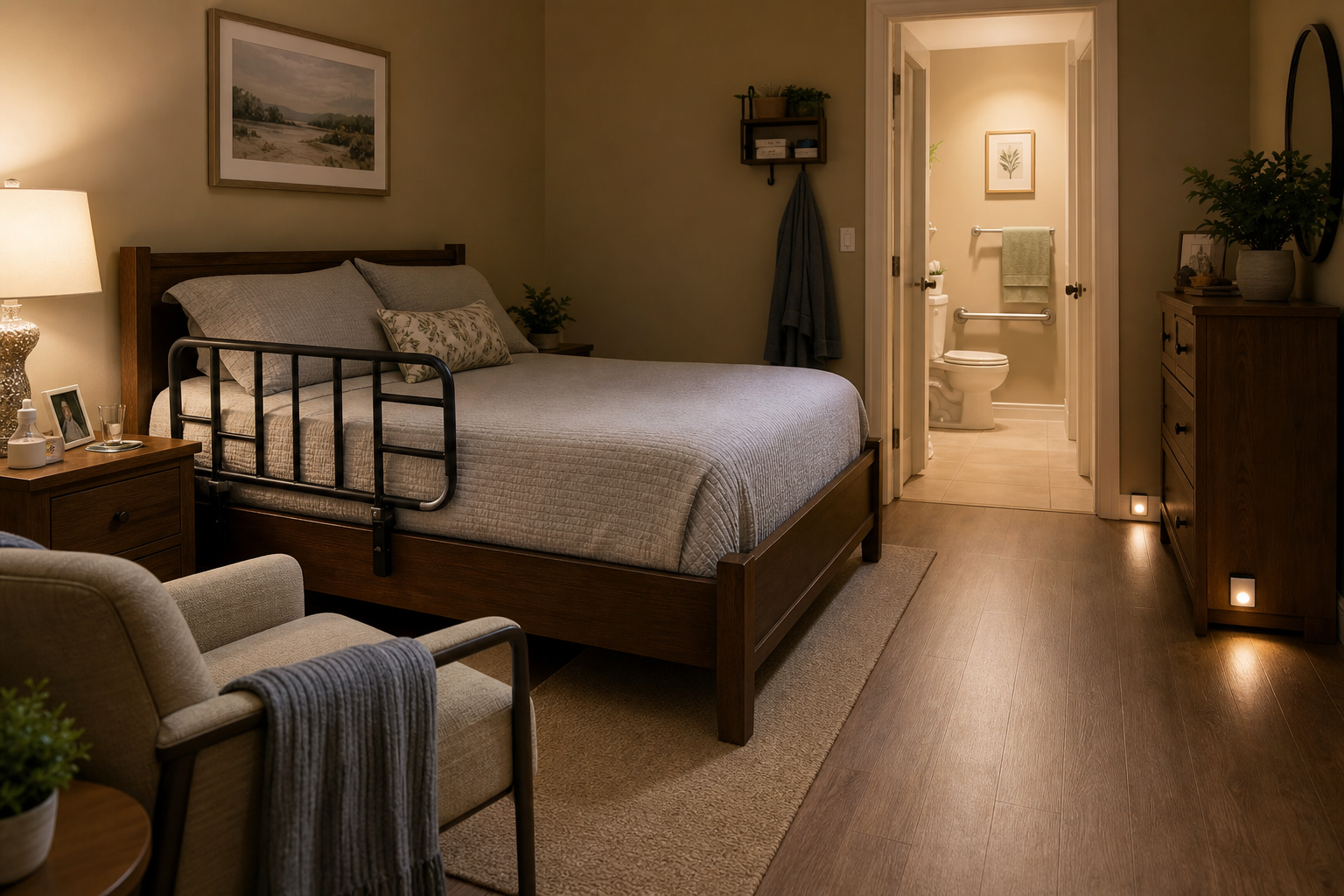
Bedroom safety for seniors is a critical part of maintaining independence because many falls and injuries occur during routine movements such as getting in and out of bed or walking at night. These are not unusual events. They are predictable risks tied to lighting, layout, and physical transitions that can be improved with simple, targeted changes.
The bedroom is a high-risk environment because it combines low visibility, fatigue, and frequent movement. Transitions between lying, sitting, and standing create instability, especially when surfaces shift or lighting is inadequate. A prevention mindset focuses on removing friction from these movements so they become smooth, predictable, and safe.
When you approach bedroom design as a system rather than a space, the changes become obvious. Every object, surface, and pathway either supports stability or increases risk. The goal is to eliminate hesitation, reduce reaching, and create direct, unobstructed movement patterns.
Bedroom Safety For Seniors Starts With Bed Height And Stability
The foundation of bedroom safety for seniors begins with the bed itself, because every day starts and ends with this transition.
If the bed is too high, the feet do not plant firmly, forcing a drop-down motion. If it is too low, standing requires excessive effort and forward momentum. Both situations increase fall risk.
A stable bed setup removes these variables:
• Adjust the bed height so feet rest flat on the floor when sitting on the edge
• Use a firm mattress that does not compress excessively during transfers
• Secure the bed frame so it does not shift or slide under weight
• Add a bed rail or transfer handle for controlled movement
• Ensure the bed does not rock when weight shifts from side to side
A stable, properly sized bed creates a predictable transition point, reducing hesitation and improving confidence during movement.
Clear Pathways Reduce Nighttime Risk
Unobstructed movement is essential for bedroom safety for seniors, especially during nighttime trips to the bathroom.
Clutter, furniture edges, and misplaced items create hazards that are difficult to see in low light. The goal is to create a direct, frictionless path from the bed to the door.
• Remove all loose items from the floor, including shoes and cords
• Position furniture so walking paths are wide and straight
• Keep commonly used items within arm’s reach to avoid unnecessary movement
• Avoid placing decorative objects along walking routes
• Use consistent furniture placement so pathways remain familiar
Even small obstructions can disrupt balance when visibility is low. A clean path reduces decision-making and supports automatic movement.
Lighting Must Support Safe Movement At All Hours
Lighting is one of the most overlooked aspects of bedroom safety for seniors, yet it directly affects visibility, balance, and reaction time.
Standard overhead lighting is not enough. Safe environments use layered lighting that supports both full visibility and low-light navigation.
• Install bedside lamps within easy reach from a lying position
• Use motion-activated nightlights along the path to the bathroom
• Place light switches at both the entrance and bedside
• Ensure consistent lighting levels to avoid sudden brightness changes
• Avoid glare from uncovered bulbs or reflective surfaces
Proper lighting reduces hesitation and eliminates the need to move in darkness, which is a major contributor to falls.
How to prevent falls in the home
Flooring And Rugs Must Eliminate Slip Hazards
Surface stability is a key factor in bedroom safety for seniors because the feet must maintain consistent traction during every step.
Loose rugs, uneven flooring, and slippery surfaces create unpredictable conditions that increase fall risk.
• Remove all unsecured rugs or use non-slip backing underneath them
• Choose low-pile carpeting that does not catch the feet
• Ensure transitions between flooring types are level and smooth
• Keep floors dry and free from dust or debris
• Avoid waxed or overly polished surfaces that reduce traction
The goal is to create a surface that behaves the same way with every step, eliminating surprises.
Furniture Placement Should Support Movement And Balance
Strategic furniture placement improves bedroom safety for seniors by providing support points and reducing unnecessary movement.
Furniture should guide movement rather than obstruct it. Every piece should have a purpose tied to stability or accessibility.
• Position a sturdy chair near the bed for seated dressing
• Place frequently used items on stable surfaces at waist height
• Avoid lightweight furniture that shifts when touched
• Keep nightstands close enough to reach without stretching
• Ensure clear space around the bed for safe entry and exit
Supportive placement reduces the need for awkward reaching or twisting, which are common causes of imbalance.
Nighttime Bathroom Trips Require Preplanned Safety
Many injuries occur during nighttime bathroom trips, making this a critical focus area for bedroom safety for seniors.
Preparation reduces the need for decision-making when the body is tired and less responsive.
• Keep a clear, well-lit path from bed to bathroom
• Use motion lights that activate automatically when movement begins
• Wear non-slip footwear or keep it within immediate reach
• Avoid rushing by ensuring the path is simple and direct
• Consider a bedside commode if distance or urgency is an issue
Planning this route in advance eliminates hesitation and reduces risk during one of the most vulnerable times of day.
https://medlineplus.gov/ency/patientinstructions/000021.htm
Bedside Essentials Should Be Within Immediate Reach
Keeping essential items close supports bedroom safety for seniors by minimizing unnecessary movement, especially during the night.
Reaching too far or getting up unnecessarily introduces avoidable risk.
• Place a phone within arm’s reach for emergencies
• Keep medications organized and easily accessible
• Store a flashlight or backup light source nearby
• Position glasses and water on a stable bedside surface
• Avoid stacking items that could fall when touched
A well-organized bedside area reduces movement and allows quick response without standing or stretching.
Consistent Habits Reinforce A Safer Environment
Safe environments only work when daily behavior supports them, making consistency a key part of bedroom safety for seniors.
Small habits reinforce the physical improvements made in the space.
• Return items to the same location after each use
• Turn on lights before standing, even during the night
• Sit briefly before standing to stabilize balance
• Avoid carrying items that block vision while walking
• Wear stable footwear instead of walking barefoot
Consistency turns a safe setup into a reliable system, reducing variability and improving long-term outcomes.
© 2026 Mark Fomenko. All rights reserved.
AgingInPlaceResource.com
Privacy Policy | Terms of Use | Disclaimer | Contact | Newsletter
Recent Articles


-
Aging In Place Resource Library
Sep 04, 26 08:30 AM
Aging In Place Resource Library -
Aging in Place Resource Newsletter
Aug 30, 26 11:16 AM
Aging in Place Resource Newsletter -
Aging in Place Resource: Simple Strategies for Living Safely at Home
Jul 28, 26 12:43 PM
 Aging in Place Resource provides practical guidance for aging in place. Learn how to live safely and independently at home with strategies for home safety, caregiving, planning, and long-term support.