Hallucinations And Confusion In Dementia
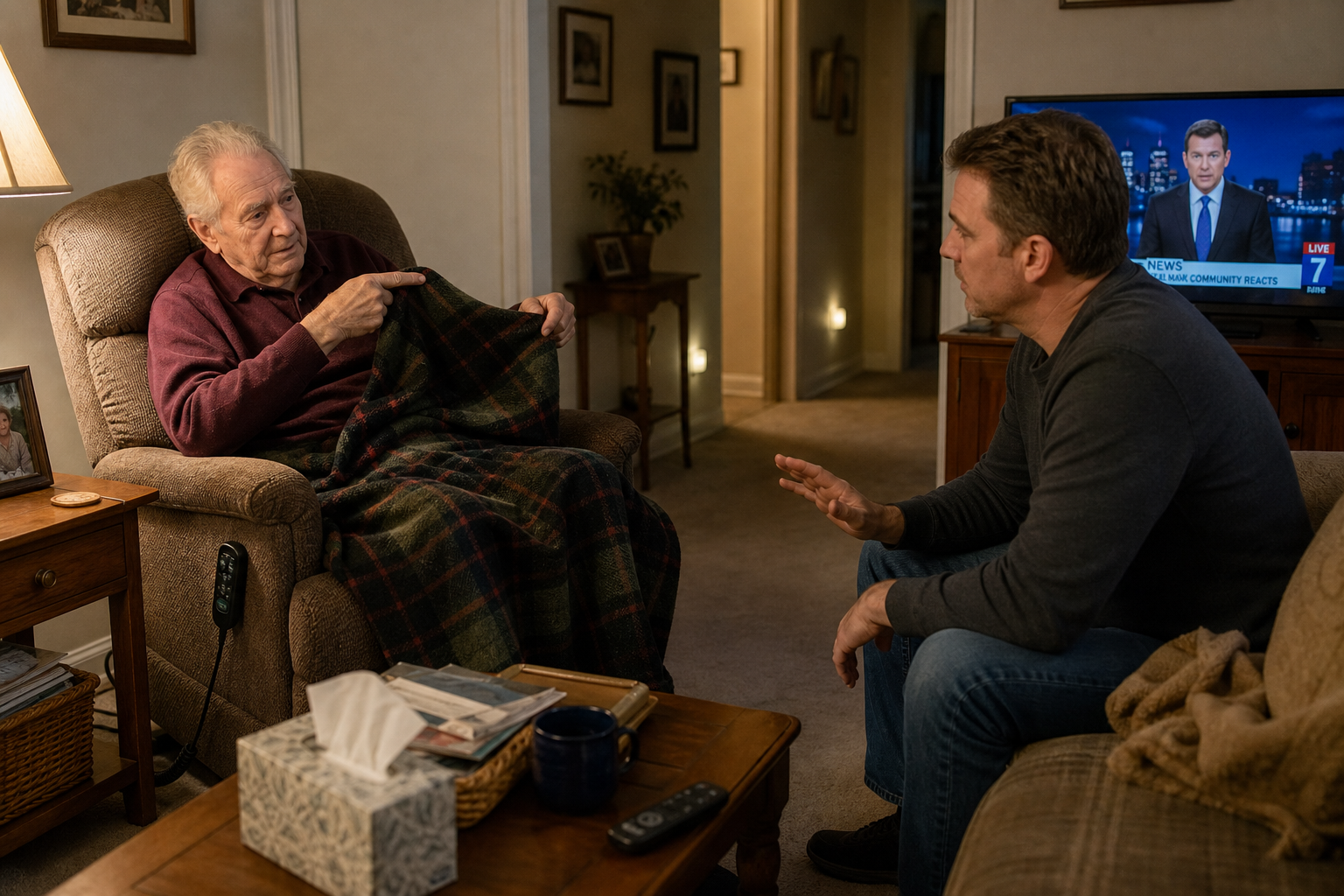
Hallucinations And Confusion In Dementia often begin gradually. A parent may start hearing voices, seeing people who are not there, confusing time periods, or believing they are somewhere else entirely. In many homes, these episodes first appear as odd conversations, misplaced accusations, nighttime confusion, or repetitive stories that stop making logical sense.
These changes can become dangerous when confusion affects walking, cooking, medications, wandering, stairs, nighttime movement, or the ability to recognize familiar surroundings. Family members are often shocked by how convincing the hallucinations seem to the person experiencing them. Trying to argue someone back into reality usually creates more agitation rather than solving the problem.
Many adult children discover these problems suddenly after visiting a parent who had seemed mostly fine on the phone. Others notice gradual changes over months or years. The practical goal at home is usually not to “win” arguments about reality. It is to reduce fear, maintain safety, simplify the environment, and make daily life calmer and more predictable.
Sometimes funny things happen.
My father began hallucinating frequently after losing much of his mobility, eyesight, and hearing. He wore hearing aids, but hallucinations became a regular part of his daily experience.
One evening we were watching the television news together when he lifted his lap blanket and pointed at it expectantly. I asked, “What is it, Dad?” He replied, “Don’t you want to look at this report card?”
I explained that we were watching the news and that he was just having one of his waking dreams. He answered, “Oh.” I assumed the matter was settled until a few minutes later when I noticed him carefully folding the blanket into a remarkably compact square.
I asked, “What are you doing, Dad?”
He replied, “If you’re not going to look at this report card, I’ll fold it up and put it away.”
At the time I was mostly tired and confused myself. I did not fully appreciate the humor until telling my sister about it the next day.
How Hallucinations And Confusion In Dementia Usually Appear At Home
Hallucinations And Confusion In Dementia rarely look identical from one person to another. Some people mainly become disoriented about time. Others see strangers in the house, hear voices, believe television programs are real, or think they must leave immediately for work or travel.
Common examples include:
- Believing deceased relatives are still alive
- Thinking strangers are entering the home
- Hearing people talking in another room
- Becoming convinced they are in a different decade
- Misidentifying family members
- Thinking they need to “go home” while already at home
- Packing bags to leave during the night
- Becoming frightened by mirrors or shadows
One family may deal mostly with repetitive confusion. Another may deal with intense nighttime wandering. Some people become angry and suspicious. Others become calm but completely disoriented.
The physical environment matters more than many people realize. Poor lighting, cluttered hallways, loud televisions, reflective surfaces, dark rooms, patterned flooring, and disrupted routines can all make confusion worse.
During difficult periods, simplifying the home environment is often more useful than lengthy explanations.
Why Arguing Usually Makes Things Worse
Families naturally try to correct false beliefs. Unfortunately, Hallucinations And Confusion In Dementia often do not respond to logic the way normal misunderstandings do. A person may fully believe what they are seeing or hearing.
Arguing can increase:
- Fear
- Anger
- Suspicion
- Agitation
- Wandering
- Emotional exhaustion
A calmer approach usually works better.
Instead of saying:
- “That never happened.”
- “You already ate.”
- “You are confused.”
- “There is nobody there.”
It is often safer to respond with reassurance and redirection.
Examples include:
- “You seem worried. Let’s sit down for a minute.”
- “Everything is okay here.”
- “Let me help you check.”
- “It’s nighttime now. We can deal with that tomorrow.”
Many caregivers eventually realize they are trying to reduce distress rather than force agreement about reality.
I worked as a landscaper in the 1990s and was hired to renovate a woman’s yard while she was caring for her husband at home. She described how he would calmly put on a business suit late at night and announce that he needed to get to the train station. He fully believed he was in Kansas City even though he was standing inside his own rural home in Arkansas. Unless someone redirected him gently, he would confidently head outside into the darkness, believing he was in Kansas City.
She was a tiny woman caring for a tall, physically strong man who still moved around very well despite his dementia. Physically stopping him was not realistic or safe. She learned that calm redirection worked better than confrontation. Sometimes she would tell him the train was delayed until morning or suggest sitting down first to have coffee while waiting. Arguing about reality usually escalated the situation rather than solving it.
There are practical techniques that sometimes help, but none are perfectly reliable because the person’s brain is operating from a false reality that feels completely real to them. The goal is usually de-escalation, delay, redirection, and environmental control rather than persuasion.
For the Kansas City/train station situation, realistic approaches might include:
-
Avoid direct contradiction if possible.
“There’s no train station” may increase agitation because, to him, there clearly is one. -
Join the emotional logic instead of the factual logic.
“The trains aren’t running tonight.”
“We’ll leave in the morning.”
“Let’s sit down and wait for the call first.” -
Redirect physically, not just verbally.
Offer coffee, a snack, looking for tickets, checking the weather, feeding the dog, or “waiting for daylight.” Movement redirection often works better than conversation alone. -
Reduce exit momentum early.
Once shoes, coat, keys, and walking stick are involved, the situation becomes much harder to interrupt calmly. -
Control the environment quietly.
Deadbolts placed higher or lower than expected, chimes on doors, darker entry areas, disguised exits, or simply keeping keys out of sight can help. -
Avoid cornering or grabbing unless immediate danger exists.
A strong confused man can react defensively very quickly if he feels trapped or controlled. -
Keep lighting calm and predictable.
Harsh contrasts, dark windows, television glare, and shadowy hallways can intensify confusion. -
Watch for patterns.
Many wandering episodes occur at nearly the same time every evening. -
Use routine fatigue strategically.
Daytime walking, simple chores, and activity sometimes reduce nighttime roaming energy. -
Understand that reassurance may need repeating every few minutes.
The person may not retain the previous conversation at all.
What is true for the person hallucinating is often completely true to them. Trying to force them back into reality through argument usually increases fear, agitation, or resistance. In many situations, it is more effective to respond to the emotion behind the hallucination rather than trying to defeat the hallucination itself.
Oddly enough, some of the communication techniques that helped during my father's dementia hallucinations reminded me of dealing with friends during drug experiences in the 1970s. Arguing aggressively about what was “real” usually made people more frightened or agitated. Calm reassurance and gentle redirection tended to work much better.
Nighttime Confusion And Wandering Risks
Hallucinations And Confusion In Dementia often become worse during the evening or overnight. Low lighting, fatigue, shadows, disrupted sleep, and reduced visual clarity can increase disorientation.
Nighttime movement creates serious fall and wandering risks.
Common problems include:
- Walking outside at night
- Falling while searching for the bathroom
- Mistaking doors for exits
- Becoming trapped in cluttered rooms
- Attempting stairs in darkness
- Confusing closets or utility rooms for bathrooms
Simple environmental changes may help considerably:
- Use warm nightlights in hallways and bathrooms
- Keep walking paths completely clear
- Remove loose rugs and unstable furniture
- Reduce mirror reflections at night
- Keep commonly used rooms softly illuminated
- Place frequently used items in predictable locations
- Avoid dramatic furniture rearrangements
Motion-sensor lighting can help in some homes, but overly bright lights may increase confusion in others. A softer, more consistent lighting pattern is often calmer.
Families sometimes discover that a parent who appeared stable during daytime hours becomes highly confused after sunset. This can be emotionally exhausting for caregivers who are already sleep deprived themselves.
Helping someone safely through nighttime confusion is often more about environmental control than conversation.
Helping A Parent Live Safely At Home
Reducing Fear During Hallucination Episodes
Hallucinations And Confusion In Dementia can feel completely real to the person experiencing them. Fear often drives the behavior more than the hallucination itself.
A frightened person may:
- Try to escape
- Become defensive
- Refuse help
- Hide objects
- Accuse others of stealing
- Resist bathing or changing clothes
- Become verbally aggressive
A calm tone matters more than perfect wording.
Helpful approaches may include:
- Sitting nearby rather than standing over the person
- Lowering background noise
- Turning off chaotic television programs
- Speaking slowly
- Avoiding sudden touching
- Redirecting attention toward food, pets, music, or familiar routines
- Using consistent daily schedules
Large groups of people talking at once can increase confusion quickly. Busy holiday gatherings sometimes overwhelm seniors who are already struggling cognitively.
Some hallucinations are neutral or even pleasant. Others are terrifying. Families often learn which situations tend to trigger worse episodes.
It is also important to remember that illness, dehydration, medication problems, infections, poor sleep, or sudden environmental changes can sharply worsen confusion.
Household Changes That Can Reduce Confusion
Small environmental adjustments are often more practical than expensive remodeling projects.
Useful low-cost changes may include:
- Increasing general lighting
- Using lamps instead of harsh overhead glare
- Removing visual clutter
- Keeping furniture placement consistent
- Labeling important rooms
- Using large clocks and calendars
- Reducing unnecessary decorations
- Keeping pathways open and simple
Busy flooring patterns sometimes appear uneven or unsafe to someone with dementia. Dark rugs may look like holes in the floor. Reflective surfaces can also become frightening.
Predictability helps many people remain calmer longer.
Helpful routines may include:
- Regular mealtimes
- Consistent bedtime schedules
- Stable seating locations
- Familiar blankets or chairs
- Simple morning routines
- Reduced late-night stimulation
Families are often surprised by how much cognitive energy is required just to interpret an ordinary household environment.
Hallucinations Triggered By Medication Or Illness
Not every episode of confusion automatically means dementia is worsening permanently. Hallucinations And Confusion In Dementia can become dramatically worse during periods of illness or medication problems.
Potential triggers include:
- Urinary tract infections
- Dehydration
- Fever
- Medication interactions
- Missed medications
- Poor sleep
- Hospitalizations
- Alcohol use
- Abrupt medication changes
My father had enjoyed a glass or two of port wine every afternoon for many years without obvious problems. Then, quite suddenly, he began seeming extremely intoxicated after a single glass. At first I suspected he was secretly drinking more than he admitted. Eventually I realized he had recently started taking an antidepressant. The combination of alcohol and medication affected him far more severely than I understood at the time.
Sudden changes deserve attention, especially if confusion escalates rapidly over hours or days rather than gradually over months.
Watch for:
- Sharp personality changes
- New hallucinations
- Increased falls
- Sudden inability to walk safely
- Dramatic sleep disruption
- New incontinence
- Increased aggression
- Severe lethargy
Medication Management For Seniors
When Hallucinations And Confusion In Dementia Become Unsafe
Hallucinations And Confusion In Dementia eventually reach a point where some households struggle to manage safely without additional support.
Warning signs include:
- Frequent wandering attempts
- Repeated falls
- Unsafe stove use
- Leaving doors open
- Aggressive behavior
- Severe sleep disruption
- Inability to recognize family members
- Repeated emergency calls
- Unsafe transfers
- Refusal of basic hygiene
- Hallucinations causing panic or violence
Many families delay difficult decisions because they feel guilty, overwhelmed, financially trapped, or emotionally exhausted. Often they are making decisions under sleep deprivation and constant stress rather than calm conditions.
It is common for caregivers to second-guess themselves afterward. Most families are simply trying to manage an impossible situation as safely as they can with the resources available.
A home does not need to become perfect. It needs to become safer and more manageable.
Signs Dementia Care At Home Is Becoming Unsafe
Maintaining Familiar Routines And Independence Longer
People experiencing Hallucinations And Confusion In Dementia often function better when daily life remains simple, predictable, and physically manageable.
The goal is usually to reduce unnecessary stress while preserving as much independence as possible.
Helpful habits may include:
- Keeping essential items visible
- Simplifying clothing choices
- Maintaining stable walking paths
- Using familiar furniture
- Limiting unnecessary room changes
- Encouraging daylight exposure during daytime hours
- Reducing overstimulation before bedtime
Even small household adjustments can reduce friction throughout the day.
Some families discover that slowing down conversations helps considerably. Others find that too many choices create confusion. In many homes, quieter routines and simpler surroundings allow the person to remain calmer and more functional longer.
Not every strange statement requires correction. Not every disagreement needs resolution. Sometimes maintaining stability and reducing fear is the more practical goal.
© 2026 Mark Fomenko. All rights reserved.
AgingInPlaceResource.com
Privacy Policy | Terms of Use | Disclaimer | Contact | Newsletter
Recent Articles


-
Aging In Place Resource Library
Sep 04, 26 08:30 AM
Aging In Place Resource Library -
Aging in Place Resource Newsletter
Aug 30, 26 11:16 AM
Aging in Place Resource Newsletter -
Aging in Place Resource: Simple Strategies for Living Safely at Home
Jul 28, 26 12:43 PM
 Aging in Place Resource provides practical guidance for aging in place. Learn how to live safely and independently at home with strategies for home safety, caregiving, planning, and long-term support.