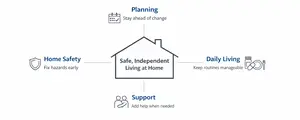
Helping Aging Parents Live Independently
Helping aging parents live independently is often the goal, but the risk is that small, preventable hazards quietly accumulate and eventually lead to falls, injuries, or loss of confidence. Most homes are not designed for aging bodies, and without intentional adjustments, everyday movements become unsafe over time.
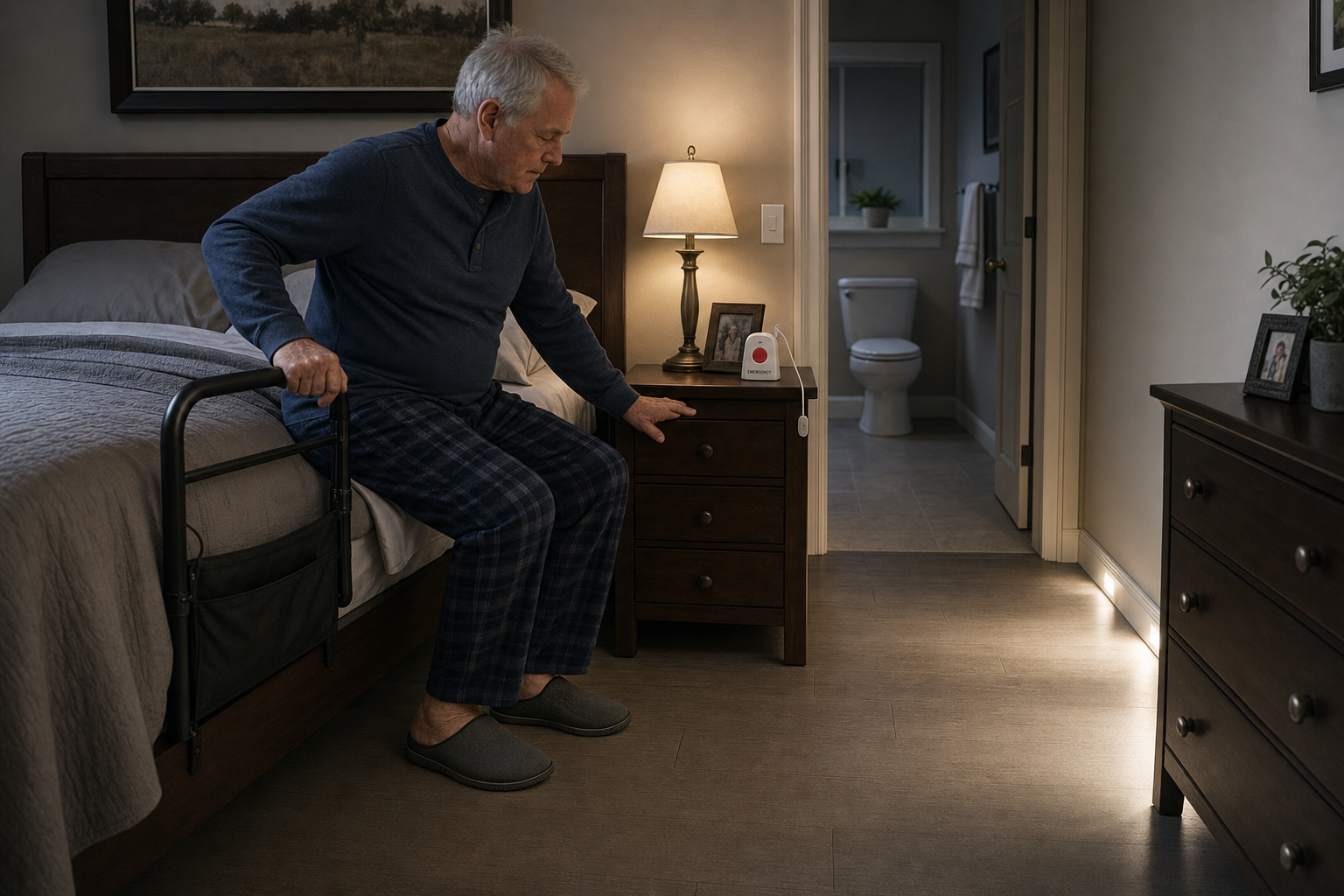
The bedroom is a particularly high-risk environment because it combines low lighting, frequent transitions, and fatigue. Getting in and out of bed, navigating to the bathroom at night, and managing clothing or mobility aids all introduce risk. Prevention requires a deliberate approach that reduces friction, improves visibility, and stabilizes movement patterns.
This guide focuses on practical, physical changes that improve safety and support long-term independence without overcomplicating the environment.
Safe Bed Transfers When Helping Aging Parents Live Independently
The most critical risk factor when helping aging parents live independently is the ability to get in and out of bed safely and consistently.
Bed transfers are among the highest-risk movements in the home because they require balance, strength, and coordination, often when the body is stiff or fatigued. An unstable bed or poor positioning immediately increases fall risk.
Start by adjusting the bed height so the feet rest flat on the floor when seated. The knees should be slightly lower than the hips to allow a controlled standing motion. If the bed is too high or too low, transfers become unstable.
• Lower or raise the bed to match the seated leg position
• Install a stable bed rail for support during transfers
• Position the bed so at least one side is fully accessible
• Remove loose rugs or obstacles near the bed
• Ensure a firm mattress that does not collapse under weight
The goal is to create a predictable, repeatable movement pattern that does not rely on strength alone.
Nighttime Lighting and Visibility
Poor lighting is one of the most overlooked hazards when helping aging parents live independently.
Most falls occur during nighttime trips to the bathroom when visibility is limited and reaction time is reduced. Instead of relying on overhead lights, which are rarely used at night, layered lighting should automatically guide movement.
Install motion-activated night lights along the path from bed to bathroom. These should activate at floor level, not eye level, to prevent glare. Consistent lighting reduces hesitation and allows the brain to recognize the path quickly.
• Place motion lights along the baseboards or outlets
• Use warm, low-glare bulbs to avoid disorientation
• Install a bedside touch lamp within arm’s reach
• Ensure the light path is continuous with no dark gaps
• Avoid shadows created by furniture or uneven lighting
Clear Walking Paths and Floor Safety
Maintaining clear pathways is essential when helping aging parents live independently, especially in areas used multiple times per day.
Clutter, cords, and uneven surfaces create unpredictable obstacles. Even a small object can disrupt balance, particularly during nighttime movement or when carrying items.
Focus on simplifying the environment so movement requires minimal attention. Walking paths should be wide, direct, and free of visual noise.
• Remove all loose rugs or secure them with non-slip backing
• Route cords along walls and away from walking paths
• Keep furniture aligned to create straight walking lanes
• Eliminate decorative items from floor-level surfaces
• Ensure flooring transitions are smooth and level
How to Prevent Falls in the Home
Stable Furniture and Support Points
When helping aging parents live independently, furniture should function as support, not decoration.
Unstable chairs, rolling furniture, or lightweight tables can shift under pressure, increasing fall risk. Every frequently used piece should be evaluated for stability and positioning.
Support points should be predictable and easy to reach. This allows individuals to steady themselves naturally during movement.
• Replace lightweight chairs with solid, non-slip seating
• Anchor tall furniture to prevent tipping
• Position chairs near bed and walking paths for rest points
• Avoid swivel or rolling chairs in the bedroom
• Ensure armrests are firm and usable for standing
Clothing, Footwear, and Dressing Safety
Daily dressing routines play a direct role in helping aging parents live independently.
Loose clothing, poor footwear, and rushed movements increase fall risk. Dressing should be done in a seated, stable position whenever possible.
Footwear is especially critical. Slippers without grip or shoes that slide can cause immediate instability on smooth floors.
• Sit while dressing to reduce balance strain
• Choose non-slip, supportive footwear
• Avoid long garments that drag on the floor
• Use adaptive clothing if mobility is limited
• Keep frequently used clothing within easy reach
Safe Path to the Bathroom
The path between the bedroom and bathroom must be optimized when helping aging parents live independently.
This route is used frequently, often in low light, and typically when the body is least stable. Any obstacle or delay increases risk.
The goal is to create a direct, unobstructed path that supports continuous movement without hesitation.
• Remove all obstacles along the path
• Install grab bars near the bathroom entrance if needed
• Ensure flooring remains consistent between rooms
• Use visual contrast to define doorways and edges
• Keep the bathroom door fully accessible at all times
https://medlineplus.gov/ency/patientinstructions/000021.htm
Emergency Preparedness and Communication
Planning for emergencies is a critical component of helping aging parents live independently.
Even with preventive measures, incidents can occur. Quick communication and response systems reduce the severity of outcomes.
Emergency tools should be simple, accessible, and consistently used.
• Keep a phone or alert device within arm’s reach of the bed
• Use wearable emergency alert systems if appropriate
• Post emergency contact numbers in visible locations
• Ensure pathways remain clear for responders if needed
• Practice simple response steps for common scenarios
Consistent Daily Routines and Movement Patterns
Consistency reinforces safety when helping aging parents live independently.
The body performs best with predictable patterns. When routines are stable, movement becomes automatic and requires less conscious effort.
Changing layouts or routines frequently introduces confusion and increases risk. Stability supports confidence and independence.
• Maintain consistent furniture placement
• Encourage the same movement patterns daily
• Avoid unnecessary rearrangement of key areas
• Keep commonly used items in fixed locations
• Reinforce safe habits through repetition
© 2026 Mark Fomenko. All rights reserved.
AgingInPlaceResource.com
Privacy Policy | Terms of Use | Disclaimer | Contact | Newsletter
Recent Articles


-
Aging In Place Resource Library
Sep 04, 26 08:30 AM
Aging In Place Resource Library -
Aging in Place Resource Newsletter
Aug 30, 26 11:16 AM
Aging in Place Resource Newsletter -
Aging in Place Resource: Simple Strategies for Living Safely at Home
Jul 28, 26 12:43 PM
 Aging in Place Resource provides practical guidance for aging in place. Learn how to live safely and independently at home with strategies for home safety, caregiving, planning, and long-term support.