Wandering And Exit-Seeking In Dementia
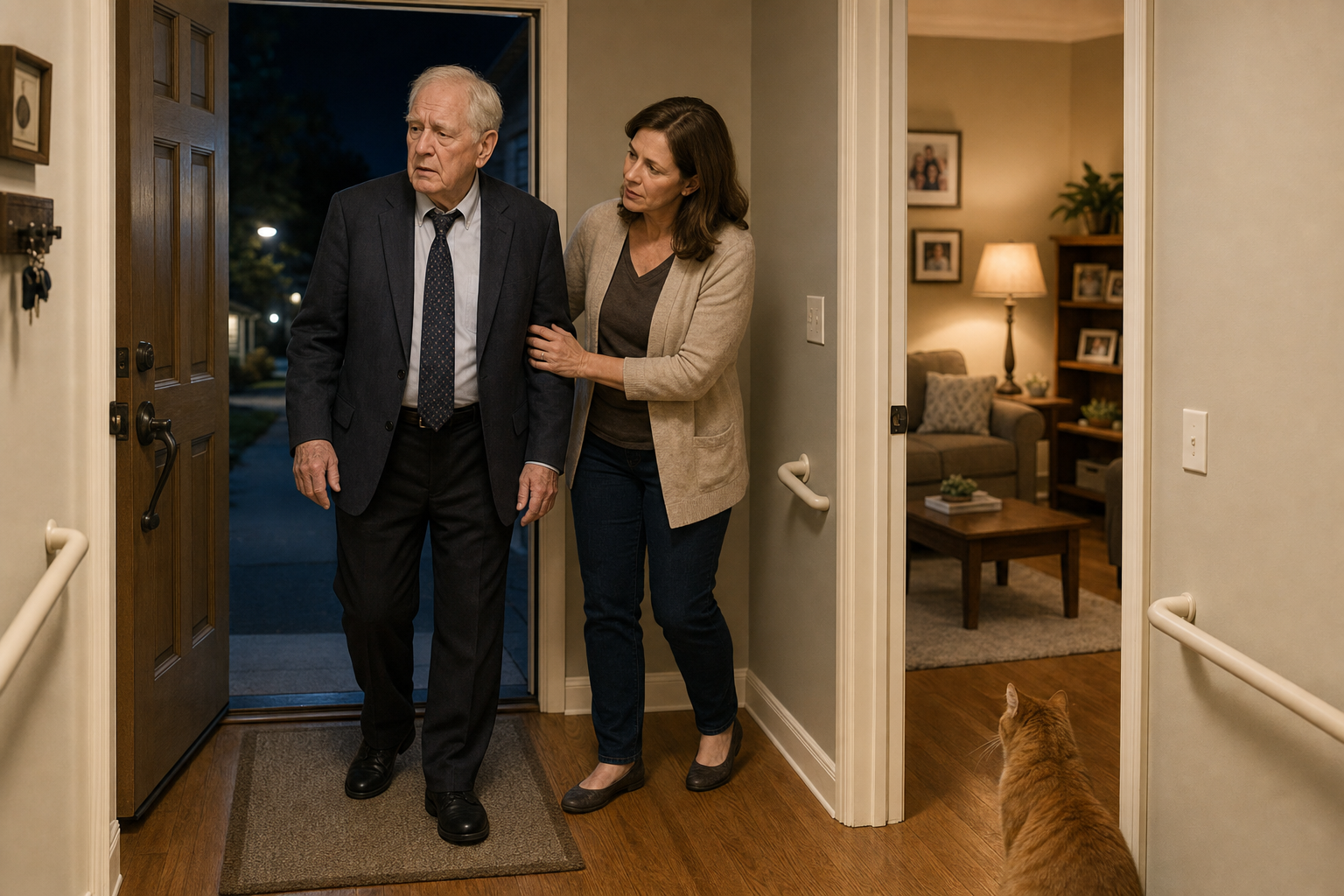
Wandering And Exit-Seeking In Dementia often begins gradually. A parent who once moved confidently through familiar routines may suddenly start pacing, trying doors, walking outside at odd hours, or insisting they need to “go home” even while standing inside their own house.
Sometimes they may believe they need to go to work even though they have been retired for years. Families are often caught off guard because the person may still appear conversational and physically capable.
My father once wandered outside during winter while he was still physically capable of walking independently and his vision remained fairly good. A letter carrier spotted him cheerfully walking down the driveway in light indoor clothing on a cold February day in Pennsylvania. When she asked where he was going, he cheerfully explained that he was heading out to watch the Fourth of July fireworks. The incident was unsettling partly because he seemed so confident and unconcerned. Situations like this are one reason wandering behavior must be taken seriously, even when a person still appears socially normal during conversations.
Wandering behavior creates immediate practical risks. A confused older adult can fall outside, become lost in bad weather, walk into traffic, or leave the house partially dressed at night. Some individuals become determined and surprisingly resourceful when trying to leave. A locked door that worked for years may suddenly become an obstacle they spend hours trying to defeat.
Many families first encounter this problem during periods of exhaustion and confusion. Someone may calmly insist they need to catch a train, go to work, visit long-dead relatives, or return to a childhood home. Reasoning usually does not work well once the person becomes emotionally fixed on leaving. The goal is not winning an argument. The goal is reducing risk while keeping the home calmer and more predictable.
Why Wandering And Exit-Seeking In Dementia Happens
Wandering And Exit-Seeking In Dementia is not always random movement. In many cases, the individual believes they are trying to solve a problem or complete an important task. They may think they are late for work, searching for family members, trying to return home, or escaping something frightening they misunderstood.
Common triggers include:
- Confusion after waking up
- Hallucinations or vivid dreams
- Changes in routine
- Excessive noise or overstimulation
- Poor lighting near evening
- Urinary urgency
- Hunger or dehydration
- Anxiety during caregiver transitions
- Looking for a bathroom
- Loneliness or boredom
- Seeing coats, shoes, keys, or purses near exits
Many people with dementia remain highly mobile long after judgment and orientation begin declining. A person may forget where they are while still being physically capable of walking long distances.
Some individuals wander repeatedly through the same path inside the house. Others focus intensely on exits. A few become very determined once the idea of leaving becomes fixed in their mind.
I worked as a landscaper in the 1990s. A woman hired me to renovate her landscaping while she was caring for her husband in a rural area. She described how he would calmly dress in a business suit late at night and announce that he needed to get to the train station. He fully believed he was in Kansas City even though he was standing inside his own home in rural Arkansas.
Unless someone stopped him, he would confidently walk outside into the darkness and start heading across the fields, believing he was in Kansas City. On several occasions, police had to help search for him after he wandered away from the property.
Common Signs That Exit-Seeking Is Getting Worse
Wandering And Exit-Seeking In Dementia usually develops in stages. Families often recognize the danger only after several smaller incidents have already occurred.
Early warning signs include:
- Frequently checking doors or windows
- Repeatedly asking to go home
- Packing bags unexpectedly
- Wearing outdoor clothing indoors
- Increased pacing
- Becoming agitated near sunset
- Walking room-to-room searching for someone
- Standing near exits for long periods
- Trying to open locked doors
- Leaving the house to “check something”
The behavior often becomes more dangerous at night. Reduced lighting, fatigue, shadows, and disrupted sleep patterns can sharply increase confusion.
A person who previously stayed seated may suddenly begin roaming the house for hours. Others wake up disoriented and immediately try to leave. Some families first realize the severity of the problem after hearing a door open at 2 a.m.
It is important to take repeated exit behavior seriously even if the person still “seems mostly normal” during conversations. Many individuals with dementia remain socially skilled long after judgment becomes unreliable.
Making The Home Safer Without Turning It Into A Prison
Families often struggle emotionally with safety changes. Locking doors, relocating keys, or blocking exits can feel harsh or disrespectful. At the same time, wandering risks can become life-threatening surprisingly fast.
The safest approach is usually quiet environmental adaptation rather than confrontation.
Helpful low-cost strategies include:
- Install simple door chimes that alert caregivers when a door opens
- Keep pathways clear to reduce fall risk during pacing
- Improve nighttime lighting between bedrooms and bathrooms
- Remove clutter near exits
- Keep car keys out of sight
- Avoid storing shoes and coats beside the front door
- Use curtains or shades to reduce nighttime reflections in windows
- Place familiar family photos in commonly used rooms
- Keep frequently used seating areas comfortable and visible
Some families place a dark mat in front of doors because certain dementia patients visually interpret it as a hole or barrier. Results vary, but simple visual distractions sometimes reduce repeated exit attempts.
Avoid creating an environment that feels aggressively restrictive whenever possible. Constant visible barriers can increase agitation in some individuals.
People with dementia often react better to calm redirection than direct refusal.
Reducing Nighttime Wandering And Confusion
Nighttime wandering is one of the most exhausting parts of dementia caregiving. Sleep schedules often become severely disrupted. Some individuals stay awake most of the night and sleep unpredictably during the day.
The house itself can either reduce or worsen nighttime confusion.
Helpful adjustments include:
- Use warm low-level lighting in hallways and bathrooms
- Remove trip hazards from nighttime walking paths
- Keep furniture placement consistent
- Avoid rearranging bedrooms unnecessarily
- Use simple bedding instead of heavy layered blankets
- Reduce television noise late at night
- Keep eyeglasses and mobility aids within reach
- Use blackout curtains if outside headlights create confusion
A predictable evening routine often helps reduce agitation. Quiet activities, familiar snacks, comfortable seating, and calmer lighting can sometimes reduce pacing and exit-seeking behavior.
Some caregivers discover that arguing at night makes everything worse. If a parent insists they “need to leave,” direct contradiction may escalate fear or anger. Gentle distraction often works better than extended explanations.
A parent who believes they need to catch a train is not operating inside normal logic. Explaining the date repeatedly may only increase frustration for everyone involved.
Walking Paths, Floors, And Fall Risks During Wandering
Wandering And Exit-Seeking In Dementia becomes even more dangerous when mobility problems are added to confusion. Many falls happen during hurried movement, nighttime disorientation, or attempts to navigate cluttered areas quickly.
Pay close attention to walking surfaces throughout the home.
High-risk hazards include:
- Throw rugs
- Electrical cords
- Dark transitions between rooms
- Slippery kitchen floors
- Narrow furniture gaps
- Pet toys
- Low coffee tables
- Clutter near doorways
- Uneven thresholds
- Poor stair lighting
Some individuals pace constantly once wandering behavior develops. Caregivers sometimes accidentally create hazards by placing extra furniture in walking paths to discourage movement. This often backfires.
It is usually safer to create wider, clearer walking routes instead.
People with dementia may also stop recognizing depth changes correctly. Dark rugs can appear like holes. Floor patterns may create confusion. Shiny floors sometimes look wet.
Simple flooring and predictable layouts usually work best.
Safe walking surfaces become even more important after hospitalizations, infections, medication changes, or periods of weakness.
How To Respond When Someone Tries To Leave
Wandering And Exit-Seeking In Dementia can quickly become emotionally intense. Some individuals become angry, frightened, or highly suspicious when prevented from leaving.
The caregiver’s tone matters enormously.
Helpful approaches include:
- Speak slowly
- Avoid sudden physical blocking
- Reduce background noise
- Redirect attention toward food, photos, or familiar tasks
- Offer short reassuring statements
- Avoid lengthy corrections
- Stay physically calm even if frustrated
Statements that sometimes work better than arguing include:
- “We’ll leave in a little while.”
- “Let’s sit down first.”
- “I need your help with something.”
- “It’s too dark right now.”
- “Let’s have some coffee first.”
Not every attempt succeeds. Some nights are simply difficult.
Caregivers often feel guilty after becoming impatient during repeated wandering episodes. Exhaustion changes how people react. Many families are making decisions while sleep-deprived and overwhelmed.
If the individual becomes physically aggressive, repeatedly escapes outdoors, or cannot safely remain supervised at home, the situation may require larger safety decisions.
https://www.cdc.gov/alzheimersdementia/risk-reduction/wandering.html
Doorways, Visibility, And Environmental Triggers
Many wandering episodes begin with visual or environmental cues inside the home.
A purse near the door may trigger the idea of leaving. Seeing outdoor workers through a window may restart an old work routine in the person’s mind. Coat racks, shoes, keys, or open blinds near exits sometimes encourage repeated attempts to go outside.
Small changes can help reduce these triggers.
Examples include:
- Move coats and shoes away from main exits
- Store keys out of sight
- Reduce visual clutter near doors
- Use curtains on doors with large windows
- Keep frequently used rooms brighter and more inviting than exit areas
- Avoid large mirrors near walking paths if reflections create confusion
Some families place a small sitting area near pacing zones so the person naturally pauses and rests. Others use music, folding towels, photo albums, or repetitive household tasks to redirect restless movement.
The goal is not forced inactivity. Many people with dementia still need movement and routine activity. Safe movement inside the home is usually far better than repeated physical struggles near exits.
How To Cope With Dementia In A Parent
Preparing For Emergencies And Getting Lost
Even careful families sometimes experience a wandering emergency. A confused parent may slip outside while someone answers the phone, carries groceries, or falls asleep briefly.
Preparation matters.
Important steps include:
- Keep recent photographs available
- Know what clothing the person usually wears
- Inform trusted neighbors about wandering risks
- Keep emergency contact information visible
- Consider simple identification bracelets
- Check outdoor areas immediately if the person disappears
- Search nearby walking routes first
Many individuals with dementia continue following familiar movement patterns even after becoming disoriented. They may head toward former workplaces, old homes, churches, stores, or long-established walking routes.
Do not assume the person “could not have gone far.” Some remain physically strong enough to travel surprising distances.
If wandering behavior becomes frequent, families should begin honestly evaluating whether current supervision remains realistic.
Signs Dementia Care At Home Is Becoming Unsafe
Creating A More Predictable Daily Routine
Wandering And Exit-Seeking In Dementia often becomes worse in chaotic households. Predictable routines reduce uncertainty and help many individuals feel calmer.
Consistency matters more than perfection.
Helpful habits include:
- Regular wake-up times
- Predictable meals
- Familiar seating areas
- Stable furniture placement
- Daily movement or short walks
- Reduced evening overstimulation
- Consistent bathroom reminders
- Simple repetitive activities
Some individuals become calmer when they feel useful. Folding laundry, sorting objects, wiping tables, watering plants, or organizing simple household items may reduce restless pacing.
Others simply need companionship and reassurance.
It is also important to recognize limits realistically. Families sometimes spend months trying to manage severe wandering behavior while physically exhausted themselves. There is no perfect system that removes all risk.
Many decisions in dementia caregiving happen under uncertainty. Most caregivers are adapting in real time while trying to keep everyone safe inside an increasingly difficult situation.
© 2026 Mark Fomenko. All rights reserved.
AgingInPlaceResource.com
Privacy Policy | Terms of Use | Disclaimer | Contact | Newsletter
Recent Articles


-
Aging In Place Resource Library
Sep 04, 26 08:30 AM
Aging In Place Resource Library -
Aging in Place Resource Newsletter
Aug 30, 26 11:16 AM
Aging in Place Resource Newsletter -
Aging in Place Resource: Simple Strategies for Living Safely at Home
Jul 28, 26 12:43 PM
 Aging in Place Resource provides practical guidance for aging in place. Learn how to live safely and independently at home with strategies for home safety, caregiving, planning, and long-term support.