When an Elderly Parent Comes Home from the Hospital
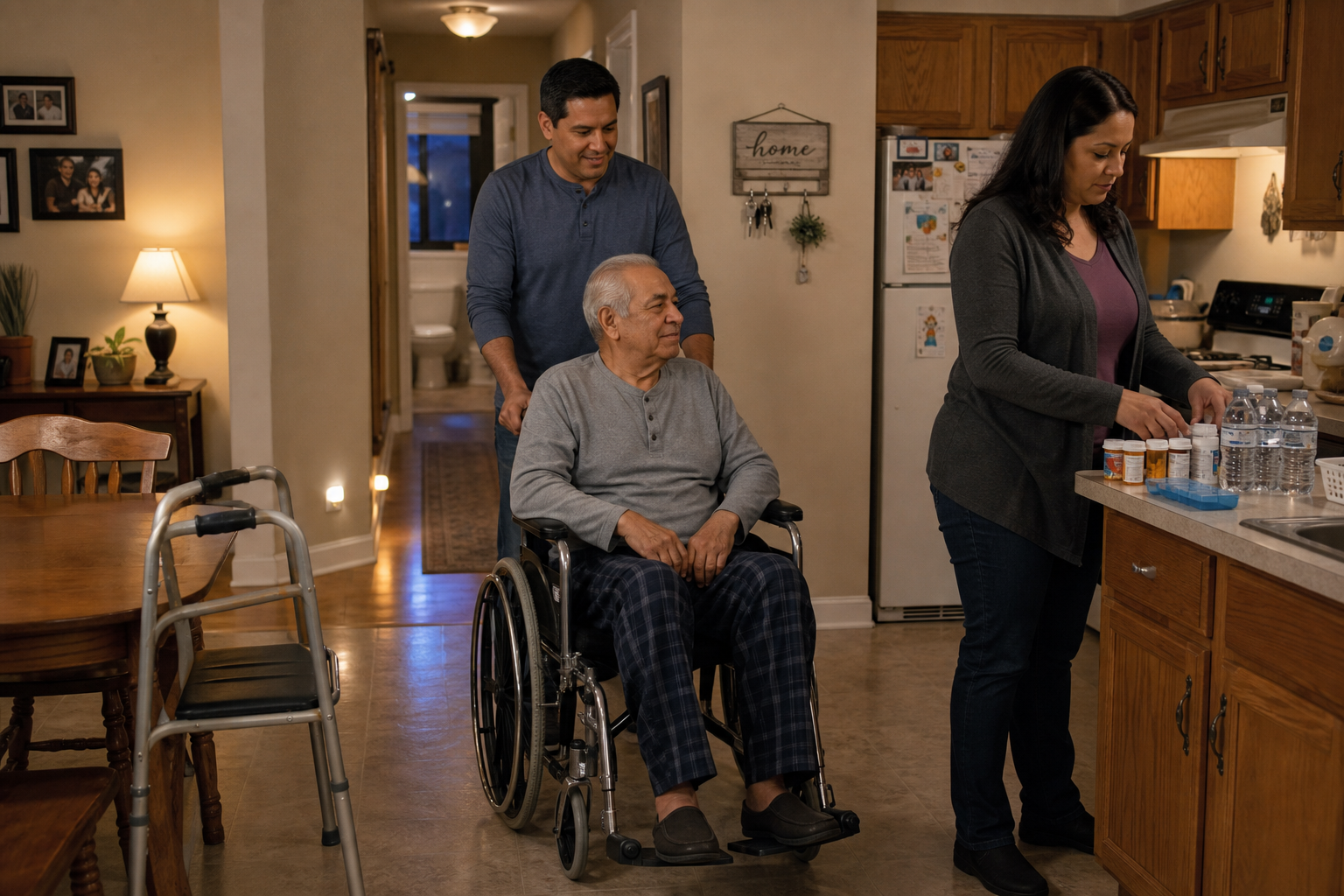
When an Elderly Parent Comes Home from the Hospital, families often discover that the home suddenly feels very different. A short hallway becomes difficult to walk through. A familiar bathroom becomes dangerous. A few steps at the front door may suddenly feel impossible.
Hospital discharge can create a strange mix of relief and anxiety. Families are glad a parent survived the immediate crisis, but many older adults return home weaker, slower, confused, heavily fatigued, or less steady than before. A parent who walked independently two weeks earlier may now need help standing up from a chair or getting to the bathroom safely.
The first few days after discharge are often the most difficult. Medication changes, poor sleep, weakness, pain, dehydration, and reduced mobility can combine to create fall risk very quickly. Practical preparation matters far more than perfection. Most families are not creating an ideal recovery environment. They are trying to make an ordinary home workable and safer under stressful conditions.
Preparing The Home Before An Elderly Parent Comes Home From The Hospital
When an elderly parent comes home from the hospital, the safest homes are usually the simplest ones. Recovery often goes more smoothly when movement paths are predictable and clutter is reduced before the parent walks through the door.
Focus first on the walking route between:
- bedroom
- bathroom
- kitchen
- favorite chair
- entry door
Remove unstable rugs, baskets, extension cords, stacks of mail, pet dishes, and decorative furniture that narrows walking space. Even small obstacles become dangerous when someone is weak, medicated, dizzy, or using a walker.
Lighting matters immediately. Older adults coming home from the hospital are often awake at unusual hours due to medication schedules, pain, anxiety, or disrupted sleep. Improve visibility by:
- placing lamps within easy reach
- adding brighter bulbs in hallways
- using nightlights between bedroom and bathroom
- keeping light switches accessible from bed
Many families also underestimate how exhausting sitting upright can become after hospitalization. A chair that was previously comfortable may suddenly be difficult to stand up from safely.
Firm chairs with armrests and electric recliners are usually safer than soft couches that sink deeply.
CDC Fall Prevention Information
What To Expect When An Elderly Parent Comes Home From The Hospital
When an elderly parent comes home from the hospital, recovery is often uneven. Some mornings may seem surprisingly normal. Then exhaustion, confusion, weakness, or instability may suddenly return later in the day.
Families are frequently caught off guard by how quickly hospitalization reduces physical strength. A parent may struggle with:
- standing from bed
- walking longer distances
- climbing steps
- getting into a shower
- preparing meals
- remembering instructions
- managing medications
Hospital delirium and temporary confusion are also common, especially after infections, surgery, dehydration, anesthesia, or medication changes. A parent may seem mentally clearer at certain times of day and much worse at others.
This unpredictability creates emotional strain for families because improvement rarely follows a straight line. Adult children often leave the hospital expecting recovery to progress steadily. Real homes are messier than that.
One difficult reality is that older adults frequently overestimate what they can safely do during early recovery. A parent who insists they are “fine” may still be unable to safely carry laundry, cook, bathe independently, or walk without support.
The goal during the first weeks is not restoring total independence immediately. The goal is reducing preventable setbacks.Reducing Fall Risk After Hospital Discharge
Fall risk increases sharply after hospitalization. Weakness, medication changes, dizziness, poor sleep, and reduced appetite can all affect balance at the same time.
Many falls happen during ordinary movement rather than dramatic accidents. Common situations include:
- turning too quickly
- walking in socks
- rushing to the bathroom
- carrying objects while using a walker
- standing up too fast
- walking in dim lighting
- attempting stairs while fatigued
Families often focus heavily on equipment while overlooking movement habits. Slower movement patterns are usually more important than adding expensive devices.
Encourage a recovering parent to pause briefly before standing and walking. Many older adults become dizzy after sitting or lying down for long periods.
Keep frequently used items within easy reach so unnecessary bending and carrying are reduced.
Hydration also matters more than many families realize. Older adults recovering from illness may avoid drinking fluids because they fear getting up to use the bathroom more often. Unfortunately dehydration itself can worsen weakness, confusion, and instability.
Managing Medications When An Elderly Parent Comes Home From The Hospital
Medication confusion is extremely common when an elderly parent comes home from the hospital. Prescriptions may change quickly during hospitalization, and discharge instructions can become surprisingly confusing once everyone is back home and exhausted.
Families sometimes discover:
- duplicate medications
- outdated pill bottles
- dosage changes
- conflicting instructions
- missed medications
- incorrect timing
- discontinued prescriptions still being used
Fatigue and cognitive problems can make organization difficult even for highly intelligent older adults.
Simple systems are usually more effective than complicated ones. Many families do best with:
- weekly pill organizers
- written medication schedules
- visible reminder notes
- consistent medication times
- one designated storage area
Avoid scattering medications throughout the house.
One practical problem many families encounter is that older adults may continue taking medications exactly as they did before hospitalization, even after major changes were made during discharge.
A calm review of all medications together at the kitchen table is often safer than relying on memory or assumptions.
Medication Management For Seniors
Bathroom Safety After Hospital Recovery
Bathrooms become one of the highest-risk areas after hospitalization because they combine fatigue, urgency, slippery surfaces, and difficult body movements.
When an elderly parent or spouse comes home from the hospital, even basic bathroom tasks may suddenly require far more physical effort.
Common problems include:
- low toilet seats
- slippery floors
- difficulty stepping into tubs
- poor nighttime lighting
- narrow movement space
- rushing due to urgency
Simple changes often help substantially:
- remove loose rugs
- improve lighting
- place non-slip mats carefully
- keep pathways clear
- add stable grab bars if needed
- keep toiletries easy to reach
Many older adults also become embarrassed by needing help with bathing or toileting. Families often find that preserving privacy wherever possible reduces conflict and stress.
A parent may accept partial assistance more comfortably than constant supervision.
For example, someone may allow help entering the shower but prefer bathing independently afterward.
Watching For Signs Recovery Is Becoming Unsafe
Some hospital recoveries go smoothly. Others gradually reveal that a parent may no longer be safe living alone without additional support.
Warning signs often appear quietly at first.
Watch for:
- increasing confusion
- repeated near falls
- skipped meals
- medication mistakes
- worsening weakness
- inability to transfer safely
- wandering at night
- poor judgment
- refusal to use mobility aids
- increasing exhaustion after simple tasks
Families sometimes struggle because a parent may appear fairly normal during short conversations while functioning poorly the rest of the day.
One difficult reality is that many adult children discover the true extent of decline only after hospitalization forces closer observation.
This can create guilt, frustration, sadness, and disagreement within families. Those reactions are common. Most people are making decisions with incomplete information while balancing work, distance, exhaustion, finances, and existing family responsibilities.
Practical assessment matters more than arguing over labels.
The important question is usually not whether a parent is “stubborn” or “trying hard enough.” The important question is whether the current situation is functioning safely.
Signs Dementia Care At Home Is Becoming Unsafe
Helping A Parent Regain Daily Function Safely
Recovery at home often improves when activity remains steady but realistic. Too much inactivity can reduce strength further. Too much activity too quickly can create setbacks.
Many families discover that ordinary daily tasks become useful recovery exercises:
- walking to the kitchen
- preparing simple meals
- folding towels
- watering plants
- standing during grooming
- short outdoor walks
Predictable routines are helpful because fatigue and confusion often worsen when the day becomes disorganized.
Keep frequently used items visible and accessible. Repeated bending, reaching, carrying, and climbing create unnecessary strain during recovery.
Some older adults also become discouraged after hospitalization because they suddenly need help with tasks they handled independently for years. Small practical successes matter.
Being able to safely make coffee, dress independently, or walk to the mailbox may restore confidence more effectively than constant reassurance.
At the same time, families sometimes need to quietly adapt the home around limitations rather than debating those limitations constantly.
Moving commonly used items closer together is often more effective than repeated arguments about what a parent “should” be able to do.
Planning Ahead After An Elderly Parent Comes Home From The Hospital
When an elderly parent comes home from the hospital, families often realize the situation was becoming difficult long before the hospitalization occurred.
The hospital stay simply forced everyone to see it more clearly.
That realization can feel unsettling, especially when families are already exhausted. Still, small practical planning decisions made now may prevent larger crises later.
It helps to think ahead about:
- future mobility changes
- transportation needs
- nighttime safety
- meal preparation
- medication supervision
- caregiver fatigue
- emergency contacts
- fall prevention
- temporary help after setbacks
Most successful aging in place situations evolve gradually. Homes adapt over time. Routines change. Responsibilities shift quietly.
Waiting for a major emergency before making adjustments usually creates more stress and fewer options.
The goal is not creating a perfect system. The goal is creating a safer and more workable daily routine that allows an older adult to remain as independent as realistically possible for as long as possible.
© 2026 Mark Fomenko. All rights reserved.
AgingInPlaceResource.com
Privacy Policy | Terms of Use | Disclaimer | Contact | Newsletter
Recent Articles


-
Aging In Place Resource Library
Sep 04, 26 08:30 AM
Aging In Place Resource Library -
Aging in Place Resource Newsletter
Aug 30, 26 11:16 AM
Aging in Place Resource Newsletter -
Aging in Place Resource: Simple Strategies for Living Safely at Home
Jul 28, 26 12:43 PM
 Aging in Place Resource provides practical guidance for aging in place. Learn how to live safely and independently at home with strategies for home safety, caregiving, planning, and long-term support.