Early Signs Of Dementia In Elderly Parents
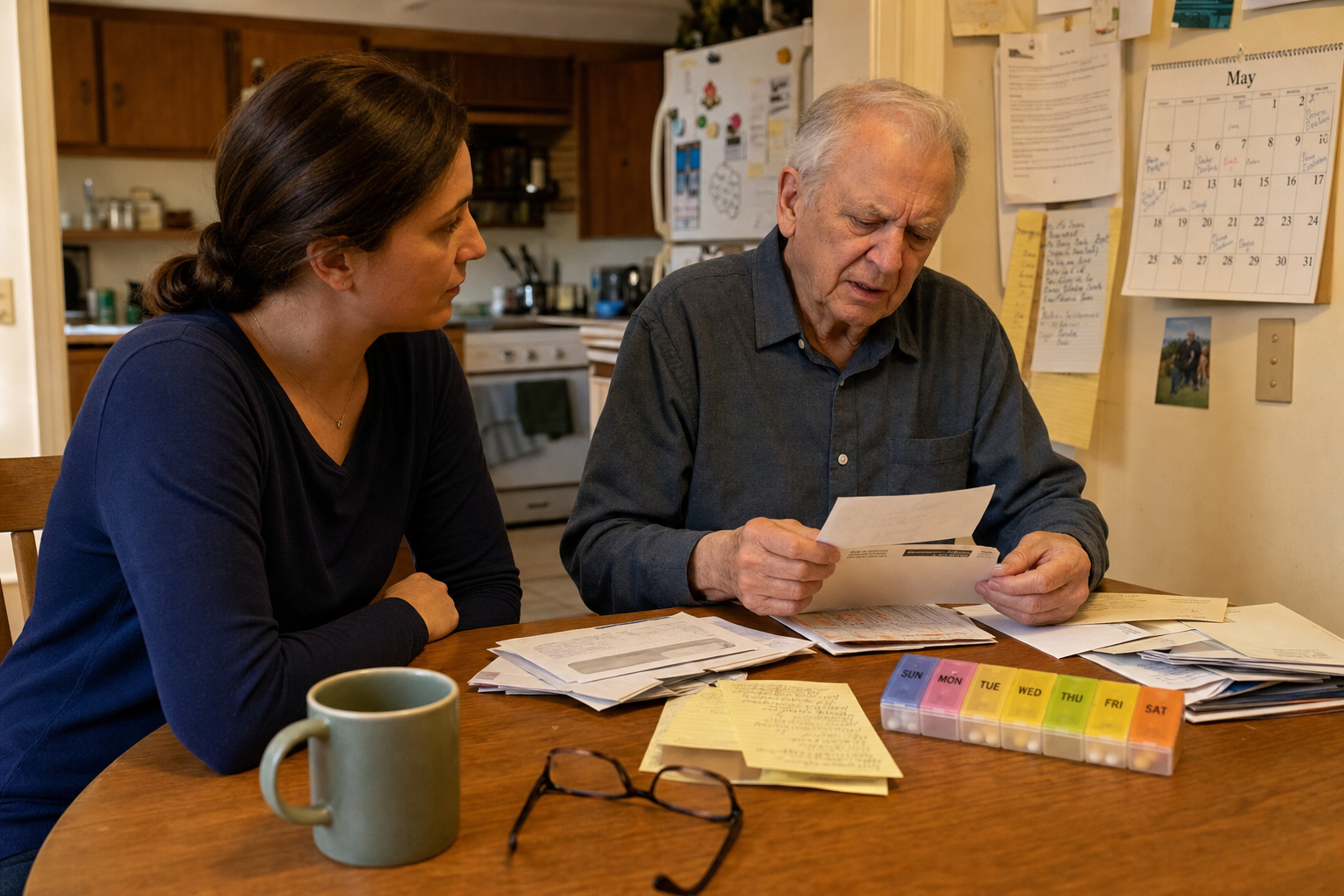
Early Signs Of Dementia In Elderly Parents are often noticed gradually through ordinary daily problems rather than dramatic memory loss. A parent may begin forgetting conversations, struggling with routines, making unusual decisions, or having trouble managing a familiar home safely. Families frequently dismiss these changes at first because the parent still sounds normal much of the time.
The difficulty is that dementia rarely appears all at once. Someone may seem fine during a short phone call while quietly struggling with cooking, medication management, walking safely, or keeping up with basic household tasks. Adult children often discover the situation suddenly after visiting a parent and realizing conditions are much worse than expected.
Recognizing Early Signs Of Dementia In Elderly Parents early can help families make practical adjustments before a crisis develops. Small changes to routines, lighting, walking paths, furniture placement, and daily organization can sometimes reduce confusion and help an older adult remain safely at home longer.
Early Signs Of Dementia In Elderly Parents At Home
Many early dementia symptoms first appear through practical household behavior. A parent may continue holding normal conversations while slowly losing the ability to manage daily tasks safely and consistently.
Common warning signs include:
- unpaid bills accumulating
- spoiled food in the refrigerator
- confusion using appliances
- repeatedly losing important items
- wearing inappropriate clothing for weather
- forgetting appointments
- difficulty preparing meals
- clutter building up unusually fast
- poor personal hygiene
- increased falls or near falls
Some families notice cooking changes first. A parent who once prepared full meals may begin relying on snacks, cereal, toast, or coffee because following multiple steps becomes mentally exhausting.
Driving problems are another common warning sign. Someone may become lost in familiar areas, drift between lanes, misjudge turns, or become unusually anxious while driving.
The overall pattern matters more than one isolated mistake. Everyone forgets things occasionally. Early Signs Of Dementia In Elderly Parents usually involve repeated problems that gradually affect safety, judgment, and routine functioning.
Helping A Parent Live Safely At Home
Changes In Judgment And Decision-Making
Poor judgment is one of the more dangerous early symptoms because it can create safety problems long before severe memory loss becomes obvious.
A parent may begin:
- giving money to scammers
- forgetting to lock doors
- leaving burners on
- walking outdoors in unsafe conditions
- taking medication incorrectly
- refusing needed mobility support
- wandering at night
- ignoring obvious fall hazards
Families are often confused by the contradiction between intelligence and judgment. A parent may still discuss politics, finances, or family history clearly while making unsafe decisions that would once have seemed impossible.
Some people become defensive when mistakes are mentioned. Others quietly hide problems out of embarrassment. Burned pans may disappear into the trash before anyone notices. Unopened mail may be stacked in drawers instead of handled.
Good days can also make the situation emotionally difficult. A parent may appear completely normal during one visit and severely confused during the next.
Arguments rarely improve these situations. Calm observation and gradual adaptation usually work better than repeated confrontation.
Some families discover nighttime wandering only after hearing movement late at night. A parent may wake disoriented and begin walking through dark rooms without turning on lights.
Reducing confusion at night is often more realistic than expecting perfect memory or judgment.
How To Prevent Falls In The Home
Walking Changes And Increased Fall Risk
Early Signs Of Dementia In Elderly Parents often affect movement patterns long before families connect those changes to cognitive decline.
A parent may begin:
- shuffling slowly
- reaching for walls while walking
- forgetting to use walkers
- hesitating on stairs
- freezing in doorways
- becoming confused during transfers
- wandering through dark rooms at night
Poor lighting becomes far more dangerous when confusion affects depth perception and balance. Cluttered walking paths, loose rugs, electrical cords, and crowded furniture arrangements can quickly become serious hazards.
Small environmental changes often help considerably:
- improve hallway lighting
- remove unstable rugs
- reduce furniture crowding
- create wider walking paths
- place chairs strategically for rest
- keep frequently used items visible
- improve bathroom visibility at night
Some families discover nighttime wandering only after hearing movement late at night. A parent may wake disoriented and begin walking through dark rooms without turning on lights.
Reducing confusion at night is often more realistic than expecting perfect memory or judgment.
Repeated Questions And Confused Conversations
One of the most recognizable Early Signs Of Dementia In Elderly Parents is repetitive conversation.
A parent may:
- ask the same question repeatedly
- tell identical stories several times
- lose track of conversations
- forget recent discussions
- confuse names or relationships
- struggle finding familiar words
- stop mid-sentence unexpectedly
These moments are often emotionally uncomfortable because awareness comes and goes unevenly. A person may suddenly recognize their confusion, become embarrassed, then forget the entire interaction later.
Families sometimes exhaust themselves trying to correct every mistake. In practice, constant correction often increases frustration and anxiety without improving memory.
Simpler communication usually works better:
- speak calmly
- reduce background noise
- avoid rapid multi-step instructions
- keep choices simple
- redirect gently when needed
- maintain familiar routines
Many older adults become overwhelmed in loud environments or complicated family gatherings. Too much stimulation can noticeably worsen confusion.
A calm room with predictable routines is often easier to manage than a busy environment filled with noise and interruptions.
How To Cope With Dementia In A Parent
Early Signs Of Dementia In Elderly Parents During Daily Routines
Daily routines often reveal dementia symptoms more clearly than occasional visits.
Families may notice problems involving:
- bathing
- dressing
- grooming
- meal preparation
- hydration
- medication management
- laundry
- pet care
- housekeeping
Someone who once maintained strict routines may begin skipping important tasks entirely. A parent may wear the same clothing repeatedly, forget to eat regular meals, or stop cleaning areas of the home that were once kept carefully organized.
Medication mistakes deserve particular attention. Pills may be doubled accidentally, skipped entirely, or taken at the wrong times.
Simple systems are usually more effective than complicated ones.
Helpful adjustments may include:
- weekly pill organizers
- large written reminders
- visible calendars
- simplified breakfast routines
- automatic bill payment
- reduced household clutter
- labeled cabinets or drawers
Many families quietly simplify the environment instead of making dramatic changes immediately. Reducing confusion is often more helpful than trying to preserve complicated routines that no longer work reliably.
Daily Routines for Aging in Place
Unsafe Cooking And Household Mistakes
Kitchen problems are among the most common Early Signs Of Dementia In Elderly Parents. My mother was an excellent cook for many years. Gradually she began forgetting how to prepare meals she had made her entire adult life. Toward the end, scrambled eggs and coffee were about the only things she could still manage consistently. Even then, the stove and frying pan were usually left in rough condition afterward. Eventually it became easier and safer for me to handle the cooking myself while still encouraging her to help as best she could.
Families may begin finding:
- burned cookware
- food left cooking unattended
- spoiled leftovers being eaten
- frozen food stored in cabinets
- confusion using microwaves
- difficulty following recipes
- forgotten meals
- unsafe knife handling
These mistakes are often frightening because they involve fire risk, injury risk, and poor nutrition simultaneously.
Many households manage this by simplifying cooking rather than removing all independence immediately.
Practical changes may include:
- preparing ready-to-eat meals
- reducing appliance complexity
- organizing frequently used items visibly
- removing unnecessary kitchen clutter
- simplifying meal choices
- improving counter lighting
A parent may still safely make coffee or prepare simple breakfasts long after more complicated cooking becomes unrealistic.
The goal is usually practical safety rather than proving total independence or total dependence.
The NIH provides additional information about dementia symptoms and cognitive decline in older adults.
Emotional Changes And Personality Shifts
Early Signs Of Dementia In Elderly Parents sometimes appear through emotional changes before severe memory loss becomes obvious.
A parent may become:
- unusually suspicious
- withdrawn
- irritable
- anxious at night
- emotionally flat
- fearful of strangers
- confused about time
- angry about routine changes
Some older adults begin accusing family members of stealing misplaced items. Others insist neighbors are entering the home or moving belongings around.
Hallucinations and delusions can also occur in some forms of dementia. What feels obviously untrue to everyone else may feel completely real to the person experiencing the confusion.
Families often struggle emotionally because reasoning stops working reliably. Logic alone cannot fix neurological confusion.
Calm reassurance and environmental stability are usually more effective than confrontation.
Predictable structure often helps reduce distress:
- regular meal times
- familiar furniture placement
- consistent lighting
- simple routines
- quieter evenings
- visible clocks and calendars
Even small household disruptions can sometimes increase confusion significantly.
Practical Steps Families Can Take Early
Recognizing Early Signs Of Dementia In Elderly Parents early gives families more time to make gradual adjustments before conditions become chaotic or dangerous.
Small practical changes can improve safety considerably:
- remove tripping hazards
- improve lighting
- simplify routines
- reduce clutter
- organize medications visibly
- monitor driving realistically
- watch for nighttime wandering
- keep important phone numbers accessible
- reduce unnecessary physical strain
Many families wait too long because they hope the problems will somehow reverse on their own. Others panic and try taking complete control too quickly.
Most households end up somewhere between those extremes.
Cognitive decline is often uneven. Some days may seem almost normal. Other days may feel frightening, confusing, or emotionally exhausting for everyone involved.
Practical adaptation usually works better than dramatic overreaction. The goal is reducing preventable danger while preserving as much familiarity, dignity, and independence as conditions realistically allow.
© 2026 Mark Fomenko. All rights reserved.
AgingInPlaceResource.com
Privacy Policy | Terms of Use | Disclaimer | Contact | Newsletter
Recent Articles


-
Aging In Place Resource Library
Sep 04, 26 08:30 AM
Aging In Place Resource Library -
Aging in Place Resource Newsletter
Aug 30, 26 11:16 AM
Aging in Place Resource Newsletter -
Aging in Place Resource: Simple Strategies for Living Safely at Home
Jul 28, 26 12:43 PM
 Aging in Place Resource provides practical guidance for aging in place. Learn how to live safely and independently at home with strategies for home safety, caregiving, planning, and long-term support.