What To Do After An Older Adult Falls
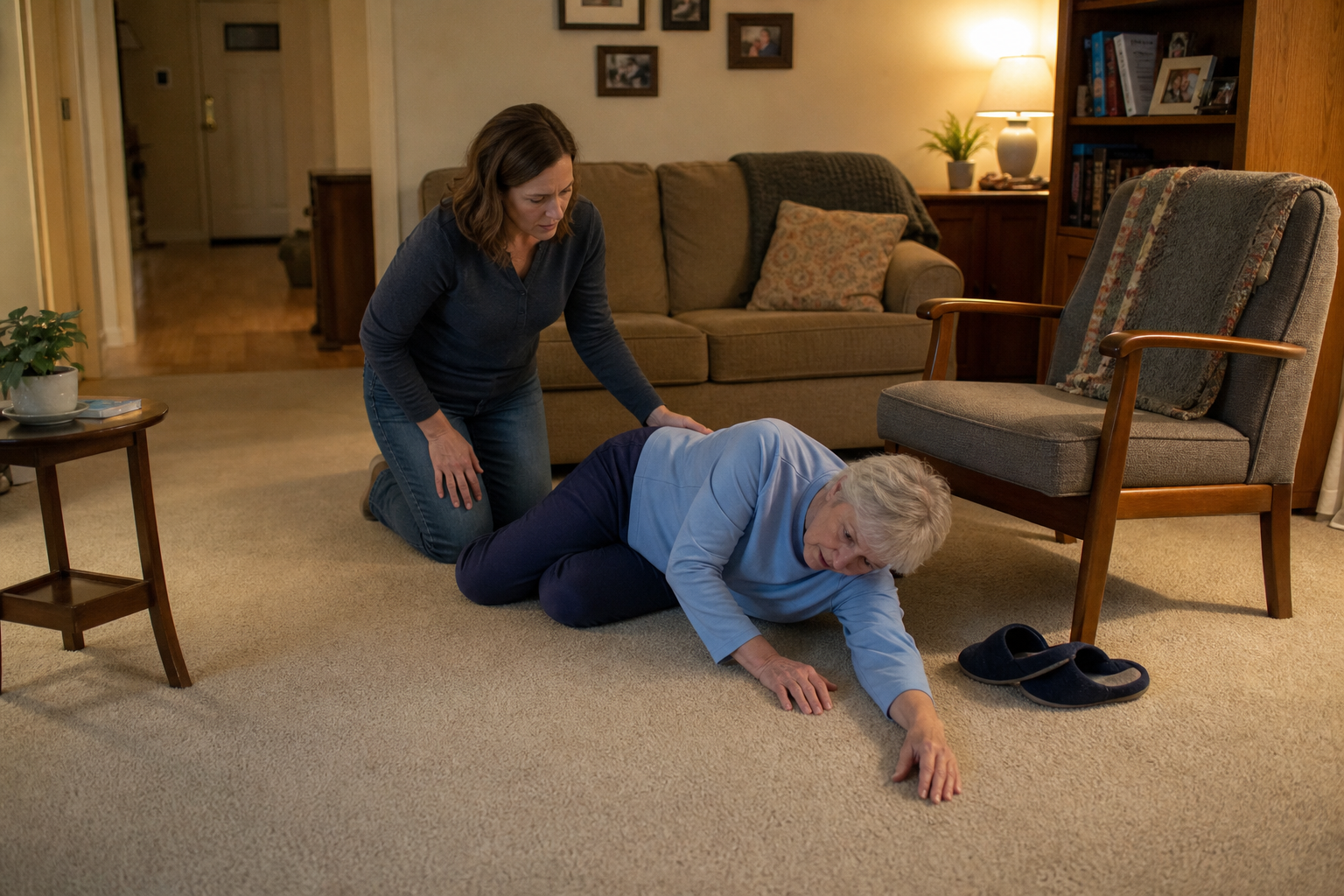
What To Do After An Older Adult Falls is not just a medical question. It is also a home safety question because the location of the fall often provides clues about what needs to change next.
A fall can expose weak lighting, cluttered pathways, loose rugs, rushed movement, poor footwear, or furniture that is no longer safe. The goal is not to panic or immediately assume the worst. The goal is to respond calmly, assess for danger, and make practical changes to reduce the risk of another fall.
What To Do After An Older Adult Falls In The Immediate Area
The first step is to keep the person still long enough to understand what happened.
Do not rush to pull an older adult up from the floor. A quick lift can make pain worse, hide an injury, or cause both people to lose balance. First, look at the body position, the surrounding floor, and the object or movement that may have caused the fall.
Check the immediate area:
- Move pets away from the person.
- Slide sharp or unstable objects out of reach.
- Turn on brighter lights if the room is dim.
- Place a pillow or folded towel under the head if needed.
- Keep the person warm with a light blanket.
- Ask where they feel pain before helping them move.
What To Do After An Older Adult Falls begins with observation. The floor, furniture, lighting, and walking path are part of the answer.
Check For Pain, Confusion, And Safe Movement
A calm check helps determine whether it is safe to move.
Ask simple questions before changing the person’s position. Find out if they hit their head, feel dizzy, have sharp pain, or feel weakness on one side. Watch whether they seem unusually confused, sleepy, or unable to answer clearly.
Before helping them sit up, check:
- Can they move both arms and legs?
- Do they have hip, back, neck, or head pain?
- Is there bleeding, swelling, or visible bruising?
- Are they short of breath?
- Do they remember falling?
- Do they feel faint when they try to sit?
If anything seems serious, call for emergency help. If they appear steady and want to get up, move slowly. Use a sturdy chair, sofa, or bed nearby instead of pulling from the arms.
Look At The Floor And Walking Path
The floor often explains more than the fall itself.
After the person is safe, look at the exact route they were taking. Many falls happen during ordinary movement: turning toward a chair, stepping around a table, walking to the bathroom, or reaching for something just out of position.
Focus on what changed underfoot:
- Remove loose throw rugs from the route.
- Push electrical cords completely against the wall.
- Move small tables out of narrow walkways.
- Pick up shoes, bags, baskets, and pet toys.
- Check whether flooring changes create a raised edge.
- Wipe up any moisture or tracked-in dirt.
What To Do After An Older Adult Falls should include a quick review of the walking surface. A fall is often blamed on “clumsiness” when the real problem is a small obstacle in a familiar path.
Write Down What Happened Before It Is Forgotten
Details are easiest to lose right after the situation calms down.
A short written note can help the family see patterns later. This does not need to be formal. A few plain facts are enough. Write down the time, room, activity, lighting, footwear, floor condition, and whether the person had just stood up, turned, rushed, or reached.
Include:
- The room where the fall happened.
- The direction the person was moving.
- The shoes, slippers, or socks they were wearing.
- Whether lights were on or off.
- Any object they were carrying.
- Any recent change in furniture or routine.
This helps avoid vague explanations like “she just fell.” What To Do After An Older Adult Falls includes identifying the repeatable conditions that can be changed.
Review Bathroom And Nighttime Fall Risks
Bathroom and nighttime falls deserve special attention.
Many falls happen when someone is tired, rushed, barefoot, or half-awake. The trip from bed to bathroom can combine dim lighting, urgency, narrow turns, slippery surfaces, and poor balance. After a fall, this route should be reviewed even if the fall happened elsewhere.
Make the route easier:
- Place a night light between the bed and bathroom.
- Clear the floor beside the bed.
- Keep slippers in the same visible spot.
- Remove loose bath mats that slide.
- Keep toilet paper, towels, and toiletries within easy reach.
- Add a stable handhold where standing or turning is difficult.
What To Do After An Older Adult Falls should include the next likely fall, not only the one that already happened.
Know When Outside Help Is Necessary
Some situations require immediate medical attention.
A practical aging-in-place approach does not mean ignoring danger. If the older adult hit their head, lost consciousness, has severe pain, cannot bear weight, has new confusion, has trouble speaking, or seems unusually weak, call emergency services. The cost of waiting can be far greater than the inconvenience of getting help.
Do not try to lift someone who cannot help with the movement. Do not force walking to “test it out” if there is hip pain, head injury, or major dizziness. Keep them comfortable and still until help arrives.
For general guidance on fall injuries, MedlinePlus has a useful patient instruction page.
https://medlineplus.gov/ency/patientinstructions/000021.htm
Make The Next Twenty-Four Hours Safer
The day after a fall is part of the response.
Even if there is no obvious injury, the older adult may move differently for a while. Fear, soreness, stiffness, embarrassment, or fatigue can increase risk. Keep the home simpler for the next day, rather than assuming everything is back to normal.
Reduce effort immediately:
- Keep meals and drinks easy to reach.
- Move the most-used chair closer to the bathroom.
- Keep a phone within reach.
- Avoid laundry baskets, trash bags, and carrying loads.
- Use brighter lighting earlier in the evening.
- Ask the person to pause before standing.
The Aging in Place Checklist belongs in this process because a fall usually reveals several small home risks at once. The point is not to overreact. The point is to convert one bad event into a practical fall-prevention measure.
Change The Home Before The Same Fall Repeats
The best response is a small change that prevents the same setup from happening again.
A fall should lead to action in the room, pathway, or habit that created the risk. Large remodeling is rarely the first step. Most homes become safer through smaller decisions: fewer obstacles, better lighting, steadier furniture, safer footwear, and more predictable layouts.
After reviewing What To Do After An Older Adult Falls, choose the next physical change:
- Remove one unnecessary piece of furniture from a narrow route.
- Replace unstable slippers with firm, non-slip footwear.
- Move frequently used items between waist and shoulder height.
- Add brighter bulbs where shadows hide floor edges.
- Keep a sturdy chair near a difficult transfer point.
- Recheck stairs, steps, and thresholds after the first changes are made.
Independent living depends on reducing repeated friction. The home should make ordinary movement easier, not demand perfect balance every time someone stands, turns, reaches, or walks.
© 2026 Mark Fomenko. All rights reserved.
AgingInPlaceResource.com
Privacy Policy | Terms of Use | Disclaimer | Contact | Newsletter
Recent Articles


-
Aging In Place Resource Library
Sep 04, 26 08:30 AM
Aging In Place Resource Library -
Aging in Place Resource Newsletter
Aug 30, 26 11:16 AM
Aging in Place Resource Newsletter -
Aging in Place Resource: Simple Strategies for Living Safely at Home
Jul 28, 26 12:43 PM
 Aging in Place Resource provides practical guidance for aging in place. Learn how to live safely and independently at home with strategies for home safety, caregiving, planning, and long-term support.