Planning for Aging in Place
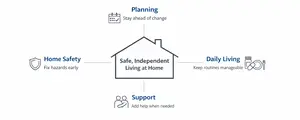
Planning for aging in place is not simply about staying in your home longer. It is about identifying risks early and systematically reducing them before they lead to injury, loss of independence, or forced relocation. The process requires a clear evaluation of how daily movement, physical limitations, and home layout interact over time.
Most homes are not designed for aging bodies. Stairs, narrow walkways, poor lighting, and unstable furniture gradually become hazards. Planning ahead allows you to make targeted adjustments that support safe movement, reduce fall risk, and preserve independence without major disruption later.
The goal is not perfection. It is control. Each improvement compounds into a safer living environment that works with you rather than against you.
Mobility and Flooring Risks in Planning for Aging in Place
Mobility breakdown is the primary driver of home-related injuries, and flooring conditions are often the first point of failure. In planning for aging in place, stable and predictable walking surfaces must be established throughout the home.
Uneven flooring, loose rugs, and transitions between surfaces create instability that worsens with reduced balance or slower reaction time. These issues are often ignored because they develop gradually.
Correcting flooring risks involves direct, physical changes:
• Remove all unsecured rugs or anchor them with non-slip backing
• Eliminate height differences between flooring surfaces where possible
• Repair warped or uneven floorboards immediately
• Keep all walkways clear of cords, clutter, and low obstacles
• Ensure thresholds between rooms are smooth and visible
Consistent walking surfaces reduce hesitation, and hesitation itself is a fall risk. Movement should feel predictable from room to room.
Lighting Strategy for Safe Movement
Lighting determines how safely a person can navigate their home, especially during early morning and nighttime hours when falls are most common. Poor lighting forces guesswork, and guesswork leads to missteps.
A layered lighting approach is required to eliminate shadows and improve visibility:
• Install bright overhead lighting in all major rooms
• Add motion-activated lights in hallways and bathrooms
• Place bedside lamps within easy reach
• Use nightlights to define walking paths after dark
• Replace dim bulbs with consistent, high-output lighting
Lighting must follow movement patterns. Focus especially on the path from the bedroom to the bathroom, as this is one of the highest-risk routes in the home.
Aging in Place Checklist
Bathroom Access and Transition Safety
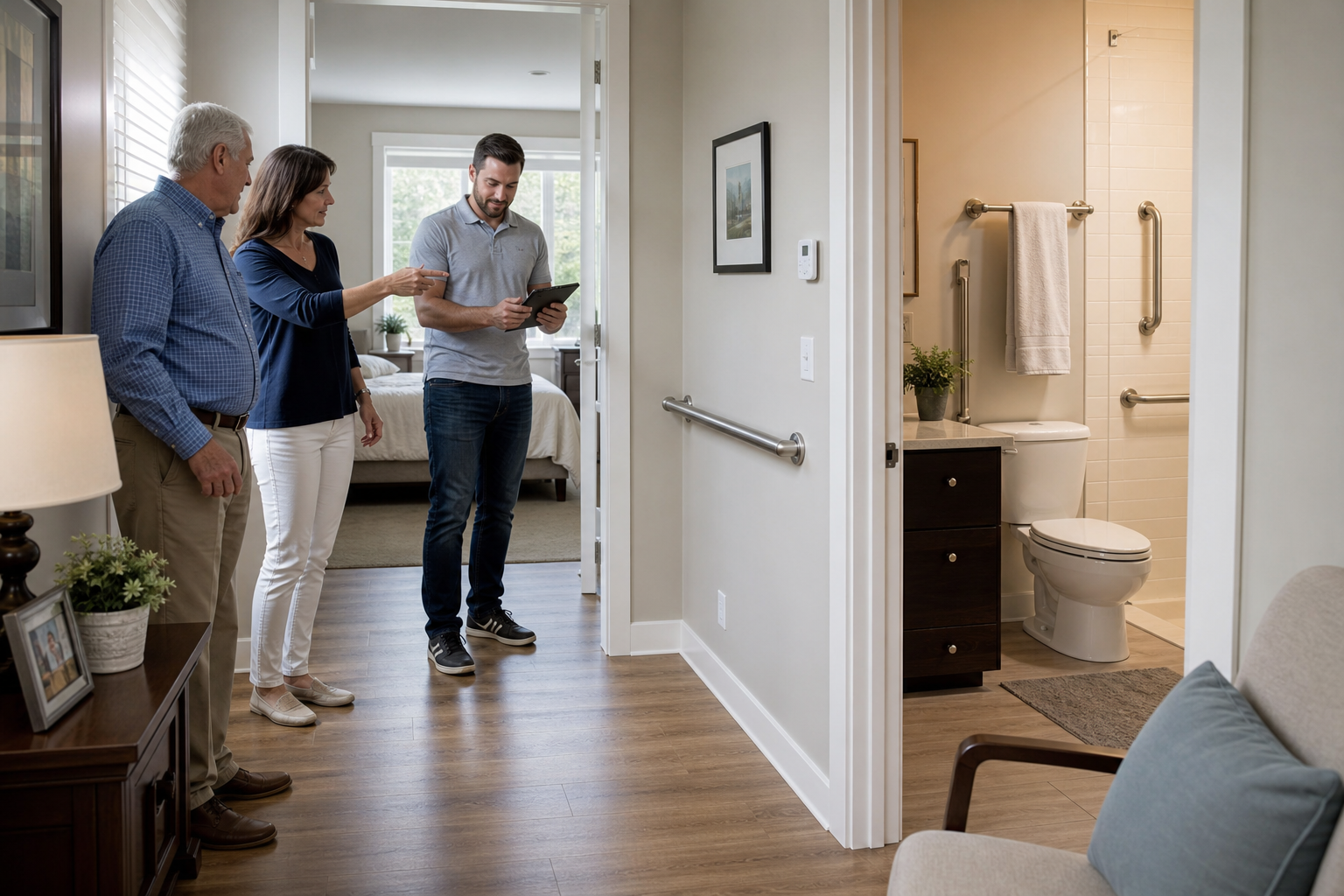
The transition into and out of the bathroom is one of the most dangerous movements in the home. Slippery surfaces, tight spaces, and sudden turns significantly increase the risk of falls.
Planning for aging in place must account for safe entry, exit, and movement within this space.
Key improvements include:
• Install grab bars at entry points and near the toilet
• Use non-slip mats both inside and outside the shower
• Ensure the bathroom door opens fully without obstruction
• Keep the path to the bathroom completely clear
• Add lighting that activates before entering the space
Transitions are often overlooked. The step into the bathroom or onto a wet surface is where stability is most compromised.
How to Prevent Falls in the Home
Furniture Stability and Transfer Safety
Standing up, sitting down, and repositioning are repeated movements that create cumulative risk. Unstable or poorly positioned furniture increases the likelihood of falls during these transitions.
Chairs, beds, and sofas must support controlled movement:
• Choose chairs with firm cushions and stable armrests
• Set bed height so feet rest flat on the floor when seated
• Anchor large furniture to prevent shifting
• Avoid low or overly soft seating that requires excessive effort to stand
• Position frequently used items within arm’s reach
Transfer safety is about reducing strain and maintaining balance. Every movement should feel supported and controlled.
Stair Navigation and Fall Prevention
Stairs are among the highest-risk features in any home. Even a single misstep can result in serious injury. Planning for aging in place requires proactive stair safety measures, even if stairs are used infrequently.
To reduce stair-related risk:
• Install secure handrails on both sides of the staircase
• Ensure steps are evenly spaced and well-lit
• Add non-slip strips to each step
• Remove objects from stairways at all times
• Consider limiting stair use by relocating essential living areas
If stairs cannot be avoided, they must be treated as a controlled environment rather than a casual passage.
Medication and Health Management Risks
Physical safety is closely tied to cognitive clarity and physical condition. Medication side effects, dehydration, and fatigue can significantly increase fall risk without obvious warning.
Planning for aging in place must include consistent health awareness:
• Review medications regularly for side effects like dizziness
• Maintain hydration throughout the day
• Monitor changes in balance or coordination
• Avoid sudden position changes after sitting or lying down
• Keep emergency contact systems accessible
These factors directly affect how safely a person moves through their environment.
https://www.nia.nih.gov/health/medicines-and-medication-management
Nighttime Movement and Risk Control
Nighttime is when most serious falls occur. Reduced visibility, fatigue, and urgency combine to create high-risk conditions.
A controlled nighttime environment reduces uncertainty:
• Keep a clear, direct path from bed to bathroom
• Use motion lighting to eliminate dark transitions
• Place stable footwear next to the bed
• Avoid rushing by ensuring adequate lighting before standing
• Keep assistive devices within immediate reach
Nighttime safety is about eliminating hesitation and confusion. Movement should be automatic and clearly defined.
Ongoing Home Assessment and Adjustment
Planning for aging in place is not a one-time task. It is an ongoing process that evolves as physical ability changes. Small adjustments made consistently prevent larger problems later.
A structured reassessment approach is essential:
• Walk through the home monthly to identify new hazards
• Reevaluate frequently used areas for efficiency and safety
• Adjust furniture placement as mobility needs change
• Replace worn safety features like mats and lighting
• Stay proactive rather than reactive
Safety is maintained through continuous attention, not a single improvement phase.
© 2026 Mark Fomenko. All rights reserved.
AgingInPlaceResource.com
Privacy Policy | Terms of Use | Disclaimer | Contact | Newsletter
Recent Articles


-
Aging In Place Resource Library
Sep 04, 26 08:30 AM
Aging In Place Resource Library -
Aging in Place Resource Newsletter
Aug 30, 26 11:16 AM
Aging in Place Resource Newsletter -
Aging in Place Resource: Simple Strategies for Living Safely at Home
Jul 28, 26 12:43 PM
 Aging in Place Resource provides practical guidance for aging in place. Learn how to live safely and independently at home with strategies for home safety, caregiving, planning, and long-term support.