Fall Prevention For Seniors With Dementia
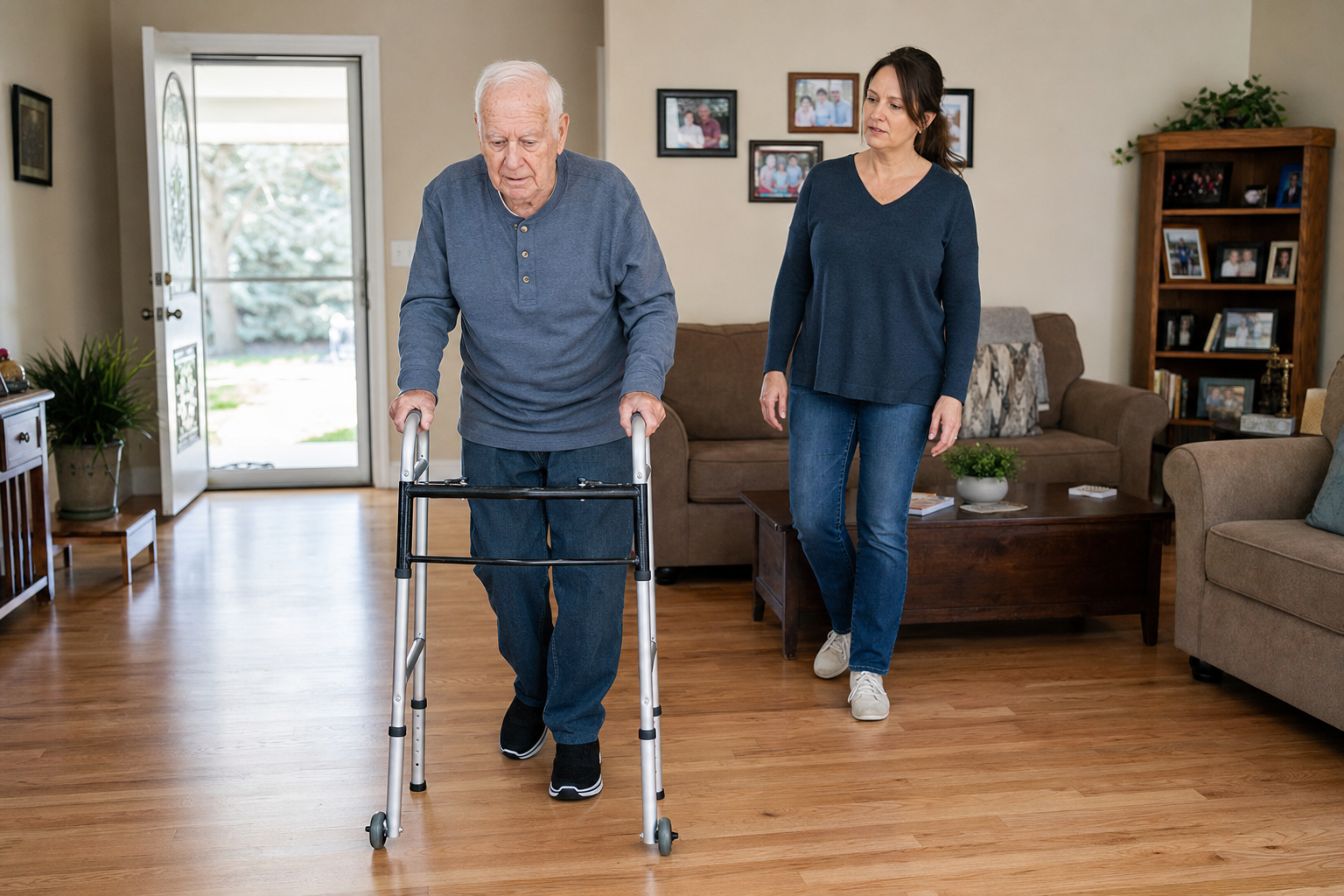
Fall Prevention For Seniors With Dementia becomes increasingly important as memory problems, confusion, poor judgment, and changing mobility begin affecting daily life. Many falls occur not because a person is physically incapable of walking, but because they forget limitations, misjudge distances, become distracted, or attempt activities that are no longer safe.
Families are often surprised by how quickly fall risk can increase. Someone who walked safely a few months ago may begin rushing to answer the door, forgetting to use a walker, wandering at night, or becoming confused about where furniture and doorways are located.
Fortunately, many fall risks can be reduced without expensive remodeling. Small changes to the home environment, daily routines, and walking patterns often make a significant difference while helping a person remain independent longer.
Understanding Fall Prevention For Seniors With Dementia
Fall Prevention For Seniors With Dementia begins with recognizing that memory loss changes behavior.
Traditional fall prevention advice often focuses on strength, balance, and mobility. Dementia adds another layer of risk because a person may not consistently remember safety instructions or recognize hazards.
Common fall-producing behaviors include:
- Standing up too quickly
- Forgetting mobility limitations
- Carrying objects while walking
- Walking in socks on smooth floors
- Rushing to answer phones or doors
- Attempting stairs without assistance
- Wandering at night
- Getting lost inside familiar rooms
Many families focus primarily on the physical condition of the older adult. In reality, behavioral changes often create equal or greater danger.
Fall Prevention For Seniors With Dementia requires ongoing observation. Conditions change, abilities change, and homes often need periodic adjustment as dementia progresses.
The goal is not eliminating all activity. The goal is reducing unnecessary risk while preserving as much independence as possible. Small changes made consistently are often more effective than major interventions made after a serious fall has already occurred.
Why Dementia Increases Fall Risk
Dementia affects much more than memory. It can interfere with judgment, attention, visual perception, spatial awareness, and the ability to recognize risk.
As a result, falls often occur not because a person lacks physical strength, but because they misjudge a situation or react in an unsafe way.
My father had severe dementia and used a walker after hip replacement surgery. One day he stood up from his recliner and began walking without it. His knee gave way and he collapsed. The resulting fracture split his femur from hip to knee. The fracture was so extensive that the X-ray of the repair looked like it had been held together with baling wire.
Whether he forgot the walker because of dementia or chose not to use it out of habit, overconfidence, or pride is impossible to know. What was clear is that a routine movement that had once been automatic had become dangerous.
The combination of impaired judgment, reduced mobility, and a momentary decision resulted in a major injury that required hospitalization, surgery, and a lengthy stay in a rehabilitation facility.
An older adult may:
- Forget that furniture has been rearranged
- Misjudge the height or location of a chair
- Miss a step or threshold
- Turn too quickly while carrying an object
- Become distracted during a transfer
- Start walking before fully standing
- Forget to use a walker or cane
Many falls occur during ordinary daily activities that once required little thought. A person may rise from a recliner and immediately begin walking without pausing to regain balance. Someone else may carry laundry, answer a ringing phone, or hurry to the bathroom without recognizing how unstable they have become.
Overconfidence can also become a problem. A person who walked safely and independently for years may continue believing they can do so despite significant changes in balance, strength, vision, or judgment. The decline is often gradual enough that they do not recognize it themselves.
Family members frequently notice warning signs during visits. A parent who seems fine during a conversation may hesitate before standing, shuffle instead of taking full steps, grab furniture while walking, or have unexplained bruises from minor stumbles that were never mentioned. These small observations often provide the first indication that fall risk is increasing.
Fall Prevention For Seniors With Dementia At Home
Fall Prevention For Seniors With Dementia often begins with making the home easier to navigate.
As dementia progresses, even familiar surroundings can become more difficult to interpret. Objects that were once easily avoided may become obstacles, and narrow walking routes can increase the likelihood of tripping, bumping into furniture, or losing balance while turning.
Clutter creates more than a housekeeping problem. It forces people to make constant adjustments as they move through the home. An older adult may step around a box, squeeze past a table, or turn awkwardly to avoid an obstacle. These small movements can increase fall risk, especially when balance, judgment, or mobility are already declining.
Look for common hazards such as:
- Electrical cords crossing walkways
- Small tables narrowing pathways
- Loose rugs
- Unstable furniture
- Decorative objects near walking routes
- Pet toys
- Stacks of newspapers or boxes
Pay particular attention to the routes used every day. A person should be able to move easily between the bedroom, bathroom, kitchen, and favorite chair without weaving around obstacles or changing direction unnecessarily.
Adult children often notice problems during visits that have become invisible to someone who lives in the home. A stack of magazines beside a recliner, a decorative plant in a hallway, or a small table placed near a doorway may seem insignificant until a parent begins shuffling, grabbing furniture for support, or struggling to turn safely.
Many families achieve substantial safety improvements without spending any money.
Removing unnecessary furniture, clearing walking paths, and simplifying frequently used areas often reduces fall risk immediately while making the home easier to navigate.
How To Prevent Falls In The Home
Improving Lighting And Visibility
Good lighting is one of the simplest and most effective ways to reduce fall risk in a person with dementia.
As people age, changes in vision can make it harder to judge distances, recognize obstacles, and distinguish between different floor surfaces. Dementia can add another layer of difficulty by affecting how the brain interprets visual information.
Areas that seem adequately lit to younger family members may appear much darker to an older adult. Shadows can be mistaken for objects. Changes in flooring color may look like steps or obstacles. Dimly lit hallways can create uncertainty that leads to hesitation, shuffling, or loss of balance.
Improving visibility often requires only a few practical changes:
- Use brighter bulbs where appropriate
- Eliminate dark hallways
- Increase lighting near stairs
- Improve bathroom lighting
- Reduce heavy shadows
- Keep frequently used rooms consistently illuminated
Nighttime deserves special attention. Many falls occur during trips to the bathroom when a person wakes disoriented and attempts to move through a dark house. A familiar hallway can suddenly become confusing when visibility is poor.
Low-cost improvements may include:
- Plug-in night lights
- Motion-sensor lighting
- Illuminated hallway routes
- Clearly visible bathroom entrances
Consistency is important. Frequently moving furniture, changing lamp locations, or creating different lighting patterns from room to room can increase confusion. A home that is predictable and easy to see is often safer than one that relies on memory alone.
Walking Surfaces And Flooring Hazards
Walking surfaces are often overlooked until a fall occurs. Many homes contain flooring changes that younger people barely notice but can create significant challenges for an older adult with dementia.
Changes in color, texture, height, or lighting can affect balance and increase hesitation, especially when mobility or depth perception is declining.
Common problem areas include:
- Carpet-to-tile transitions
- Tile-to-wood transitions
- Raised thresholds
- Uneven flooring
- Curled rug edges
People living with dementia may have difficulty judging these changes accurately. Some begin taking unusually short steps when approaching a doorway. Others pause, shuffle, or lift their feet excessively because they are uncertain about the surface ahead.
Pay close attention to locations where hesitation occurs repeatedly. If a parent regularly slows down at the same doorway, catches a foot in the same spot, or reaches for support while crossing a threshold, that area deserves immediate attention.
Many families are surprised to discover that long-familiar floor coverings become hazards as mobility and cognition change. A throw rug that caused no problems for twenty years may suddenly become a fall risk when balance declines or walking patterns become less steady.
Consider removing:
- Throw rugs
- Braided runners
- Loose mats
- Decorative floor coverings
The bathroom deserves particular attention. Water, smooth flooring, frequent transfers, and limited space combine to create one of the highest-risk areas in the home. Even small improvements in bathroom safety can significantly reduce the likelihood of a serious fall.
Safe Transfers And Daily Movement
Many serious falls occur during transitions rather than while walking across a room.
Standing up, sitting down, or moving from one position to another requires balance, coordination, judgment, and physical strength. Dementia can make these movements more difficult because a person may forget the sequence of steps needed to move safely.
Common high-risk situations include:
- Getting out of bed
- Standing from a recliner
- Rising from a toilet
- Entering or exiting a vehicle
- Moving between a wheelchair and a chair
Family members often notice that a parent begins rushing these movements. Someone may try to stand before their feet are positioned properly, turn too quickly, or start walking before they have fully regained their balance. These moments often last only a few seconds but are responsible for many falls.
Encouraging a slower pace can help reduce risk. Simple verbal reminders such as "pause for a moment" or "get your balance first" are often more effective than lengthy instructions.
Furniture choice also matters. Deep, soft couches can be difficult to get out of because they require more strength and stability. Chairs with firm cushions, stable armrests, and a comfortable seat height generally make standing and sitting safer and easier. Even small changes in how a person transfers throughout the day can significantly reduce fall risk over time.
Transfer Safety And Aging In Place
Establishing Predictable Daily Routines
Routine is one of the most effective and overlooked tools for reducing fall risk in older adults with dementia.
People living with dementia often function better when daily activities follow familiar patterns. Regular meal times, medication schedules, bathing routines, and bedtimes reduce confusion and help people move through the home with greater confidence. When the day becomes unpredictable, older adults may become disoriented, rush unnecessarily, wander, or attempt tasks at times when they are tired and less stable on their feet.
A predictable routine does not eliminate fall risk, but it often reduces the uncertainty and confusion that contribute to many falls.
When meals, medications, activities, and bedtime occur at roughly the same time each day, people often move more confidently through their environment.
Unexpected situations frequently create problems.
Examples include:
- Searching for misplaced items
- Rushing to appointments
- Rearranged furniture
- Visitors creating congestion
- Last-minute schedule changes
A calm predictable environment reduces unnecessary movement and confusion.
Families should also pay attention to fatigue.
Many older adults function reasonably well early in the day but become more confused and physically unstable during evening hours.
Scheduling demanding activities during stronger periods may reduce fall risk.
For additional information about home safety planning, see the Aging in Place Checklist.
Monitoring Changes Before A Serious Fall Occurs
Fall Prevention For Seniors With Dementia works best when families recognize warning signs before a serious fall occurs.
Many falls are preceded by weeks or months of gradual changes that can be easy to overlook. A parent who once moved confidently through the home may begin touching furniture for support, hesitating before standing, or taking noticeably shorter steps. Because these changes often develop slowly, family members may adjust to them without realizing that fall risk is increasing.
Near falls deserve particular attention. An older adult may stumble, lose balance, or grab a wall before reaching the floor. Since no actual fall occurred, everyone may assume the situation is under control. In reality, near falls are often among the clearest signs that mobility, balance, judgment, or confidence are beginning to decline.
Adult children frequently notice these changes during visits. A parent who sounds fine on the phone may be moving much more cautiously at home than family members realize.
Watch for:
- Furniture grabbing
- Increased shuffling
- Difficulty turning
- Unexplained bruises
- Near falls
- Refusal to use mobility aids
- Trouble rising from chairs
- Increasing hesitation
When several of these warning signs begin appearing together, it may be time to reassess walking paths, lighting, footwear, daily routines, and other factors that contribute to fall risk. Small changes made early are often easier than dealing with the consequences of a serious fall later.
Near falls deserve attention.
Many families focus only on actual falls. In reality, near falls often provide valuable warning that conditions are worsening.
Keep notes regarding:
- Time of day
- Location
- Activity being performed
- Possible contributing factors
Patterns often emerge quickly.
Understanding common fall risks can also be helpful.
Practical Long-Term Fall Prevention For Seniors With Dementia
Fall Prevention For Seniors With Dementia is usually an ongoing process rather than a one-time project.
Dementia, mobility, vision, balance, and overall health can change gradually over time. A home that worked well six months ago may need adjustments as abilities decline or daily routines change.
The most effective approach is continued observation. Families who regularly pay attention to how a parent moves through the home often identify problems before a serious fall occurs. Small changes in walking behavior, balance, or confidence can provide valuable warning that additional safety measures may be needed.
It can be helpful to periodically ask practical questions:
- Are walking routes still clear?
- Has nighttime confusion increased?
- Are transfers becoming more difficult?
- Is furniture placement still working well?
- Have new hazards appeared?
- Is a mobility aid being used consistently?
Many families discover that a series of small improvements is more effective than a major renovation. Removing a tripping hazard, improving hallway lighting, rearranging furniture, or simplifying a daily routine can significantly reduce risk without disrupting the home environment.
The goal is not to create a perfect home. The goal is to create a home that remains easy to understand, safe to navigate, and adaptable as circumstances change.
Consistent attention to small problems often prevents larger problems later.
© 2026 Mark Fomenko. All rights reserved.
AgingInPlaceResource.com
Privacy Policy | Terms of Use | Disclaimer | Contact | Newsletter
Recent Articles


-
Aging In Place Resource Library
Sep 04, 26 08:30 AM
Aging In Place Resource Library -
Aging in Place Resource Newsletter
Aug 30, 26 11:16 AM
Aging in Place Resource Newsletter -
Aging in Place Resource: Simple Strategies for Living Safely at Home
Jul 28, 26 12:43 PM
 Aging in Place Resource provides practical guidance for aging in place. Learn how to live safely and independently at home with strategies for home safety, caregiving, planning, and long-term support.