Small Bathroom Safety for Seniors
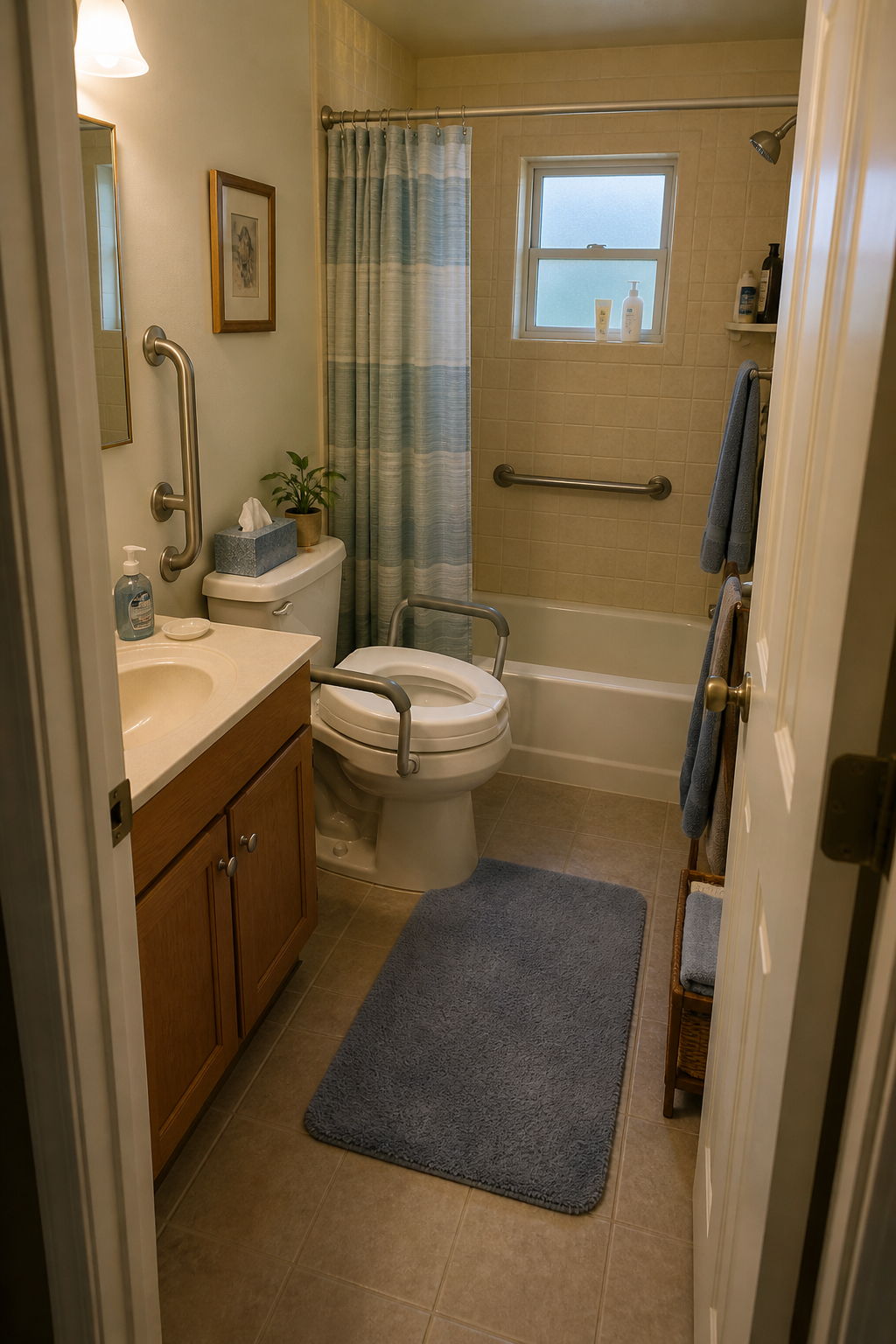
Small bathroom safety for seniors matters because many older bathrooms were never designed for slower movement, changes in balance, walkers, grab bars, or safe transfers. A small bathroom can quickly create risks when the toilet, sink, tub, door, rugs, and storage are crowded into a tight space.
The goal is not to make the room perfect. The goal is to make ordinary bathroom routines safer, easier, and more predictable without assuming a major remodel. Small changes in lighting, floor space, storage, support, and movement patterns can help an older adult stay more independent at home.
Small Bathroom Safety for Seniors Starts With Clear Floor Space
Clear floor space is the first priority in a small bathroom because every inch matters. A narrow bathroom can become unsafe when towels, rugs, baskets, trash cans, scales, or cleaning products sit where feet, canes, walkers, or hands need to go.
Start by looking at the bathroom from the doorway. The path to the toilet, sink, and shower should be simple and obvious. If someone has to turn sideways, step around objects, or reach over clutter, the layout is working against safety.
Useful changes include:
- Remove loose bath mats from the main walking path
- Move the trash can beside the sink instead of near the toilet
- Store extra toilet paper off the floor
- Keep laundry baskets outside the bathroom
- Move cleaning products to a cabinet or closet
- Leave enough space for a cane or walker to turn
A small bathroom should not be used as a storage room. The fewer objects on the floor, the easier it is to see where to step and where to place support.
Improve Toilet Access in a Tight Bathroom
Toilet transfers are among the most important aspects of small bathroom safety for seniors. The toilet may be too low, too close to a wall, or positioned in a way that leaves little room to turn safely. Many falls happen when a person rushes, twists, or reaches for weak support.
The toilet area should allow slow, deliberate movement. If the person uses a cane or walker, there should be a clear place to position it before sitting. If the person pushes up from the sink, towel bar, or toilet paper holder, that is a warning sign. Those fixtures are not designed to hold body weight.
Practical improvements include:
- Add a raised toilet seat if the toilet is too low
- Install a toilet safety frame if side support is needed
- Remove rugs that bunch near the toilet base
- Keep toilet paper within easy reach
- Place night lighting near the toilet path
- Make sure the door does not block access during a fall
For a broader room-by-room planning tool, see the Aging in Place Checklist.
Make The Shower Or Tub Easier To Enter
The shower or tub is often the most dangerous feature in a small bathroom because it combines water, stepping, turning, and limited space. A high tub wall can be especially difficult when balance, hip strength, knee comfort, or vision has changed.
Small bathroom safety for seniors should focus on reducing risky movements. Stepping over a tub wall while holding a towel rack is not a safe routine. Neither is balancing on one foot while reaching for soap, shampoo, or a towel.
A safer setup may include:
- Use a non-slip bath mat inside the tub or shower
- Place soap and shampoo within seated or standing reach
- Add a shower chair if standing is tiring or unsteady
- Use a handheld showerhead to reduce twisting
- Keep towels reachable without stepping onto a wet floor
- Remove decorative items from the tub edge
A walk-in shower may help, but many families are not ready for that expense. Before considering remodeling, make the existing bathing space simpler, less slippery, and easier to use.
For related guidance, see Bathroom Safety For Seniors.
Use Grab Bars Where Hands Naturally Reach
Grab bars are most useful when they match real movement. A bar in the wrong place may look reassuring, but do little during an actual transfer. In a small bathroom, placement matters because people often reach sideways, backward, or diagonally when space is tight.
Watch the movement pattern carefully. Where does the person reach when stepping into the shower? Where does the hand go when standing from the toilet? Where is the balance lost during turning? Those answers matter more than appearance.
Good grab bar planning includes:
- Place a vertical bar near the shower or tub entry
- Add a horizontal bar along the shower wall if standing support is needed
- Install support near the toilet if the person pushes up with effort
- Avoid relying on towel bars for balance
- Choose textured bars that are easy to grip
- Make sure bars are mounted into a solid structure
Suction grab bars may help as temporary balance cues, but they should not be trusted for full body weight. A real grab bar should be anchored securely.
For more help with safer movement during sitting and standing, see the following guides.
Transfer Safety And Aging In Place
Improve Lighting Without Creating Glare
Lighting needs special attention in a small bathroom because shadows, shiny tile, mirrors, and white fixtures can confuse depth perception. A person may think the floor is dry when it is wet, or misjudge the edge of a rug, tub, or threshold.
The best lighting is even and predictable. A bright overhead light may not be enough if the toilet area, shower entry, or floor near the sink remains shadowed. Nighttime bathroom trips are especially risky because people may be sleepy, stiff, or in a hurry.
Practical lighting changes include:
- Use a night light between the bedroom and bathroom
- Add a motion-sensor light near the bathroom doorway
- Replace dim bulbs with brighter bulbs that do not glare
- Keep the light switch easy to reach from the doorway
- Avoid glossy rugs or mats that reflect light oddly
- Clean mirrors and glass so reflections are less confusing
Small bathroom safety for seniors often improves when the first step into the room is well-lit. The goal is to help the person see the toilet, floor, sink, and shower edge before moving.
For related nighttime planning, see Nighttime Safety For Seniors.
Control Water Before It Reaches The Floor
Water on the floor immediately changes the risk level. In a small bathroom, there may be no safe, dry area nearby, so one wet spot can affect the entire room. The solution is to control water at the source instead of waiting to mop it up later.
Check where water actually goes during ordinary use. Does water drip from the shower curtain? Does the person step out before drying? Does the sink splash onto the floor? Does the toilet leak slightly at the base? These small issues matter because they create repeated hazards.
Useful fixes include:
- Use a shower curtain liner that stays inside the tub
- Replace thin bath mats with a stable non-slip mat outside the shower
- Keep a towel within reach before bathing starts
- Repair small leaks promptly
- Wipe sink splashes after use
- Avoid storing bottles where they can fall into wet areas
For additional fall-prevention guidance, see Bathroom Fall Prevention
Keep Storage Simple And Reachable
Storage affects safety more than many families expect. In a small bathroom, people often reach into awkward cabinets, bend for supplies, or stretch toward shelves while standing on a damp floor. That combination is not safe.
The most-used items should be kept between waist and shoulder height whenever possible. Daily items should not require bending, twisting, or stepping around the toilet. Extra supplies can be stored elsewhere if the bathroom is too small.
A safer storage plan may include:
- Keep toothbrush, toothpaste, and medications in easy reach
- Store extra towels outside the bathroom
- Remove rarely used products from crowded shelves
- Use a small wall shelf only if it does not block movement
- Keep shampoo and soap in a shower caddy that does not fall
- Avoid glass containers near the sink or shower
This is also a good place to notice changes in daily function. If an older adult begins leaving items scattered, dropping bottles, or struggling to find ordinary supplies, the bathroom may need further simplification.
For related organization ideas, see Decluttering For Senior Safety.
Create A Safer Bathroom Routine
A safer bathroom depends on routine as much as equipment. Small bathroom safety for seniors works best when the room supports the same safe sequence every day. The person should not have to improvise each time they bathe, use the toilet, or get ready for bed.
A predictable bathroom routine reduces rushing. It also helps family members notice when something has changed. If a parent suddenly avoids showering, leaves towels on the floor, or stops using the bathroom safely at night, the room may no longer match their abilities.
A practical routine may include:
- Turn on the light before entering
- Close the toilet lid before using the sink if space is tight
- Dry hands before reaching for support
- Sit while grooming if standing is tiring
- Keep the same towel location every day
- Check the floor before leaving the room
The Aging in Place Checklist can help families connect bathroom safety with other fall-prevention issues throughout the home. A small bathroom may be only one area of risk, but it often reveals larger patterns in balance, lighting, clutter, transfers, and daily routines.
For broader home safety planning, see Home Safety For Seniors.
© 2026 Mark Fomenko. All rights reserved.
AgingInPlaceResource.com
Privacy Policy | Terms of Use | Disclaimer | Contact | Newsletter
Recent Articles


-
Aging In Place Resource Library
Sep 04, 26 08:30 AM
Aging In Place Resource Library -
Aging in Place Resource Newsletter
Aug 30, 26 11:16 AM
Aging in Place Resource Newsletter -
Aging in Place Resource: Simple Strategies for Living Safely at Home
Jul 28, 26 12:43 PM
 Aging in Place Resource provides practical guidance for aging in place. Learn how to live safely and independently at home with strategies for home safety, caregiving, planning, and long-term support.