Bathroom Grab Bar Placement
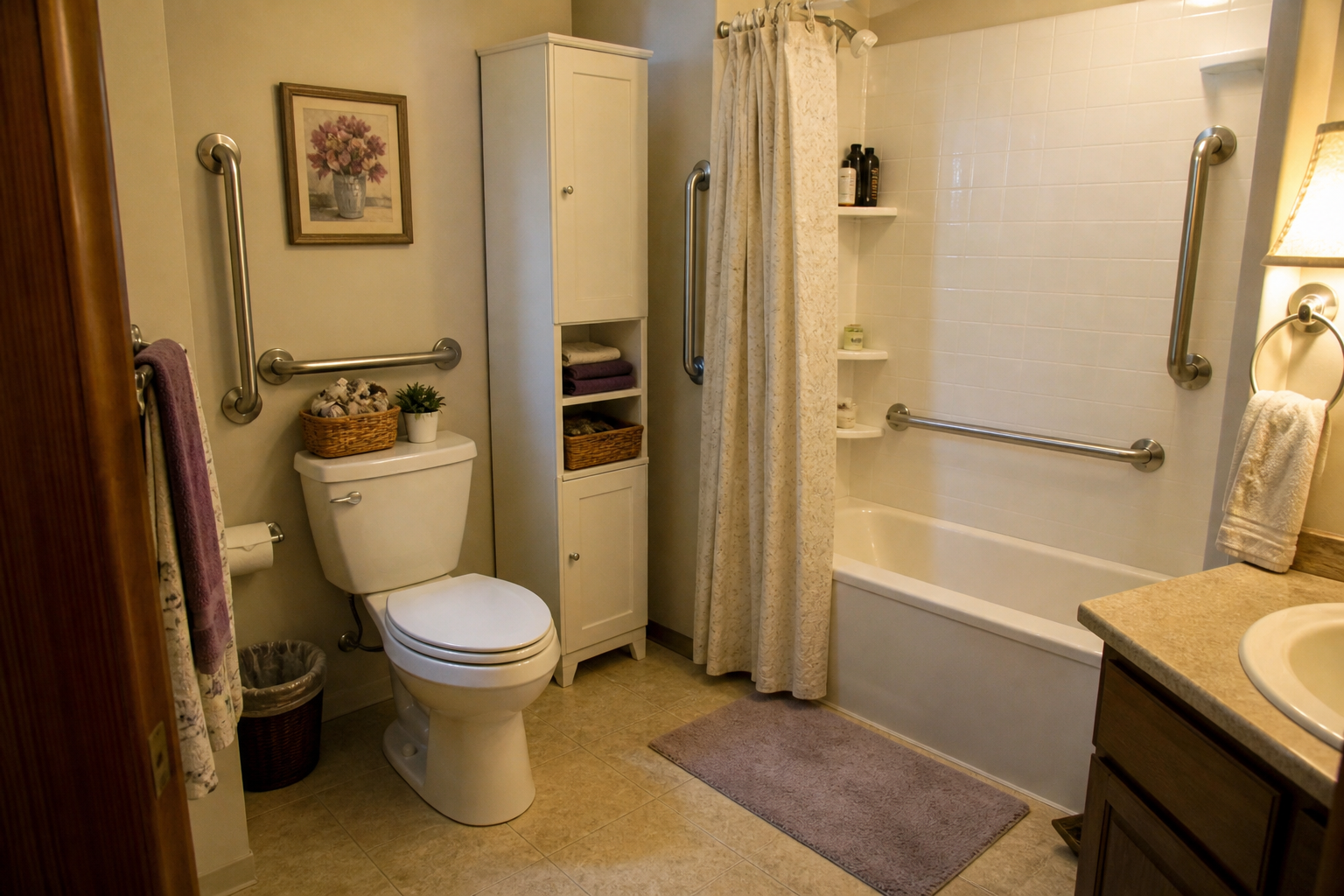
Bathroom Grab Bar Placement matters because the bathroom is one of the easiest rooms to underestimate and one of the hardest rooms to recover in after balance is lost. Wet floors, tight turns, low toilet seats, tub walls, shower thresholds, and poor lighting all create risk at the exact moments when a person may be standing on one foot, reaching, twisting, or changing direction.
Good placement is not about filling the bathroom with hardware. It is about putting strong, reachable support where the body naturally needs help. That keeps the solution affordable, practical, and focused on independence instead of turning the bathroom into something that feels institutional.
Grab bars work best when they match the way someone actually uses the room. The right location near a toilet, shower, tub, or doorway can make daily routines safer without requiring a major remodel.
Bathroom Grab Bar Placement Starts With Wet-Floor Movement Risk
Bathroom Grab Bar Placement should begin with the places where feet, water, and body weight meet.
The highest-risk moments usually happen when someone steps out of a shower, turns near the toilet, reaches for a towel, or shifts weight on a damp floor. A towel bar, sink edge, or shower door is not a reliable support. Those items may feel convenient, but they are not designed to hold body weight during a slip.
A practical first step is to walk through the bathroom slowly and watch where support is missing. Focus less on where a bar “looks right” and more on where a hand naturally searches for balance.
Check these movement points:
- Stand at the bathroom doorway and identify the first slippery surface.
- Step toward the toilet and note where the hand reaches during turning.
- Stand outside the shower and mark where support is needed before stepping in.
- Stand inside the shower and identify where support is needed while turning.
- Step out of the tub or shower and note the first stable handhold location.
- Test nighttime movement with the actual bathroom lighting used after dark.
Place Toilet Grab Bars Where Sitting And Standing Happen
Toilet transfers need support beside the body, not across the room.
A grab bar near the toilet should help with lowering, rising, and steadying during clothing adjustment. The best location is usually on the side wall next to the toilet, where the person can press down or pull slightly while keeping the body close to the seat. If there is no side wall, a rear-wall bar or toilet safety rail may be more practical.
The goal is to reduce twisting. Many falls happen when someone reaches for a sink, towel bar, or door frame while turning away from the toilet. Bathroom Grab Bar Placement should make the safer handhold easier to use than the unsafe one.
Useful toilet-area checks include:
- Sit on the toilet and notice where the stronger hand naturally reaches.
- Stand up slowly and mark the point where support is needed most.
- Remove small trash cans or storage baskets from the foot path.
- Keep toilet paper reachable without leaning forward or sideways.
- Add a night light so the grab bar is visible during late bathroom trips.
Shower Wall Bars Should Support Standing, Turning, And Reaching
Shower grab bars should match the way the person moves inside the shower.
A vertical bar near the shower entrance helps with stepping in and out. A horizontal bar along the side wall can help while standing, turning, or adjusting water temperature. In a tub-shower combination, the entry point matters because stepping over the tub wall creates a short moment of one-legged balance.
Bathroom Grab Bar Placement inside the shower should also account for shampoo, soap, handheld shower controls, and towel location. If someone must reach across the shower to get an item, the bar may not solve the real risk.
Good shower planning includes:
- Place one bar where the hand reaches before entering the shower.
- Place one bar where balance is needed while turning under running water.
- Keep soap, shampoo, and washcloths between shoulder and waist height.
- Use a nonslip mat or textured surface that does not bunch up.
- Keep the towel close enough to reach before stepping onto the floor.
- Check that the shower curtain or door does not block the handhold.
Bathroom Safety For Seniors
Tub Grab Bars Need To Address The Step-Over Hazard
A bathtub creates a different problem than a walk-in shower.
The tub wall forces a person to lift one foot, shift weight, and step over a raised edge. That is why a grab bar at the entry point is often more useful than one placed only on the back wall. A vertical bar near the tub edge can help control the step-over movement. A second bar inside the tub can help with standing balance once both feet are inside.
Avoid clamp-on tub rails unless they are stable, compatible with the tub, and checked often. Some can loosen over time. A permanently installed grab bar anchored into proper blocking or studs is usually more dependable.
Practical tub checks include:
- Stand outside the tub and identify where the first handhold is needed.
- Step over the tub wall slowly and notice where the weight shifts.
- Place bathing supplies so they do not require turning backward.
- Keep the bath mat flat and outside the main step-out path.
- Remove decorative rugs that slide when damp.
- Make sure the bar is reachable before the foot leaves the tub.
Entry And Exit Points Need Support Before Balance Is Lost
The safest grab bar is often the one reached before trouble starts.
Bathroom doorway areas, shower thresholds, and tight turns near vanities deserve attention because they are transition points. People often move faster through these areas than they realize. A small threshold, bath rug edge, or open cabinet door can become a trip hazard when someone is tired or moving in low light.
Bathroom Grab Bar Placement should support the first step into a risky area and the first step out of it. This is especially important when the bathroom is small and there is little room to recover after a stumble.
Look closely at transition areas:
- Clear the floor between the doorway and toilet.
- Move hampers, scales, and baskets away from turning zones.
- Keep cabinet doors fully closed before using the bathroom.
- Add a grab bar near the shower entrance if the threshold is raised.
- Check whether the bathroom door swing blocks safe movement.
- Keep slippers or shoes out of the nighttime walking path.
Flooring Safety For Seniors
Use Reliable Installation Instead Of Decorative Support
A grab bar is only useful if it can hold real weight.
Decorative towel bars, suction handles, shower doors, and vanity edges should not be treated as safety equipment. A proper grab bar must be firmly installed into wall studs, blocking, or another approved mounting system. The location matters, but the strength of the installation matters just as much.
For many families, this is the one part of Bathroom Grab Bar Placement where outside help may be worth the cost. A handyman or installer who understands wall structure can often do the job quickly and affordably. The point is not to create a luxury remodel. It is to make sure the support does not fail when someone needs it most.
Installation checks should include:
- Confirm that the bar is rated for bathroom safety use.
- Avoid relying on suction cups for primary support.
- Choose a textured surface that is easy to grip with wet hands.
- Test the bar firmly after installation.
- Recheck screws or mounting points periodically.
- Place the bar where it can be reached without leaning.
https://medlineplus.gov/ency/patientinstructions/000021.htm
Match the Grab Bar Height to the Person Using the Bathroom
Standard placement is helpful, but real use matters more.
A grab bar that is too high may force shoulder strain. A bar that is too low may not help with standing. The right height depends on the person’s reach, strength, toilet height, shower layout, and balance pattern. Bathroom Grab Bar Placement should be tested with the actual user whenever possible.
Have the person move through the routine slowly while fully dressed and dry. Watch where the hand naturally reaches when sitting, standing, stepping, and turning. Mark those spots with painter’s tape before drilling anything. This simple step prevents a common mistake: installing bars in technically reasonable places that do not match the person’s body.
Good fit checks include:
- Sit and stand from the toilet, noting the natural hand position.
- Step into the shower with shoes on before testing barefoot movement.
- Reach for the water controls without leaning across the wet space.
- Turn toward the towel and note whether support is still available.
- Test the route during the same lighting conditions used at night.
- Adjust storage so daily items stay within easy reach.
Bathroom grab bars are part of a larger aging-in-place and fall-prevention system. A well-placed bar reduces risk during specific movements, but it works best with clear flooring, good lighting, reachable storage, and simple routines. The Aging in Place Checklist can help connect these small changes into a more complete home safety plan.
Home Modifications for Aging in Place
Keep Bathroom Grab Bar Placement Practical And Easy To Maintain
A good setup should stay useful without constant effort.
The bathroom will change as towels move, bath mats wear out, soap dishes shift, and storage habits creep back into old patterns. That means grab bar planning should include maintenance. A bar hidden behind hanging towels or blocked by a laundry basket may technically exist, but it will not help during a fast balance correction.
Keep the system simple. The best grab bars are visible, reachable, and positioned to support repeated daily movement. This allows older adults to continue using the bathroom with lower risk and less reliance on last-minute help.
Ongoing checks should include:
- Keep towels off grab bars used for balance.
- Replace worn bath mats before edges curl.
- Remove bottles from the shower floor.
- Keep the toilet-side path clear every day.
- Check lighting after bulbs are replaced.
- Review placement if walking ability changes.
_____________________________________________________________________________________________________
Get clear, practical insights on aging in place sent occasionally, and only when useful.
No spam. No noise. Unsubscribe anytime.
______________________________________________________________________________________________________