How To Get Up After A Fall
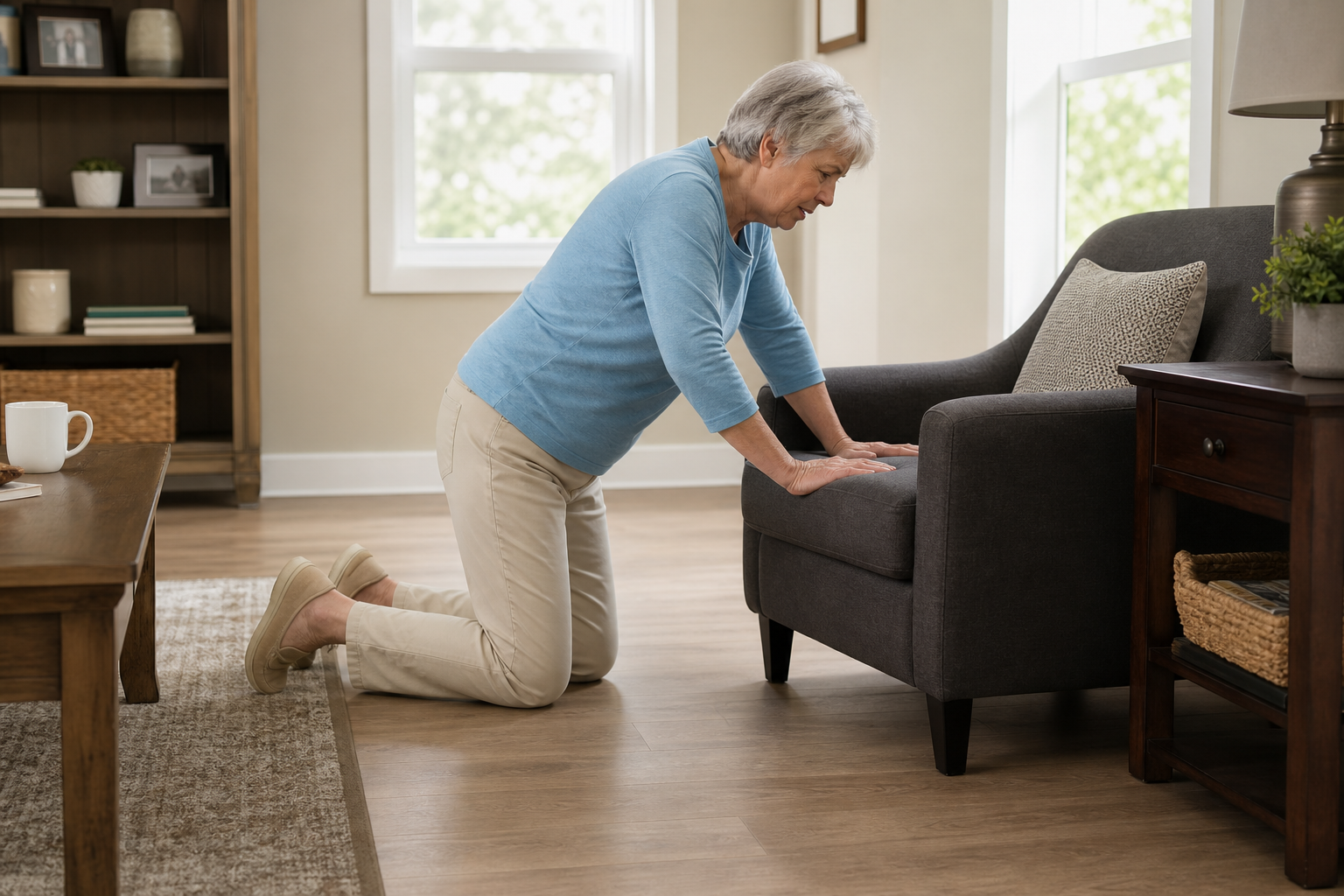
How To Get Up After A Fall is an important skill for older adults, caregivers, and anyone concerned about maintaining independence at home. Falls are common, but what happens afterward can sometimes be just as important as the fall itself.
Many people panic after finding themselves on the floor. They may try to stand too quickly, become disoriented, or make an injury worse by moving without thinking through the situation. Even a minor fall can become a major problem if getting up safely proves difficult.
Learning How To Get Up After A Fall before it happens can reduce anxiety and improve confidence. It also allows older adults and family members to prepare realistic plans that support safety and independence.
Falling, even without injury, can be traumatic and indicative of changing conditions.
I came home from work one day and found my mother on the floor in a panic. She had fallen hours earlier and could not get up. My father was unable to help her safely. By the time I arrived, they had evidently spent much of that time arguing. My parents had always argued, but this felt different. The fall exposed a problem neither of them could solve. Seeing them both unable to manage the situation was one of the events that convinced me to remain with them full-time. It became clear that a single fall could create a crisis neither of them was prepared to handle.
Check Yourself Before Trying To Stand
The first step in How To Get Up After A Fall is resisting the urge to jump up immediately.
Many people feel embarrassed after a fall and instinctively try to stand up as quickly as possible. Unfortunately, rushing can make injuries worse and may increase the risk of falling again.
Remain still for a moment and assess the situation.
Ask yourself:
- Did I hit my head?
- Do I feel severe pain?
- Can I move my arms and legs?
- Do I feel dizzy?
- Am I bleeding?
- Am I having trouble breathing?
Move your hands, arms, feet, and legs gently.
Take a few moments to determine whether anything feels unusual before attempting to move further.
If you suspect a serious injury, especially involving the head, neck, back, hip, or leg, do not attempt to stand. Call for help if possible.
Some injuries are obvious immediately. Others become apparent only after movement causes pain or weakness.
Many injuries become worse because people feel embarrassed and try to prove they are fine before they actually know whether they are injured.
How To Get Up After A Fall Using Furniture
If you are not seriously injured, the safest method often involves using sturdy furniture for support.
How To Get Up After A Fall generally follows a gradual process rather than one quick movement.
A common approach is:
- Roll onto your side.
- Move onto your hands and knees.
- Crawl toward a sturdy chair, sofa, or heavy piece of furniture.
- Place both hands on the furniture.
- Bring one foot forward into a kneeling position.
- Push up slowly using your arms and legs.
- Turn and sit down immediately.
Avoid grabbing lightweight furniture that could slide or tip.
Many repeated falls occur because people rush the final standing movement. Sitting down first allows you to evaluate how you feel before attempting to walk.
What To Do If You Cannot Get Up
Sometimes How To Get Up After A Fall becomes impossible because of weakness, pain, injury, or fatigue.
This situation is more common than many people realize.
If you cannot stand:
- Stay calm.
- Conserve energy.
- Call for help if you have a phone nearby.
- Use a medical alert device if available.
- Make noise to attract attention if others are nearby.
- Keep warm while waiting.
People who live alone should think about this possibility before a fall occurs.
A charged cell phone carried in a pocket often provides more protection than a phone sitting on a kitchen counter.
Some older adults keep phones in multiple locations throughout the home to improve access during emergencies.
It is also important to recognize that help may not arrive immediately. Family members may be at work, running errands, asleep, or otherwise unavailable. Neighbors may not hear calls for assistance.
Planning for that possibility ahead of time can reduce anxiety and improve the chances of getting help when it is needed.
Preparing Your Home Before A Fall Happens
Knowing How To Get Up After A Fall is valuable, but preparation beforehand is even better.
Look around your home and identify areas where getting up would be especially difficult.
Pay attention to:
- Narrow spaces between furniture
- Cluttered pathways
- Slippery flooring
- Rooms with few stable support surfaces
- Areas with poor lighting
A simple rearrangement of furniture may create enough open space to move safely after a fall.
Many older adults discover that decorative furniture, storage baskets, magazine racks, and small tables reduce available movement space. These items may seem harmless until someone finds themselves trying to crawl, roll, or maneuver around them from the floor.
My mother enjoyed decorating the house with expensive dolls and small ceramic statues. Many were displayed on small tables throughout the home. Over the years the rooms became increasingly crowded. As my parents' mobility declined, those decorations began creating obstacles rather than adding enjoyment. I eventually packed up the statues, gave the dolls to my sister, and moved the small tables to the basement. Afterward, the basement looked like an antique furniture store, but the main living areas became much easier and safer to navigate.
Consider whether there is sturdy furniture nearby that could be used for support. A stable chair or sofa may help a person move from the floor to a seated position. Lightweight tables, rolling chairs, and unstable furniture should not be relied upon during recovery.
It is also worth thinking about where a fall is most likely to occur. Bedrooms, bathrooms, hallways, and areas near frequently used chairs deserve particular attention because they are used every day.
Preparing before an emergency often costs little or nothing. A few simple changes may make it easier to move safely, reach a phone, or access support after a fall.
How To Prevent Falls In The Home
Practicing How To Get Up After A Fall
Many people assume they will know what to do after a fall.
Unfortunately, stress often interferes with decision-making. A person who is frightened, embarrassed, uncomfortable, or worried about injury may have difficulty thinking clearly.
Practicing How To Get Up After A Fall can make the process more familiar.
If physically able, consider practicing on a carpeted surface with another person present.
Focus on:
- Rolling onto your side
- Moving to hands and knees
- Crawling short distances
- Using a sturdy chair for support
- Sitting safely after standing
The goal is not athletic performance.
The goal is to become familiar with the sequence before it is needed.
Many people have not spent time on the floor in years. They may be surprised by how much strength, balance, and flexibility are required to move from the floor to a standing position.
Older adults often discover that getting onto the floor is easier than getting back up. This realization can help identify strength or mobility issues that deserve attention.
If getting up from the floor feels difficult during practice, it will likely be even more difficult after an unexpected fall when fatigue, pain, or anxiety may also be present.
Practicing occasionally can reveal limitations before they become an emergency.
Everyday Habits That Reduce Fall Risk
When To Call For Medical Help
Not every fall requires emergency treatment, but some situations should never be ignored.
Seek medical attention if:
- You hit your head
- You lose consciousness
- You experience severe pain
- You cannot bear weight afterward
- You notice confusion or memory problems
- You develop worsening symptoms after the fall
Some injuries are not immediately obvious.
A person may feel relatively normal immediately after a fall and then experience increasing pain, swelling, bruising, or mobility problems hours later. Adrenaline, embarrassment, or the desire to avoid causing concern can sometimes lead people to underestimate the seriousness of an injury.
Pay particular attention to changes that develop after the initial event. Difficulty walking, increasing pain, unusual drowsiness, dizziness, or confusion should not be ignored.
Older adults occasionally insist they are fine because they were able to stand up or continue their normal activities. Unfortunately, the ability to get up after a fall does not necessarily mean an injury did not occur.
The following information from the CDC provides additional fall prevention resources.
Why Older Adults Often Struggle To Get Up
Difficulty with How To Get Up After A Fall is often related to changes that develop gradually over many years.
Common factors include:
- Reduced leg strength
- Poor balance
- Arthritis
- Joint stiffness
- Obesity
- Fatigue
- Fear of falling again
Many people become less active after retirement, illness, hospitalization, or injury. Strength and mobility often decline so gradually that the changes are easy to overlook.
Small warning signs may appear first. Standing from a chair may require pushing off the armrests. Climbing stairs may require pulling on handrails. Kneeling to pick something up may become difficult. Getting down onto the floor may be avoided altogether.
Over time, ordinary movements require more effort.
The ability to get up from the floor depends on leg strength, balance, flexibility, and confidence. A person may still be able to walk through the house, prepare meals, and perform most daily activities while no longer possessing the strength needed to rise from the floor without assistance.
In some cases, older adults discover this limitation only after a fall occurs.
These changes often develop slowly enough that they are easy to overlook until a minor incident becomes a major challenge.
Equipment That May Help After A Fall
Simple equipment may make recovery easier and may reduce the amount of time spent on the floor after a fall.
Examples include:
- Stable chairs with arms
- Grab bars in appropriate locations
- Medical alert systems
- Walking aids used correctly
- Improved lighting
- Non-slip footwear
Equipment should support independence rather than create new obstacles.
One common problem occurs when walkers, canes, or mobility aids are left across the room. They provide little benefit if they cannot be reached after a fall.
The same principle applies to phones, emergency alert devices, and other safety equipment. A phone sitting on a kitchen counter may be useless if a fall occurs in the bedroom or bathroom.
My father once accidentally triggered his medical alert device. A speaker connected to the system sat next to his recliner, and a representative's voice came through asking whether he was alright. At the time he had severe dementia. Rather than associating the voice with the speaker, he calmly replied, "Yes, I'm alright." I heard the exchange from the next room. It was funny, but it also highlighted a limitation of safety equipment. The device worked exactly as intended. The challenge was that my father could no longer reliably understand what was happening.
Think about where mobility devices are normally placed and whether they would be accessible if you ended up on the floor unexpectedly.
Many older adults focus on preventing falls but spend little time thinking about what would happen afterward. Consider whether you could:
- Reach a phone
- Call for help
- Access a medical alert device
- Move to a chair for support
- Stay warm if help is delayed
Planning for these possibilities can reduce the likelihood that a minor fall turns into a prolonged emergency.
Reducing The Chance Of Future Falls
Learning How To Get Up After A Fall is important, but preventing future falls remains the larger goal.
Many falls are not random accidents. They often result from a combination of small changes that develop gradually over time.
Pay attention to situations that create instability.
Examples include:
- Standing up too quickly
- Carrying objects while walking
- Walking in dim lighting
- Rushing to answer the phone or door
- Turning suddenly
- Navigating cluttered pathways
- Walking while distracted
- Wearing loose slippers or socks on smooth floors
- Reaching overhead for frequently used items
- Climbing on stools or chairs
- Getting out of bed during the night
Many falls occur during ordinary daily routines rather than unusual accidents.
The small moments matter.
A slight hesitation before stepping over clutter, grabbing furniture for balance, holding onto walls while walking, or feeling uncertain while turning often provides an early warning sign that changes may be needed.
A fall can also reveal underlying problems that were previously easy to ignore. Reduced leg strength, balance problems, medication side effects, poor vision, fatigue, and chronic health conditions can all increase fall risk.
In some cases, the fall itself becomes a turning point. Even without injury, a fall can reveal hazards and vulnerabilities that were easily overlooked.
Reducing fall risk does not require perfection. It usually involves a series of practical adjustments such as improving lighting, removing trip hazards, wearing appropriate footwear, keeping frequently used items within easy reach, and maintaining strength and mobility as much as possible.
The goal is not to eliminate every possible risk. The goal is making everyday movement safer, more predictable, and more manageable while remaining independent at home for as long as possible.
© 2026 Mark Fomenko. All rights reserved.
AgingInPlaceResource.com
Privacy Policy | Terms of Use | Disclaimer | Contact | Newsletter
Recent Articles


-
Aging In Place Resource Library
Sep 04, 26 08:30 AM
Aging In Place Resource Library -
Aging in Place Resource Newsletter
Aug 30, 26 11:16 AM
Aging in Place Resource Newsletter -
Aging in Place Resource: Simple Strategies for Living Safely at Home
Jul 28, 26 12:43 PM
 Aging in Place Resource provides practical guidance for aging in place. Learn how to live safely and independently at home with strategies for home safety, caregiving, planning, and long-term support.