How Adult Children Can Assess The Home of Aging Parents
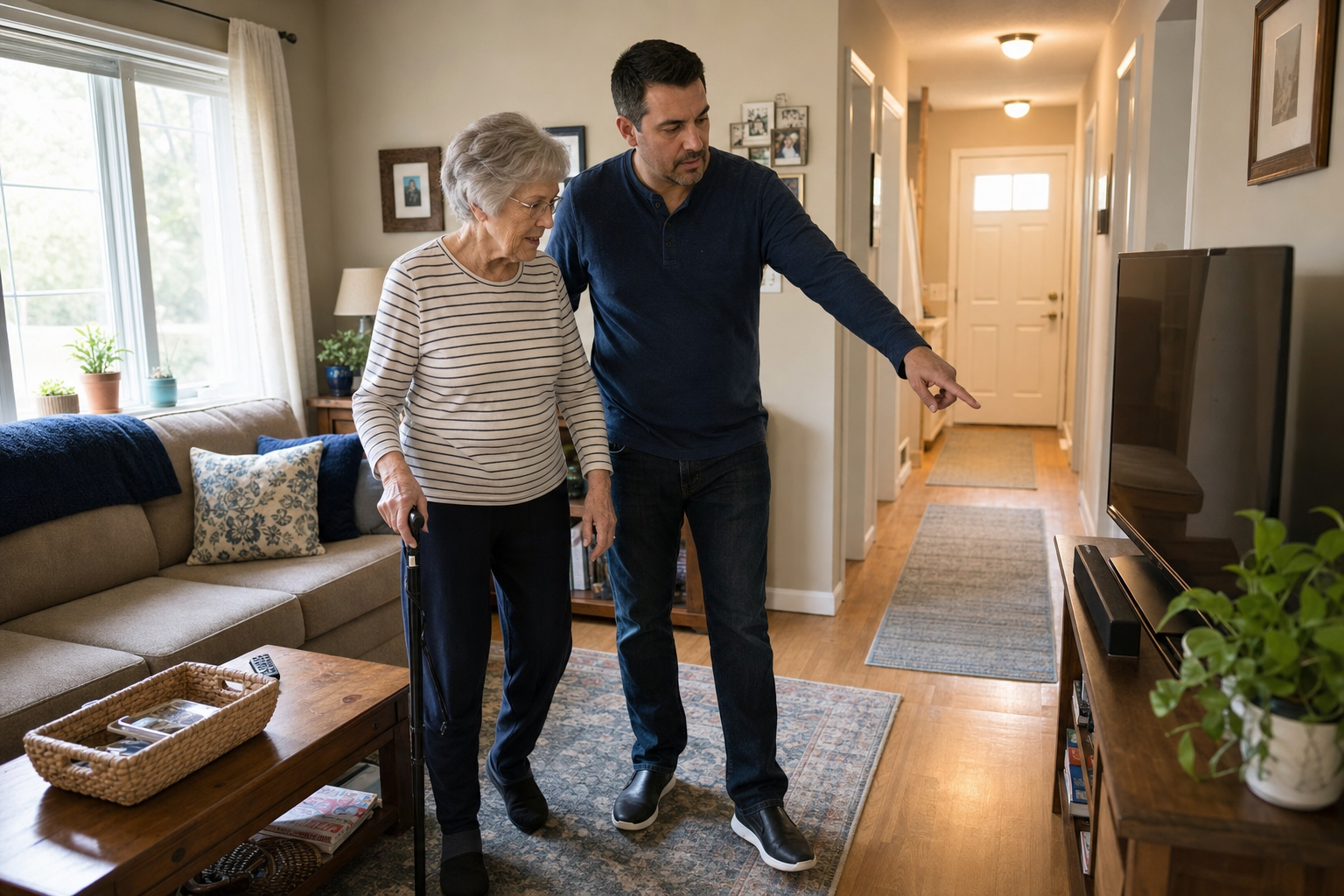
How Adult Children Can Assess The Home of Aging Parents starts with noticing how the home actually works in daily life. The goal is not to criticize a parent’s housekeeping, taste, independence, or habits. The goal is to see whether the home still supports safe movement, clear routines, and practical independence.
Small problems at home can create larger risks when vision changes, balance weakens, reaction time slows, or memory becomes less reliable. A careful home assessment helps adult children spot hazards before a fall, medication mistake, kitchen accident, or nighttime emergency turns into a crisis.
The best approach is calm and practical. Look at the home the way your parent uses it, not the way a showroom would display it. Ordinary, affordable changes often matter more than expensive remodeling.How Adult Children Can Assess The Home of Aging Parents For Walking Hazards
Walking through the home is the best starting point.
Begin at the front door and follow the same paths your parent uses every day. Notice whether movement feels simple or whether each room requires stepping around furniture, cords, baskets, loose rugs, pet items, or narrow spaces. A home can look familiar and still become difficult to move through safely.
Pay special attention to transitions. Doorways, hallway turns, raised thresholds, and changes from carpet to tile can create trouble when balance is less steady. The risk is often not one dramatic hazard. It is usually several small obstacles placed along the same walking path.
Look for these specific issues:
- Walk from the main entrance to the favorite chair and remove anything that narrows the path.
- Check whether extension cords cross any walking area and move them along walls.
- Lift the edges of throw rugs to see whether they curl, slide, or catch a shoe.
- Open interior doors fully and confirm they do not block walking space.
- Watch whether furniture corners force your parent to turn sideways.
- Clear stacked items from hallways, landings, and room entrances.
How Adult Children Can Assess The Home of Aging Parents should begin with movement because walking paths connect every other safety issue in the house.
Start With The Rooms Used Most Often
The most-used rooms deserve the closest attention.
Many adult children make the mistake of inspecting the whole house with equal concern. That can feel overwhelming and lead to arguments about closets, storage rooms, or belongings that have little effect on daily safety. Start instead with the rooms your parent uses every day.
Focus first on the bedroom, bathroom, kitchen, living room, and the route between them. These spaces usually contain the highest risk because they involve standing, bending, turning, reaching, bathing, cooking, dressing, and nighttime walking.
A practical room-by-room review should include:
- Stand where your parent gets out of bed and check whether both feet land on a clear surface.
- Sit in the favorite chair and confirm a lamp, phone, tissues, and remote are within easy reach.
- Walk from the bedroom to the bathroom in dim light and notice any confusing shadows.
- Open kitchen cabinets and check whether frequently used items are too high or too low.
- Remove decorative tables that crowd the path between seating and doorways.
- Place everyday items where they can be reached without a step stool.
How Adult Children Can Assess The Home of Aging Parents works best when the review follows real routines instead of an abstract room checklist.
Look Closely At Floors, Rugs, And Thresholds
Flooring problems are often easier to fix than people expect.
A floor does not need to be perfect to be safe, but it should be stable, visible, and predictable. Loose rugs, shiny surfaces, uneven transitions, and clutter near walking paths can become serious hazards when an older adult is tired, distracted, or moving quickly to answer the phone or reach the bathroom.
Do not judge flooring only by appearance. Test it with your feet. Notice whether rugs slide, carpet bunches, thresholds catch shoes, and small objects blend into the floor color. A dark object on a dark floor can be easy to miss.
Useful flooring checks include:
- Remove or secure small throw rugs in walking areas.
- Tape down or reroute cords along walls instead of across the open floor.
- Move shoes, pet toys, magazines, and baskets away from main paths.
- Check whether the floor mats near the doors curl at the corners.
- Add contrast near steps or level changes if the edge is hard to see.
- Keep laundry baskets out of hallways and bedroom walkways.
For more detailed walking-surface planning, see Flooring Safety For Seniors.
Check Bathroom Movement, Not Just Bathroom Fixtures
Bathroom safety depends on movement, not just equipment.
A bathroom may already have a bath mat, towel bars, and a shower curtain, but that does not mean it is safe. The important question is how your parent enters, turns, bathes, reaches, dries off, dresses, and leaves the room. Many falls happen during ordinary transitions.
Watch for places where your parent must stand on one foot, twist, bend, reach behind, or step over a high tub wall. These movements become riskier when the floor is wet or when the person is hurrying. A bathroom assessment should be practical, private, and respectful.
Look for specific changes that reduce strain:
- Place soap, shampoo, and towels where they can be reached without bending.
- Use a stable non-slip bath mat outside the tub or shower.
- Remove loose rugs that slide on tile.
- Keep a night light near the bathroom route.
- Check whether the toilet paper holder can be reached without twisting.
- Make sure the bathroom door can open easily if help is ever needed.
How Adult Children Can Assess The Home of Aging Parents should include bathroom routines, as bathing and toileting involve wet surfaces, turning, and urgency.
Review Stairs, Steps, And Entry Points
Steps deserve special attention because they leave little room for error.
Many homes have small step hazards that families stop noticing. A single step into a garage, a raised front threshold, a short basement stairway, or uneven outdoor steps can become difficult when strength, balance, or vision changes. These areas should be checked in daylight and again in evening light.
Handrails matter, but so does the full approach to the steps. Look at lighting, landing space, door swing, weather exposure, shoes, packages, and whether your parent carries items while stepping up or down. A safe stair setup reduces multitasking.
Check these points carefully:
- Confirm that stairways have clear lighting from top to bottom.
- Remove objects stored on steps, even temporarily.
- Test whether handrails feel secure when weight is placed on them.
- Clear leaves, ice, mats, and loose items from outdoor steps.
- Place frequently used items so they do not need to be carried on stairs.
- Keep both top and bottom landings free of boxes and laundry.
For deeper stair-specific planning, see Stair Safety For Seniors.
Notice Lighting, Visibility, And Nighttime Routes
Poor lighting turns familiar rooms into confusing spaces.
Adult children should look at the home during the hours when problems are most likely. A house that seems safe at noon may be difficult at 2 a.m. when a parent is tired, moving slowly, or trying to reach the bathroom without fully waking. Shadows, glare, and dark hallways can all increase risk.
Do not assume more light is always the answer. The better goal is useful light in the right places. A bright lamp across the room may not help if the switch is hard to reach from the bed. Glare from a shiny floor can also make depth harder to judge. See Nighttime Safety For Seniors for more guidance.
Practical lighting improvements include:
- Put a lamp within reach of the bed and favorite chair.
- Add night lights along the bedroom-to-bathroom route.
- Replace burned-out bulbs immediately in stairways and halls.
- Open curtains during the day to reduce dark interior corners.
- Place light switches where they can be reached before entering a dark room.
- Reduce glare by repositioning lamps that shine directly into the eyes.
MedlinePlus offers practical fall-prevention guidance for older adults at home:
Senior Fall Prevention
Assess Kitchen Safety And Daily Routines
Kitchen safety often reveals changes before other rooms do.
A parent may still hold a good conversation while quietly struggling with cooking, food storage, bending, lifting, timing, or cleanup. The kitchen requires memory, balance, vision, grip strength, and judgment. That makes it one of the most useful rooms to review.
Look for signs that daily routines are becoming too complicated. Burned pans, expired food, crowded counters, unused appliances, or frequently dropped items may show that the kitchen needs simplification. This does not have to mean taking cooking away. It may mean making the safest habits easier.
Check the kitchen in practical ways:
- Move everyday dishes to shelves between shoulder and waist height.
- Remove rarely used appliances from crowded counters.
- Store heavy pots where they can be lifted without bending deeply.
- Clear the area around the stove of towels, bags, and paper.
- Check whether food labels and expiration dates are easy to read.
- Keep the floor clear of pet bowls, mats, and step stools.
How Adult Children Can Assess The Home of Aging Parents includes noticing when once-easy routines now require too much effort, memory, or reaching.
Turn The Assessment Into Practical Changes
A useful assessment ends with small changes that actually get done.
The goal is not to create a perfect house. The goal is to reduce the most likely risks first. Adult children should prioritize changes that improve daily movement, reduce falls, simplify routines, and make help easier to reach. Low-cost action is better than a long list nobody completes.
Start with the fixes that are inexpensive and unlikely to cause conflict. Clear pathways, improve lighting, move everyday items, reduce clutter near walking routes, and remove unstable rugs. Then discuss larger changes only when they are truly needed.
A practical action plan can include:
- Fix the top three hazards first, rather than arguing about the whole house.
- Take photos of risky areas so changes can be compared later.
- Move one piece of furniture at a time and see whether movement improves.
- Replace weak bulbs and add night lights before buying larger equipment.
- Keep a written list of agreed changes in one visible place.
- Review the home again after any fall, illness, or noticeable change in mobility.
Aging in place and fall prevention are not separate projects. The safer the daily layout becomes, the easier it is for an older adult to remain at home with less strain on the family. An Aging in Place Checklist is most useful when it turns observations into specific household changes.
For broader home-safety planning, see Home Safety For Seniors.
© 2026 Mark Fomenko. All rights reserved.
AgingInPlaceResource.com
Privacy Policy | Terms of Use | Disclaimer | Contact | Newsletter
Recent Articles


-
Aging In Place Resource Library
Sep 04, 26 08:30 AM
Aging In Place Resource Library -
Aging in Place Resource Newsletter
Aug 30, 26 11:16 AM
Aging in Place Resource Newsletter -
Aging in Place Resource: Simple Strategies for Living Safely at Home
Jul 28, 26 12:43 PM
 Aging in Place Resource provides practical guidance for aging in place. Learn how to live safely and independently at home with strategies for home safety, caregiving, planning, and long-term support.