Fall Prevention During Nighttime Bathroom Trips
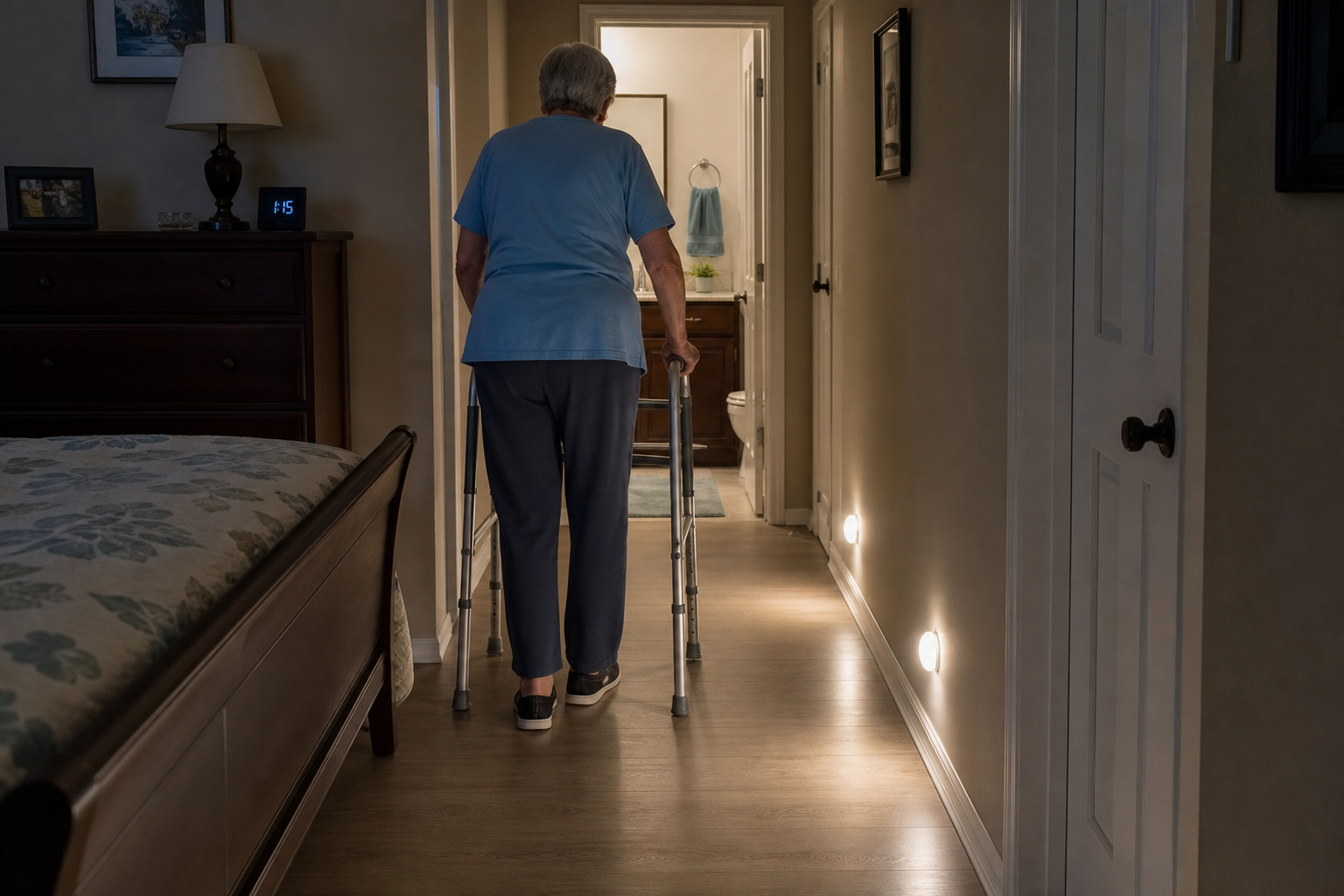
Fall Prevention During Nighttime Bathroom Trips is an important part of aging in place safely. Many falls occur not during busy daytime activities but during routine nighttime trips between the bed and bathroom.
Nighttime creates several challenges. Rooms are dark, people are tired, balance may be reduced, and medications can contribute to dizziness or confusion. Even familiar pathways can become hazardous when visibility is poor and judgment is affected by sleepiness.
Fortunately, many nighttime falls can be reduced through simple adjustments. Better lighting, clearer walking paths, safer movement habits, and a predictable nighttime routine often provide significant benefits without requiring major expense.
Why Nighttime Bathroom Trips Create Fall Risk
The period between waking up and reaching the bathroom often combines several risk factors at once.
Many people:
- Wake suddenly
- Stand too quickly
- Walk before fully alert
- Move through dark rooms
- Rush because of urinary urgency
- Navigate around furniture or pets
Blood pressure may temporarily drop when standing. Legs may feel stiff. Balance can be less reliable than it is during the day.
Nighttime urgency can also encourage risky behavior. A person who feels they need to reach the bathroom quickly may skip using a walker, avoid turning on lights, or attempt to move faster than is safe.
Fall Prevention During Nighttime Bathroom Trips begins with recognizing that nighttime movement is fundamentally different from daytime movement.
Creating A Safer Path Between Bed And Bathroom
The walking route from the bed to the bathroom should be simple, direct, and predictable.
Many nighttime falls occur in homes that feel perfectly safe during the day. The problem is not always balance or mobility. Often it is a combination of darkness, fatigue, and an obstacle that has gradually become part of the room.
Walk the route during daylight and look for things that could interfere with a tired person's feet or mobility aid, including:
- Small tables
- Electrical cords
- Pet toys
- Shoes
- Laundry baskets
- Decorative items
- Furniture that narrows the walking path
Some hazards develop slowly. A chair may be moved into a hallway and remain there for months. Boxes may be placed along a wall temporarily and gradually become permanent. A pile of clothing that seems harmless during the day can become difficult to see at two o'clock in the morning.
Pay particular attention to areas where the walking path narrows or requires turning. These locations often become more difficult to navigate when visibility is limited.
If possible:
- Remove unnecessary obstacles
- Create a wider walking path
- Keep floors clear
- Avoid storing items along the route
- Make sure mobility aids can pass through comfortably
Many falls occur not because someone cannot walk, but because they catch a foot, walker, or cane on an object that should not have been there in the first place.
Fall Prevention During Nighttime Bathroom Trips often begins with identifying household obstacles that have quietly become part of the normal environment.
How To Prevent Falls In The Home
Improving Lighting Without Creating Glare
Good lighting reduces fall risk, but lighting should be practical rather than overwhelming.
Sudden bright light can be uncomfortable and disorienting when someone has just awakened.
Useful options include:
- Motion-activated night lights
- Low-level hallway lighting
- Plug-in pathway lights
- Small bedside lamps
- Illuminated bathroom night lights
The goal is visibility, not brightness.
Night lights should illuminate:
- Bedside areas
- Hallways
- Doorways
- Bathroom entrances
Light should clearly define the walking path while minimizing harsh shadows.
Many older adults discover they can navigate much more confidently when they can see floor surfaces and furniture edges clearly.
Standing Up Safely Before Walking
Some falls occur before the bathroom trip even begins.
An older adult may wake suddenly, sit up, stand immediately, and begin walking before they are fully awake. A few seconds later they may feel dizzy or unsteady and grab for nearby furniture, a wall, or a doorframe.
This tendency is particularly common during nighttime bathroom trips because people are often focused on reaching the bathroom rather than paying attention to how they feel when they first stand up.
Taking a moment to sit on the edge of the bed before standing may reduce the likelihood of dizziness. After standing, it may also help to pause briefly before beginning to walk.
People who use walkers, canes, or other mobility aids should keep them within easy reach of the bed.
One common mistake is leaving a walker several feet away. Reaching it often requires unsupported steps at exactly the time balance may be least reliable.
Transfer Safety And Aging In Place
Managing Urgency Without Rushing
Urinary urgency contributes to many nighttime falls.
The need to reach the bathroom quickly can cause people to make decisions they would not make during the day.
Common examples include:
- Moving faster than usual
- Leaving a walker or cane behind
- Skipping the light switch
- Taking shortcuts through cluttered areas
- Attempting to stand too quickly after waking
Many falls occur not because a person cannot walk safely, but because urgency encourages them to abandon the habits that normally help them remain safe.
A person may tell themselves they will only be gone for a minute. That minute is often enough for a fall to occur.
Some practical strategies may help reduce rushing:
- Use the bathroom before going to bed
- Limit excessive evening fluids when appropriate
- Keep mobility aids within easy reach
- Keep pathways clear and well lit
- Allow a few moments to sit on the edge of the bed before standing
In some situations, a bedside commode may be worth considering. It is not necessary for everyone, but it can reduce walking distance when balance problems, weakness, dizziness, or mobility limitations make longer nighttime trips increasingly difficult.
Using a bedside commode is often viewed as a loss of independence. In reality, it may help someone remain safely at home longer by reducing the risk associated with repeated nighttime trips across the house.
The goal is not eliminating movement. The goal is reducing unnecessary risk while preserving independence whenever possible.
Using A Bedside Commode Safely At Home
Flooring And Footwear Considerations
Floor surfaces can become surprisingly hazardous during nighttime bathroom trips.
A rug that never causes problems during the day may become a tripping hazard when someone is tired, moving in dim light, or shuffling rather than taking full steps.
Pay particular attention to:
- Loose throw rugs
- Curled rug edges
- Slippery flooring
- Uneven transitions between rooms
- Thresholds at bathroom entrances
- Recently waxed or highly polished surfaces
Many older adults develop shorter walking strides at night. A foot that barely clears the floor can easily catch on a rug edge or raised transition.
Removing loose throw rugs is often one of the simplest and most effective safety improvements.
Footwear also plays a role.
Some people routinely make nighttime bathroom trips wearing:
- Loose slippers
- Socks only
- Bare feet
- Shoes with worn-out soles
Others leave their footwear beside the bed but decide not to put it on because they expect to be gone for only a minute.
That minute is often when falls occur.
Safer choices generally include footwear with:
- Non-slip soles
- Good fit
- Stable heel support
- Easy on-and-off design
The goal is not finding perfect footwear. The goal is maintaining reliable traction while moving through the home when balance, visibility, and alertness may be reduced.
Safe Shoe Choices For Seniors At Home
Fall Prevention During Nighttime Bathroom Trips becomes easier when flooring is predictable and footwear provides stable traction every time a person gets out of bed.
Medication And Sleep-Related Factors
Some people notice that nighttime movement feels very different after starting a new medication or changing a dosage.
A person who walks confidently during the day may feel unsteady when getting out of bed at two in the morning. Others may experience dizziness, grogginess, confusion, or a brief loss of balance when standing up after sleeping.
Medications that affect alertness, blood pressure, sleep, anxiety, pain, or bladder function can sometimes contribute to these problems.
Pay attention to patterns such as:
- Increased unsteadiness during nighttime bathroom trips
- New episodes of dizziness when standing
- Near-falls that occur shortly after getting out of bed
- Difficulty becoming fully alert after waking
- Greater reliance on walls, furniture, or doorframes for support
These changes often develop gradually and may be mistaken for normal aging.
If nighttime falls, near-falls, or dizziness become more common after a medication change, the timing may be worth noting. A simple record of when symptoms occur can sometimes reveal patterns that would otherwise be easy to miss.
For additional information about fall risks and contributing factors, see the National Institute on Aging:
https://www.nia.nih.gov/health/falls-and-falls-prevention
Medication Side Effects And Fall Risk
Fall Prevention During Nighttime Bathroom Trips For Caregivers
Family caregivers often notice nighttime fall hazards that the person living in the home no longer recognizes.
An adult child visiting a parent may discover that the route from the bedroom to the bathroom has gradually become less safe. A chair may have been moved into the hallway. A stack of magazines may now sit beside the bed. A night light that once illuminated the path may have burned out months ago.
Common observations include:
- Furniture gradually narrowing walking paths
- Burned-out night lights
- Mobility aids left in another room
- Difficulty standing from the bed
- Unsteady turning movements
- Clutter accumulating near the walking route
- Signs of near-falls, such as scuff marks on walls or furniture used for support
These changes often happen slowly. Because they develop over time, the person living in the home may stop noticing them.
A parent may insist that everything is fine while routinely steadying themselves against walls, door frames, or furniture during nighttime bathroom trips.
Simple caregiver tasks can help reduce risk:
- Check lighting along the entire route
- Replace burned-out bulbs and night lights
- Remove unnecessary furniture and clutter
- Verify that mobility aids remain easily accessible
- Look for signs that walking or transfers are becoming more difficult
- Observe a nighttime bathroom trip if safety concerns are increasing
Many nighttime fall risks can be reduced with small adjustments that cost little but make movement safer and more predictable.
Building Consistent Nighttime Habits
Fall Prevention During Nighttime Bathroom Trips is often less about equipment and more about routine.
Consistent habits reduce uncertainty and encourage safer movement.
Examples include:
- Using the same route every night
- Turning on lights before walking
- Pausing before standing
- Wearing stable footwear
- Keeping pathways clear
- Using mobility aids consistently
These habits may seem minor individually, but their effects accumulate over time.
Most nighttime falls are not caused by dramatic accidents. They occur during ordinary activities carried out when a person is tired, distracted, rushing, or unable to see clearly.
A practical approach focuses on making nighttime movement predictable. Clear pathways, adequate lighting, stable footing, and slower movement patterns can help reduce risk while allowing people to remain independent in their own homes for as long as possible.
© 2026 Mark Fomenko. All rights reserved.
AgingInPlaceResource.com
Privacy Policy | Terms of Use | Disclaimer | Contact | Newsletter
Recent Articles


-
Aging In Place Resource Library
Sep 04, 26 08:30 AM
Aging In Place Resource Library -
Aging in Place Resource Newsletter
Aug 30, 26 11:16 AM
Aging in Place Resource Newsletter -
Aging in Place Resource: Simple Strategies for Living Safely at Home
Jul 28, 26 12:43 PM
 Aging in Place Resource provides practical guidance for aging in place. Learn how to live safely and independently at home with strategies for home safety, caregiving, planning, and long-term support.