Senior Vision Changes And Home Safety
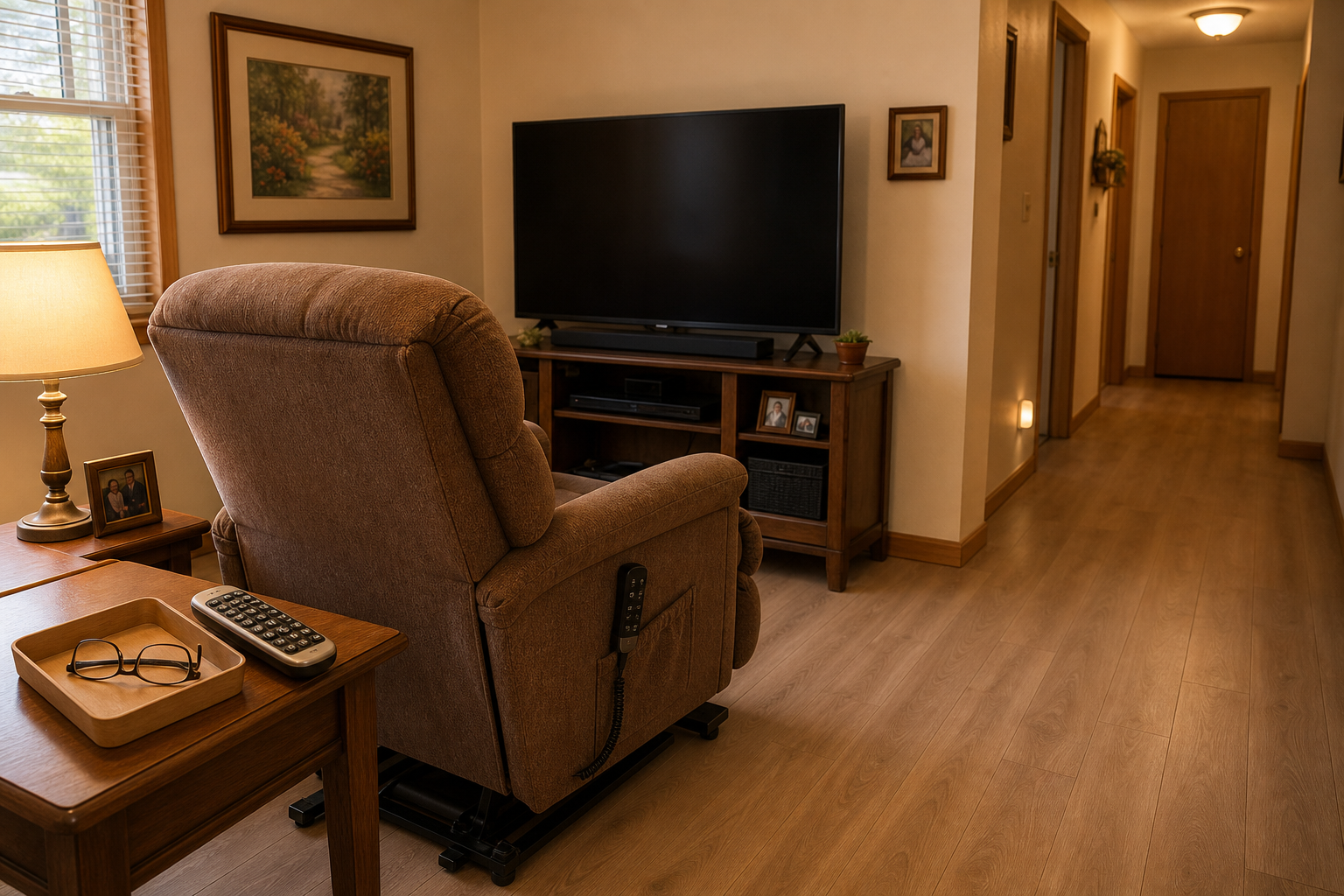
Senior Vision Changes And Home Safety matters because small changes in eyesight can turn ordinary rooms into confusing, risky spaces. A step edge, dark hallway, shiny floor, medicine label, or low-contrast chair can become harder to judge before anyone realizes the home itself needs adjustment.
The goal is not to treat vision problems as a loss of independence. The goal is to make the home easier to read. Better lighting, stronger contrast, simpler pathways, and smarter placement of everyday items can help older adults move with more confidence while keeping changes affordable and practical.
Senior Vision Changes And Home Safety Starts With Safer Movement
Senior Vision Changes And Home Safety begins with how a person moves through the home every day.
Vision affects balance, depth judgment, and the ability to notice obstacles before reaching them. When eyesight becomes less sharp, a cluttered pathway or dim corner can create hesitation, missteps, or sudden reaching. The risk is often greatest in familiar spaces because people assume they know where everything is.
A safer movement pattern starts with reducing visual surprises.
Useful first changes include:
- Remove low objects from walking paths.
- Keep chair legs and small tables out of narrow routes.
- Move laundry baskets away from hallways and bedroom doors.
- Keep frequently used items at waist to shoulder height.
- Use steady lamps instead of relying on one overhead light.
- Check each room from the doorway to see what blends into the background.
Senior Vision Changes And Home Safety is especially important where movement happens automatically, such as getting up from a chair, turning toward a hallway, or walking to the bathroom at night.
Improve Lighting Where Vision Changes Create Confusion
Lighting should make the room easier to understand, not just brighter.
Many homes have uneven lighting. One corner may be bright while another stays shadowed. For someone with vision changes, that contrast can make a room harder to judge. Glare from windows, glossy floors, or exposed bulbs can also make details disappear.
Start with the places where decisions are made: doorways, turns, stairs, medication areas, and seating areas. A person should be able to see where to step, where to reach, and where the next support point is located.
Practical lighting changes include:
- Add plug-in night lights along the route to the bathroom.
- Place a lamp near the favorite chair and the bed.
- Use lampshades that soften exposed bulbs.
- Keep window blinds adjusted to reduce harsh glare.
- Replace burned-out bulbs promptly.
- Use consistent bulb brightness in connected spaces.
Lighting does not need to be expensive. The best improvements are often small, targeted, and placed where they support real movement.
Home Lighting Safety For Seniors
Use Contrast To Make Edges And Objects Easier To See
Contrast helps the eye separate one surface from another.
When walls, floors, furniture, and rugs are similar in color, the room may look calmer but become harder to navigate. A beige chair on beige carpet near a beige wall can be easy to miss. The same problem can happen with white grab areas, pale countertops, light switch plates, or stair edges.
Senior Vision Changes and Home Safety improve when important objects stand out clearly from their surroundings.
Useful contrast changes include:
- Place a darker chair against a lighter wall.
- Use a contrasting placemat under dishes.
- Add visible tape or edging to stair tread fronts.
- Choose towels that contrast with bathroom walls.
- Use a dark tray for light-colored pills or papers.
- Put a contrasting strip near thresholds that are hard to see.
Contrast should not create visual clutter. The goal is to make the important things easier to identify quickly. A few clear visual markers are better than a room full of busy patterns.
Decluttering For Senior Safety
Reduce Glare On Floors, Tables, And Windows
Glare can hide hazards even when the room seems well-lit.
Shiny floors, glass tables, polished countertops, and bright windows can create reflections that make depth and edges harder to judge. This is especially risky when a person is walking from a bright area into a darker one or turning near a reflective surface.
A practical glare check can be done at different times of day. Morning sun, afternoon sun, and nighttime lamps may create different problems in the same room.
Simple glare-reduction steps include:
- Use curtains or blinds to soften direct sunlight.
- Move lamps so bulbs do not shine directly into the eyes.
- Replace glossy table coverings with matte surfaces.
- Remove glass-top tables from tight walking areas.
- Use low-sheen floor products instead of high-gloss finishes.
- Position reading lamps beside the chair, not directly in front of the face.
Senior Vision Changes And Home Safety often improves when light becomes more even and less harsh. A room does not need to look dim. It needs to be readable without painful brightness or confusing reflections.
Make Floors Easier To Read And Safer To Walk On
Floors should show where the feet are going.
Vision changes can make patterns, shadows, and uneven surfaces harder to interpret. A dark rug on a dark floor may disappear. A busy patterned rug can make the floor look uneven. A threshold strip may look like a step when it is flat, or look flat when it is raised.
The safest floor is not always the newest floor. It is the floor that is clear, stable, and visually understandable.
Practical floor changes include:
- Remove small loose rugs from main walking paths.
- Secure any remaining rugs with non-slip backing.
- Keep cords away from walking routes.
- Use plain floor mats instead of busy patterns.
- Mark raised thresholds with visible contrast.
- Keep shoes, bags, and pet items out of traffic areas.
Senior Vision Changes And Home Safety depends heavily on predictable walking surfaces. A person should not have to study the floor while moving across the room.
Make Medication Areas Easier To See And Use
Medication mistakes can happen when labels, colors, and small print become harder to read.
A safe medication area needs strong light, a clear surface, and a simple routine. The kitchen counter, dining table, or bedroom dresser can work if the area is uncluttered and well lit. What matters most is that the person can see the label, identify the container, and avoid mixing items together.
Helpful setup changes include:
- Keep medicines in one consistent location.
- Use a lamp near the medication area.
- Place pills on a plain, contrasting surface.
- Use large-print labels when available.
- Separate morning and evening items clearly.
- Remove expired or discontinued bottles from the area.
Small print should not be the only safeguard. If two bottles look similar, they should not sit side by side without a clear system. The same applies to eye drops, ointments, supplements, and over-the-counter medicines.
Improve Nighttime Routes Before A Fall Happens
Nighttime movement deserves special attention because vision has less information to work with.
A person who can move safely in daylight may still struggle when waking from sleep. The eyes need time to adjust. The person may be tired, hurried, or slightly disoriented. A dark room, low furniture, or an invisible slipper on the floor can create a serious problem.
A safer nighttime route should be simple enough to follow without turning on every light in the house.
Useful changes include:
- Place a touch lamp within easy reach of the bed.
- Keep eyeglasses in the same bedside location.
- Clear the path from bed to bathroom every evening.
- Use night lights at floor level and doorway level.
- Keep slippers beside the bed, not in the walking path.
- Avoid dark bedding or rugs that hide dropped items.
Senior Vision Changes And Home Safety is not only about daytime convenience. Nighttime safety often determines whether a person can continue living at home with less worry.
Keep Daily Items Visible, Reachable, And Predictable
Predictable placement reduces searching, bending, and risky reaching.
When vision changes, misplaced items create more than inconvenience. Looking for glasses, keys, remote controls, hearing aids, mail, or medicine can lead to rushed movement and unnecessary bending. The solution is not to buy more storage. The first step is to make the most-used items easier to find.
A practical setup should match the person’s actual habits. If the favorite chair is where bills are opened, then that area needs a small, clear system. If the kitchen table is where medication is handled, that surface needs better light and less clutter.
Good placement choices include:
- Keep glasses in one consistent tray.
- Use a bright container for remote controls.
- Store keys on a visible hook near the door.
- Place commonly used kitchen items on easy shelves.
- Keep a flashlight in the bedroom and near the main exit.
- Remove decorative objects from surfaces used for daily tasks.
Senior Vision Changes And Home Safety works best when the home becomes simpler to interpret. The fewer unnecessary visual decisions a person has to make, the safer ordinary movement becomes.
Vision changes connect directly to aging in place and fall prevention because the home must remain easy to understand at a glance. The Aging in Place Checklist can help families notice these small risks before they become larger problems. Clear paths, useful light, and predictable placement support independence without turning the home into a medical space.
© 2026 Mark Fomenko. All rights reserved.
AgingInPlaceResource.com
Privacy Policy | Terms of Use | Disclaimer | Contact | Newsletter
Recent Articles


-
Aging In Place Resource Library
Sep 04, 26 08:30 AM
Aging In Place Resource Library -
Aging in Place Resource Newsletter
Aug 30, 26 11:16 AM
Aging in Place Resource Newsletter -
Aging in Place Resource: Simple Strategies for Living Safely at Home
Jul 28, 26 12:43 PM
 Aging in Place Resource provides practical guidance for aging in place. Learn how to live safely and independently at home with strategies for home safety, caregiving, planning, and long-term support.