How To Prepare For Cognitive Decline
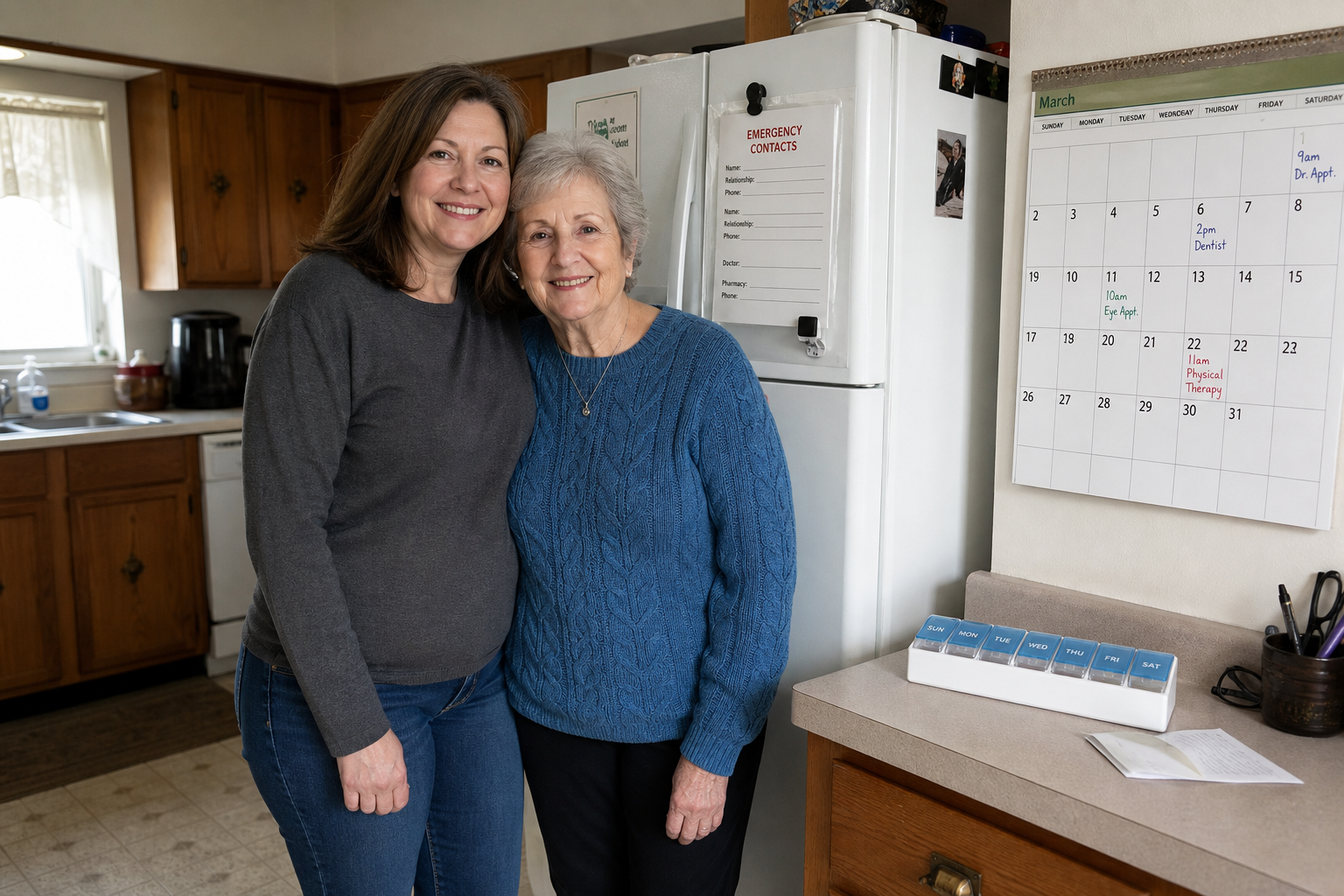
Learning How To Prepare For Cognitive Decline is a topic many families avoid until memory problems begin affecting daily life. Unfortunately, waiting until confusion, medication mistakes, financial problems, or safety concerns appear often limits available options and increases stress for everyone involved.
Cognitive decline can develop gradually. Adult children may notice repeated questions, forgotten appointments, unpaid bills, misplaced items, poor judgment, or increasing difficulty managing routine tasks. Sometimes the changes are subtle enough that family members dismiss them for months or even years.
Learning How To Prepare For Cognitive Decline before a crisis develops allows families to organize information, simplify routines, improve safety, and make important decisions while the older adult can still participate fully in the process.
This page focuses primarily on adult children and spouses caring for loved ones who may be experiencing cognitive decline.
Preparing for your own cognitive decline is important as well.
Many people purchase insurance hoping they never need to use it. Planning for possible cognitive decline serves a similar purpose.
None of us knows whether we will eventually experience significant memory loss, impaired judgment, or dementia. However, we can make certain preparations while we are still able to make decisions clearly and communicate our preferences.
As you approach your senior years, it is worth asking yourself a simple question:
How would I manage if I were experiencing cognitive decline?
Would important documents be easy to find?
Would someone know how to access critical information during an emergency?
Have you communicated your wishes regarding finances, healthcare decisions, transportation, and future living arrangements?
Taking these steps now may reduce confusion and stress for both you and your family later.
Why Early Planning Matters
One of the most important aspects of How To Prepare For Cognitive Decline is understanding that preparation is not the same as assuming the worst.
Planning ahead simply creates options.
Many families postpone discussions because no major problem exists yet. Unfortunately, cognitive decline often becomes obvious only after something goes wrong.
Examples include:
- Medication errors
- Missed medical appointments
- Financial mistakes
- Getting lost while driving
- Falls caused by poor judgment
- Difficulty preparing meals
- Confusion during emergencies
Addressing these issues before they become emergencies usually creates less conflict than trying to solve them during a crisis.
Pay attention to early warning signs such as:
- Increasing forgetfulness
- Repeated stories or questions
- Difficulty following conversations
- Trouble managing finances
- Missed medications
- Changes in personal hygiene
- Poor decision-making
- Increased confusion during stressful situations
Early planning allows families to adapt gradually instead of reacting under pressure.
How To Prepare For Cognitive Decline Through Organization
A surprising amount of stress during cognitive decline comes from disorganization rather than memory problems alone.
Important information should be easy to locate.
Consider organizing:
- Insurance information
- Medication lists
- Banking information
- Contact information
- Medical records
- Legal documents
- Property records
- Emergency contacts
Avoid storing important information in multiple locations without a clear system.
Many families discover that no one knows where essential documents are located until an emergency occurs. A hospitalization, fall, medication problem, or sudden change in health can quickly turn a routine day into a search for paperwork.
Create a simple system that trusted family members can understand.
A written list of:
- Doctors
- Medications
- Pharmacies
- Family contacts
- Financial institutions
can save significant time when problems arise.
Many parents manage their own affairs very well for many years. Over time, however, it can become increasingly difficult to keep track of information scattered throughout a home.
Important documents may be stored in drawers, file folders, envelopes, cabinets, and occasionally in places that made sense only to the person who put them there.
The problem is not that the information no longer exists. The problem is finding it when it is needed.
A hospitalization, fall, medication issue, or other emergency can quickly turn into a search for insurance information, medication lists, legal documents, account numbers, or emergency contacts.
Organizing important information before it becomes necessary can save time, reduce stress, and make it easier for family members to help when circumstances change.
As cognitive decline progresses, organization becomes a form of preparation. Family members should not have to search an entire house to locate insurance policies, medication information, banking records, or emergency contacts.
The goal is not to create a perfect filing system. The goal is making sure important information can be found quickly by the people who may eventually need to use it.
How To Prepare For Cognitive Decline At Home
How To Prepare For Cognitive Decline often involves simplifying the home environment.
Complex environments require more memory, attention, and decision-making.
Look for opportunities to reduce confusion.
Examples include:
- Clearly labeling storage areas
- Keeping frequently used items in consistent locations
- Reducing unnecessary clutter
- Simplifying household routines
- Using large-print calendars
- Maintaining visible clocks
Consistency becomes increasingly important as cognitive abilities change.
When items are routinely moved, misplaced, or stored in multiple locations, confusion often increases. A person may remember owning an item but have difficulty remembering where it was placed. Family members sometimes respond by moving things repeatedly in an effort to help, which can unintentionally make the problem worse.
Pay particular attention to:
- Medication storage
- Keys
- Wallets
- Cell phones
- Glasses
- Hearing aids
Many families discover that items begin accumulating in unusual places. Medications may be stored in multiple rooms. Important papers may end up mixed with junk mail. A spare set of keys might be hidden so well that nobody can find them.
My father developed a habit of hiding items for safekeeping and then forgetting where he had put them. What seemed logical to him at the time often created confusion later. Family members would spend hours searching for objects that had been carefully stored in places nobody would think to look.
The goal is not creating a perfectly organized home. The goal is creating a predictable environment where important items are easy to locate and daily routines require less effort.
A predictable environment frequently works better than adding complicated reminder systems.
How To Cope With Dementia In A Parent
Financial And Legal Preparations Before They Become Necessary
Financial and legal planning can be uncomfortable, but delaying these conversations often creates greater problems later.
The best time to discuss future decisions is before decision-making abilities become impaired.
Topics worth discussing include:
- Durable powers of attorney
- Healthcare directives
- Banking access
- Bill payment systems
- Insurance coverage
- Estate planning
Many adult children discover that a parent handled finances independently for decades but never explained where accounts, passwords, policies, or records were kept.
That situation can create major difficulties if sudden illness or cognitive decline occurs.
The goal is not taking control prematurely.
The goal is ensuring that someone can step in if assistance becomes necessary.
Families should also discuss:
- Future living preferences
- Transportation plans
- Caregiving expectations
- Emergency decision-making
These conversations are usually easier before cognitive decline advances.
During my father's dementia, my sister handled the household finances because she was much more comfortable balancing checkbooks than providing hands-on care.
One day she discovered a two-cent discrepancy in the checkbook balance and became determined to find the error. She spent hours reviewing records and repeatedly discussing the problem while sitting near my father.
To her, the issue was a bookkeeping problem that needed to be solved. To my father, who was severely demented and frequently hallucinating, the situation looked entirely different.
He could see that someone he trusted was upset and intensely focused on the bank accounts. He could not understand that the disagreement involved only two cents.
After listening to hours of discussion, he concluded that something must be seriously wrong with the family's finances and became increasingly anxious. Eventually he insisted that I take him to the bank immediately so the problem could be fixed.
Looking back, the missing two cents was never the real issue. The lesson was that people with dementia often react to emotional signals more than factual details. What appears to be a minor concern to a caregiver can be interpreted as a major crisis by someone who no longer understands the full context.
Families should be careful about prolonged arguments, visible frustration, and repeated discussions of financial, medical, or caregiving problems around a person with dementia. They may absorb the anxiety even when they cannot understand the actual issue being discussed.
Reducing Everyday Safety Risks
As cognitive abilities change, everyday household hazards can become more significant.
Many injuries and emergencies occur during ordinary daily activities rather than unusual accidents. A person who managed a home successfully for decades may begin overlooking small details that previously required little thought.
Common examples include:
- Forgetting a pan on the stove
- Leaving water running in a sink or bathtub
- Missing medications or taking duplicate doses
- Leaving doors unlocked
- Misplacing important items and becoming frustrated while searching for them
- Carrying multiple objects while trying to navigate stairs
- Wandering outside to perform a task and becoming disoriented
- Continuing to drive despite increasing confusion
These situations rarely appear all at once. More often, family members notice a growing pattern of small incidents.
An adult child might discover spoiled food in the refrigerator, unpaid bills mixed with junk mail, medications stored in several different locations, or household chores that are no longer being completed consistently.
Pay attention to changes in judgment as much as changes in memory.
Many people with mild cognitive decline can still remember names, conversations, and appointments while simultaneously making decisions that create safety concerns. A person may insist they are managing well while forgetting to turn off appliances, neglecting home maintenance, or taking unnecessary physical risks.
Simple changes often help.
Examples include:
- Automatic shut-off devices for plumbing
- Simplified medication systems
- Improved lighting throughout the home
- Reduced household clutter
- Clearly defined walking paths
- Consistent locations for frequently used items
- Written reminders for important tasks
- Predictable daily routines
Safety improvements do not always require major remodeling.
In many homes, reducing complexity provides more benefit than adding expensive equipment. A simpler, more predictable environment often reduces confusion and helps an older adult remain independent longer.
For additional information about cognitive changes and dementia, review resources available from the NIH.
https://www.nia.nih.gov/health/alzheimers-and-dementia
Building A Support System Before A Crisis
One practical aspect of How To Prepare For Cognitive Decline involves identifying future sources of help.
Before I became a caregiver for my parents, they relied on a kind retired neighbor who took them grocery shopping once a week and occasionally drove them to medical appointments. We were fortunate to have someone willing to help.
Looking back, those trips were more important than they appeared at the time. The arrangement allowed my parents to remain independent longer and provided support before a crisis developed.
Many families assume someone will step in when help becomes necessary.
Unfortunately, responsibilities often become unclear during emergencies.
Consider who might help with:
- Transportation
- Shopping
- Medical appointments
- Medication management
- Financial oversight
- Home maintenance
- Emergency response
Even limited assistance can reduce caregiver stress.
Family members should understand:
- Who lives nearby
- Who can respond quickly
- Who handles financial matters
- Who communicates with healthcare providers
- Who may provide temporary support
Waiting until exhaustion develops often creates conflict.
Early discussions help establish realistic expectations.
Preparing For Changes In Driving And Transportation
Driving often becomes one of the most sensitive issues associated with cognitive decline.
Many older adults view driving as closely connected to independence.
Unfortunately, declining judgment, slower reactions, confusion, or navigation problems can increase risk long before someone voluntarily stops driving.
Watch for signs such as:
- New dents or scrapes
- Getting lost
- Missing turns
- Difficulty following directions
- Traffic citations
- Family concerns
- Increased anxiety while driving
Transportation alternatives should be explored before driving becomes unsafe.
Options may include:
- Family transportation
- Community transportation programs
- Ride services
- Volunteer transportation networks
- Delivery services
Planning ahead helps reduce the feeling that independence disappears overnight.
Transportation Options After Driving
Maintaining Independence As Long As Possible
Many people assume that preparing for cognitive decline means preparing for dependence.
In reality, How To Prepare For Cognitive Decline often focuses on preserving independence longer.
Successful aging in place frequently depends on adaptation rather than perfection.
Helpful strategies include:
- Maintaining routines
- Using written reminders
- Simplifying decisions
- Organizing the home
- Reducing unnecessary tasks
- Accepting appropriate assistance
- Planning before emergencies occur
Families should recognize that needs may change gradually.
What works today may need adjustment later.
The goal is not predicting every future challenge.
The goal is creating a home environment, support system, and decision-making framework that can adapt as circumstances change.
© 2026 Mark Fomenko. All rights reserved.
AgingInPlaceResource.com
Privacy Policy | Terms of Use | Disclaimer | Contact | Newsletter
Recent Articles


-
Aging In Place Resource Library
Sep 04, 26 08:30 AM
Aging In Place Resource Library -
Aging in Place Resource Newsletter
Aug 30, 26 11:16 AM
Aging in Place Resource Newsletter -
Aging in Place Resource: Simple Strategies for Living Safely at Home
Jul 28, 26 12:43 PM
 Aging in Place Resource provides practical guidance for aging in place. Learn how to live safely and independently at home with strategies for home safety, caregiving, planning, and long-term support.