Fall Prevention For Seniors Living Alone
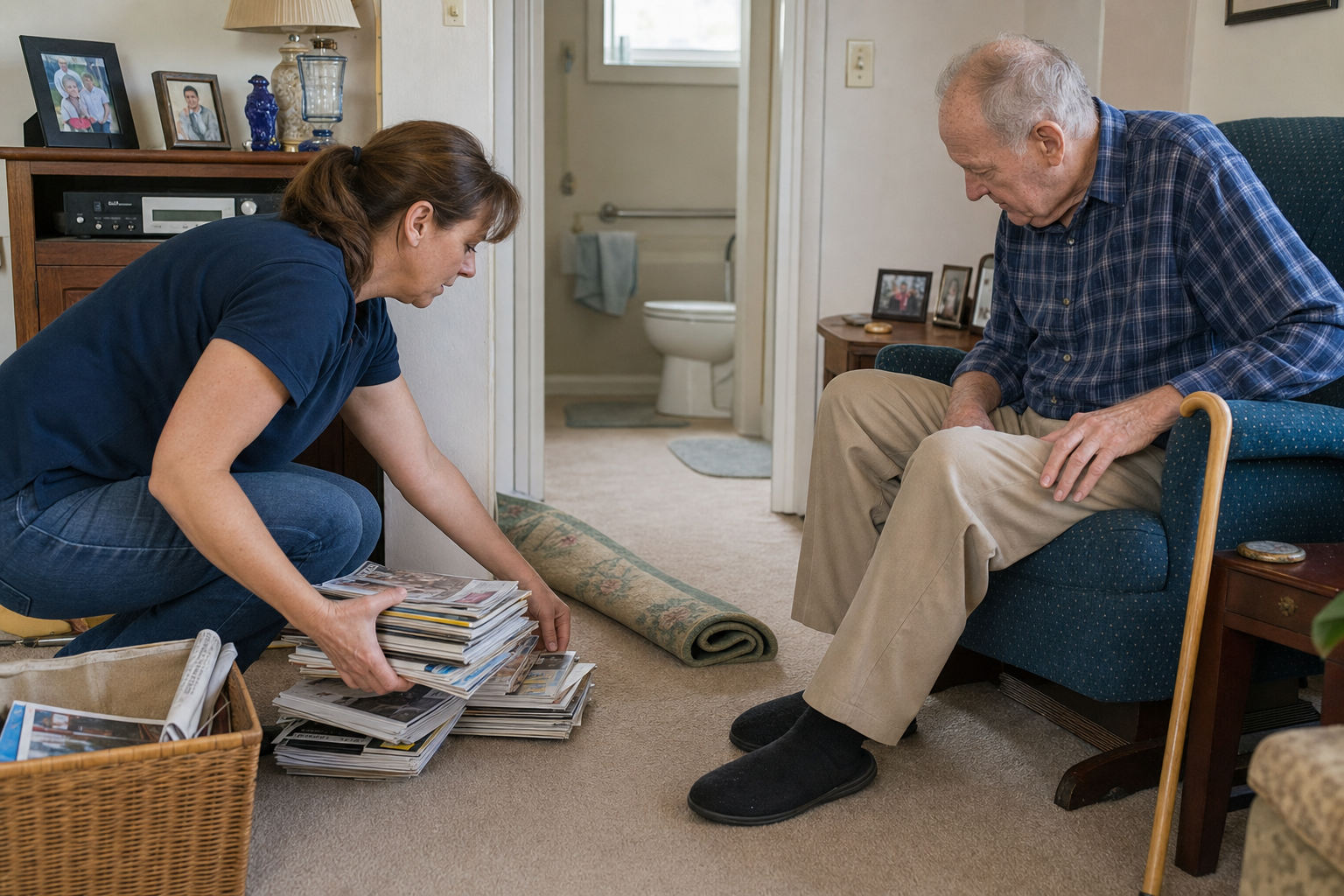
Fall Prevention For Seniors Living Alone becomes increasingly important as mobility, balance, vision, and strength change with age. Many older adults live independently and manage daily activities successfully, but a single fall can quickly disrupt that independence.
Living alone creates unique challenges. There may be no one nearby to notice changes in walking ability, increasing fatigue, medication side effects, or small accidents that signal growing fall risk. Problems often develop gradually. A person adapts without realizing how much more difficult certain activities have become.
Fortunately, many falls can be prevented through simple adjustments to routines and the home environment. Fall Prevention For Seniors Living Alone is usually less about expensive equipment and more about recognizing hazards, improving visibility, simplifying movement, and reducing unnecessary risks.
My elderly sister lives alone and took a fall that seemed minor at first. She cut her ear badly enough to visit the emergency room, where precautionary X-rays revealed a cracked vertebra in her neck. The injury required months in a neck brace. She still does not know exactly why she fell.
Understanding Fall Prevention For Seniors Living Alone
Fall Prevention For Seniors Living Alone starts with understanding how most falls actually occur. Contrary to popular belief, falls are rarely caused by dramatic accidents. They usually happen during ordinary daily activities that have been performed thousands of times before.
Common situations include:
- Standing up too quickly from a chair
- Turning suddenly while carrying something
- Walking through a dark hallway
- Tripping over clutter
- Rushing to answer the phone
- Losing balance while reaching overhead
- Navigating stairs while distracted
What makes falls difficult to predict is that they often result from several small factors occurring at the same time. A person may be slightly tired, moving through poor lighting, carrying an object, and dealing with mild balance problems. Any one of those factors might not cause a fall, but together they can create a situation where recovery becomes difficult.
Many older adults become accustomed to gradual changes in mobility. They may begin using furniture for support when walking, holding handrails more tightly, or avoiding certain activities that no longer feel comfortable. Because these changes often develop over months or years, they may seem normal rather than concerning.
Living alone can make the situation harder to recognize. There may be nobody nearby to notice that walking speed has slowed, balance has become less reliable, or everyday tasks require more effort than before. Adult children often discover these changes during visits. A parent who insists everything is fine may be taking longer to stand, hesitating before using stairs, or quietly avoiding parts of the home that feel unsafe.
Near-falls deserve attention as well. Catching yourself on a countertop, grabbing a doorway for support, stumbling without going down, or feeling unsteady during a turn are often early warning signs. While they may seem insignificant at the time, they frequently reveal weaknesses in balance, strength, vision, or home safety.
Many people focus only on falls that cause injury. In reality, the events that almost resulted in a fall are often just as important. They provide an opportunity to identify problems and make adjustments before a serious injury occurs.
Pay attention to situations that create hesitation, uncertainty, or instability. Those moments often reveal where future falls are most likely to occur and where simple changes can have the greatest impact.
Creating Clear Walking Paths Throughout The Home
Safe movement begins with clear pathways.
Many homes gradually accumulate obstacles. Small tables, decorative items, storage containers, pet supplies, electrical cords, and stacks of newspapers can narrow walking areas without anyone noticing. Because these changes occur slowly, people often adapt to them rather than recognizing them as hazards.
Walking paths should allow comfortable movement without squeezing between furniture or making awkward turns.
Look for:
- Narrow passages between rooms
- Furniture corners that catch feet
- Electrical cords crossing walkways
- Area rugs that slide or curl
- Storage boxes placed near traffic routes
- Pet beds positioned in walking areas
- Magazine racks and plant stands
- Shoes left near entrances
- Laundry baskets stored in hallways
The highest-risk areas are usually not entire rooms but the routes people use repeatedly throughout the day. These include the path from the bedroom to the bathroom, the route between the kitchen and dining area, and the walkway from a favorite chair to the television, telephone, or front door.
Many older adults begin unconsciously modifying how they move through their homes. They turn sideways to pass between pieces of furniture, step around obstacles they know are there, or use furniture for support while walking. These adjustments often become so routine that the hazards no longer seem obvious.
Adult children frequently notice these problems during visits. A home that appears neat and familiar may contain walking paths that have gradually become more difficult to navigate. A decorative table added years ago, several storage bins tucked against a wall, or accumulated possessions in unused rooms can slowly reduce available space.
Pets deserve special consideration. Even well-behaved animals can create unexpected hazards. Dogs and cats often move underfoot, especially around meal times. Pet toys, food bowls, and bedding can also create tripping hazards in frequently used areas. Sometimes my 50-pound black dog lies in the hallway at night. He usually moves as soon as he notices me, but in low light he can still become an obstacle.
A useful exercise is to walk through the home while carrying a laundry basket. The basket partially blocks the view of the floor and limits maneuverability, much like carrying groceries, folded laundry, or household supplies. Areas that suddenly feel awkward, cramped, or difficult to navigate often deserve attention.
Another helpful approach is to evaluate walking paths at night. Hallways and rooms that feel spacious during the day may feel much narrower when visibility is reduced and fatigue is greater.
The goal is not creating a perfectly empty home. Most people want their homes to remain comfortable and familiar. The goal is creating predictable walking routes with enough space to move safely, even when carrying objects, feeling tired, or navigating in low light.
Small changes often have a surprisingly large impact. Moving a chair a few inches, relocating a storage container, securing a rug, or rerouting an electrical cord may eliminate a hazard that has existed unnoticed for years.
How To Prevent Falls In The Home
Improving Lighting Where Falls Commonly Occur
Poor visibility contributes to many falls.
The problem is often not complete darkness. Instead, it is uneven lighting that creates shadows, hides obstacles, and makes changes in floor surfaces harder to see. As people age, they generally need more light to perform the same tasks comfortably and safely.
Pay particular attention to:
- Hallways
- Stairways
- Entryways
- Bathrooms
- Bedrooms
- Laundry areas
- Garages
- Exterior walkways
Nighttime bathroom trips deserve special consideration. Many falls occur when someone wakes up groggy, sits up quickly, and attempts to navigate dark rooms before becoming fully alert. The combination of poor lighting, sleepiness, and balance changes can create a significant risk.
Stairways are another common problem area. A staircase that seems adequately lit during the day may become difficult to navigate in the evening. Shadows on individual steps can make depth perception more difficult, particularly for older adults with vision changes.
Entryways often create challenges as well. Moving from bright sunlight into a darker interior space can temporarily reduce visibility while the eyes adjust. The opposite can happen when stepping from a dimly lit home into bright outdoor light.
Helpful improvements include:
- Nightlights in hallways
- Motion-activated lighting
- Easily accessible bedside lamps
- Brighter bulbs in frequently used rooms
- Light switches positioned near entrances
- Illuminated pathways to bathrooms
- Outdoor lighting near entrances and walkways
Lighting should be evaluated during the times it is actually used. A hallway that appears bright at noon may be surprisingly dark at midnight. Walking through the home after dark often reveals lighting problems that are easy to miss during the day.
Adult children frequently notice lighting issues during visits. Burned-out bulbs, dim lamps, and dark corners may seem insignificant individually but can create substantial fall hazards when combined with balance problems or reduced vision.
Clutter can also interact with poor lighting. Shoes left near a doorway, pet toys in a hallway, electrical cords along a wall, or laundry baskets near a bedroom entrance become much harder to notice when visibility is reduced.
Many older adults adapt without realizing it. They begin moving more slowly at night, avoiding certain rooms after dark, or memorizing pathways through the home. While these adaptations may help temporarily, improving visibility is usually a safer long-term solution.
Fortunately, lighting improvements are often among the least expensive fall-prevention measures available. A few strategically placed nightlights, brighter bulbs, or motion-activated fixtures can significantly improve visibility and make everyday movement safer throughout the home.
Home Lighting Safety For Seniors
Managing Fatigue And Daily Movement Habits
Many falls occur when people become tired.
Fatigue affects judgment, reaction time, balance, coordination, and walking mechanics. Tasks that feel easy in the morning may become noticeably more difficult later in the day.
Common examples include:
- Carrying groceries after a long outing
- Climbing stairs repeatedly
- Cleaning for extended periods
- Standing while preparing meals
- Working outdoors in hot weather
- Walking longer distances than usual
- Completing several errands in one trip
The connection between fatigue and falls is often overlooked because tiredness develops gradually. A person may begin the day feeling fine but become less steady after several hours of activity.
Simple tasks often require more effort than they once did. Carrying laundry, vacuuming, changing bed linens, unloading groceries, or working in the yard can leave older adults more exhausted than they realize. By the time balance begins to feel less reliable, fatigue may already be affecting judgment and coordination.
Many falls occur near the end of an activity rather than the beginning. A person finishes mowing the lawn, carries the final load of groceries into the house, or makes one last trip up the stairs before losing balance. The desire to finish a task often overrides the body's warning signs.
Hot weather can make the problem worse. Dehydration, heat, and fatigue often combine to increase dizziness and weakness. Activities that seem routine during cooler weather may become more difficult during the summer months.
Adult children frequently notice fatigue-related changes during visits. A parent may begin sitting more often between tasks, moving more slowly as the day progresses, or avoiding activities that once seemed easy. They may insist they are doing fine while obvious signs of exhaustion become visible to others.
Many older adults are proud of their independence and accustomed to pushing through discomfort. While determination can be beneficial, it does not eliminate physical limitations. Continuing an activity after becoming exhausted sometimes creates more risk than benefit.
Fall Prevention For Seniors Living Alone includes learning to recognize personal warning signs such as:
- Leg weakness
- Shortness of breath
- Increasing reliance on furniture for support
- Slower walking speed
- Difficulty concentrating
- Feeling unsteady when turning
- Needing frequent rest breaks
When these signs appear, stopping to rest is often the safest decision.
The goal is not reducing activity. Regular movement remains one of the best ways to maintain strength, mobility, and independence. The goal is matching activity levels to current physical abilities and recognizing when fatigue is increasing fall risk.
Many serious falls occur because someone attempts one more trip, one more chore, or one more task after becoming tired. A short rest break is often easier to recover from than a fall.
Everyday Habits That Reduce Fall Risk
Reducing Fall Risk During Transfers
Transfers deserve special attention because they combine movement, balance changes, and shifts in body position. Many older adults walk reasonably well once they get moving but are most vulnerable when changing positions.
Common transfers include:
- Getting out of bed
- Standing from a recliner
- Rising from a toilet
- Getting into or out of a vehicle
- Standing after prolonged sitting
- Getting up from a dining chair
- Standing after bending down to pick something up
Many people experience brief dizziness, weakness, or disorientation when standing quickly. Blood pressure can take a few moments to adjust, particularly after sleeping, sitting for long periods, or taking certain medications.
A safer approach is:
- Sit upright first.
- Pause briefly.
- Place both feet firmly on the floor.
- Stand slowly.
- Wait before walking.
This routine may seem unnecessary until balance becomes less reliable.
Recliners deserve particular attention. Many older adults spend several hours a day in the same chair. Deep, soft cushions can make standing more difficult because they require additional leg strength and balance. It is common to see someone rock forward several times before finally standing. Fatigue, arthritis, and weakness can make this movement increasingly difficult. Power recliners are far safer.
The bathroom is another common location for transfer-related falls. Standing from a toilet requires balance, leg strength, and coordination. Wet floors, cramped spaces, and rushing can make the situation worse. Many falls occur not while using the bathroom but while standing up afterward and attempting to walk immediately.
Bed transfers can become more difficult as strength and mobility decline. A person may wake during the night, sit up quickly, and begin walking before they are fully alert. Poor lighting and grogginess can combine with balance problems to create a dangerous situation.
Vehicle transfers also present challenges. Twisting while stepping into or out of a car requires coordination and balance. Uneven parking surfaces, curbs, gravel driveways, and bad weather can increase risk.
Adult children often notice transfer difficulties before they notice obvious walking problems. A parent may take longer to stand, push heavily on armrests, hesitate before taking the first step, or appear unsteady immediately after getting up. These small changes are often early signs that balance, strength, or mobility are declining.
Falls frequently occur during the first few steps after standing. The body is still adjusting, balance may not be fully established, and people often begin moving before they are ready. Slowing down for a few seconds can significantly reduce risk.
Transfer safety is not about moving less. It is about moving deliberately. A few extra seconds spent standing, stabilizing, and regaining balance can help prevent an injury that may take months to recover from.
Transfer Safety And Aging In Place
Medication Side Effects And Fall Risk
Medication changes sometimes affect balance, alertness, blood pressure, coordination, reaction time, and judgment.
In some cases the effects appear quickly. In others they develop gradually over days or weeks, making them easy to overlook.
Potential warning signs include:
- Dizziness
- Increased sleepiness
- Confusion
- Weakness
- Unsteady walking
- Feeling lightheaded after standing
- Slower reaction times
- Difficulty concentrating
- Increased need to hold onto furniture while walking
Many falls occur shortly after a medication change, dosage increase, or the addition of a new prescription. Medications used for blood pressure, sleep problems, anxiety, depression, pain management, and certain neurological conditions are among the most common contributors to balance and mobility problems.
The challenge is that older adults often adapt to these changes without fully recognizing them. Someone who feels slightly unsteady may begin walking more slowly, avoiding stairs, or using walls and furniture for support. Because these adjustments happen gradually, the connection to medication is not always obvious.
Adult children frequently notice changes during visits. A parent who previously moved confidently around the home may begin standing more cautiously, pausing before walking, shuffling their feet, or appearing uncertain when turning. They may complain of feeling tired, weak, or "not quite right" without identifying a specific cause.
Medication side effects can sometimes be mistaken for normal aging, worsening dementia, or general decline. Changes in alertness, balance, confusion, and behavior may appear gradually after a medication is started or adjusted. Because these symptoms often overlap with other age-related problems, the connection to medication is not always obvious.
Another common issue involves blood pressure changes. Some medications can cause a sudden drop in blood pressure when standing. A person may feel perfectly normal while sitting but become dizzy when getting out of bed, rising from a recliner, or standing after a meal. Those first few steps are often when a fall occurs.
Fall Prevention For Seniors Living Alone includes paying attention to changes that appear after medications are started, stopped, or adjusted. If new symptoms develop, it is worth considering whether a medication may be contributing to the problem.
A useful habit is to keep an updated list of medications and note any significant changes in mobility, balance, alertness, or behavior. Patterns that seem unrelated at first sometimes become obvious when viewed over time.
Even when medications are necessary, awareness of their effects can help reduce risk. Moving more deliberately, standing slowly, using appropriate mobility aids, and paying attention to new symptoms may prevent a serious fall before it happens.
Medication Side Effects And Fall Risk
For additional information, see the CDC fall prevention resources.
Preparing For Emergencies When Living Alone
Even the best Fall Prevention For Seniors Living Alone plan cannot eliminate every fall. The question is not whether accidents are possible. The question is how quickly help can be reached if something happens.
Many older adults assume they will simply call someone if they need assistance. The reality can be more complicated. A phone may be in another room. A fall may occur while carrying laundry, taking out trash, or making a nighttime trip to the bathroom. Even a minor injury can make it difficult to stand back up.
People who live alone should periodically ask themselves a simple question:
If I fell right now, how would I get help?
The answer should be practical and specific.
Consider:
- Carrying a phone throughout the day
- Keeping emergency contacts easy to find
- Establishing regular check-ins with family members
- Maintaining relationships with nearby neighbors
- Ensuring house numbers are clearly visible from the street
- Keeping entryways accessible for emergency responders
It is also worth considering how long someone might remain on the floor after a fall. Older adults sometimes underestimate how physically difficult it can be to get up without assistance. A fall that causes little injury can become a much larger problem if help is delayed for hours.
Adult children often discover gaps in emergency planning during routine visits. They may find phones left charging in distant rooms, emergency numbers written on scraps of paper, or no clear plan for contacting help during an emergency.
Preparation is not a sign of declining independence. In many cases, it is what allows independence to continue safely for longer.
Maintaining Independence While Living Alone
Many older adults living alone continue functioning well long after family members begin worrying about falls. The challenge is recognizing that fall risk often increases gradually rather than appearing overnight.
A person may begin using furniture for support when walking through the house. Stairs may start feeling more difficult. Getting up from a favorite chair may require several attempts. Grocery trips may become exhausting. These changes are easy to dismiss because they develop slowly.
Living alone also means there may be nobody present to notice the decline. Adult children often discover the situation during visits. They may notice bruises that cannot be fully explained, clutter accumulating in walking paths, unopened mail, or signs that certain rooms are no longer being used because they have become difficult to reach safely.
Fall Prevention For Seniors Living Alone requires occasional honest assessment. Questions worth asking include:
- Am I becoming less steady when walking?
- Have I fallen or nearly fallen during the past year?
- Do I avoid certain activities because I feel unsteady?
- Am I relying on walls or furniture for support?
- Are everyday tasks becoming more tiring?
The goal is not eliminating every risk. The goal is identifying problems before they lead to a serious injury.
Many people successfully remain in their homes for years by making small adjustments as their needs change. Improving lighting, clearing walking paths, addressing balance problems early, and adapting routines when necessary are often enough to maintain independence and reduce unnecessary risk.
Fall Prevention For Seniors Living Alone works best when prevention starts before the first major fall rather than after it.
© 2026 Mark Fomenko. All rights reserved.
AgingInPlaceResource.com
Privacy Policy | Terms of Use | Disclaimer | Contact | Newsletter
Recent Articles


-
Aging In Place Resource Library
Sep 04, 26 08:30 AM
Aging In Place Resource Library -
Aging in Place Resource Newsletter
Aug 30, 26 11:16 AM
Aging in Place Resource Newsletter -
Aging in Place Resource: Simple Strategies for Living Safely at Home
Jul 28, 26 12:43 PM
 Aging in Place Resource provides practical guidance for aging in place. Learn how to live safely and independently at home with strategies for home safety, caregiving, planning, and long-term support.