Dementia Safety Checklist For Home
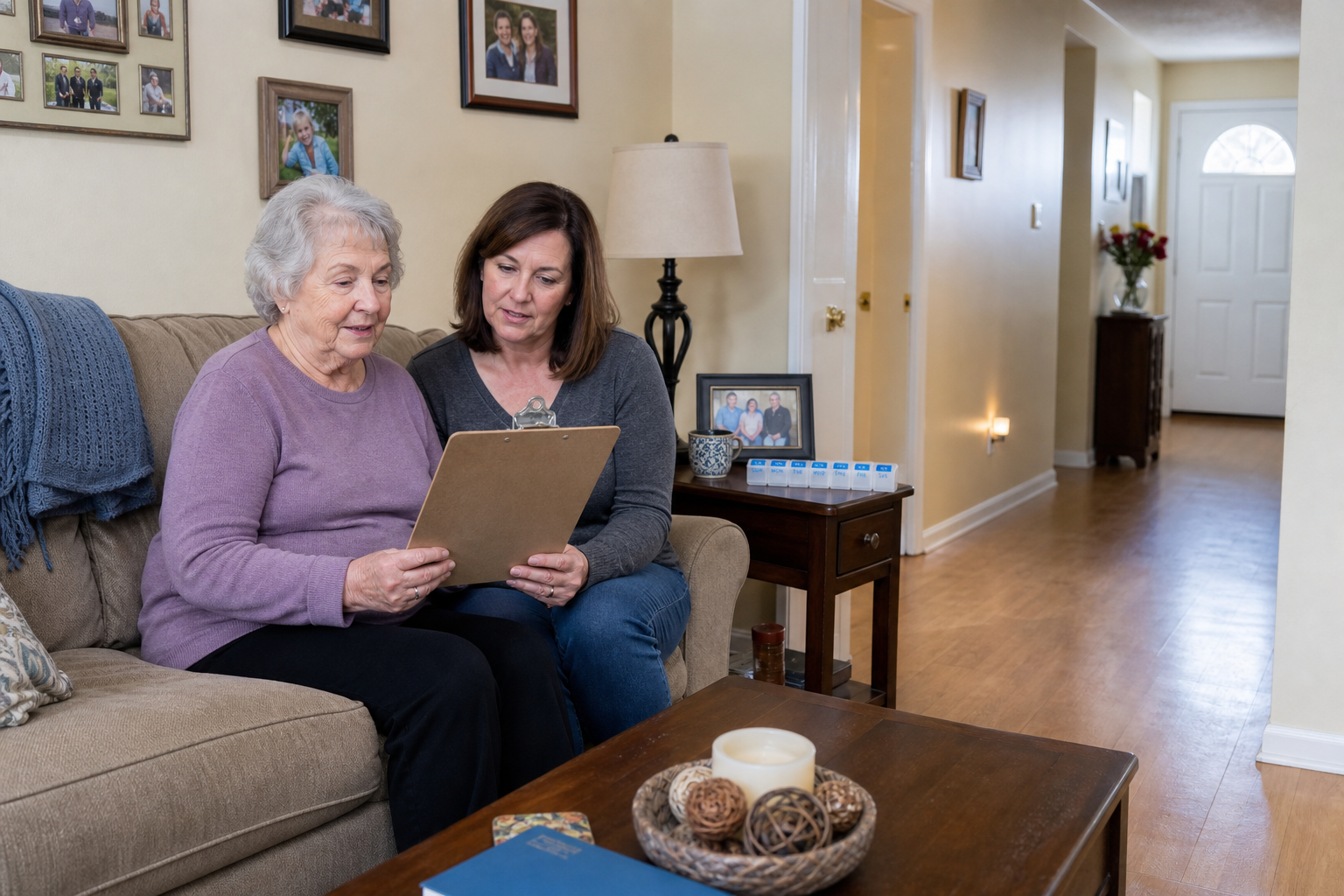
A Dementia Safety Checklist For Home often begins long before a family realizes how many small changes are needed. A person may still recognize familiar surroundings, prepare simple meals, and manage many daily routines, yet subtle changes in judgment, memory, and awareness can quietly increase the risk of injury. What appears to be an ordinary home can gradually become more difficult to navigate safely.
Many safety problems develop slowly. A forgotten pan on the stove, medications left in several rooms, unlocked doors, poor lighting, or cluttered walkways may not seem serious by themselves. Over time, however, these small issues can combine to create situations that become increasingly difficult for both the person living with dementia and the family members trying to help.
A practical Dementia Safety Checklist For Home focuses on reducing everyday hazards without making the home feel institutional. Most improvements are inexpensive, can be completed over a weekend, and help preserve independence while making caregiving more manageable.
Dementia Safety Checklist For Home Essentials
The purpose of a Dementia Safety Checklist For Home is not to eliminate every possible risk. That is rarely realistic. Instead, the goal is to identify common problems before they lead to injuries, wandering, medication mistakes, or emergencies.
Begin by walking through the home as though you are seeing it for the first time. Look for situations where memory problems or confusion could turn an ordinary activity into a dangerous one.
Pay particular attention to:
- Loose throw rugs
- Electrical cords across walking paths
- Poor lighting in hallways
- Frequently used items stored on high shelves
- Furniture that narrows walking areas
- Clutter near entrances and doorways
- Slippery bathroom floors
- Steps without sturdy handrails
Remember that dementia often affects judgment as much as memory. A person may not recognize hazards that once seemed obvious or may attempt activities that have quietly become unsafe.
Safety should support normal routines whenever possible rather than creating unnecessary restrictions.
Improve Walking Paths Throughout The Home
Falls remain one of the greatest concerns for older adults living with dementia. Confusion, impaired depth perception, and poor decision-making can make ordinary walking much more hazardous.
Clear pathways should remain consistent every day. Frequently moving furniture or decorative items may increase confusion.
Simple improvements include:
- Remove unnecessary furniture from narrow walkways.
- Keep frequently used rooms connected by wide, open paths.
- Secure loose carpeting.
- Coil or relocate electrical cords.
- Store shoes, bags, and packages away from walking areas.
- Keep pet toys off the floor.
- Avoid small decorative tables that become obstacles.
Pay attention to turning movements. Many falls occur while turning near beds, recliners, or dining chairs rather than while walking in a straight line.
A person carrying laundry or a snack may pay less attention to where they are stepping than they once did.
Make Lighting Predictable Day And Night
Vision changes and dementia often create a difficult combination. Shadows may be mistaken for objects. Poor contrast makes steps difficult to judge. Dim lighting increases confusion during nighttime bathroom trips.
Good lighting does not require expensive remodeling.
Focus on consistency by:
- Replacing burned-out bulbs immediately.
- Using brighter bulbs in hallways and bathrooms.
- Installing inexpensive night lights.
- Keeping light switches easy to find.
- Opening curtains during the day.
- Reducing glare from shiny floors.
Many families notice increased confusion near sunset or after dark. Better lighting cannot eliminate this entirely, but it often makes movement around the home easier and more predictable.
Nighttime trips deserve special attention because fatigue and disorientation often occur together.
Simplify The Kitchen Without Removing Independence
Many people with early dementia continue preparing meals safely with a few practical adjustments.
Rather than removing every opportunity to cook, simplify the kitchen so familiar tasks require fewer decisions and less searching. The goal is to support independence while quietly reducing the chance of mistakes.
Helpful changes include:
- Store everyday dishes, glasses, and utensils within easy reach.
- Keep frequently used foods together in consistent locations.
- Remove expired food during regular kitchen cleanups.
- Label cabinets and drawers with simple words or pictures.
- Unplug small appliances that are rarely used.
- Store sharp knives and other dangerous utensils securely when they are no longer needed for daily meal preparation.
- Reduce countertop clutter so work surfaces remain easy to use.
- Place a large clock and calendar where they are visible from the main kitchen work area.
Pay attention to small changes in routine as much as obvious mistakes. A person may begin leaving cabinet doors open, repeatedly searching for items that are in their usual places, forgetting ingredients, boiling water until the pan is nearly dry, or walking away while food is cooking. None of these incidents alone necessarily means the kitchen has become unsafe, but a pattern of increasing mistakes deserves attention.
These changes usually develop gradually rather than overnight. Reviewing kitchen safety every few weeks can help families recognize when additional supervision or further simplification has become appropriate.
Home safety should extend beyond the kitchen. Bathrooms present many of the same challenges involving judgment, balance, and routine, while also introducing wet surfaces and transfer hazards that require their own practical precautions.
Reduce Medication Mistakes And Daily Confusion
Medication problems are one of the most common reasons families begin questioning whether someone can continue living safely at home. Dementia affects memory, attention, and judgment. A person may honestly believe they have not taken their medication when they already have, or they may forget it entirely.
A Dementia Safety Checklist For Home should include one consistent medication routine instead of relying on memory alone.
Practical ways to reduce mistakes include:
- Use a weekly pill organizer that is filled by one responsible person.
- Keep medications in one location instead of several rooms.
- Avoid storing old prescriptions with current ones.
- Keep a written medication list nearby.
- Remove expired medications promptly.
- Check that medication bottles remain tightly closed.
- Watch for pills accumulating on tables or in pockets.
Observe daily habits rather than asking, "Did you take your medicine?" Many people with dementia answer confidently even when they cannot remember.
Instead, notice whether the pill organizer matches the day, whether medications are left untouched, or whether bottles appear to be opened repeatedly.
Medication changes can also affect balance, alertness, and walking ability. If a noticeable decline follows the addition of a new medication, discuss it with the prescribing physician rather than assuming it is simply the dementia progressing.
Medication Mistakes And Cognitive Decline
Prevent Wandering And Unsafe Exits
Wandering does not always mean someone intends to leave permanently. A person may believe they need to go to work, visit a relative who died years ago, pick up children who are now adults, or simply "go home" while already standing in their own living room.
These situations often occur during moments of confusion rather than deliberate decision-making.
A practical Dementia Safety Checklist For Home should include ways to make unexpected exits less likely without making the house feel like a secure facility.
Consider simple measures such as:
- Keep exterior doors locked according to local safety requirements.
- Place keys in one consistent location that caregivers can access.
- Install door chimes that quietly alert family members when a door opens.
- Keep walking paths outside free of tripping hazards if supervised outdoor activity is common.
- Make sure house numbers are clearly visible from the street for emergency responders.
- Keep recent photographs available in case someone leaves the home unexpectedly.
Many families also discover that regular walks, familiar routines, and meaningful daytime activities reduce restlessness that can contribute to wandering.
Wandering And Exit-Seeking In Dementia
Check For Changing Safety Needs Every Month
A Dementia Safety Checklist For Home is not something you complete once and put in a drawer. Dementia changes over time, often in small ways that are easy to overlook when you see someone every day.
Many families adjust to gradual decline without realizing how much has changed over the course of several months. A parent who safely managed meals six months ago may now forget ingredients, leave the refrigerator open, or become confused about how to use familiar appliances.
Schedule a brief safety review every month.
Walk through the home and ask practical questions such as:
- Are walking paths still clear?
- Has balance become less steady?
- Are medications being taken correctly?
- Is the person eating regular meals?
- Have any new falls or near-falls occurred?
- Is nighttime confusion becoming more common?
- Are bills, mail, or appointments being forgotten more often?
- Has driving become questionable?
- Is personal hygiene becoming more difficult?
- Are caregivers becoming exhausted?
These observations are often more useful than relying on memory when deciding whether additional help is needed.
The goal is to recognize gradual changes before they become emergencies.
When A Dementia Safety Checklist For Home Is No Longer Enough
Even the best Dementia Safety Checklist For Home cannot eliminate every risk. There may come a point when the home remains physically safe, but the person can no longer use it safely because judgment, memory, or awareness have declined significantly.
Families often struggle with this realization because decline is rarely dramatic. Instead, small incidents begin accumulating.
Examples include:
- Repeated falls despite removing hazards.
- Leaving the stove on several times.
- Becoming lost in familiar neighborhoods.
- Wandering outside at night.
- Forgetting to eat or drink regularly.
- Increasing difficulty recognizing dangerous situations.
- Frequent medication errors despite supervision.
- Hallucinations or severe confusion leading to unsafe behavior.
- Caregivers becoming so exhausted that consistent supervision is no longer possible.
The decision to increase supervision or consider another living arrangement is seldom based on one incident. More often, it follows months of accumulating evidence that the person's needs now exceed what the home environment can reasonably support.
Making changes before a crisis develops usually provides more options and allows families to make thoughtful decisions rather than rushed ones.
For additional information about dementia safety and caregiving, visit the CDC:
https://www.cdc.gov/aging/
© 2026 Mark Fomenko. All rights reserved.
AgingInPlaceResource.com
Privacy Policy | Terms of Use | Disclaimer | Contact | Newsletter
Recent Articles


-
Aging In Place Resource Library
Sep 04, 26 08:30 AM
Aging In Place Resource Library -
Aging in Place Resource Newsletter
Aug 30, 26 11:16 AM
Aging in Place Resource Newsletter -
Aging in Place Resource: Simple Strategies for Living Safely at Home
Jul 28, 26 12:43 PM
 Aging in Place Resource provides practical guidance for aging in place. Learn how to live safely and independently at home with strategies for home safety, caregiving, planning, and long-term support.