Balance Problems In Older Adults
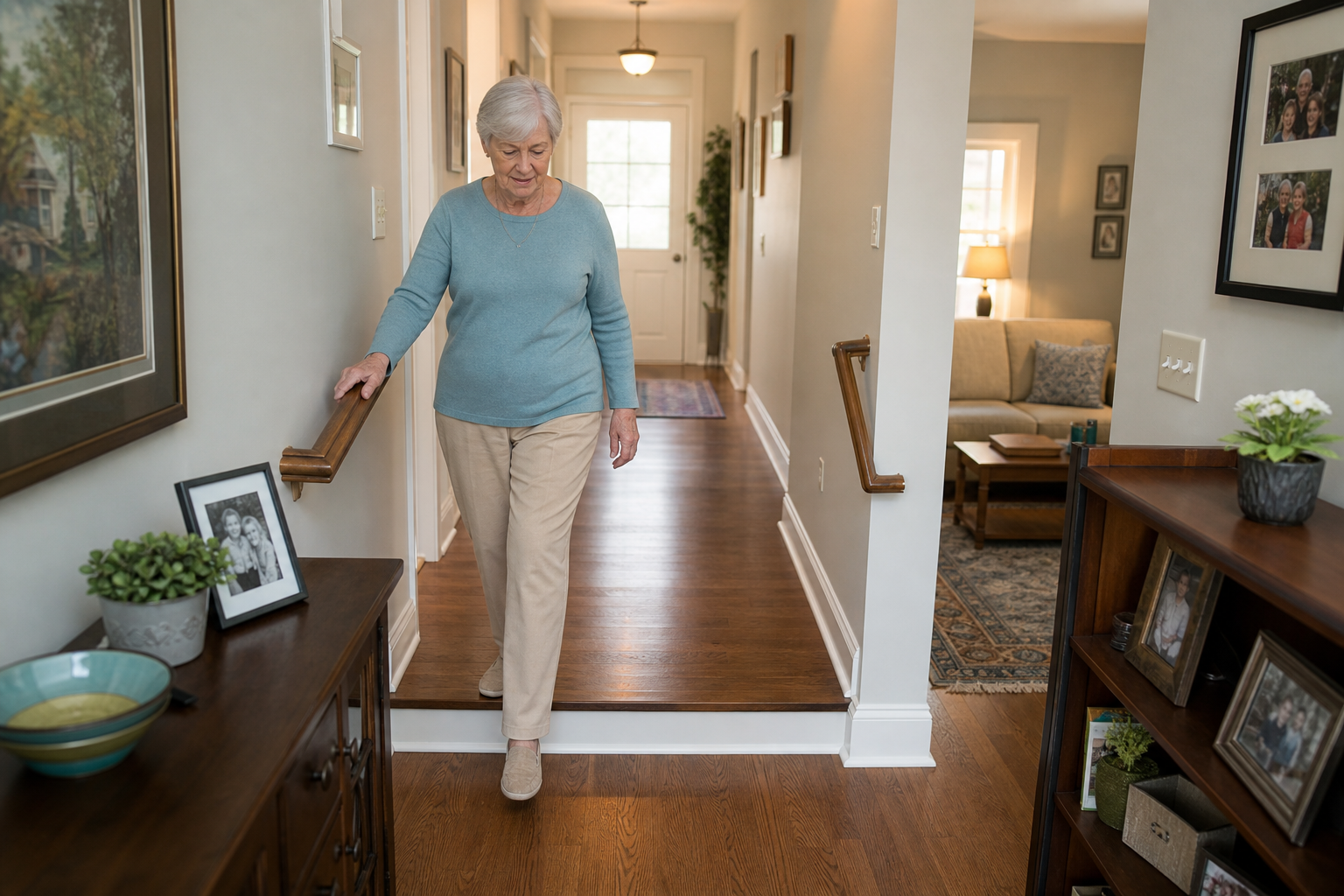
Balance Problems In Older Adults are one of the most common reasons older adults begin struggling with daily activities that once seemed routine. Walking through the house, carrying groceries, climbing steps, getting out of a chair, or turning around in a narrow hallway can gradually become more difficult and less predictable.
Many people do not notice the change immediately. Balance problems often develop slowly. A person may begin holding onto furniture while walking, moving more cautiously on uneven surfaces, avoiding stairs, or hesitating before standing up. Family members may notice these changes during visits long before the older adult recognizes them.
Balance problems do not automatically mean someone can no longer live independently. However, they do deserve attention because small losses of stability often increase the risk of falls, injuries, and loss of confidence. Understanding the causes and making practical adjustments at home can help many older adults remain safer and more independent.
Recognizing Balance Problems In Older Adults
Balance Problems In Older Adults often reveal themselves through small changes in everyday movement long before a fall occurs.
Family members frequently notice these changes during visits, while the older adult may view them as minor adjustments or simply part of getting older.
Common warning signs include:
- Holding onto walls, countertops, or furniture while walking
- Taking unusually small steps
- Shuffling instead of lifting the feet normally
- Hesitating before turning
- Difficulty standing from a chair
- Frequent stumbling or catching a foot on obstacles
- Avoiding activities that require movement
- Increased fear of falling
- Trouble walking in dim lighting
Adult children often notice that a parent who once moved comfortably around the home now behaves differently. They may pause before standing, use furniture for support, avoid carrying objects while walking, or choose longer routes through the house that keep them close to walls and stable surfaces.
Turning movements can be especially revealing. A parent who once pivoted naturally may now take several small steps to change direction. Others begin avoiding stairs, rushing less, or limiting trips outside the home because they no longer feel as confident about their balance.
Many older adults gradually adapt to these changes without recognizing them. What begins as an occasional hand on a countertop or a slightly slower pace can eventually become a routine part of moving around the house.
For this reason, observation is often more useful than asking someone whether they feel unsteady. Many people do not describe themselves as having balance problems even while changing the way they walk, stand, turn, and navigate their home.
The goal is not to identify every minor change in movement. The goal is recognizing patterns that suggest balance is becoming less reliable. These small adjustments often appear months or even years before a serious fall occurs, providing an opportunity to make practical changes before an injury happens.
Common Causes Of Balance Problems
Balance depends on several body systems working together. Changes in any of these systems can affect stability.
Many people assume balance is primarily a matter of leg strength. While strength is important, maintaining stability requires constant coordination between the muscles, joints, eyes, inner ear, nerves, and brain. When one system becomes less effective, the others must work harder to compensate.
This is one reason Balance Problems In Older Adults can be surprisingly difficult to understand. Two people may appear equally strong, yet one moves confidently while the other feels unsteady. The difference often involves multiple small factors working together.
Common contributors include:
- Muscle weakness
- Arthritis
- Reduced flexibility
- Vision problems
- Inner ear disorders
- Medication side effects
- Nerve damage
- Previous falls
- Fatigue
- Deconditioning from inactivity
Muscle weakness affects the ability to recover from small losses of balance. Every step requires the body to make continuous adjustments. Strong muscles help correct minor stumbles before they become falls.
Arthritis can create additional challenges. Pain, joint stiffness, and reduced range of motion may alter walking patterns and make movements less predictable. Someone with painful knees or hips may unconsciously shift weight differently while walking, turning, or climbing stairs.
Reduced flexibility often develops gradually. Stiff ankles, hips, and knees make it harder to react quickly when balance is challenged. Simple activities such as stepping over an obstacle or turning around may require more effort than they once did.
Vision problems are another common contributor. The brain relies heavily on visual information to determine body position and movement. Changes in depth perception, contrast sensitivity, and overall visual clarity can make obstacles, stairs, and uneven surfaces more difficult to recognize.
The inner ear plays a critical role as well. The vestibular system constantly helps the brain determine head position and movement. When this system is affected, an older adult may feel dizzy, unsteady, or as if the ground is moving beneath them.
Medication side effects are frequently overlooked. Some medications can cause dizziness, drowsiness, weakness, or slower reaction times. In some cases, the medication itself is not the problem, but the combination of several medications may increase fall risk.
Nerve damage can reduce sensation in the feet and lower legs. When the brain receives less information about foot position and contact with the ground, maintaining balance becomes more difficult. Some people describe this as feeling disconnected from the floor beneath them.
Previous falls can have lasting effects even after physical injuries heal. Many older adults become more cautious following a fall. Fear of falling may lead them to move less, avoid activities, and gradually lose strength and confidence.
Fatigue is another important factor. Balance often becomes less reliable as people become tired. An older adult who appears stable in the morning may move much more cautiously by evening after several hours of activity.
Sometimes several small issues combine to create significant Balance Problems In Older Adults.
Mild arthritis, slightly reduced vision, poor lighting, and a cluttered walking path may each seem minor on their own. Together they can create a much greater risk.
This accumulation of small problems is extremely common. A family member may look at each issue separately and conclude that none of them is serious. The older adult may think the same thing.
However, balance is affected by the combined effect of all these factors occurring at the same time.
For example, imagine an older adult who:
- Has mild knee arthritis
- Takes medication that causes occasional dizziness
- Walks through a dim hallway at night
- Is tired after a long day
- Must step around a basket in the hallway
None of these factors alone may cause a fall. Together they can create a situation where a momentary loss of balance becomes much more likely.
People are often surprised by how quickly strength and balance decline after hospitalization, illness, or extended bed rest.
Even a relatively short period of inactivity can reduce stability and confidence.
Families frequently notice this after a hospital stay. A parent who was walking independently before hospitalization may return home weaker, slower, and less steady than expected.
Part of the problem is physical deconditioning. Muscles lose strength when they are not used. Endurance declines. Balance reactions become less effective. Activities that once felt effortless may suddenly require concentration and effort.
Confidence often declines as well. An older adult who feels unsteady may begin moving less. Unfortunately, reduced activity often leads to further weakness, creating a cycle that becomes increasingly difficult to break.
This is one reason early intervention matters. Recognizing small changes in mobility, strength, and balance allows families to make practical adjustments before a minor decline becomes a major loss of independence.
Understanding the many factors that contribute to balance problems helps explain why fall prevention is rarely about fixing a single issue. More often, it involves identifying several small risks and reducing them before they combine into a serious problem.
How Walking Patterns Change Over Time
Many balance issues become visible through changes in walking behavior.
Family members often expect balance problems to appear suddenly after a fall. In reality, balance decline is frequently visible long before an injury occurs. The signs are often subtle and develop gradually enough that the older adult adapts without realizing how much their movement patterns have changed.
Observing how someone walks can reveal a great deal about their stability, confidence, strength, and overall mobility.
Older adults experiencing Balance Problems In Older Adults often begin to:
- Walk more slowly
- Shorten their stride
- Widen their stance
- Pause before changing direction
- Avoid carrying objects while walking
- Use furniture for support
Walking more slowly is one of the earliest and most common adaptations. Slower movement provides additional time to react to uneven surfaces, obstacles, and changes in direction. While this adjustment can improve safety in the short term, it may also signal declining confidence or stability.
Shortened strides are another common change. Instead of taking normal-length steps, an older adult may begin taking shorter, more cautious steps. This often lowers the center of gravity and reduces the time spent balancing on one foot during each stride.
Some people gradually widen their stance while walking. Feet may be placed farther apart in an attempt to create a broader base of support. While this can increase stability, it often indicates that balance is becoming less reliable.
Many older adults also become reluctant to carry objects while walking. They may stop carrying laundry baskets, coffee cups, groceries, or other household items because doing so occupies their hands and limits their ability to catch themselves if they become unsteady.
Furniture walking deserves particular attention. A person may casually touch walls, countertops, tables, or chairs while moving through the home. Because these touches are brief, family members often overlook them. However, frequent reliance on furniture for support is often one of the clearest signs that balance confidence is declining.
Turning movements deserve particular attention. Many falls occur during turning rather than straight-line walking.
Walking in a straight line is relatively simple. Turning requires the body to shift weight, change direction, and maintain balance simultaneously. Even mild balance problems can become much more apparent during these movements.
Watch what happens when someone turns around near a chair, kitchen table, or bathroom doorway. A person who takes several small steps to complete a turn may be compensating for reduced stability.
Some older adults stop pivoting naturally and instead perform what is essentially a series of tiny adjustments. Others pause before turning, hold onto nearby furniture, or visibly concentrate during the movement.
Bathroom doorways, kitchen work areas, and narrow hallways often reveal these changes because they require frequent turns in confined spaces.
Adult children should also pay attention to transitions between activities. Does a parent stand up and walk smoothly? Do they hesitate before taking the first step? Do they appear less steady when carrying something or talking while walking?
These observations often reveal more than formal balance tests.
Fatigue also matters. An older adult may walk reasonably well in the morning but become noticeably less steady later in the day after several hours of activity.
This pattern is extremely common. Strength, coordination, concentration, and reaction time can all decline as fatigue accumulates. An older adult who appears stable during a morning appointment may look quite different by evening.
Families often miss this because visits tend to occur during the most active part of the day. Spending an entire day with a parent often provides a more accurate picture of their mobility than a brief visit.
Watch for:
- Increased shuffling later in the day
- Greater reliance on furniture
- More cautious turns
- Difficulty rising from chairs
- Slower walking speed
- Increased hesitation
These changes may indicate that fatigue is reducing stability and increasing fall risk.
Understanding these patterns can help families identify problems before a serious fall occurs.
Most major falls are not isolated events that occur without warning. In many cases, the warning signs have been present for months. Walking becomes slower. Turning becomes more deliberate. Furniture becomes a source of support. Daily activities require more effort.
Recognizing these changes early allows families to make practical adjustments before a fall results in hospitalization, injury, or loss of independence.
Improving Lighting And Visibility
Poor visibility can significantly worsen Balance Problems In Older Adults.
Many people think of balance as a problem involving the legs, muscles, or inner ear. In reality, vision plays a major role in helping the brain determine body position and movement. Every step relies on visual information about floor surfaces, obstacles, furniture placement, changes in elevation, and available walking space.
When lighting is poor, the brain receives less information about the environment. Even an older adult who moves safely during the day may become noticeably less steady at night.
Even familiar rooms become more difficult to navigate when shadows obscure walking surfaces or changes in floor height.
This often surprises families because they assume familiarity makes a room safe. A person may have lived in the same home for decades, but familiarity does not eliminate the need to see where they are walking.
Small hazards become much harder to recognize in dim lighting:
- A curled rug edge
- A pet sleeping in a walkway
- A floor transition
- A low footstool
- An electrical cord
- A single stair
- A misplaced object
Many falls occur because the person never sees the hazard clearly enough to react.
Helpful improvements include:
- Brighter hallway lighting
- Night lights between the bedroom and bathroom
- Better lighting near stairs
- Higher-wattage bulbs where appropriate
- Reduced glare from windows
- Clear visibility of furniture edges
Hallways deserve particular attention because they connect the areas people use most frequently. A brightly lit living room provides limited benefit if the hallway leading to the bathroom remains dim.
Stairs also require careful lighting. Changes in floor height become more difficult to judge as vision changes with age. Shadows can make steps appear deeper, shallower, or harder to distinguish. Well-lit stairways help older adults place their feet more confidently and reduce hesitation.
Glare can be just as problematic as darkness. Bright sunlight reflecting off floors, shiny surfaces, or windows may temporarily reduce visibility. An older adult moving from a bright room into a darker hallway may require several moments for their eyes to adjust.
Furniture visibility matters as well. Glass tables, low coffee tables, decorative stands, and furniture with dark finishes can become difficult to see in low light. Improving contrast and lighting around these objects can reduce accidental collisions.
Nighttime bathroom trips deserve special attention.
Many falls occur when someone wakes up sleepy, stands quickly, and walks through a dim environment.
Several risk factors often occur simultaneously:
- Reduced alertness
- Temporary dizziness
- Poor lighting
- Bare feet or socks
- Urgency to reach the bathroom
- Stiffness after lying in bed
The combination can be surprisingly hazardous.
Many older adults are reluctant to turn on bright lights because they do not want to fully wake up. Night lights provide a practical compromise by creating a visible path without requiring full room lighting.
Adult children should pay attention to the route between the bed and bathroom. Walk the path at night. What appears safe during the day may look very different in darkness. Obstacles, shadows, furniture corners, and floor transitions become much more noticeable when viewed under realistic nighttime conditions.
Simple lighting improvements are often inexpensive and can make immediate differences in safety.
Unlike major home renovations, improving visibility often requires little more than better bulbs, additional lamps, night lights, or minor furniture adjustments. These changes can reduce uncertainty, improve confidence, and make movement safer throughout the home.
For many older adults experiencing balance problems, better lighting is one of the simplest and most effective ways to reduce fall risk while maintaining independence.
Removing Household Obstacles
Many homes gradually accumulate obstacles that increase fall risk.
The process is usually so gradual that nobody notices it happening. A small table is added near a chair. A basket is placed beside a doorway. A stack of magazines collects next to a recliner. A decorative stool is moved into a hallway. None of these changes seem important individually, but over time they can create a home that requires constant navigation and adjustment.
For a younger person with good balance, these obstacles may be little more than an inconvenience. For someone experiencing Balance Problems In Older Adults, they can significantly increase fall risk.
Common examples include:
- Loose rugs
- Electrical cords
- Pet toys
- Magazine stacks
- Decorative stools
- Narrow pathways
- Small furniture pieces
The problem is not always tripping over these items directly. More often, the problem is that they force a person to alter normal walking patterns.
Balance Problems In Older Adults become more dangerous when walking paths require constant adjustments and obstacle avoidance.
An older adult may need to sidestep around a magazine rack, turn sideways to pass between furniture, step over a pet toy, or reach awkwardly around an obstacle while carrying an object. Each adjustment creates another opportunity for a loss of balance.
Many falls occur during ordinary activities rather than unusual events. Someone gets up from a chair to answer the telephone, carries a cup of coffee to the kitchen, or walks to the bathroom during the night. The obstacle itself may seem insignificant, but when combined with poor lighting, fatigue, reduced mobility, or a moment of distraction, the risk increases.
Walk through the home and examine the route between:
- Bedroom and bathroom
- Living room and kitchen
- Entry door and main living areas
These are often the most heavily traveled pathways in the home.
As you walk these routes, ask simple questions:
- Can someone walk through without turning sideways?
- Is there enough room for a walker if one becomes necessary?
- Are there obstacles that require stepping around them?
- Are frequently used items creating clutter?
- Would the path still be safe at night with limited visibility?
Many families are surprised by what they notice when they deliberately evaluate the home from a mobility perspective rather than a decorating perspective.
Furniture placement deserves particular attention. Coffee tables, end tables, plant stands, storage baskets, and decorative items may have been arranged years earlier when mobility was not a concern. What once felt spacious may now feel crowded to someone using a cane, walker, or simply moving more cautiously.
Pet owners face additional challenges. Toys, food bowls, leashes, and pets themselves can create unexpected hazards. Many older adults are injured not because they trip over furniture but because they step around a pet or change direction suddenly to avoid one.
The goal is not creating an empty house. The goal is creating predictable walking paths that allow comfortable movement without frequent sidestepping or reaching.
This distinction is important. A home should remain comfortable and lived-in. Fall prevention does not require removing every piece of furniture or turning a home into a clinical environment.
Instead, focus on creating clear routes where everyday movement can occur naturally and safely.
Adult children often discover that furniture added over many years has gradually narrowed pathways throughout the home.
A parent may have adapted so gradually that the problem is no longer obvious to them. They automatically walk around obstacles, avoid certain routes, or use furniture for support without realizing how much their movement patterns have changed.
Sometimes a simple rearrangement of furniture provides more benefit than an expensive home modification. Moving a chair, removing a small table, securing a rug, or clearing a walkway can immediately reduce fall risk while preserving both comfort and independence.
Standing, Sitting, And Transfer Safety
Many falls occur during transfers rather than walking.
When people think about fall prevention, they often picture someone slipping while walking down a hallway or tripping over an obstacle. In reality, many falls occur while moving from one position to another. Standing up from a recliner, getting out of bed, rising from a dining chair, or transferring on and off a toilet all require strength, balance, coordination, and timing.
Transfers become more difficult because they involve several movements occurring at once. A person must shift weight forward, generate enough strength to stand, maintain balance as their center of gravity changes, and stabilize themselves before beginning to walk.
Small declines in strength or balance can make these everyday movements surprisingly challenging.
Watch for:
- Rocking repeatedly before standing
- Using excessive arm strength
- Falling back into the chair
- Hesitation after standing
- Immediate unsteadiness
These behaviors often indicate that transfers are becoming more difficult.
Repeated rocking is one of the most common signs. An older adult may lean forward several times before finally generating enough momentum to stand. Others push forcefully on armrests, tables, walkers, or nearby furniture because their legs are no longer providing enough assistance.
Sometimes the difficulty is subtle. A person may stand successfully but remain frozen for a few moments before taking a step. This hesitation often reflects a need to regain balance before moving.
Immediate unsteadiness after standing is particularly important to notice. Some older adults appear stable while seated but become noticeably wobbly during the first few seconds after rising.
Recliners deserve special attention. Deep, soft recliners are comfortable but often difficult to exit. The seated position places the hips lower than the knees, requiring greater effort to stand. Many families notice transfer problems first when an older adult begins struggling to get out of a favorite chair.
Bed transfers can present similar challenges. Weakness, stiffness, arthritis, medications, and poor sleep can make the first few minutes after getting out of bed especially difficult. Nighttime bathroom trips are a common time for falls because people may still be sleepy, stiff, and not fully alert.
A common mistake is standing and immediately beginning to walk.
Many older adults rise from a chair and start moving before their balance has fully stabilized. If dizziness, weakness, or unsteadiness is present, the first step may occur before the body is ready.
Instead, it helps to:
- Stand fully.
- Pause briefly.
- Establish balance.
- Begin walking.
This simple routine reduces many preventable falls.
The pause does not need to be long. Even a few seconds can allow balance, blood pressure, and coordination to catch up with the movement. Older adults who feel lightheaded when standing often benefit from making this pause a habit.
Adult children can learn a great deal by simply observing transfers during visits. Does a parent stand smoothly from a chair? Do they need multiple attempts? Are they pulling themselves up with furniture? Do they look stable immediately after standing?
These observations often reveal mobility decline earlier than walking itself.
Many successful aging-in-place adaptations focus on making transfers easier and safer. Slightly higher chair heights, firm seat cushions, sturdy armrests, proper lighting, and clear pathways around beds and chairs can all reduce risk without requiring major home modifications.
Transfers occur dozens of times every day. Because they are so routine, the gradual decline in transfer ability often goes unnoticed until a fall occurs. Paying attention to these everyday movements can help families identify problems early and make practical adjustments before a serious injury happens.
Transfer Safety And Aging In Place
Footwear And Walking Surfaces
Footwear plays an important role in managing Balance Problems In Older Adults.
Many people focus on walkers, grab bars, and home modifications while overlooking what is on their feet. However, every step begins with the interaction between the foot and the walking surface. Shoes that fit poorly, slide easily, or fail to provide adequate support can increase instability even in a relatively safe home environment.
Good shoes should provide:
- Stable support
- Secure fit
- Non-slip soles
- Low heels
- Adequate traction
A shoe should feel secure during normal walking, turning, and standing from a seated position. Feet should not slide forward inside the shoe, and heels should not lift excessively while walking. Shoes that move independently from the foot can create instability during everyday activities.
Many older adults continue wearing footwear long after it has become unsafe. Favorite shoes may feel comfortable because they are broken in, but worn soles and weakened support can increase fall risk.
Common household hazards include:
- Slippery socks
- Worn-out slippers
- Shoes with loose backs
- Uneven flooring transitions
Slippery socks are particularly common. An older adult may walk safely on carpet while wearing socks, then step onto hardwood, tile, or vinyl flooring and suddenly lose traction. Falls often occur during these transitions because the person is moving normally and does not anticipate the change in surface conditions.
Slippers deserve special attention. Many slippers provide warmth and comfort but little support. Soft soles, loose heels, and worn treads can make them surprisingly hazardous, especially for individuals already experiencing Balance Problems In Older Adults.
Shoes with loose backs or open heels can also contribute to instability. A person may unconsciously grip with their toes to keep the shoe in place while walking. Over time this can alter normal gait patterns and reduce stability.
Floor surfaces also deserve attention.
Moving from carpet to tile, hardwood to area rugs, or smooth flooring to uneven outdoor surfaces can challenge balance.
These transitions require subtle adjustments in foot placement, traction, and body position. Younger people often make these adjustments automatically. Older adults with balance problems may require more time to adapt.
Area rugs are a particularly common source of difficulty. Even when secured, they create changes in height and texture that require careful foot placement. Curling edges and loose corners increase risk further.
Outdoor surfaces present additional challenges. Sidewalk cracks, uneven driveways, wet decks, gravel paths, and grass all demand greater balance and coordination than smooth indoor flooring. An older adult who moves comfortably inside the home may become noticeably less stable outdoors.
Many falls happen because people continue moving at the same pace despite changing walking conditions.
For example, someone may walk confidently across carpet, step onto a smooth tile floor, and continue at exactly the same speed. Another person may move quickly from a level surface onto a slightly uneven walkway without slowing down or paying attention to foot placement.
The problem is often not the floor itself. The problem is failing to recognize that the walking environment has changed.
Families can reduce risk by observing how an older adult moves throughout the home. Watch for hesitation at flooring transitions, shuffling over rugs, catching toes on thresholds, or difficulty navigating outdoor surfaces. These small observations often reveal balance problems long before a serious fall occurs.
Appropriate footwear and attention to walking surfaces will not eliminate all fall risk. However, they are among the simplest and most affordable ways to improve safety. A supportive pair of shoes and awareness of changing floor conditions can help many older adults move more confidently and remain independent longer.
Safe Shoe Choices For Seniors At Home
When Balance Problems Need Further Evaluation
Not every balance issue requires urgent medical attention, but some situations deserve prompt evaluation.
Many Balance Problems In Older Adults develop gradually. An older adult may slowly become less steady over a period of months or years. They may begin taking shorter steps, holding onto furniture, moving more cautiously, or avoiding activities that feel challenging. These changes are common and often allow time for practical adjustments at home.
Sudden changes are different and should not be ignored.
Seek medical advice if balance problems:
- Appear suddenly
- Worsen rapidly
- Follow a fall or injury
- Are accompanied by dizziness
- Include weakness on one side
- Interfere significantly with daily activities
A sudden loss of balance can sometimes indicate an underlying medical problem rather than ordinary aging. For example, an older adult who was walking normally last week but now struggles to remain steady deserves prompt attention.
Dizziness can also be important. Some people describe feeling lightheaded when standing. Others feel as if the room is spinning or that they are being pulled to one side while walking. These symptoms may increase fall risk and should be evaluated, particularly if they appear unexpectedly.
Balance problems that develop after a fall should also be taken seriously. Even a seemingly minor fall can result in pain, weakness, fear of falling, or changes in walking patterns that persist long after bruises have healed. Some older adults become noticeably less active after a fall, leading to further loss of strength and confidence.
Weakness affecting one side of the body is especially concerning. Difficulty lifting one foot, dragging a leg, weakness in one arm, facial drooping, or sudden coordination problems should not be dismissed as normal aging.
Families should also pay attention when balance problems begin interfering with routine activities. An older adult who can no longer safely carry laundry, prepare meals, navigate stairs, shop independently, or move comfortably around the home may require further evaluation and additional support.
One practical question to ask is:
"Has something changed recently?"
Gradual decline often allows time for adaptation. Sudden changes usually require a closer look.
The goal is not to seek medical attention for every stumble or moment of unsteadiness. The goal is recognizing when balance problems no longer fit the pattern of slow, predictable aging and may indicate a new problem that needs attention.
The following resource provides additional information about balance disorders and fall prevention:
National Institute on Aging Balance And Falls Information
Maintaining Independence Despite Balance Challenges
Many older adults continue living successfully at home despite Balance Problems In Older Adults.
The key is recognizing limitations early and adapting the environment before a serious injury occurs.
Many serious falls do not happen because a person suddenly becomes unable to walk. They happen because gradual changes go unnoticed or are ignored. An older adult may remain largely independent while balance slowly declines. Small warning signs often appear months or even years before a major fall.
Practical strategies include:
- Keeping frequently used items within easy reach. Reaching overhead, bending deeply, or climbing on stools becomes riskier when balance is less reliable. Frequently used dishes, medications, clothing, and household items should be stored between waist and shoulder height whenever possible. Reducing unnecessary reaching and bending can prevent many avoidable falls.
- Avoiding unnecessary rushing. Many falls occur when someone feels pressured to move quickly. Rushing to answer the telephone, get to the bathroom, answer the door, or complete a task before forgetting it often leads to poor decisions and loss of balance. Slowing down and allowing extra time for routine activities can significantly reduce risk.
- Maintaining clear walking paths. Walking routes should be predictable and unobstructed. Furniture, baskets, pet supplies, extension cords, stacks of mail, and decorative items can gradually narrow pathways throughout a home. An older adult with balance problems may be able to walk safely in an open hallway but struggle when forced to step around obstacles.
- Improving lighting. Balance depends heavily on visual information. Shadows, dark hallways, poorly lit stairways, and nighttime bathroom trips make navigation more difficult. Better lighting helps older adults identify changes in floor surfaces, furniture edges, and potential hazards before they become problems.
- Using mobility aids when needed. Walkers and canes are sometimes resisted because they can feel like a loss of independence. In reality, the appropriate mobility aid often allows a person to remain independent longer. Problems arise when someone who clearly needs a walker decides to leave it behind "just this once." Many families have experienced serious injuries that began with that decision.
- Taking fatigue seriously. Balance often deteriorates as people become tired. An older adult may move well in the morning but become noticeably less steady by late afternoon. Activities that seem manageable when rested may become difficult after a busy day, poor sleep, illness, or prolonged standing. Fatigue is a common contributor to falls because it is easy to underestimate.
- Paying attention to changes in walking patterns. Walking behavior often reveals balance problems before a fall occurs. Shorter steps, slower movement, wider stance, increased reliance on furniture, hesitation when turning, difficulty getting up from chairs, or a tendency to shuffle rather than lift the feet are all signs worth noticing. Adult children frequently observe these changes during visits before the older adult recognizes them.
The goal is not to eliminate activity or create a perfectly safe environment. The goal is to recognize that balance has become less reliable and make practical adjustments before a moment of instability leads to a fractured hip, head injury, hospitalization, or loss of independence. Many successful aging-in-place strategies begin with noticing small changes and responding to them early rather than waiting for a crisis.
Families sometimes focus entirely on preventing falls. A better approach is creating an environment where safe movement becomes easier and more predictable.
Most improvements are inexpensive. Many involve observation rather than major renovation. A brighter hallway, a clearer pathway, a better chair height, or safer footwear can reduce risk substantially.
Balance problems do not automatically end independence. However, they are often an early signal that adjustments are needed. Paying attention to small changes in movement today may help prevent much larger problems tomorrow.
© 2026 Mark Fomenko. All rights reserved.
AgingInPlaceResource.com
Privacy Policy | Terms of Use | Disclaimer | Contact | Newsletter
Recent Articles


-
Aging In Place Resource Library
Sep 04, 26 08:30 AM
Aging In Place Resource Library -
Aging in Place Resource Newsletter
Aug 30, 26 11:16 AM
Aging in Place Resource Newsletter -
Aging in Place Resource: Simple Strategies for Living Safely at Home
Jul 28, 26 12:43 PM
 Aging in Place Resource provides practical guidance for aging in place. Learn how to live safely and independently at home with strategies for home safety, caregiving, planning, and long-term support.