Walker Safety At Home
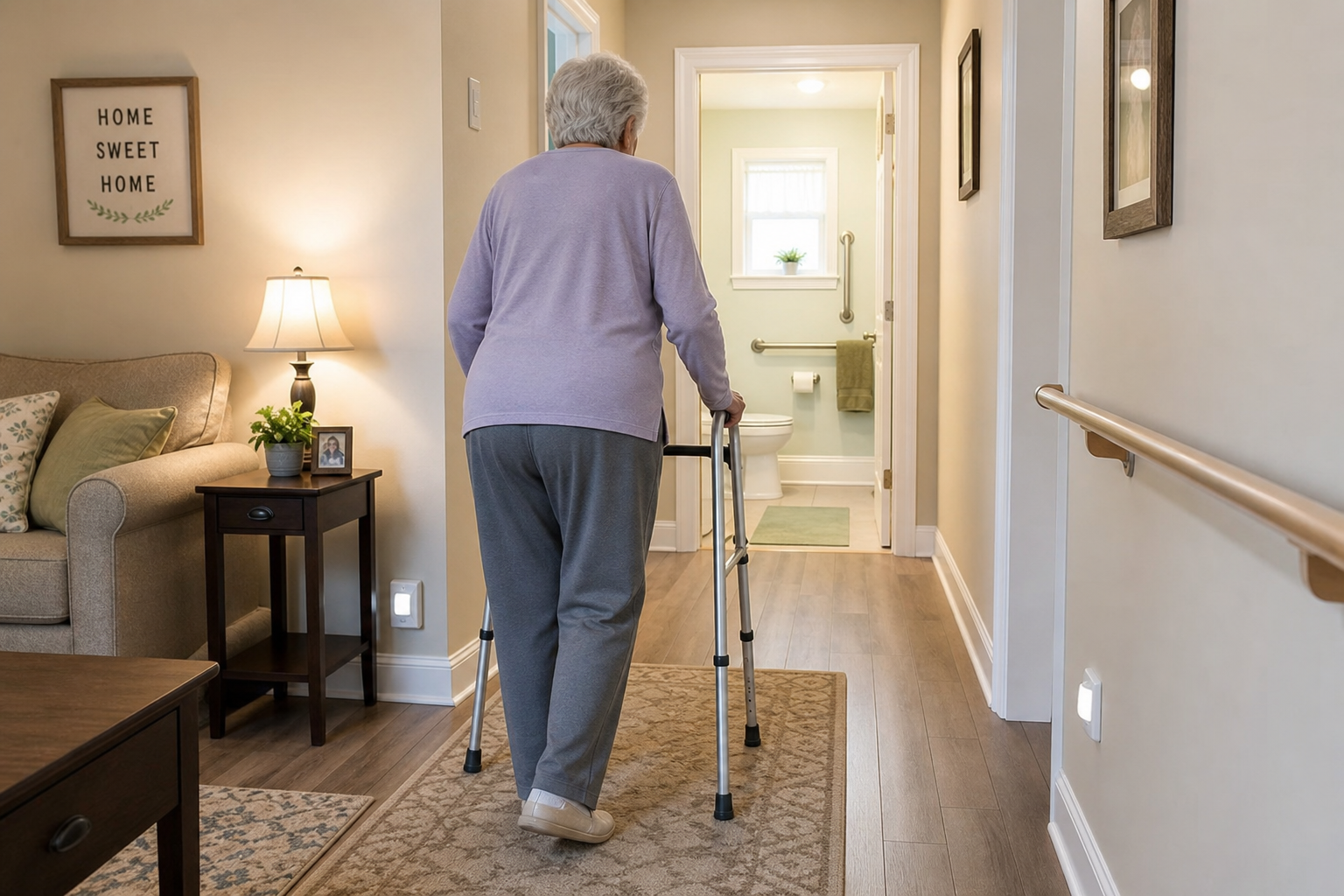
Walker use inside the home creates unique movement and balance challenges that are often underestimated. Walker Safety At Home requires attention to flooring, turning space, lighting, furniture placement, and walking paths because small household obstacles can quickly become major fall hazards.
Many falls happen during ordinary movement inside familiar rooms rather than during unusual accidents. Bedrooms, bathrooms, kitchens, and narrow hallways often force awkward turns, sudden stops, or unstable reaching movements. Prevention starts with reducing clutter, improving movement flow, and making daily routines safer and easier.
A safer home does not require expensive remodeling. Small layout changes, improved lighting, and better movement habits can significantly reduce risks while helping older adults remain independent longer.
Walker Safety At Home Starts With Clear Walking Paths
Clear walking paths are one of the most important parts of Walker Safety At Home. Walkers require more turning space than many people realize, especially around furniture corners, doorway transitions, and narrow hallways. Tight movement areas increase the chance of clipped walker legs, sudden twisting motions, and loss of balance.
Furniture should support movement rather than obstruct it. Chairs, side tables, baskets, and decorative items often narrow pathways, and homeowners often don't notice the problem until mobility declines.
Important safety adjustments include:
- Remove small tables that force sideways turning
- Keep at least several feet of open space in major walking routes
- Secure loose electrical cords against walls
- Avoid storing boxes in hallways or bedroom paths
- Remove decorative floor stands from corners
- Keep pet bowls outside primary walking areas
Many homes become dangerous because possessions slowly accumulate over time. Regularly reassessing movement space helps maintain safer daily mobility.
Flooring Conditions Can Either Help Or Hurt Stability
Floor surfaces strongly influence walker stability and movement confidence. Uneven flooring, thick rugs, slippery transitions, and cluttered walking areas create constant hazards during daily movement.
Carpet edges and area rugs are particularly dangerous because walker legs can catch during forward movement. Even small changes in floor height can disrupt balance. Smooth movement matters more than appearance when mobility equipment is involved.
Safer flooring strategies include:
- Remove loose throw rugs completely
- Use low-pile carpeting whenever possible
- Secure transition strips between rooms
- Avoid waxed or slippery flooring surfaces
- Keep floors dry near kitchens and bathrooms
- Repair cracked tiles or lifted flooring edges
Shoes also affect walker safety. Slippers without grip increase the risk of slipping, even on dry flooring. Stable footwear improves traction and helps support smoother movement patterns throughout the house.
Many families begin identifying hazards concerning walker safety at home by reviewing:
Proper Walker Height Improves Balance And Posture
A poorly adjusted walker changes posture, arm positioning, and walking mechanics. Many older adults unknowingly use walkers that are too low or too high, creating unnecessary stress on the shoulders, back, and wrists.
The walker should support upright posture rather than encourage leaning. Excessive forward leaning shifts body weight improperly and increases instability during movement and turning.
Common adjustment principles include:
- Elbows should bend slightly during the normal standing posture
- Hands should rest naturally on the grips without reaching
- Shoulders should remain relaxed rather than elevated
- The walker should move smoothly without dragging
- Wheels or feet should contact the flooring evenly
- Rubber tips should be checked regularly for wear
Walker placement matters during movement as well. Pushing the walker too far ahead weakens stability and encourages unsafe reaching. Smaller, controlled steps improve balance and reduce sudden shifting motions.
Lighting Conditions Affect Safe Walker Movement
Lighting problems increase the risk of falls throughout the home, especially during nighttime bathroom trips or early-morning movement. Shadows, glare, and poorly illuminated walking paths make it harder to judge floor surfaces and obstacles.
Good lighting supports safer foot placement and smoother walker movement. Consistent lighting between rooms also reduces visual adjustment problems.
Helpful lighting improvements include:
- Install bright bulbs in hallways and bedrooms
- Use night lights along bathroom routes
- Reduce glare from uncovered windows
- Place lamps near primary seating areas
- Add lighting near stairs and entryways
- Keep light switches easy to reach
Motion-sensor lighting can help reduce nighttime confusion while improving visibility. Battery-operated lighting systems may provide affordable improvements without major electrical work.
For additional insights, review:
https://www.nia.nih.gov/health/falls-and-falls-prevention/preventing-falls-home-room-room.
Safe Turning And Transfers Require Deliberate Movement
Turning while using a walker creates instability because many falls happen during directional changes rather than straight walking. Fast pivots, twisting motions, and backward stepping significantly increase the risk of losing balance.
Transfers between beds, chairs, toilets, and couches also require careful positioning. Stable movement patterns reduce sudden shifts in body weight.
Safer transfer habits include:
- Back up slowly until legs touch the chair or bed
- Reach for stable armrests before sitting
- Avoid twisting while lowering into a seat
- Stand fully before beginning movement
- Turn using several small steps instead of pivoting
- Keep frequently used items within easy reach
Furniture height also affects safety. Very soft couches or low chairs make standing more difficult and often encourage unsafe pushing or pulling motions.
People working to improve transfer safety often review additional guidance on Furniture Safety For Seniors.
Bathroom Routes And Nighttime Movement Need Extra Attention
Bathroom trips create some of the highest-risk movement situations in the home. Fatigue, darkness, urgency, and slippery flooring combine to increase the risk of falls. Walker users often move faster than usual during nighttime bathroom trips, reducing control and stability.
The bathroom path should remain completely clear at all times. Clothing, laundry baskets, shoes, or pet items should never be left along nighttime walking routes.
Helpful nighttime strategies include:
- Keep a lamp within easy reach of the bed
- Use night lights along the bathroom path
- Keep mobility aids next to the bed consistently
- Avoid rushing during nighttime movement
- Install grab bars near toilets and showers
- Keep towels and supplies easy to reach
Bathroom entrances should also allow enough turning space for walkers. Narrow doorways or crowded layouts often force awkward positioning and unstable movements.
Additional guidance is available from Bathroom Safety For Seniors.
Daily Habits Influence Long-Term Walker Safety
Daily routines shape long-term movement safety more than occasional adjustments. Repetition creates habits, and unsafe habits often become automatic over time.
Walker users should avoid carrying heavy objects while moving. Bags, drinks, laundry baskets, and loose items interfere with grip stability and movement control. Keeping essential items organized near major activity areas reduces the need to carry them.
Useful daily safety habits include:
- Pause briefly before standing up
- Keep phones within easy reach
- Move slowly after waking up
- Wear stable shoes indoors
- Avoid multitasking while walking
- Maintain consistent furniture placement
System Context: Fall prevention depends heavily on how people move through their homes every day. Walker Safety At Home supports broader aging in place planning by helping families identify practical risks before injuries occur. Many homeowners use the Aging in Place Checklist to organize mobility improvements room by room.
Consistent Home Safety Adjustments Support Independent Living
Long-term independence depends on maintaining safe movement patterns throughout the home. Small adjustments made early often prevent larger problems later. Walker users benefit most from homes that support predictable, stable movement without unnecessary obstacles or rushed positioning.
Safety improvements should focus on practical movement rather than appearance. Clear pathways, stable furniture placement, better lighting, and safer transfer areas often provide greater value than expensive renovations.
Important long-term priorities include:
- Reassess walking routes regularly
- Remove clutter before it accumulates
- Replace worn rubber walker tips promptly
- Adjust furniture when mobility changes
- Improve lighting as vision changes occur
- Simplify room layouts whenever possible
Family members should also observe how movement actually occurs during ordinary routines. Watching real walking patterns often reveals hazards that are easy to overlook during casual observation.
How To Prevent Falls In The Home
_____________________________________________________________________________________________________
Get clear, practical insights on aging in place sent occasionally, and only when useful.
No spam. No noise. Unsubscribe anytime.
______________________________________________________________________________________________________